



Switching From a Hair System to Hair Transplant Surgery
A hair transplant can be possible after wearing a hair system, but it should not be planned as a direct copy of the system. A hair system gives instant, even coverage from outside the body. A transplant moves a limited number of real grafts from your donor area, so the result has to be judged by donor capacity, hair caliber, future hair loss, scalp health, and the density you have become used to seeing in the mirror.
The most common disappointment is not that the transplant failed, but that surgery was expected to match system density too quickly. That expectation must be corrected before the system is removed permanently, before the scalp is shaved, and before donor grafts are spent.
I also separate two different kinds of thinness. Early thinness during shedding and regrowth is part of the normal transplant timeline. A mature result that still looks lighter than a system is a different issue, and it usually comes from donor limits, fine hair caliber, a large area to cover, or expectations built around the density of a system.
A system can be adjusted the same day. A transplant cannot. It sheds, grows slowly, changes texture over months, and only becomes fair to judge near maturity. If you compare month 4 or month 5 against the system on its best styling day, the transplant will almost always feel too light.
Hair system transition gate
Which switch plan is safe enough to start?
Open the checkpoint that best matches the patient before choosing graft numbers or stopping the system.
This is the starting point. A graft plan should be based on the real scalp, not on the shape, density, or front edge created by the system.
Do not rush incisions into irritated skin. Let the scalp calm down first, then confirm the recipient area again before scheduling surgery.
Adhesive marks and scalp irritation should settle before the transplant line is drawn. A clear skin day without the system gives a better view of the real recipient area than removing it only when surgery is already booked.
Reset the target before surgery. Donor grafts are limited, so the plan may need a softer frame, staged coverage, or continued non surgical support.
The graft number should serve a long term plan. A large first session can create thin coverage and spent donor if it tries to imitate system density.
Plan the visible transition before surgery. Time off, temporary styling, SMP, fibers, or delay may be safer than letting the system force poor healing timing.
Surgeon-led checkpoint The question is not only whether surgery is possible. It is whether the switch protects scalp health, donor supply, and the patient’s expectation of density.
A transplant can look thinner than a hair system
A hair system can create coverage that surgery often cannot safely copy. The base, hair volume, direction, and styling are chosen before it is fitted. It can cover a large bald area immediately and make the scalp almost disappear under uniform density. Surgery works in a different way. We take follicular units from the back and sides, then place them into the recipient area in a pattern that must still respect blood supply, graft survival, future loss, and natural hair direction.
If you have worn a thick system for years, your eye may be trained to expect a level of coverage that a responsible transplant cannot promise. This is especially true when the bald area is wide, the crown is involved, the donor hair is fine, or the donor area has already been used in a previous surgery. That conversation belongs before surgery, not after twelve months of waiting.
The comparison between a hair system and a hair transplant is not fair unless you understand what each option is doing. A system adds hair from outside the body. A transplant moves your own limited hair. That difference is the whole subject.
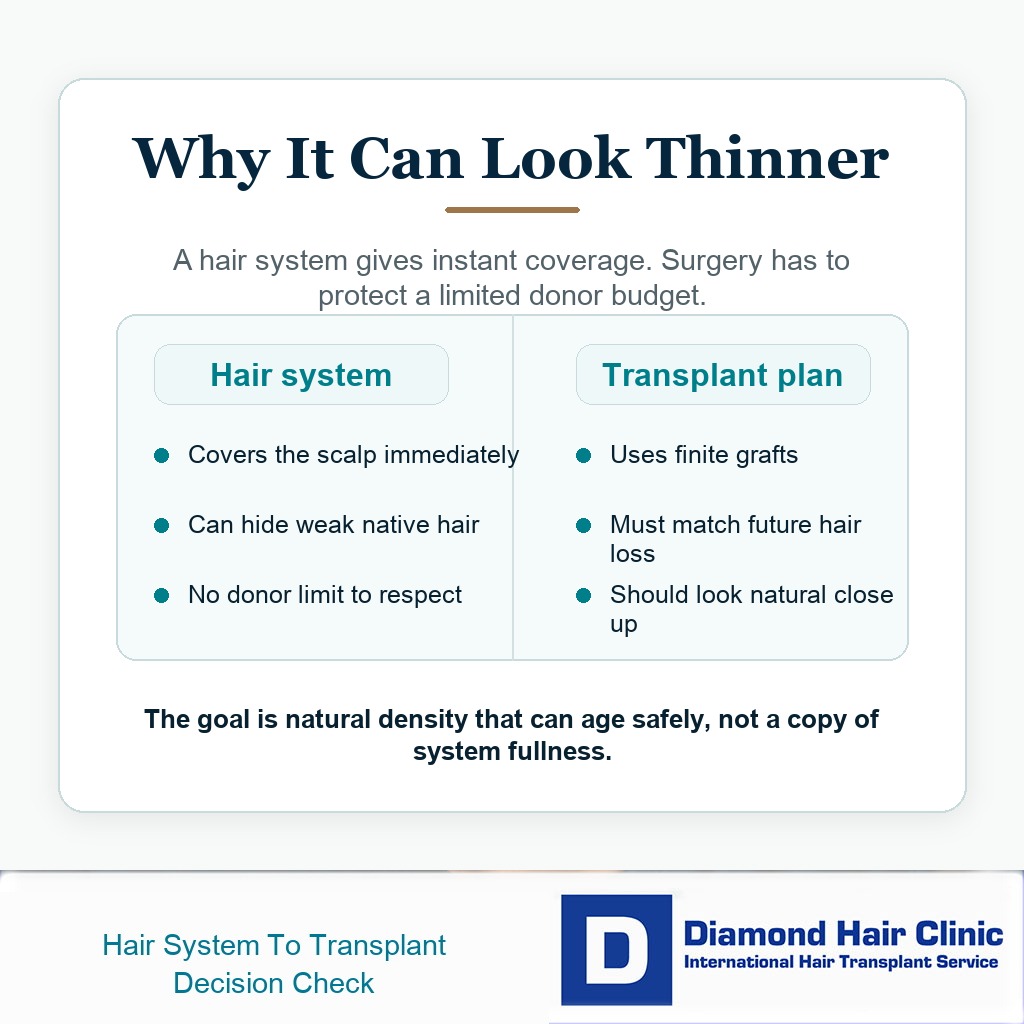
Checks before switching from a hair system to surgery
The first check is not the hairline. It is whether you are a good candidate for a hair transplant without the system covering the true pattern of loss. I need to see the scalp, the donor area, the crown, the sides, the hair caliber, and the degree of miniaturization. If the system has been worn constantly, the real situation can be different from what casual photos show. This is similar to evaluating hair fibers before hair transplant planning. The camouflage must come off before the baseline is judged.
Bring one photo with the system as you normally wear it and several photos without it on a clean scalp. The system photo shows the density and front edge your eye is used to, while the clean scalp photos show what surgery can safely plan from.
Remove adhesive early enough that the scalp can be cleaned without harsh rubbing on consultation day. Red skin from tape or glue can make the exam less reliable than a clean scalp that has had time to settle.
I also ask what result you are emotionally comparing the transplant against. Some men say they want a natural transplant, but in their mind they still expect the density, fixed styling, and sharp front edge of the system. That difference has to be discussed plainly. If you will only feel satisfied with the fullness of the system, surgery may disappoint you even when the technical result is acceptable.
During consultation, I separate medical suitability, the long-term value of surgery, and the result you would accept after years of wearing a system. Surgery can be possible without being the best choice for your donor reserve or expectations. Confusing those decisions can lead to regret.
You may want to leave tape, glue, and repeated cleaning behind, or spend less time hiding the front edge each morning. A transplant cannot promise an end to every styling task. I want the expected hairstyle and daily upkeep to be as clear as the density target.
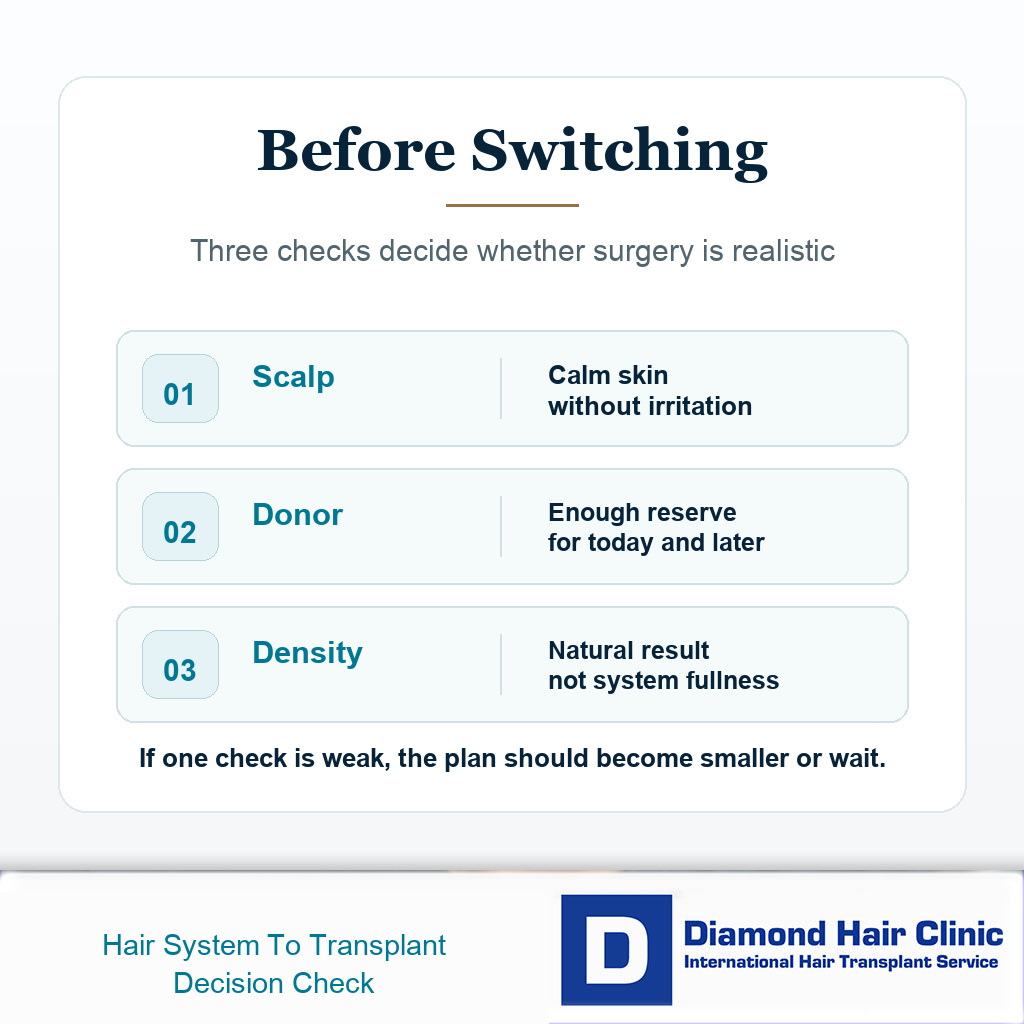
The scalp under a hair system can change the plan
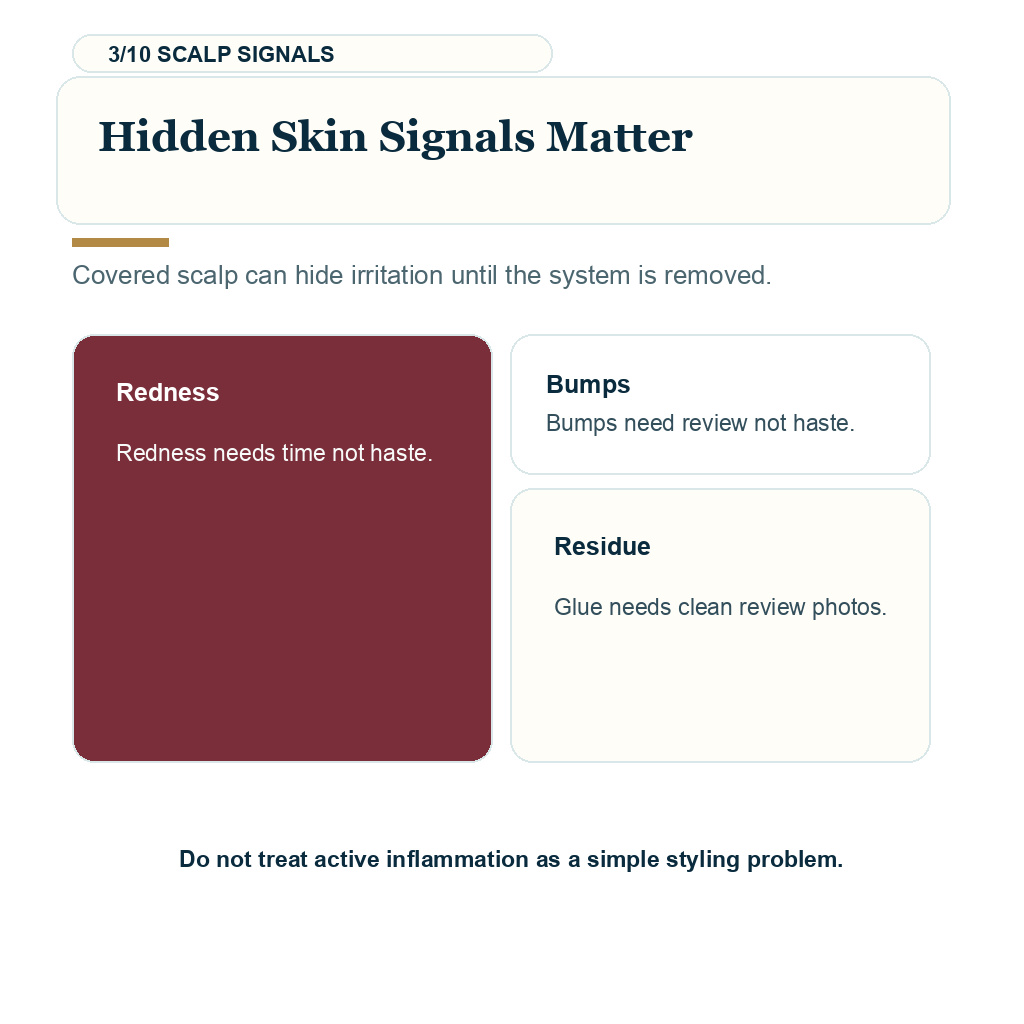
The scalp under a system may be healthy, but it must be checked directly. Adhesive, tape, sweat, repeated removal, scratching, poor ventilation, or irritation can leave redness, scaling, folliculitis, or sensitive skin. A transplant should not be planned over an irritated scalp as if nothing is happening.
Many system users have healthy skin. The question is whether this patient’s skin is quiet, or still reacting to glue, tape, solvents, pulling, sweat, or scratching. If there is active inflammation or poor scalp hygiene, I usually treat the scalp first and delay surgery until the surface is quiet enough for safe incisions and recovery.
The existing system also affects recovery planning. I cover this in my article about whether you can wear a hair system after a hair transplant, because the early healing period is not only about graft security. It is also about pressure, friction, sweating, adhesive exposure, and repeated removal.
What I need to see after the system comes off?
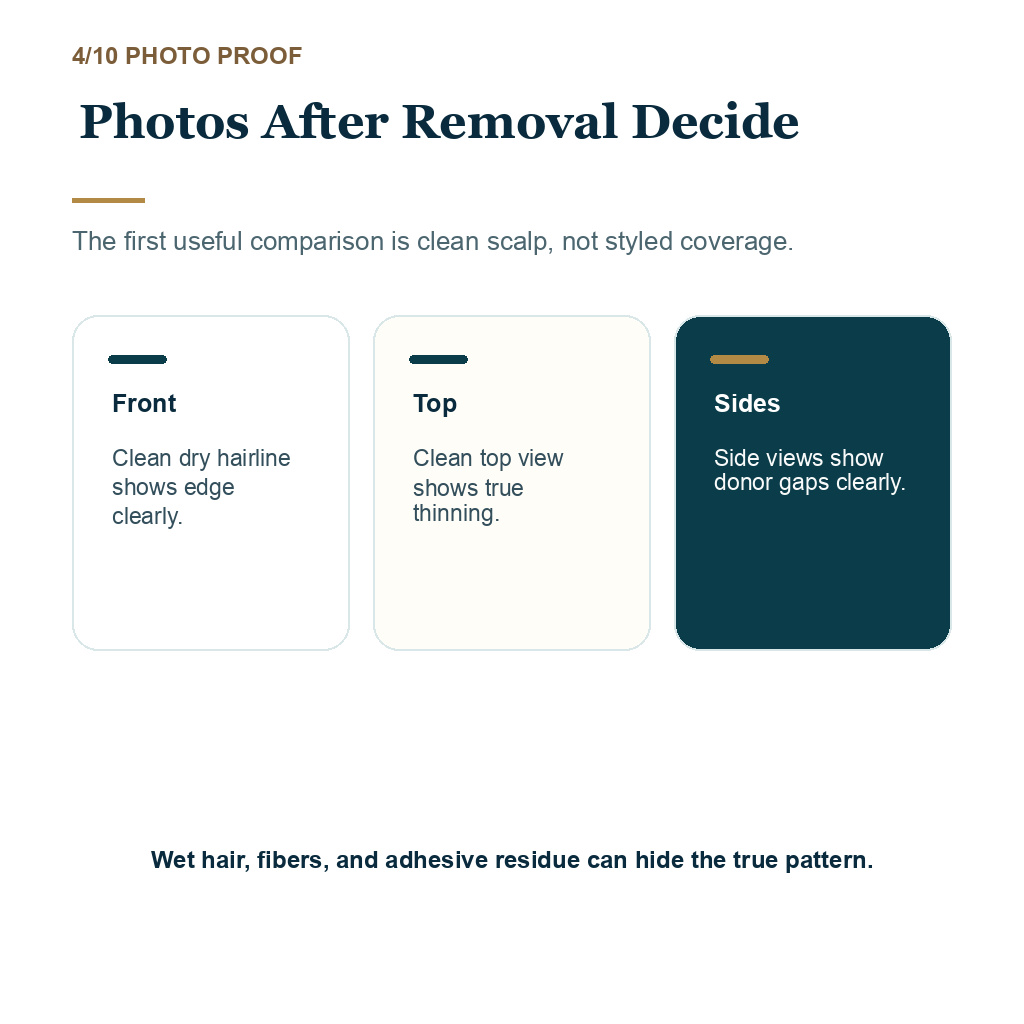
This case cannot be judged while the system is still shaping the story. I need photos without the system, the real hairline, the crown, the midscalp, the attachment zones, and the skin that has been under tape, glue, clips, sweat, and cleaning products.
The scalp has to be calm enough for surgery planning. Redness, scaling, folliculitis, tenderness, broken hairs, traction marks, or irritation can change the timing. If the patient has been hiding severe thinning for years, I also need to reset the density expectation before any graft number is discussed.
Only after that do I connect the case to donor reserve and hairline design. Wearing a system is not the problem. The danger is replacing one maintenance problem with a surgery that cannot meet the same visual standard safely.
Scalp health must be ready before surgery
A fixed number of days is not enough. I need to see a clean scalp without adhesive residue, fresh pulling marks, active redness, open areas, folliculitis, or heavy scaling. Removing the system aggressively the night before surgery and arriving with irritated skin can create a problem that was avoidable. Removing the system briefly for one photo can still leave adhesive or redness hiding the real baseline.
For consultation, the system should be removed long enough for the real hair loss pattern and the skin to be examined properly. For surgery, the scalp should be calm enough that the incisions are being made in healthy skin, not in skin reacting to glue, tape, sweat, scratching, or removal solvents.
If privacy or work pressure is the reason the system is worn every day, this has to be planned before the operation. You may need time off work after a hair transplant, a temporary styling plan, or a decision to delay surgery until the transition can be handled safely. The system should not force the surgical timing.
Donor supply sets the realistic density
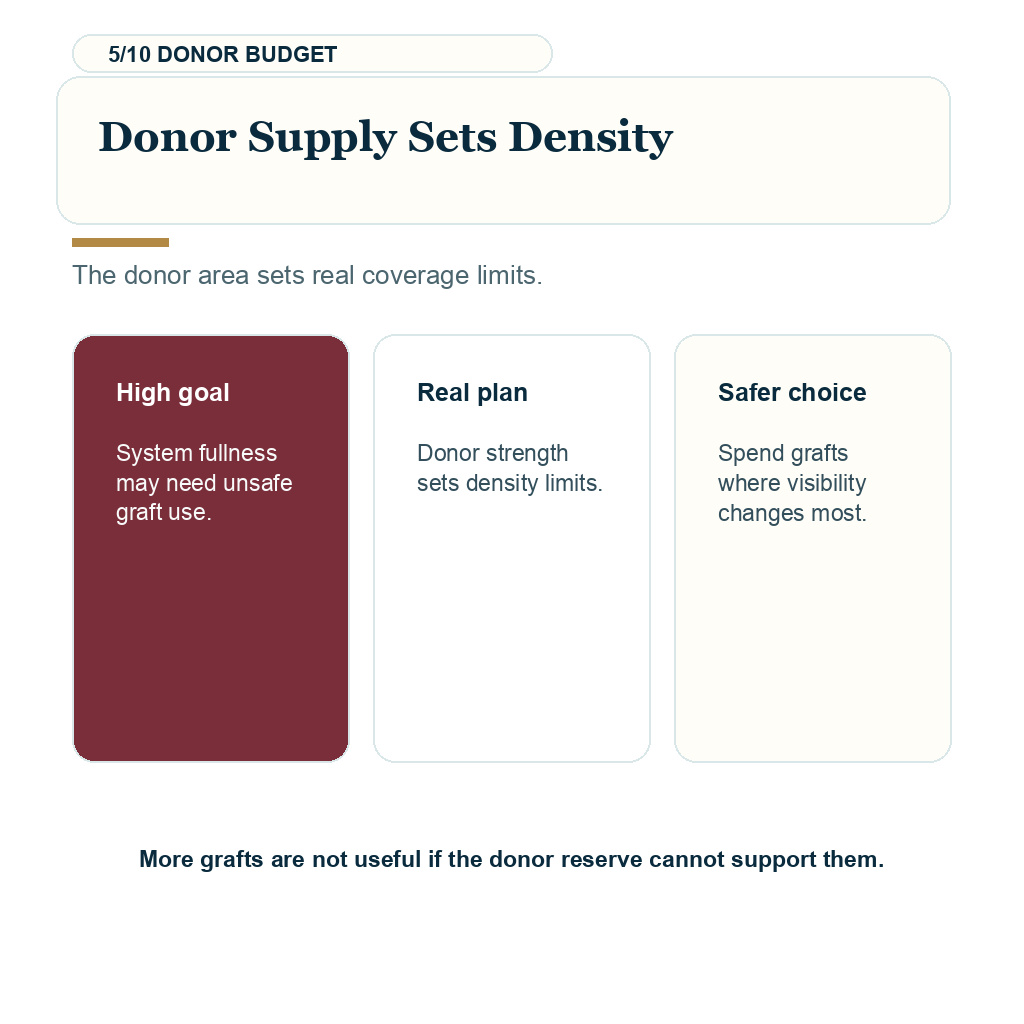
The donor area decides the real limit of the plan. If you have a strong donor area, thick hair caliber, a limited recipient area, and stable hair loss, a transplant may give a satisfying natural result. If the donor is weak, the bald area is large, or the crown also needs coverage, the plan becomes more careful.
Here, many system users need a very direct conversation. A system can hide a large area without using donor grafts. Surgery cannot. Once grafts are moved, they are spent from the donor reserve. If too many grafts are used trying to imitate system density, you may end with thin coverage on top and a depleted donor area behind.
I explain donor reserve before I explain the hairline. A person who understands donor limits is less likely to be impressed by a clinic promising a very large number without explaining what remains for the future.
A system user should also read the decision through lifetime planning. This is not only about what can be done this year. It is how many hair transplant grafts can safely be used over a lifetime and whether the first operation leaves enough reserve for future hair loss.
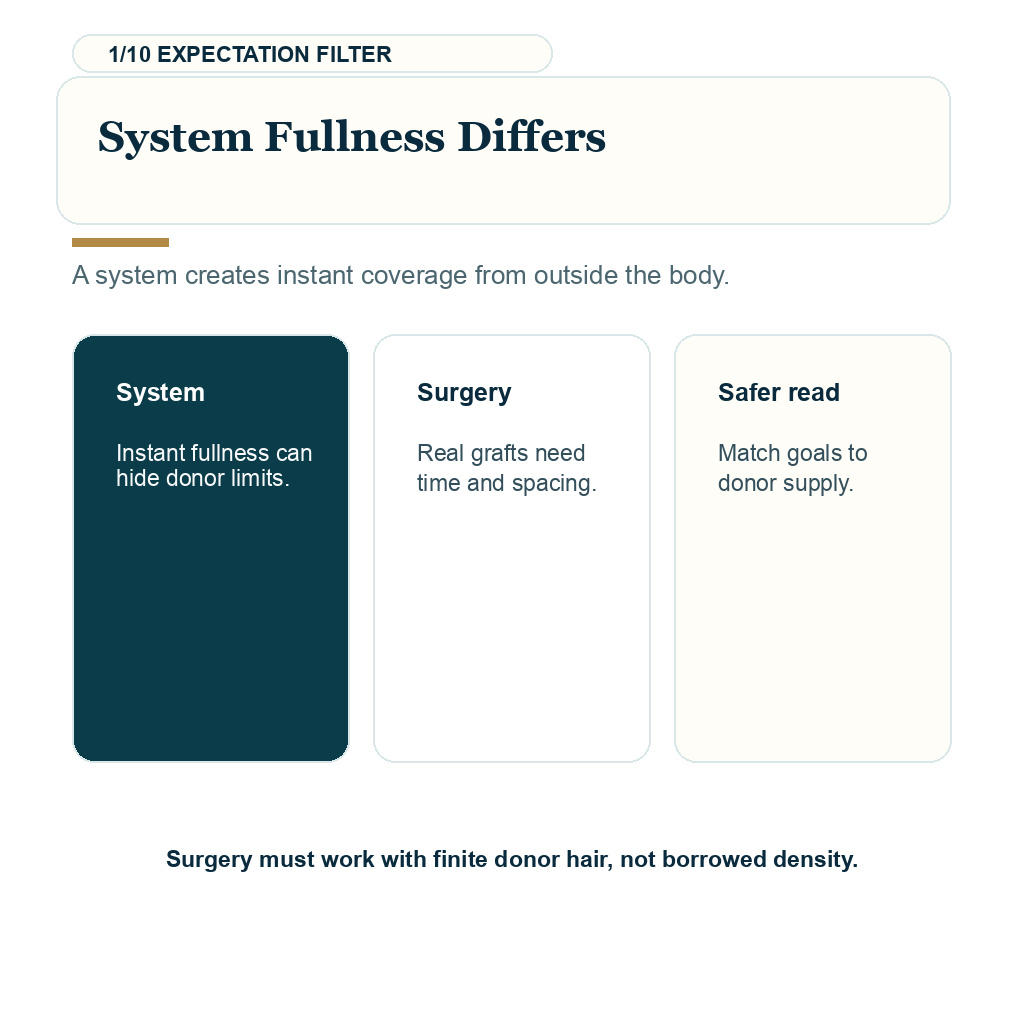
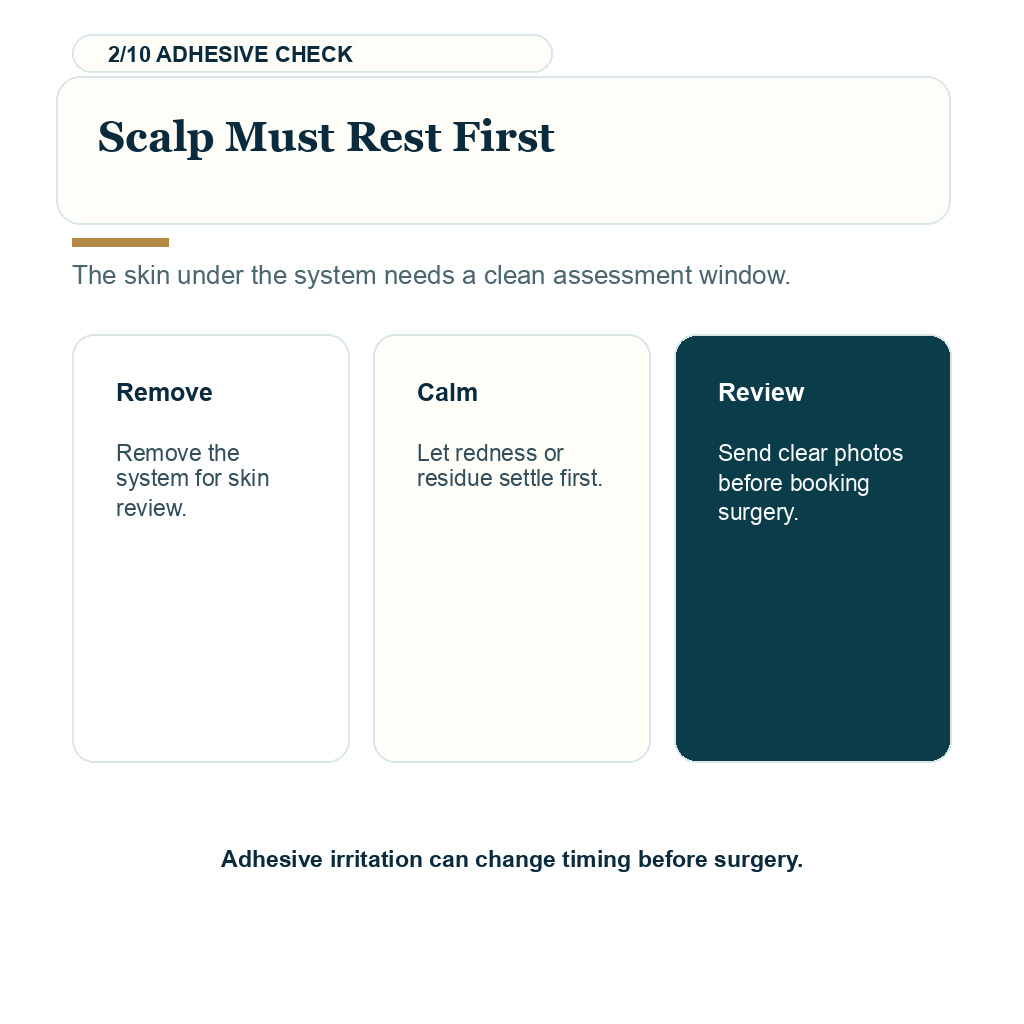
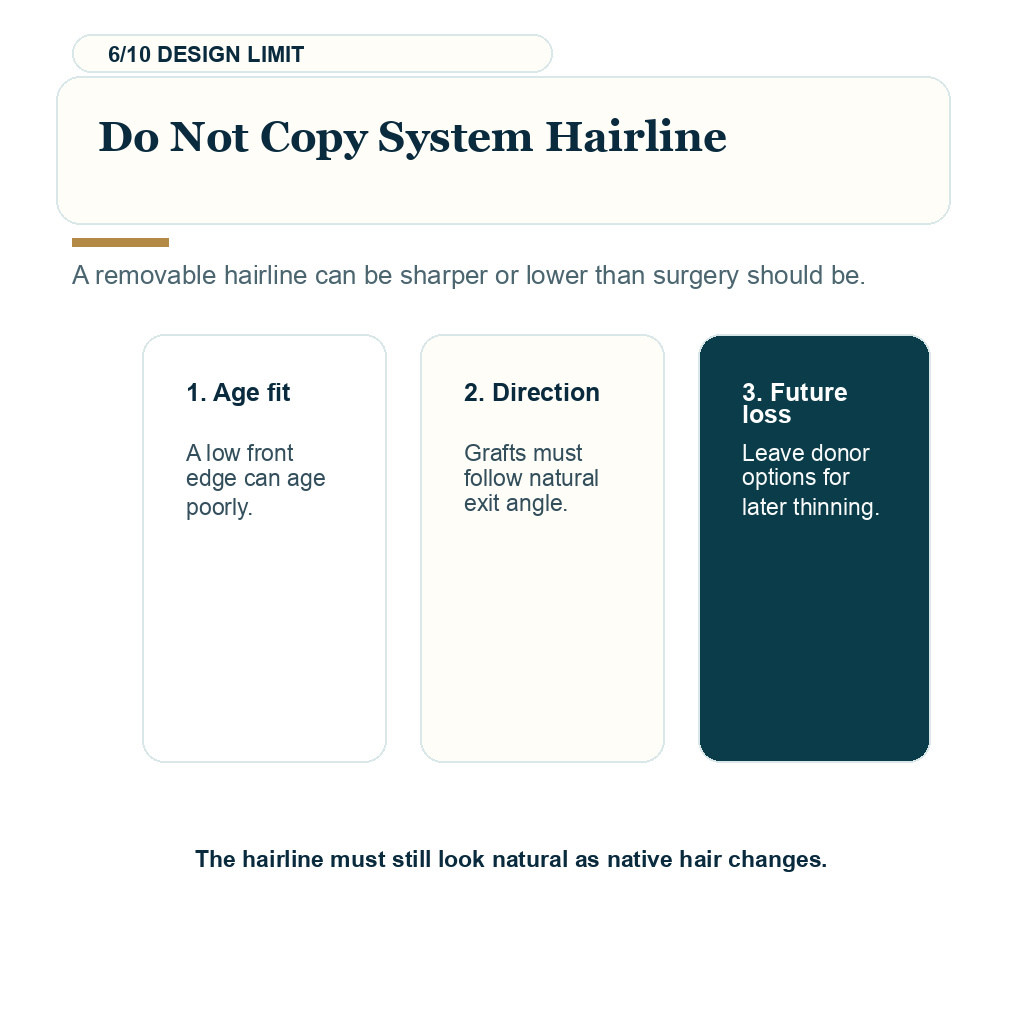
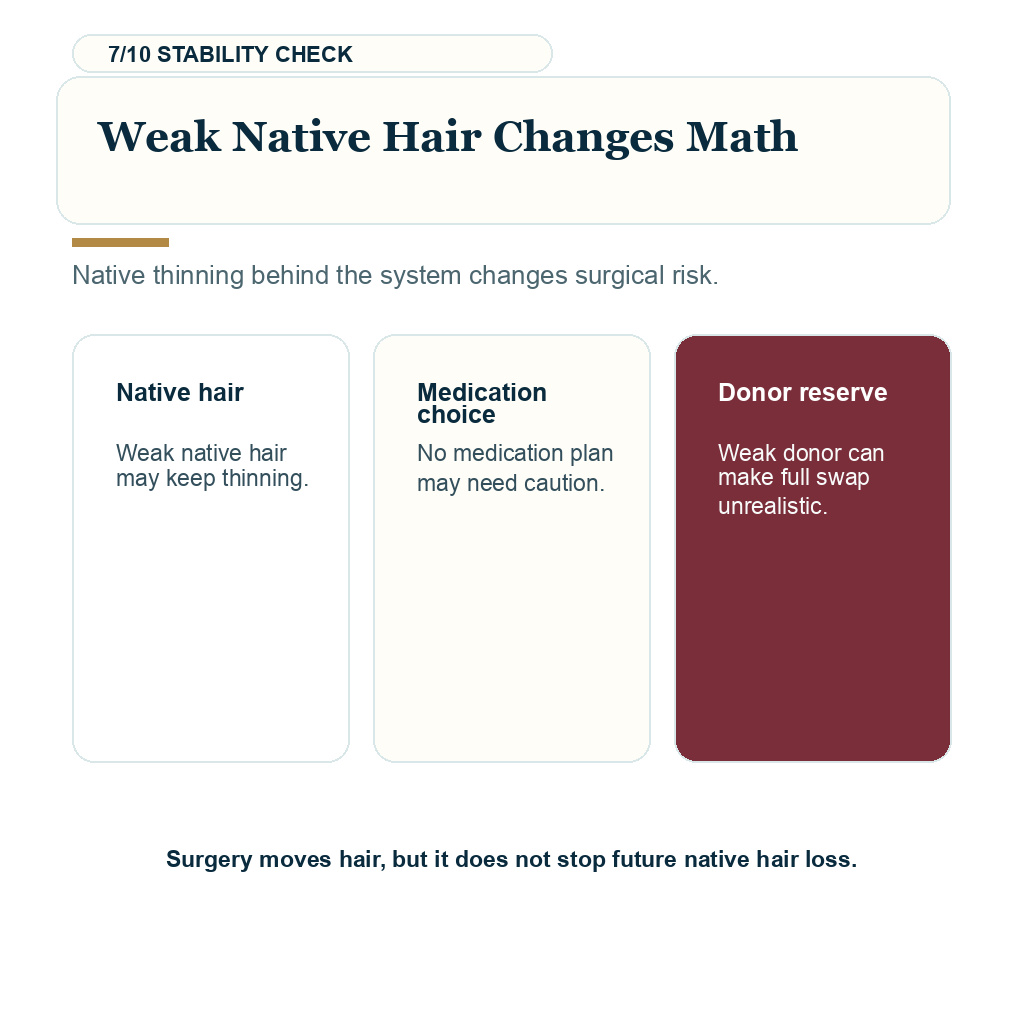
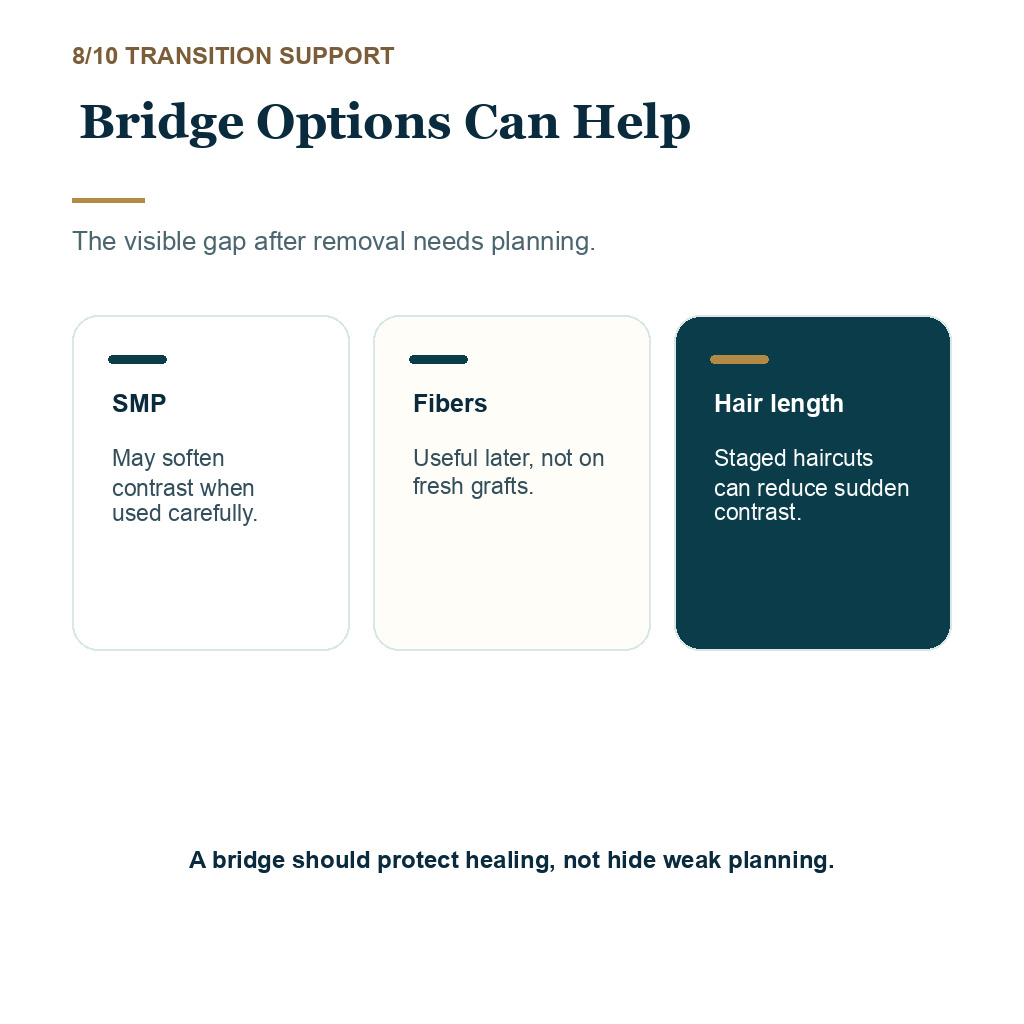
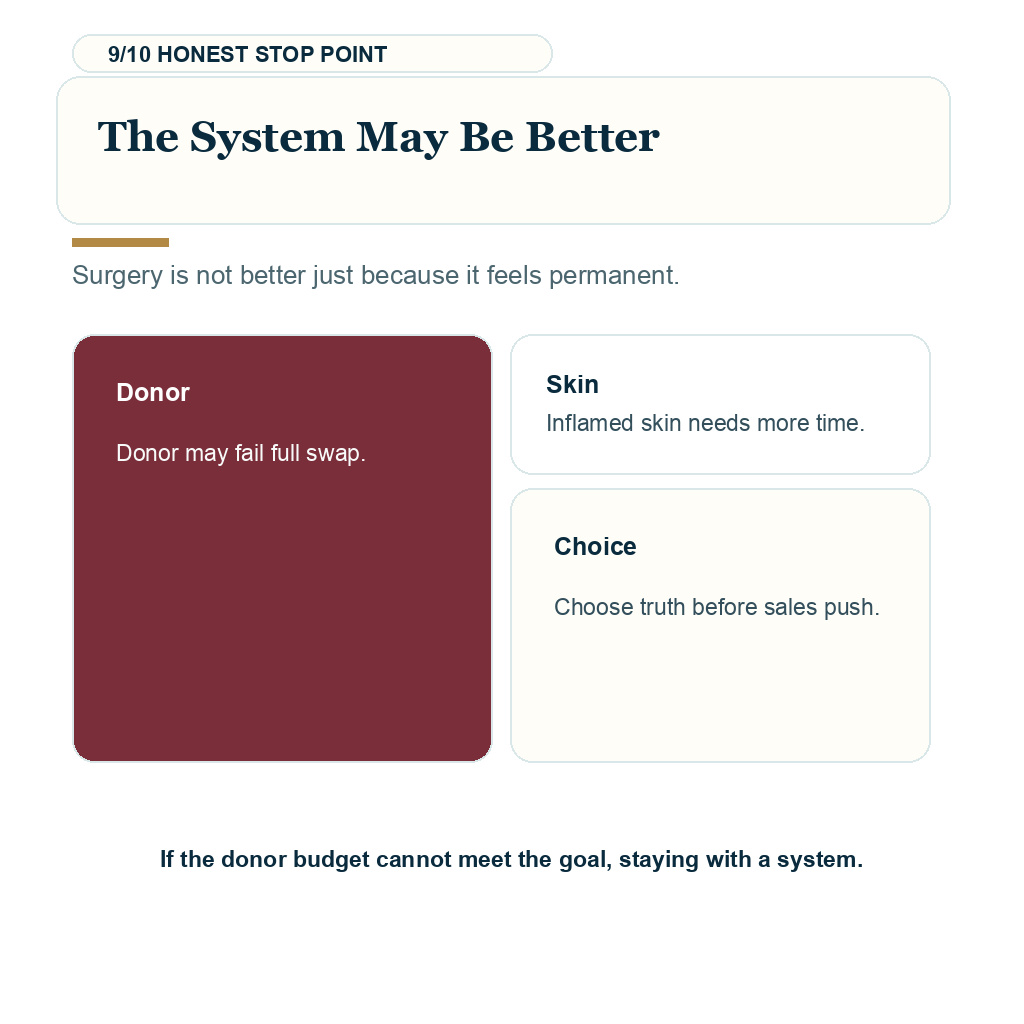
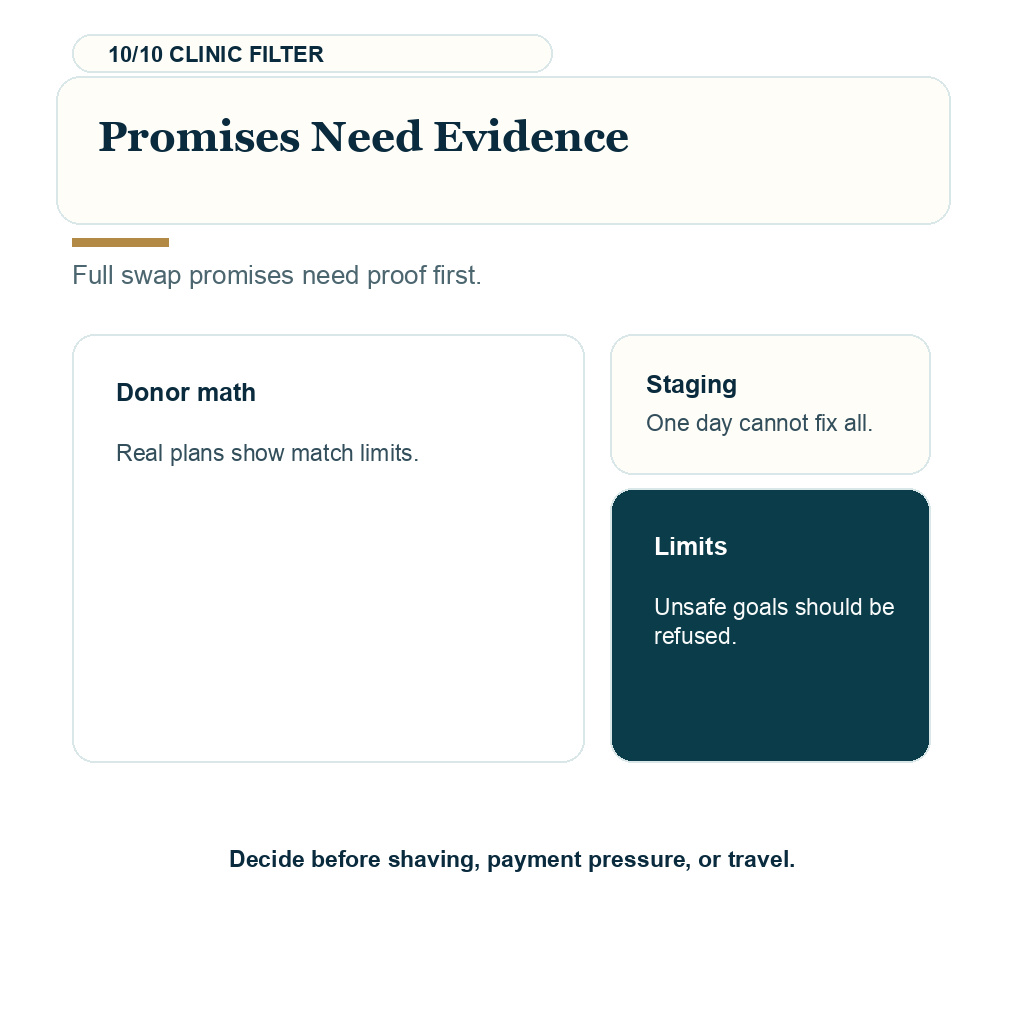
Use the 10 hair system transition slides below to separate system level fullness, adhesive rest, hidden scalp signals, clean photos, donor supply, hairline design, weak native hair, bridge options, stop points, and promise checks. Swipe sideways, use the arrows, or choose a number below the image.
The transplanted hairline should not simply copy the hair system
A hair system can create a low, dense, sharp, or highly styled hairline that may not be wise to copy surgically. Real hairline design has to respect age, forehead proportion, temple shape, future loss, graft direction, and donor supply. If I draw the transplanted hairline too low just to match the old system, it may look better for a short period and worse as you age.
Naturalness comes from careful planning in the right places. A slightly higher, softer, more mature hairline may be the better surgical plan, even if it feels less dramatic on the day of design. The front must also blend with the density behind it. A visually dense front with a weak middle scalp or crown can look artificial in a different way.
If you plan to keep a hair system behind a transplanted frontal frame, say that clearly before surgery. A natural exposed hairline, temple point support, and a front edge that must blend into a system are different surgical goals. The donor budget, the system edge, and future native hair loss have to be planned together before grafts are spent.
For patients moving away from a system, hairline design in hair transplant matters as much as density. I am not only replacing a front edge. I am designing a living hairline that has to look natural under daylight, wet hair, short hair, future thinning, and ordinary movement.
Weak donor or native hair can change the decision
If donor reserve is weak, surgery may still be possible, but the target has to become smaller. You may need a modest frontal frame instead of full coverage. The crown may need to wait. Dense packing may be unwise. In some cases, the most responsible answer is not to operate.
This is difficult after wearing a system because you already know what full coverage feels like. But surgery has to protect the future. A person with a weak donor area should not be pushed into a large session just because the system created a visual standard that real donor hair cannot support.
Diffuse thinning needs even more attention. If the hair is thin across the scalp and there is still a lot of weak native hair between the planned grafts, surgery can be technically possible but strategically delicate. A diffuse thinning hair transplant needs diagnosis, stability, and a clear reason to operate instead of relying first on medical treatment or waiting.
The plan may need to work without finasteride
Many people who wear systems are already trying to avoid medication, or they have tried medication and stopped. I respect that. The surgical plan still has to respect the choice. A transplant does not stop native hair from thinning. If you cannot use finasteride or choose not to, I usually plan with more caution, not more aggression.
Transplanted donor hair can grow without finasteride. The harder question is what happens to the remaining native hair around and behind the transplant. If that hair continues to thin, the transplanted part may become exposed over time, and you may return to the same problem that led you to a system.
For that reason, understand what it means to have a hair transplant without finasteride. The plan may need a more careful hairline, a smaller area, staged surgery, or acceptance that a system, fibers, SMP, or medication alternatives may still play a role.
Scalp micropigmentation or fibers may bridge the gap
Sometimes they can help, but they should not be used to hide a weak diagnosis. Scalp micropigmentation can reduce scalp contrast when there is enough hair to blend with it. Hair fibers can help some people during styling. Both are camouflage tools. They do not create new donor grafts, correct a poor hairline, or fix an unstable hair loss pattern.
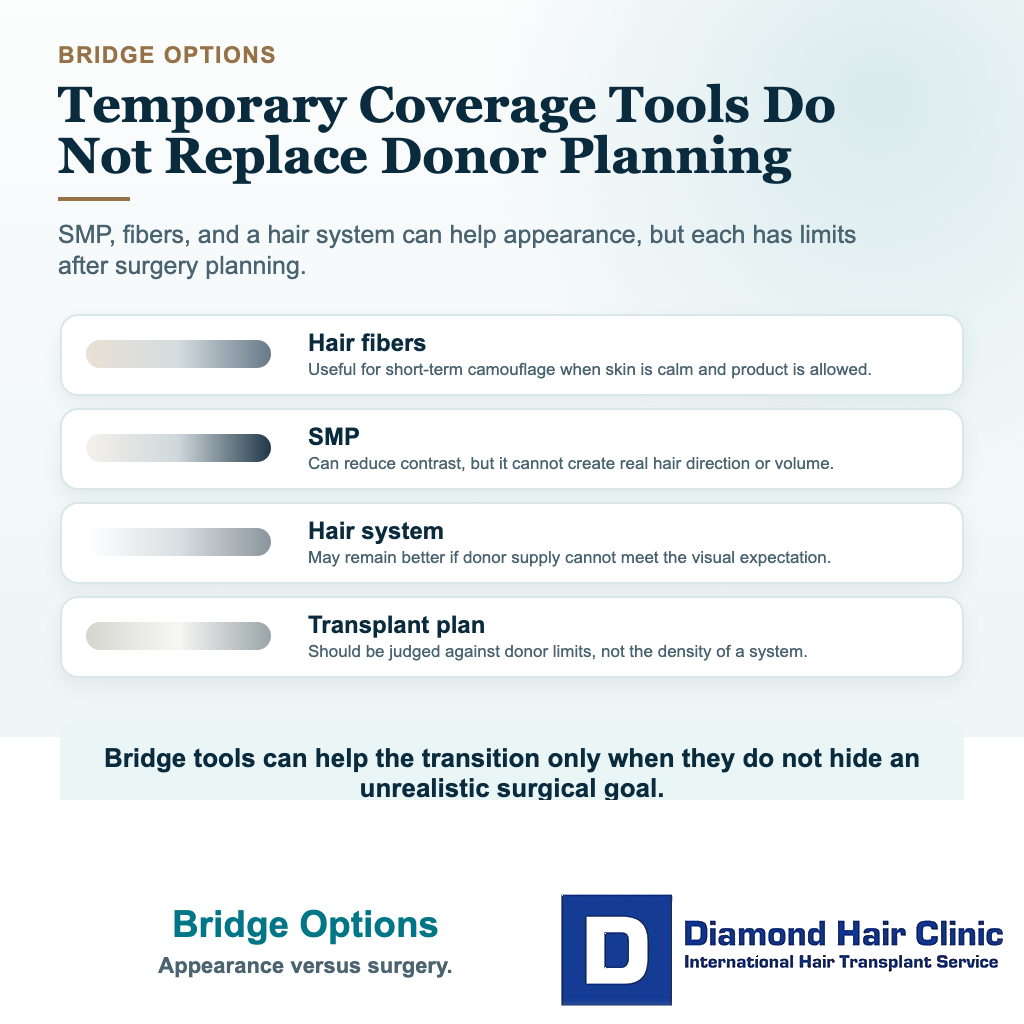
For someone leaving a system, camouflage can be useful because the visual drop in density may feel large. But it has to be planned carefully. SMP placed too early, too dark, or across an immature transplant can make regret worse. Fibers used over irritated skin or during early healing can also create problems if they interfere with washing, scalp inspection, or clinic instructions.
I judge camouflage by whether it supports a sound plan. If the transplant is mature and still slightly see through, scalp micropigmentation for a thin hair transplant may help carefully chosen patients. If the transplant is weak because the plan was wrong, pigment only darkens the background while the real problem remains.
Staying with a hair system can be the better choice
Staying with a system may be the better choice when the donor supply is too limited, the desired density is very high across a large bald area, the crown and front both need major coverage, the hair loss is still unstable, or the softer surgical result would not feel acceptable. There is no shame in that. The wrong surgery is worse than a well managed non-surgical option.
A system may also be better when immediate full coverage is essential for work, public life, or personal privacy and the waiting period after surgery is not realistic. A transplant has an ugly duckling phase. It has shedding. It has months where you may look worse before you look better. A system avoids much of that, although it brings maintenance, attachment, cost, and scalp hygiene responsibilities.
My concern is not whether one option is superior in every case. My concern is whether you understand the tradeoff. Surgery can give real growing hair and a natural hairline, but it is limited by biology. A system can give instant density, but it remains an external solution that needs ongoing maintenance.
Promises of full replacement density need scrutiny
If a clinic tells you that surgery can easily replace the same fullness as your system, slow the conversation down. The clinic should examine the scalp without the system, check donor density and caliber, assess future hair loss, discuss medication tolerance, and explain how much visual density is realistic. A promise made from styled photos or quick messages is not enough.
The graft number also needs context. Four thousand grafts, five thousand grafts, or another large number may sound reassuring, but the useful questions are where those grafts will be taken from, how evenly the donor will be preserved, what area will receive them, and what will be saved for future loss. The number should serve the plan. It should not replace the plan.
If you are worried about regret, read the clinic promise against long-term peace of mind. A rushed decision can lead to the same emotional place described in hair transplant regret after surgery. Regret is harder when someone abandons a system expecting instant freedom and then realizes the surgical result was always going to be more modest.
See the scalp before leaving the system behind
Do not remove the system permanently until the real scalp has been examined and the surgical limits are clear. Photos without the system, donor review, medication history, and realistic density discussion should come before a commitment.
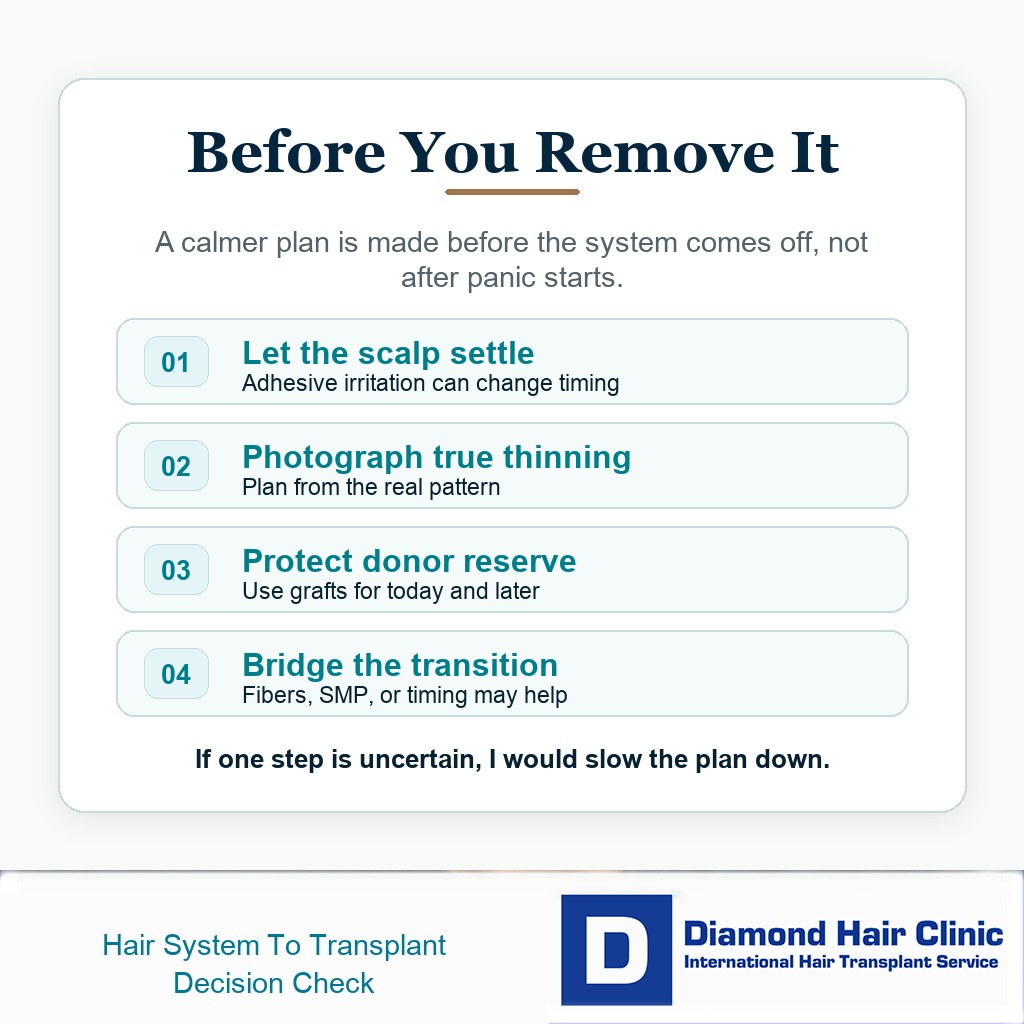
The best outcome after a hair system is not always a full replacement of the system. Sometimes the realistic plan is a transplanted frontal frame, a staged approach, transplant plus camouflage, or staying with the system because the donor area cannot support the requested density.
I plan this transition around biology as much as emotion. The result should look natural and stable without chasing system density or spending grafts that cannot be taken back.

Read this review excerpt
Upon arriving home, I sent 4 photos (of each side of head) after every washing process to doctor for checking where I was given personal advice for how to take care of my healing head.