


Summer or Winter Hair Transplant Timing
The season itself is not what protects the transplant. A hair transplant can be performed in summer, winter, spring, or autumn. The right timing is the one that lets you protect the scalp during the first 10 to 14 days, keep the next few weeks controlled, and avoid turning recovery into travel, work, sun, sweat, or social pressure.
Summer can work well if you can take proper time off, stay cool indoors, and avoid holiday habits, but planning the beach after a hair transplant needs more caution than simply choosing a warm season. Winter may make sun, swimming, and outdoor pressure easier to avoid, but it can still bring dry heated rooms, tight beanies, coughs or flu, and rushed travel in bad weather.
Choose the month by your recovery calendar, not by the weather headline or season label. A cool month with rushed work or social pressure can be harder than a warm month where you can stay indoors and avoid sweat, sun, and swimming.
Write down what that season will tempt you to do. A hot month with quiet indoor rest can be easier than a cool month with rushed work, tight hats, and crowded travel.
Traveling for surgery means the season is not only about weather. Rain after a hair transplant, airport transfers, hotel stay, work, privacy, family obligations, and the return flight can all change how easy the first days feel.
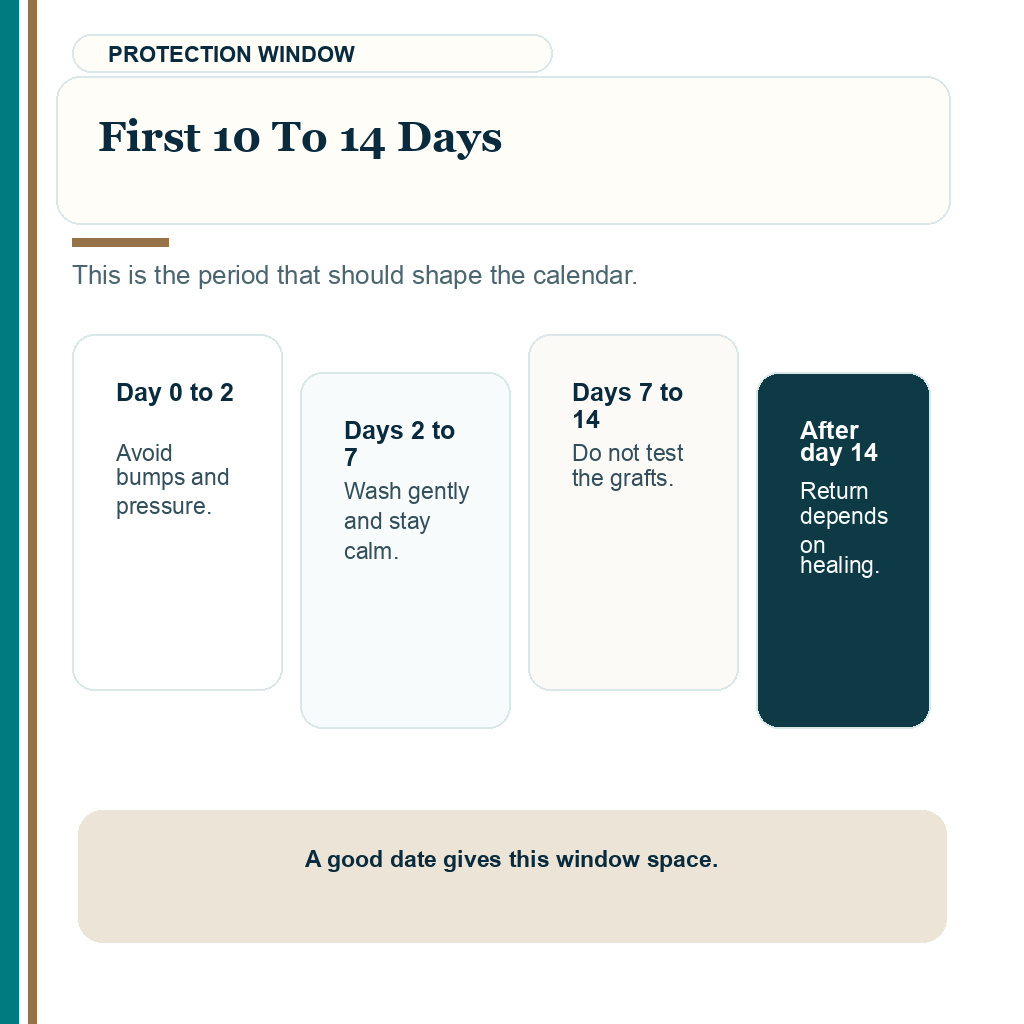
In my own approach, the first 10 to 14 days are the main protection period. I treat the first 3 to 4 weeks as controlled healing, before normal routines return too freely. A good surgery date is the date that makes careful recovery realistic. That broader recovery rhythm is the reason hair transplant aftercare should guide the calendar, not just the weather.
There is no single best season
There is no calendar month that fixes weak surgery or weak aftercare. A careful person can recover well in August. A careless person can make January difficult.
Convenience matters, but I judge it against the real routine, including work, travel pressure, outdoor exposure, privacy, headwear, family duties, and whether the first two weeks can stay protected.
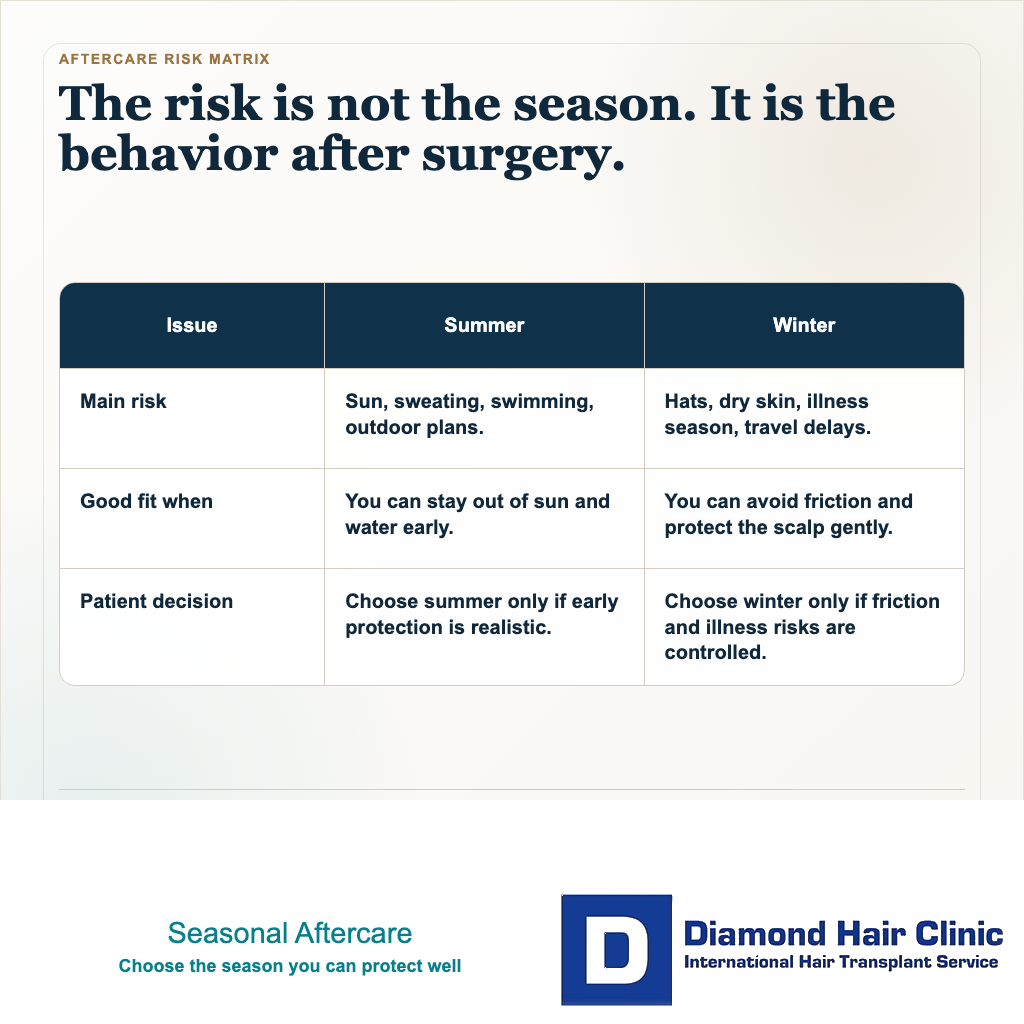
I avoid ranking months in isolation because the calendar does not decide the result. Surgical quality, donor management, recipient area planning, graft handling, and aftercare discipline matter much more than whether the surgery happens in June or January.
A transplant done in the season that looks ideal can still disappoint if the planning is weak. A carefully planned transplant done in a less convenient season can still heal well when the first days are protected properly.
Recovery has to fit real life
This question matters because the season changes real life. Privacy, work, travel, sunlight, sweating, sleeping, washing, hats, exercise, holidays, and the need to explain visible healing all affect recovery.
I hear it most often when someone is trying to fit surgery into annual leave, a school break, a work gap, or a holiday plan. The real fear is usually whether the season will make it easier to break the aftercare rules without meaning to.
I do not answer only by naming a month. I first ask whether the person can create a protected recovery window. If that answer is yes, the season becomes much less important.
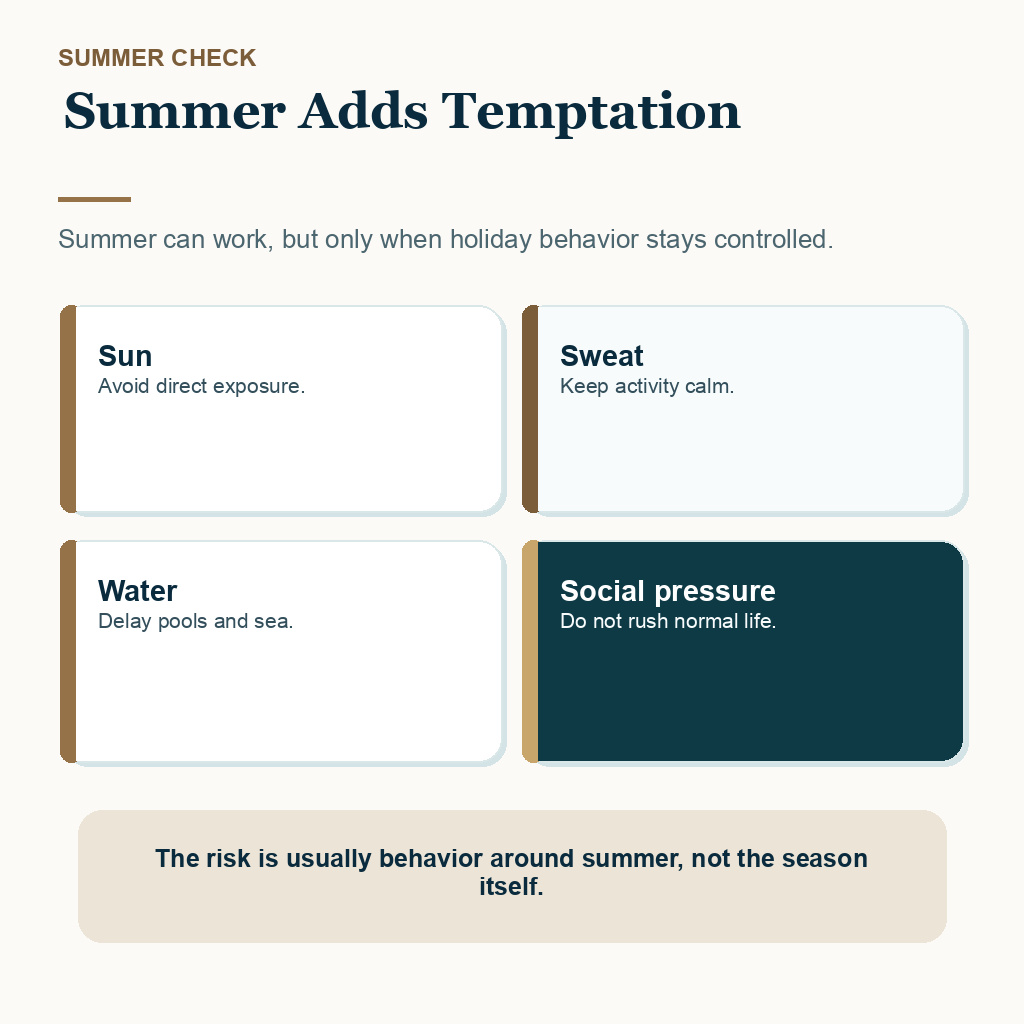
Summer adds more temptation, not different biology
Summer creates obvious temptations and obvious anxieties. Strong sun, heat, sweating, beach holidays, swimming pools, the sea, outdoor activities, caps, travel, and social life can all make the scalp feel ready before it is.
That does not mean summer changes the biology of graft healing. It means summer gives more chances to make poor aftercare decisions.
The danger is when warm weather makes a healing scalp feel normal too early. Sunscreen timing after a hair transplant does not remove the early need for shade and controlled exposure, and a healing scalp does not benefit from repeated sweating, seawater, pool chemicals, sand, sauna heat, or impulsive summer activity.
For that reason, my aftercare rules stay conservative. I want special protection from strong direct sun for at least the first month, continued respect for prolonged sun for about 2 to 3 months, and no swimming pools, sea, hot tubs, saunas, or steam rooms during the first 3 months.
Summer itself is not the issue. Recovery becomes risky when it turns casual too early.
Summer can work when aftercare stays controlled
For some people, summer is a practical time for surgery because annual leave, school breaks, or a quiet work period are easier to arrange.
Summer is not forbidden. It simply needs a more realistic recovery plan.
If surgery is planned as indoor recovery, the first 10 to 14 days stay protected, the first 3 to 4 weeks stay controlled, strong sun is respected, the beach is avoided early, swimming is not negotiated, and exercise limits are followed, summer can work well.
If the plan is really a beach holiday with surgery attached, the answer changes. Long sun exposure, outdoor sport, swimming, alcohol, late nights, and social pressure make summer much less forgiving.
Summer convenience must not become summer carelessness. The season can work when the environment is controlled. It becomes risky when the same summer routine continues and the scalp is expected to tolerate it.
If summer is your only window, plan the environment
If summer is the only time you can take proper leave, I would not reject the season automatically. I would make the plan more reliable.
Before surgery, think about where you will spend the first two weeks, whether the room is cool enough, how you will travel, whether your job or family plans will force you outdoors, and whether you can avoid beach activity without constantly negotiating with yourself.
If you sweat easily, work outdoors, commute in heavy heat, or need to wear a cap for long periods, summer needs more planning. For sweating after a hair transplant, the concern is not sweat alone. It is heat, rubbing, wiping, pressure, poor hygiene, and irritation happening together.
A person who plans shade, rest, gentle washing, simple travel, and quiet indoor recovery usually does well. Someone who assumes surgery can fit inside the same summer routine is the one I worry about.
Day 10 to day 20 can create false confidence
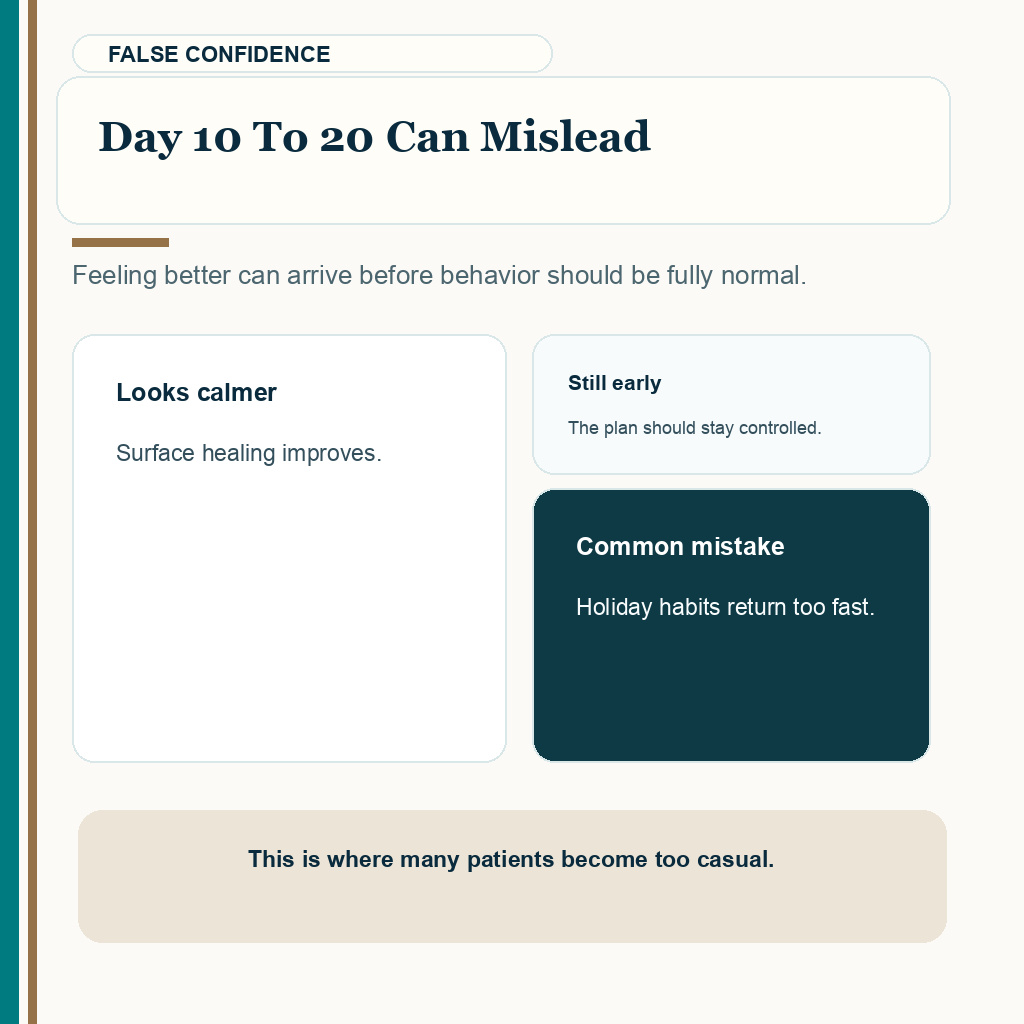
Many patients become too relaxed around day 10 to day 20. The earliest days look clearly postoperative, so the patient naturally behaves carefully, but the scalp can look calmer before it is ready for normal summer life.
Around day 10 to day 20, crusts are reduced or gone, swelling has improved, and social anxiety decreases. The gym, a short trip, a beach plan, a hat, or a casual day outside can suddenly feel harmless because the scalp looks better.
Looking calmer is not the same as being fully ready. The surface improves faster than the patient’s behavior should, so I still treat the first 10 to 14 days as protected time and the first 3 to 4 weeks as controlled healing, not casual freedom.
Different clinic timelines should not become random choices
Different clinic instructions are common, and they can confuse patients.
One clinic says two weeks for one habit, another says one month, and another sounds relaxed or strict without explaining why. The unsafe part begins when the patient chooses the timeline he likes most rather than the timeline that fits his scalp, work, weather, travel, and aftercare risk.
I use a clear structure rather than a random collection of numbers. I usually begin the first gentle wash on day 2. At Diamond Hair Clinic, I personally go through the washing routine with the patient on the morning of the second day after surgery. I avoid treating the scalp as normal for at least the first 14 days, advise gentle massage to remove crusts on day 12, allow light walking early, keep the first 14 days away from gym or sweaty training, and move back toward controlled low intensity activity only when the scalp looks settled. Swimming pools, the sea, hot tubs, saunas, steam rooms, contact sport, and truly hard training belong much later in the plan, closer to the 3 month review point.
The timing has a clinical reason and a practical reason. A recovery plan is stronger when it is built from clear clinic instructions instead of random opinions.
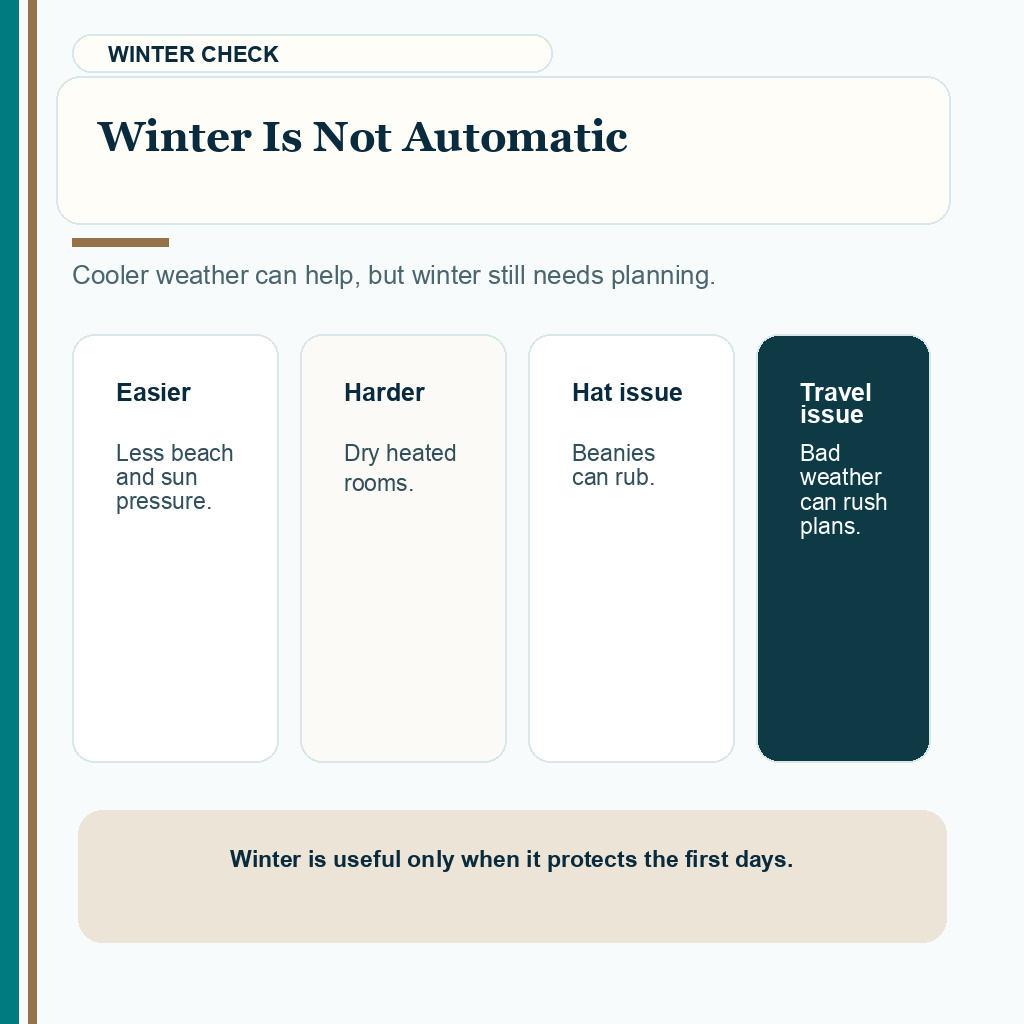
Winter can make good behavior easier
For some people, winter does make recovery easier, but not because it is medically magical.
It is often easier to behave well in winter. There is usually less pressure to stay outdoors for long hours, fewer beach and pool plans, and less temptation to turn recovery into a holiday. Some people also like having several months pass before the more socially active summer season arrives.
Winter still has its own traps. Dry heated rooms can increase itching. Tight beanies can rub the grafted area. Rain, snow, and wind can make people rush, pull hoods down, or keep damp fabric on the scalp. A cold, flu, repeated cough, or fever close to surgery can also change the plan.
I would never tell someone that winter is the safe season and summer is the risky one. That is too crude. Winter helps only when it makes good recovery behavior easier.
Spring and autumn often feel more balanced
Spring and autumn often feel comfortable when a patient has real flexibility.
The weather is often milder, the sun is usually less aggressive than peak summer, and daily life may place less pressure on the patient to swim, sweat heavily, travel in a holiday style, or stay outdoors for long periods.
Even here, I would not turn the season into a rigid rule. A quiet summer with strong discipline can be better than an autumn full of travel, business commitments, family events, and poor recovery habits.
The best season is the one that allows the best behavior after surgery.
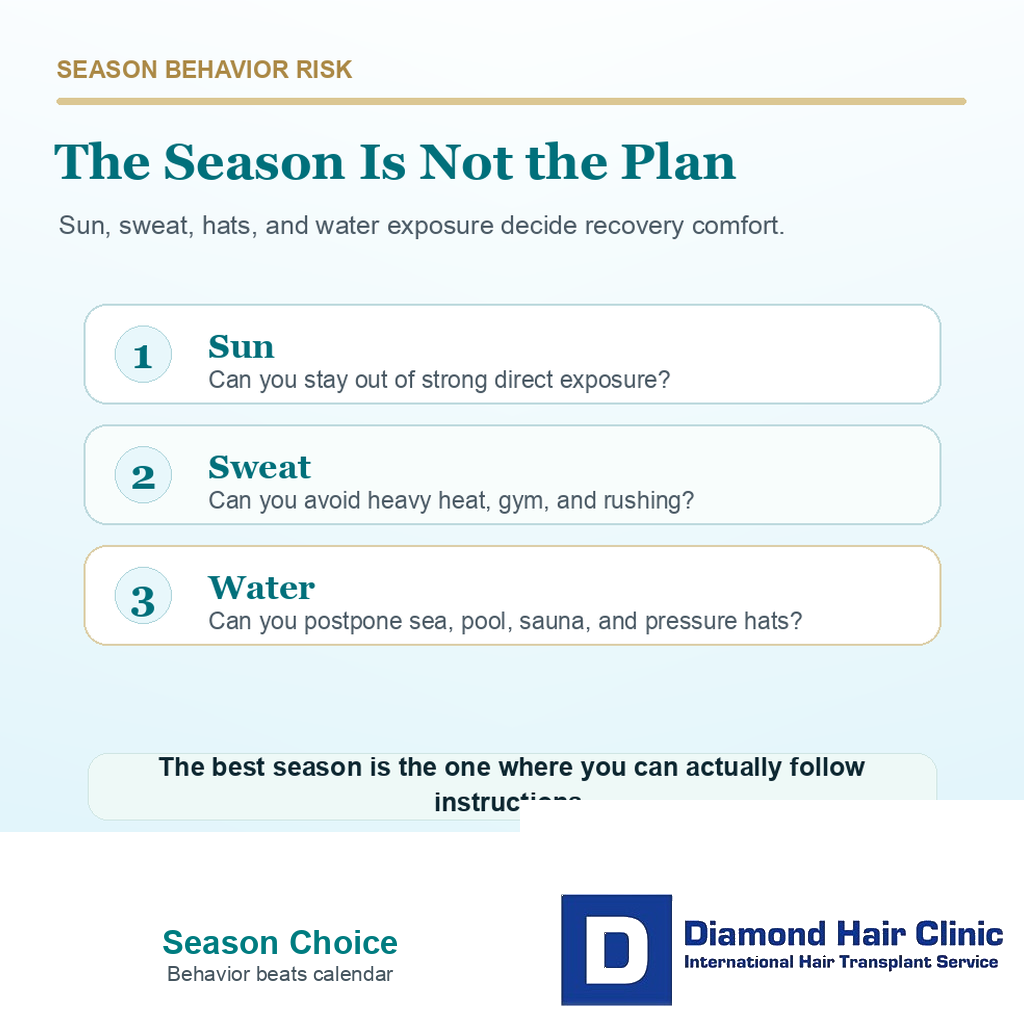
Summer or winter matters less than whether the patient can avoid sun, sweat, pressure, and water exposure during early recovery.
Some plans need another month
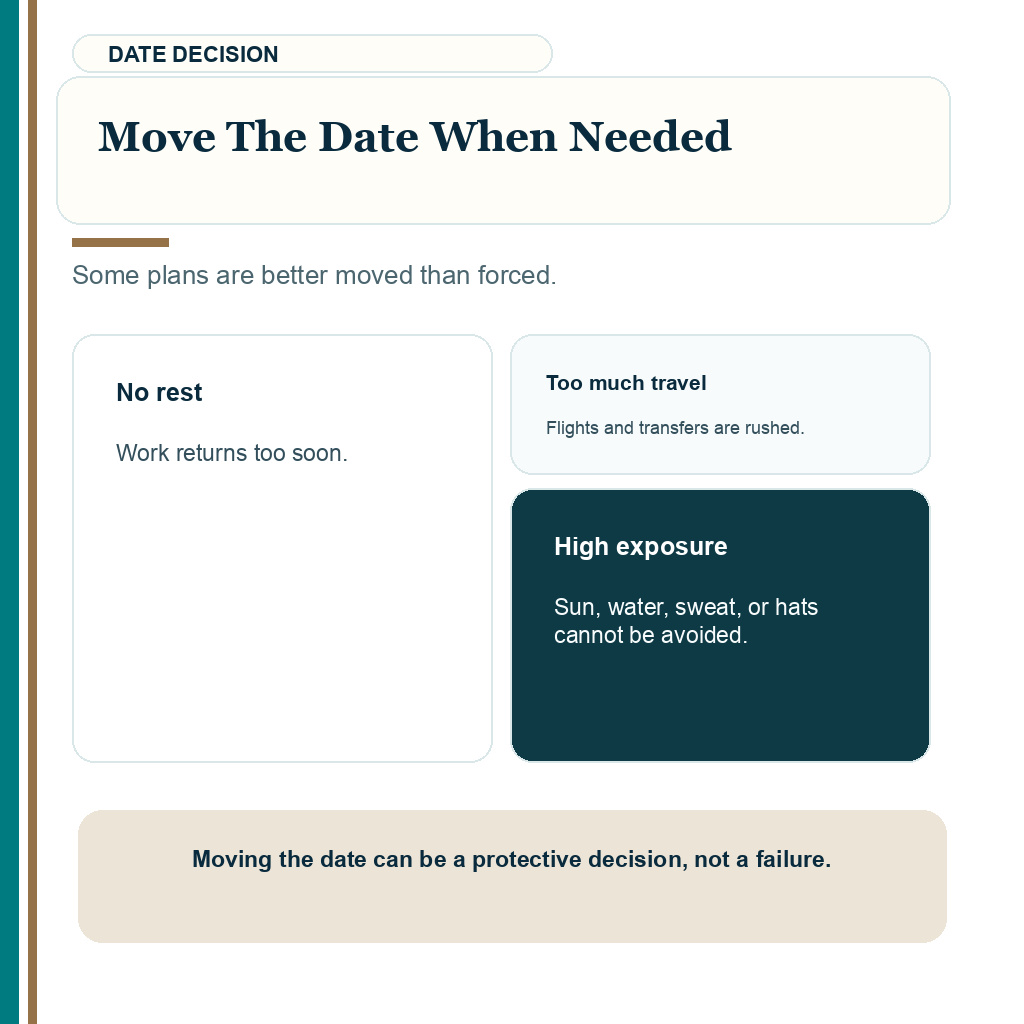
If the only available date forces outdoor work, a beach or pool holiday, a helmet or tight hat, heavy sweating, a long rushed travel route, or no realistic 10 to 14 day protected window, moving the surgery is safer than pretending the season is harmless.
Illness matters too. Active cold, flu, fever, or repeated cough near the surgery date should be reported before travel or surgery. That is not only a winter inconvenience. It can affect comfort, coughing, medication use, and whether the body is ready for an elective procedure.
The better date is not always the earliest date. It is the date that lets the medical plan and the recovery plan work together.
Sun, sweat, and water are pattern risks
Sun, sweat, and water matter because they are persistent, not because every single exposure is dramatic. A single moment of sunlight is not the same as repeated strong sun exposure. A small amount of moisture is not the same as repeated heavy sweating. Looking at the sea is not the same as entering it.
Recovery is often affected more by patterns of carelessness than by one dramatic event. A little heat, a little sweat, one hat adjustment, one towel rub, one long outdoor meal, and one extra walk can combine into a scalp environment that is no longer controlled.
Small repeated temptations can slowly push recovery away from disciplined aftercare.
When weather exposure needs review?
If sun, sweat, water, wind, rain, or cold weather exposure is followed by worsening pain, spreading hot redness, discharge, pus, fever, open skin, fresh bleeding, blistering sunburn, black or grey tissue, or swelling that is getting worse instead of settling, the clinic should review it. The same warning logic applies when judging redness, scabs, and pimples after a hair transplant.
If the exposure was brief and the scalp looks unchanged, do not punish the area with aggressive washing or repeated checking. Return to the planned aftercare, keep the scalp protected, and send photos in steady lighting if you are unsure.
Daily recovery details matter more than the month
Daily recovery details matter more than the calendar. The first wash usually begins on day 2, but normal life does not begin on day 2. Early washing should be gentle, controlled, and protective.
For the first few nights, I advise sleeping with the head elevated at around 45 degrees, or more upright if that is more comfortable, and avoiding direct pressure on the grafted area.
Most patients sleep more upright than usual for the first 2 to 5 nights. I still stay cautious about sleep pressure on the operated areas for roughly the first 10 to 12 days, and a fuller return to normal positions usually feels safer around day 10 to day 14 if healing looks good.
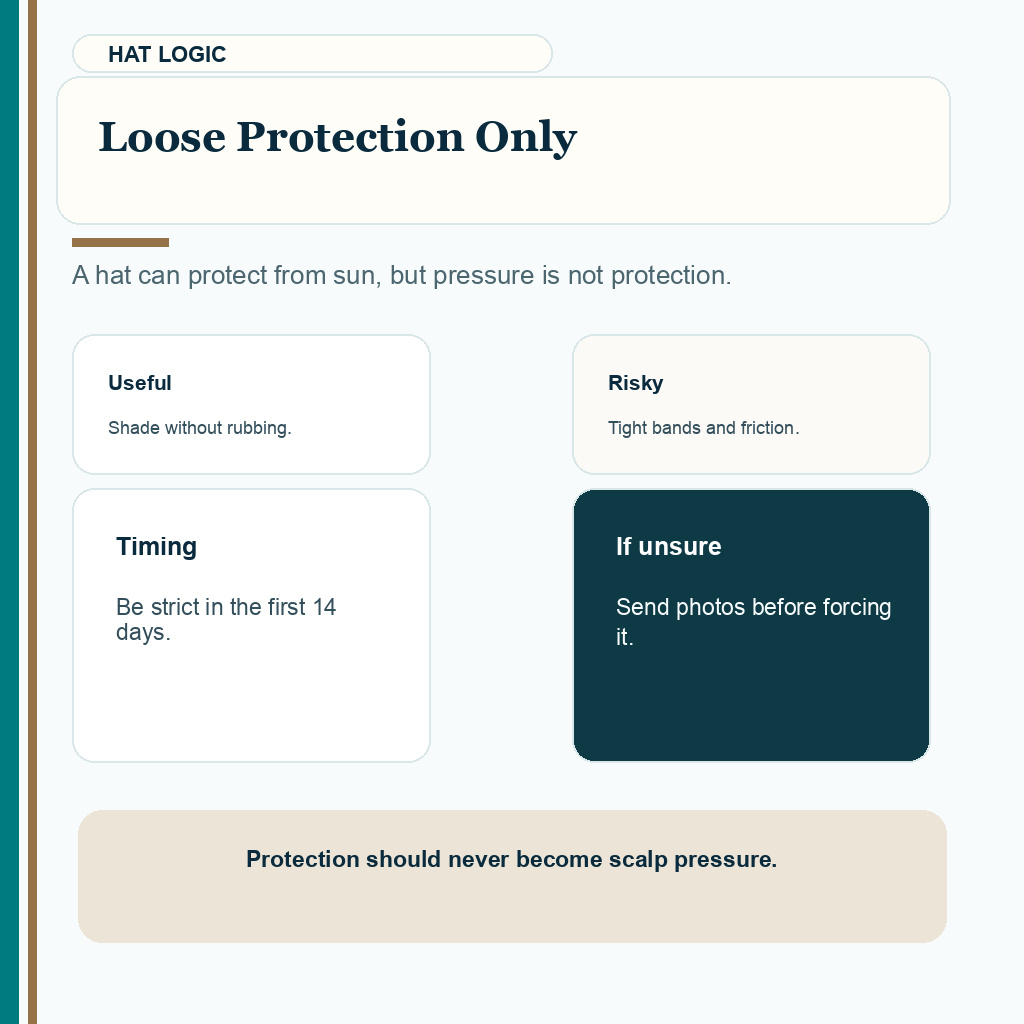
Hat use after a hair transplant also needs common sense. A hat can protect from sun, but it can also create friction if used carelessly, so I avoid tight hats or anything that rubs the grafted area during the first 14 days.
Protection is good. Pressure is not.
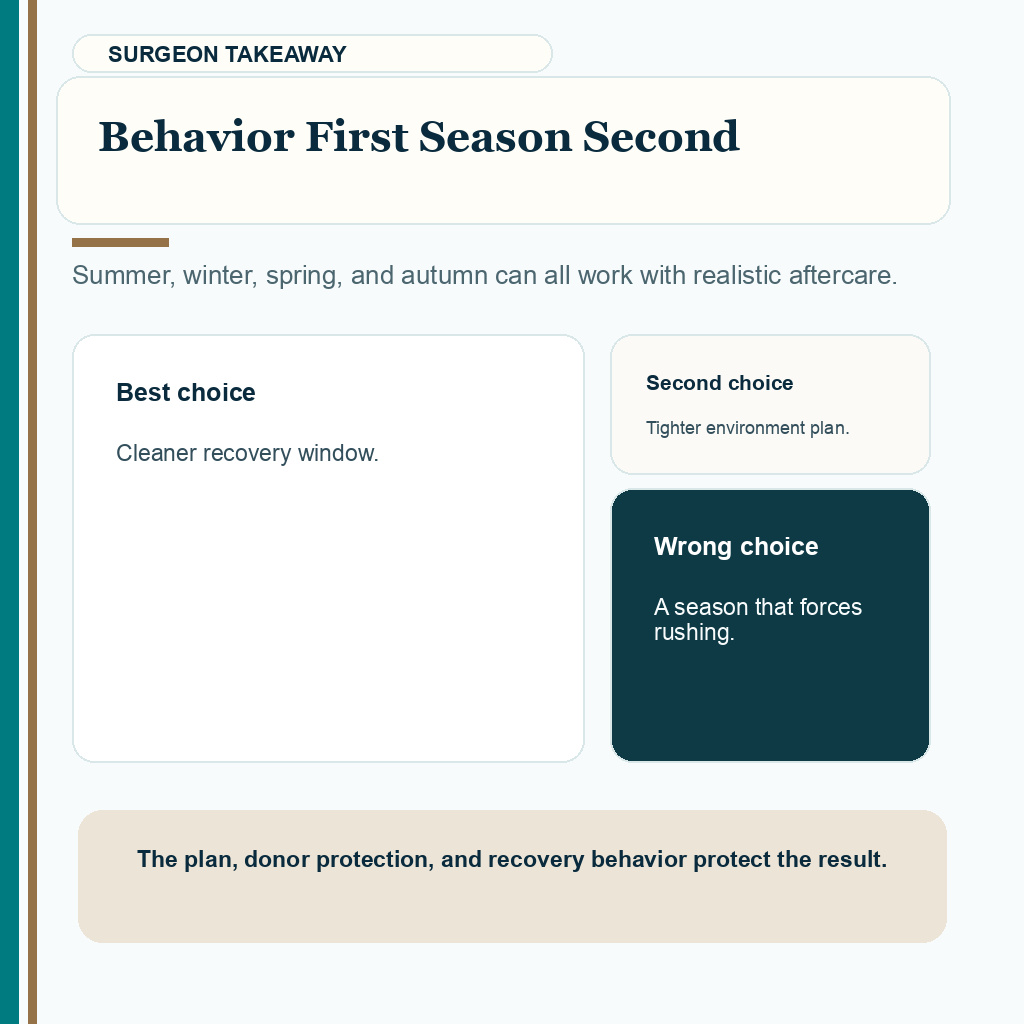
Use these slides to compare early protection, sun, sweat, water, hats, travel, and when moving the date is wiser.
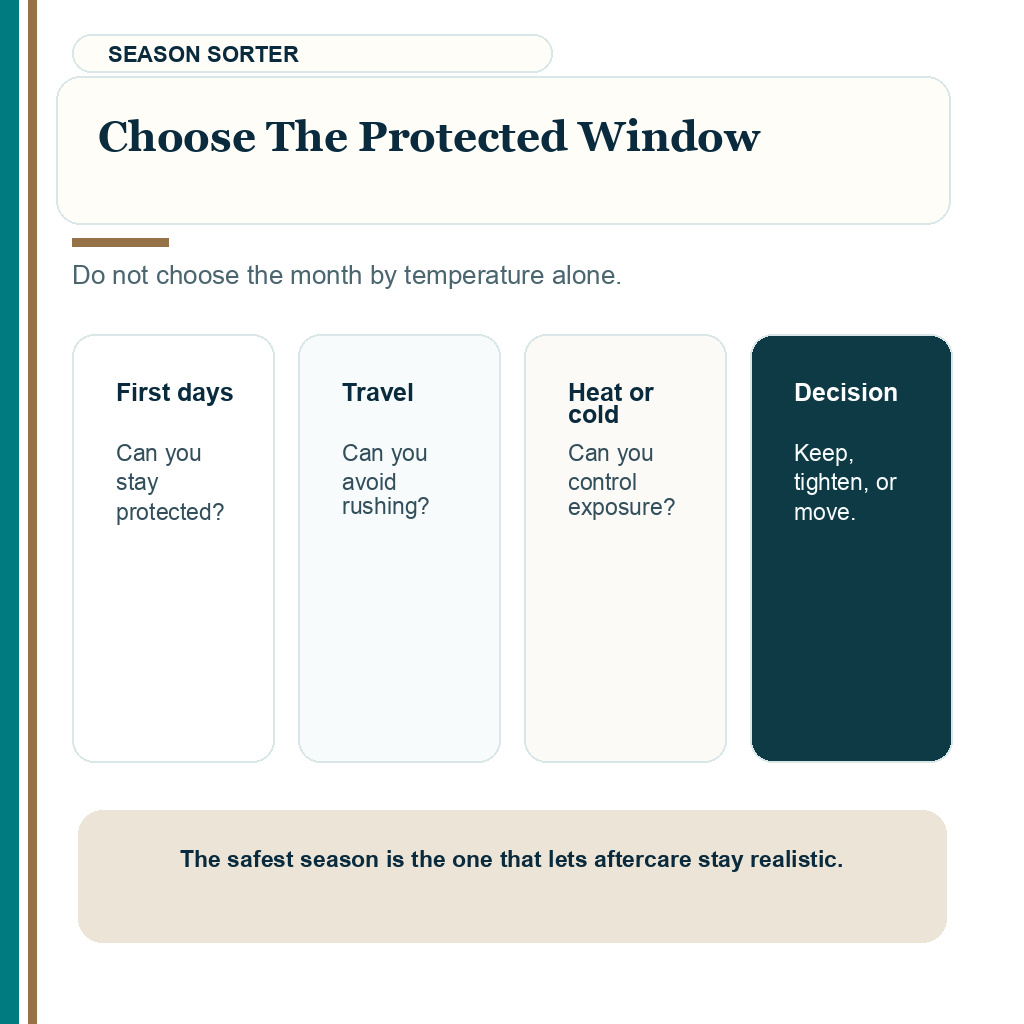

International timing should protect the first days
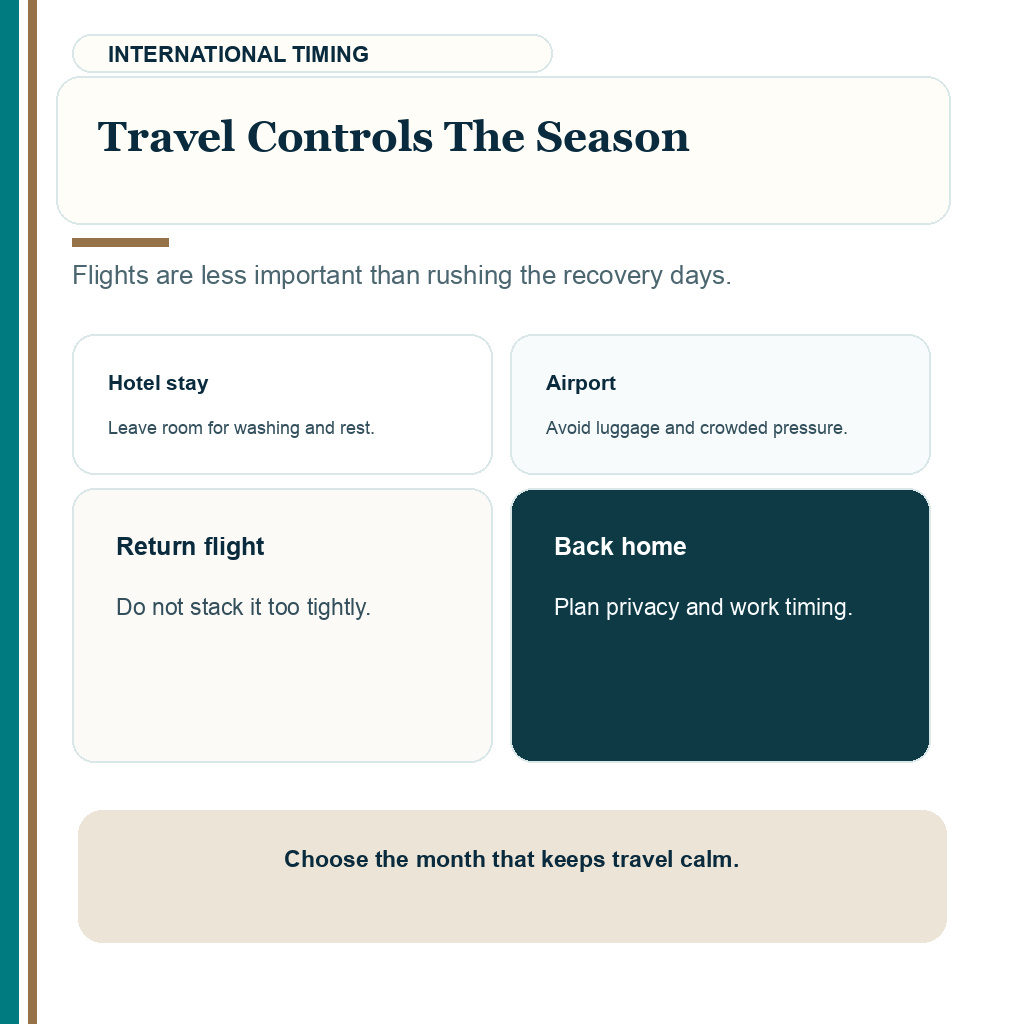
For international patients, season choice becomes a practical travel decision.
Flights, hotel stay, airport timing, return to work, privacy, and the first day back home all matter. The surgery month should be chosen by whether the real schedule allows proper recovery, not by weather alone.
In my own practice, I schedule a postoperative check on the morning of the second day after surgery and personally go through the first wash with the patient. The airplane itself is usually not the true issue. The bigger issues are rushing, luggage, fatigue, crowded spaces, accidental bumps, and avoidable pressure on the scalp.
Choose the month that lets you recover without rushing. A season that sounds attractive is not useful if it forces the first days to become hurried.
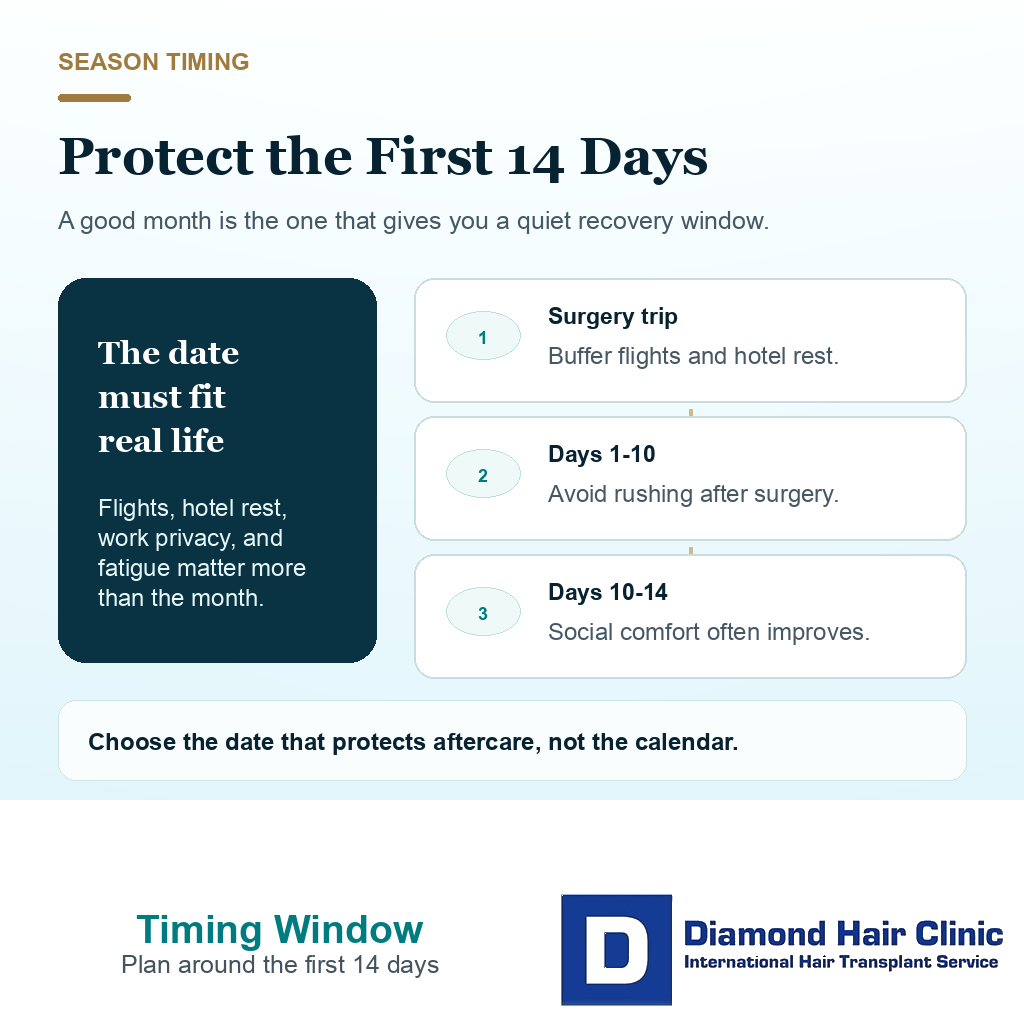
Work and social timing should match the healing stage
Work and social timing also matter when deciding the season.
For an office job, many patients can return in about 5 to 10 days, but from a social point of view many feel more comfortable waiting 10 to 14 days. For time off work after a hair transplant, the job environment matters as much as the number of days.
Patients who judge the result too early often confuse healing stages with outcome quality. I separate early recovery from how I judge result quality and from why some hair transplant results look thin. A transplant can look far weaker than it really is if it is judged too early, or if surrounding native hair continues to miniaturize over time.
The hair plan matters more than the season
The season matters much less than the overall hair plan.
I first want to understand donor capacity, hairline aggressiveness, graft distribution, crown involvement, future loss risk, and whether the patient is protecting native hair medically.
A hair transplant is only one part of the larger hair loss story. Long-term management may also involve medication planning after a hair transplant, or the separate question of whether surgery still makes sense without finasteride. The procedure must fit into a broader plan, not sit alone like an isolated event.
The technical method matters too. It should not distract from whether the patient can protect the grafts, follow the plan, and avoid rushing normal life too early.
My recommendation is behavior first, season second
In consultation, I bring the answer back to behavior.
The best season for a hair transplant is the season in which you can protect the scalp and respect the aftercare. It is not the hottest season, the coldest season, or the season that sounds best in a marketing sentence.
If two dates are available, choose the one that gives you the cleaner recovery window. If only one date is realistic, build the environment around it before surgery, not after the first problem appears.
Summer, winter, spring, and autumn can all work when the aftercare is realistic. The plan, the surgery, donor management, and recovery behavior reduce avoidable risk.