


High Hemoglobin or Hematocrit and Hair Transplant Safety
A slightly high hemoglobin or hematocrit result does not always cancel a hair transplant. It becomes a problem when the number is clearly high, repeated, unexplained, or connected to clotting risk, sleep apnea, smoking, testosterone use, dehydration, or polycythemia.
One number is not enough for a surgical decision. I compare the exact value with the lab range, the repeat result, your sex, smoking history, altitude, medicines, and medical history. I also want to know whether there has been clotting, heart disease, sleep apnea, TRT, dehydration, or a diagnosis such as polycythemia.
If the result is mild, temporary, and explained, surgery may only need documentation and careful planning. If it is clearly high, persistent, unexplained, close to a level your treating doctor considers unsafe, or linked to symptoms, I postpone the operation instead of accepting avoidable medical risk.
Send the full report early before travelling, not only a screenshot of one result. The wider picture from blood tests before a hair transplant is what protects the surgical day.
Meaning of high hemoglobin and hematocrit
Hemoglobin is the oxygen carrying protein inside red blood cells. Hematocrit is the percentage of blood volume made up by red blood cells. When either number is high, the report is telling us that the red cell part of the blood is more concentrated than expected.
More red blood cells do not mean “better blood” for a hair transplant. I first separate a concentration problem from true red cell overproduction. Dehydration or low plasma volume can make the hematocrit look higher. Persistent erythrocytosis means the body is carrying too many red cells, and the reason has to be understood.
Sometimes the number is a temporary finding. Sometimes it is a signal that the body is responding to lower oxygen, medication, smoking, sleep apnea, heart or lung disease, or a blood condition that needs proper review.
Sometimes the explanation is simple. You may be dehydrated before the blood draw, live at high altitude, smoke, or have trained hard without drinking enough water. In that setting, a repeat test under better conditions may look different. If a donor center screen or recent donation attempt is part of the story, the related timing question is finasteride, dutasteride, and blood donation before FUE.
Sometimes the result is a medical clue. High hemoglobin or hematocrit can be related to testosterone therapy, untreated sleep apnea, lung disease, heart disease, kidney hormone signals, or a blood disorder such as polycythemia. I do not need every raised result to become a hematology case, but I do need the result to make sense before elective surgery.
A high red blood cell count matters for surgery
A hair transplant is elective surgery. It is usually performed with local anesthesia, but it still involves many small openings in the donor area and recipient area, a long operating day, medication planning, blood pressure monitoring, and wound healing. A blood abnormality is not ignored just because the surgery is not inside the chest or abdomen.
When red blood cell concentration is high, I think about blood viscosity, clot history, oxygen level, cardiovascular stability, and the underlying reason for the result. The scalp procedure itself is not the same as major surgery, but you are still a whole person on the day of operation.
Travel also matters. A long flight, dehydration, poor sleep, alcohol, and sitting for many hours can make a borderline medical picture less comfortable. I do not want a patient to arrive after travel stress with a blood result that should have been reviewed at home before the ticket was booked.
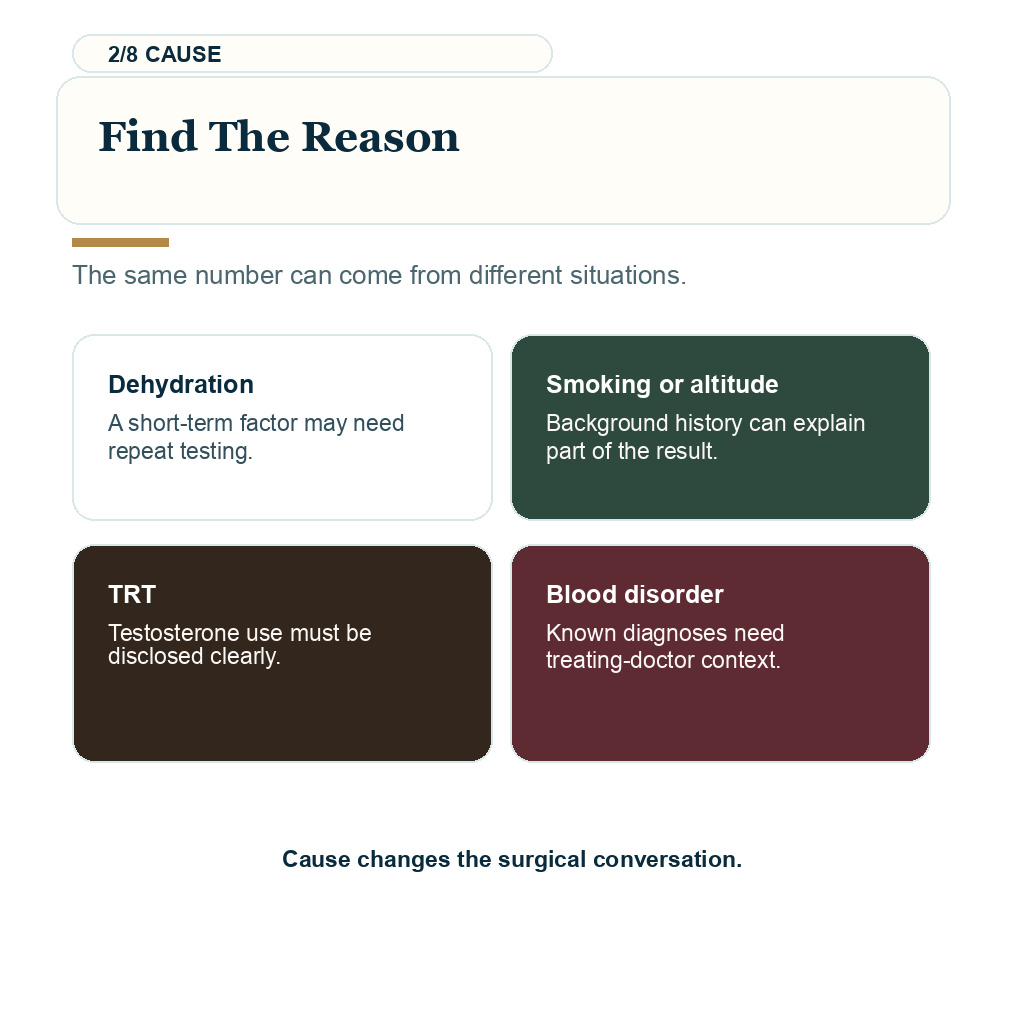
The more important issue is the cause. A slightly high number after dehydration is different from persistent erythrocytosis, polycythemia vera, a recent clot, uncontrolled blood pressure, untreated severe sleep apnea, or heart disease. The surgical plan changes when the medical story changes.
Surgery can usually go ahead in stable cases
Surgery is more likely to proceed when the elevation is mild, stable, explained, and not connected to symptoms or a clotting history. I also have to see that the rest of the blood count is acceptable, blood pressure is controlled, you are not acutely unwell, and any treating doctor involved has no objection to an elective procedure.
A repeat result can be useful when the first test was borderline or taken during dehydration, illness, heavy exercise, fasting, or poor sleep. Do not fly to Istanbul with a value that nobody has interpreted. The result needs review early enough that postponement, if needed, is planned rather than rushed at the last moment.
If another doctor is clearing you, the clearance has to be specific. The important question is whether the high hemoglobin or hematocrit was reviewed, repeated, linked to a cause, checked against clot history or symptoms, and connected to any medication plan before an elective procedure under local anesthesia.
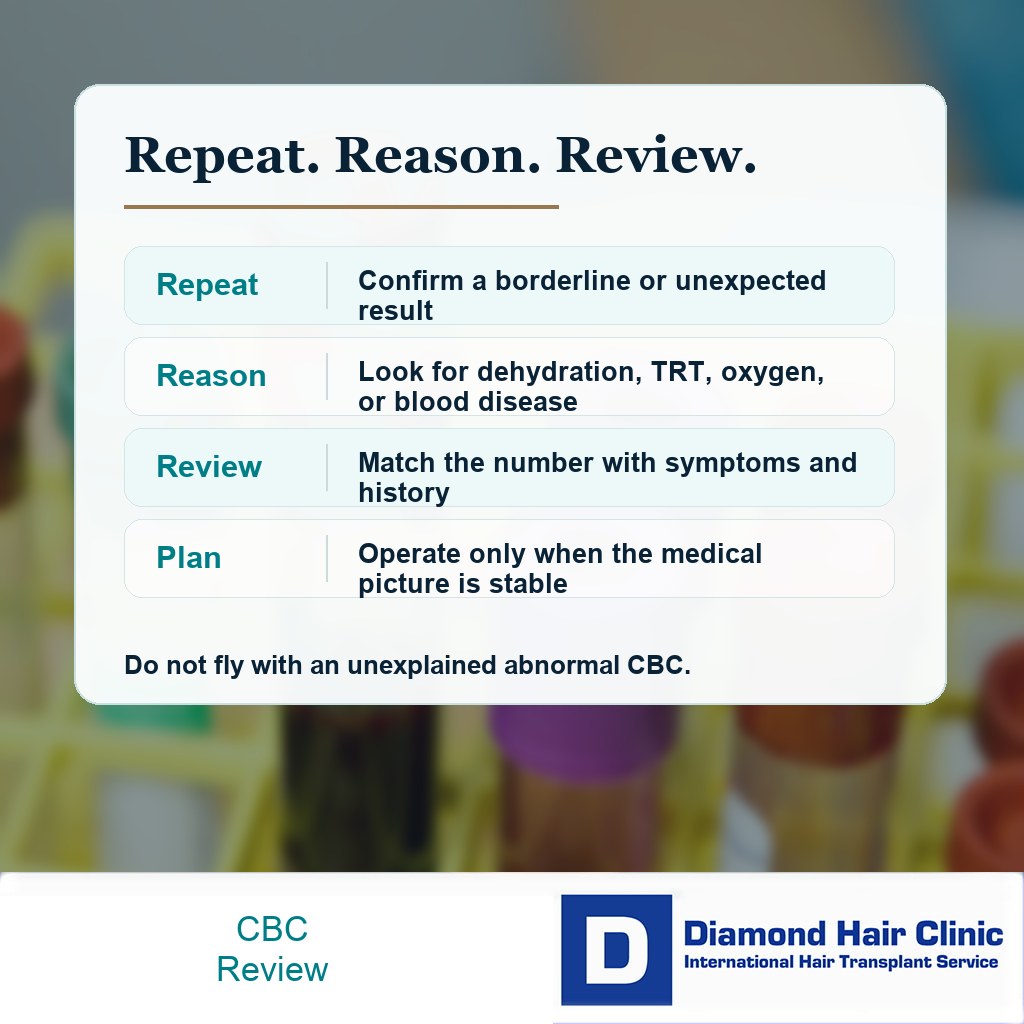
Clarify whether the result is temporary, persistent, or connected to another medical condition.
If surgery goes ahead, I still plan conservatively. A stable medical picture supports predictable surgery. It does not give permission to ignore swelling, blood pressure, medication history, or donor management.
The planned session size matters too. A small, carefully planned operation with stable bloodwork is not the same decision as a very long day with dense packing, difficult extraction, uncontrolled pressure readings, and unclear bloodwork. When the medical background is not completely clean, I make the surgical plan more conservative, not more ambitious.
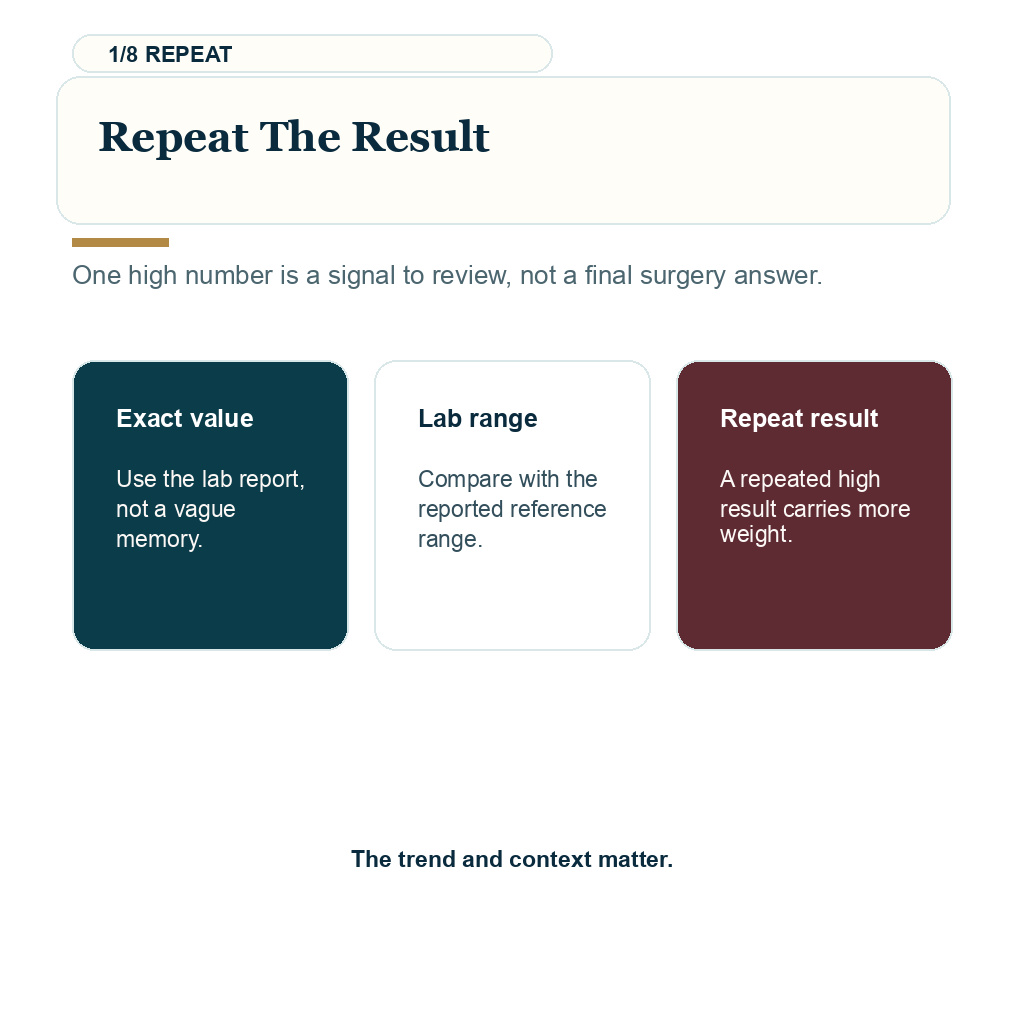
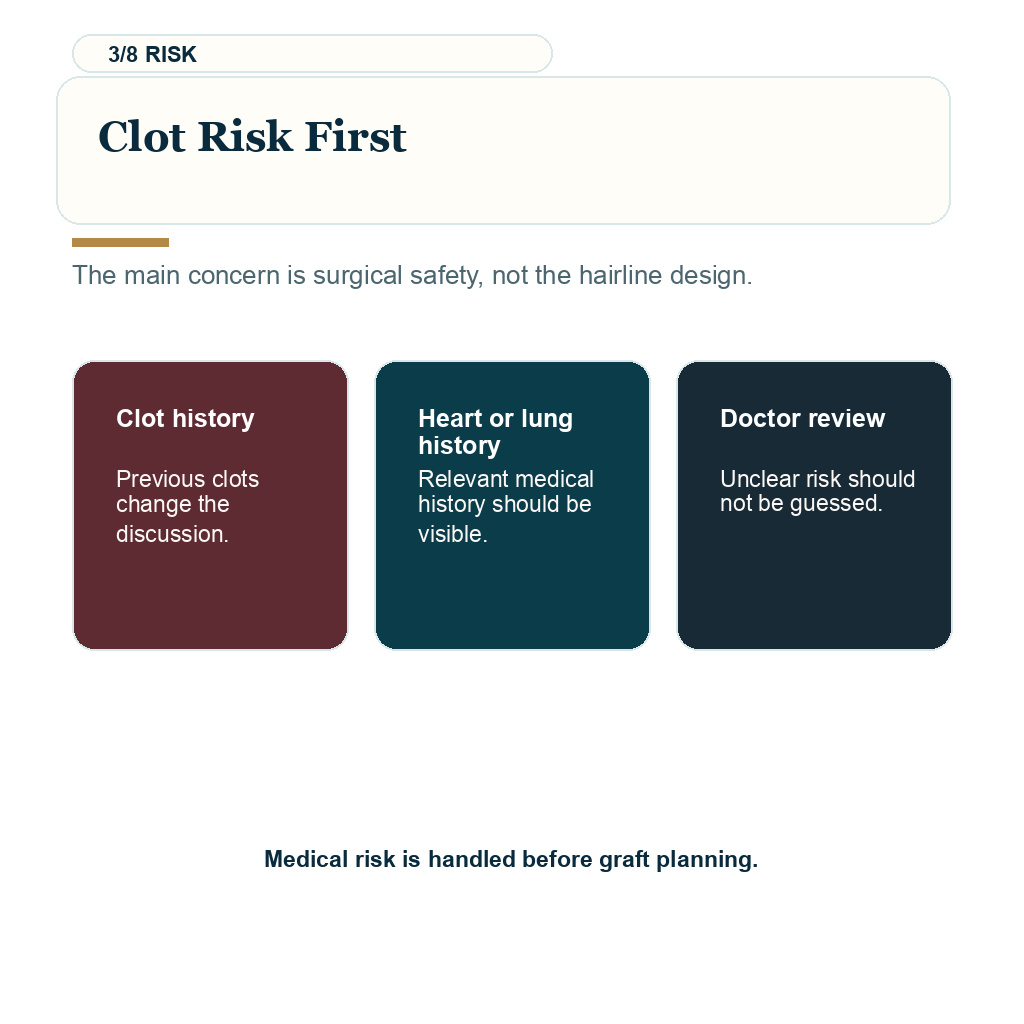
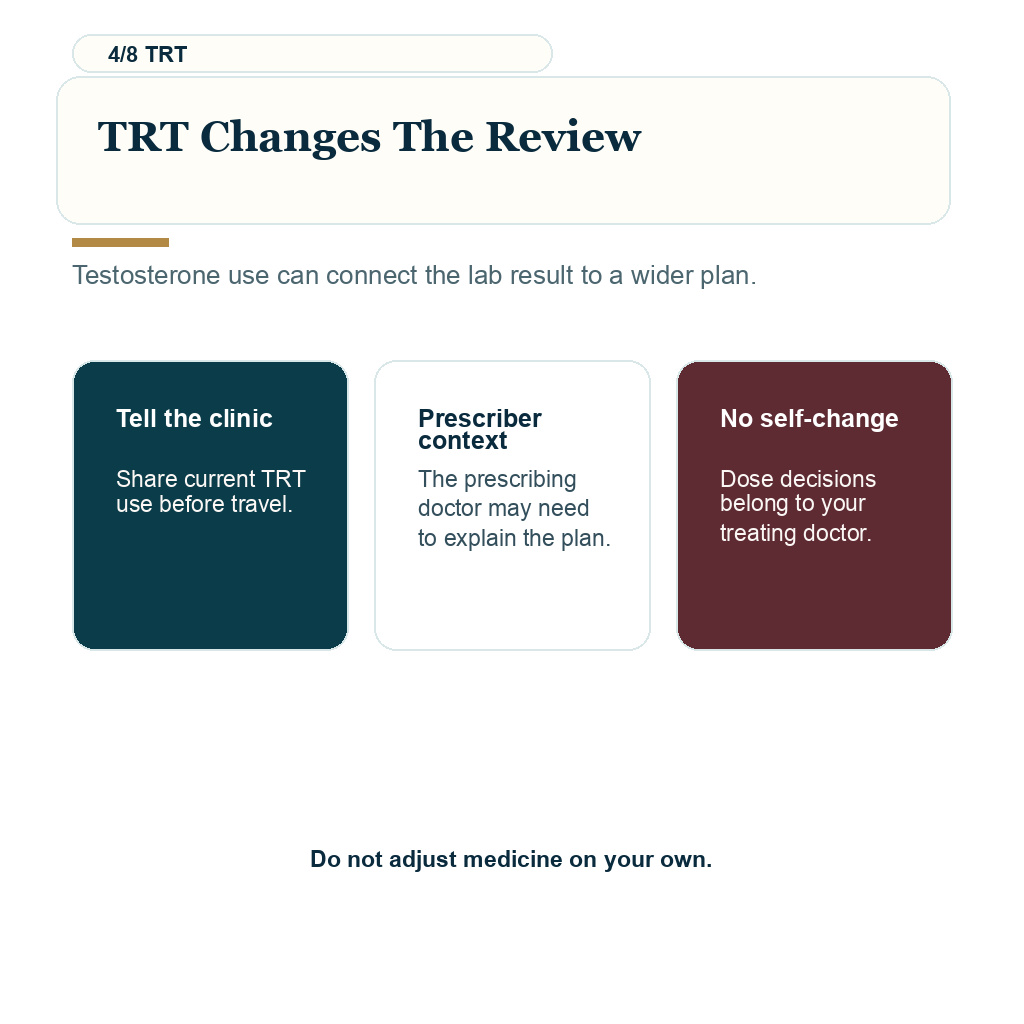
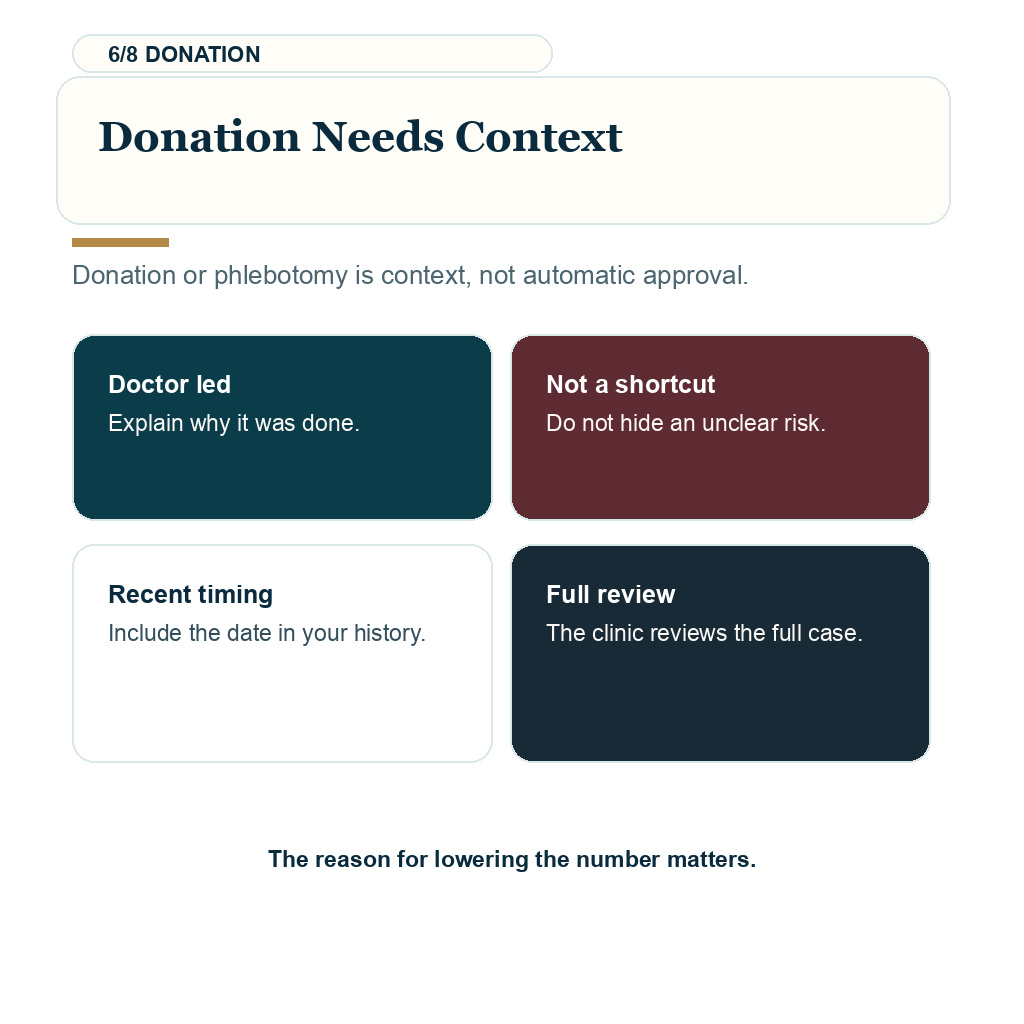
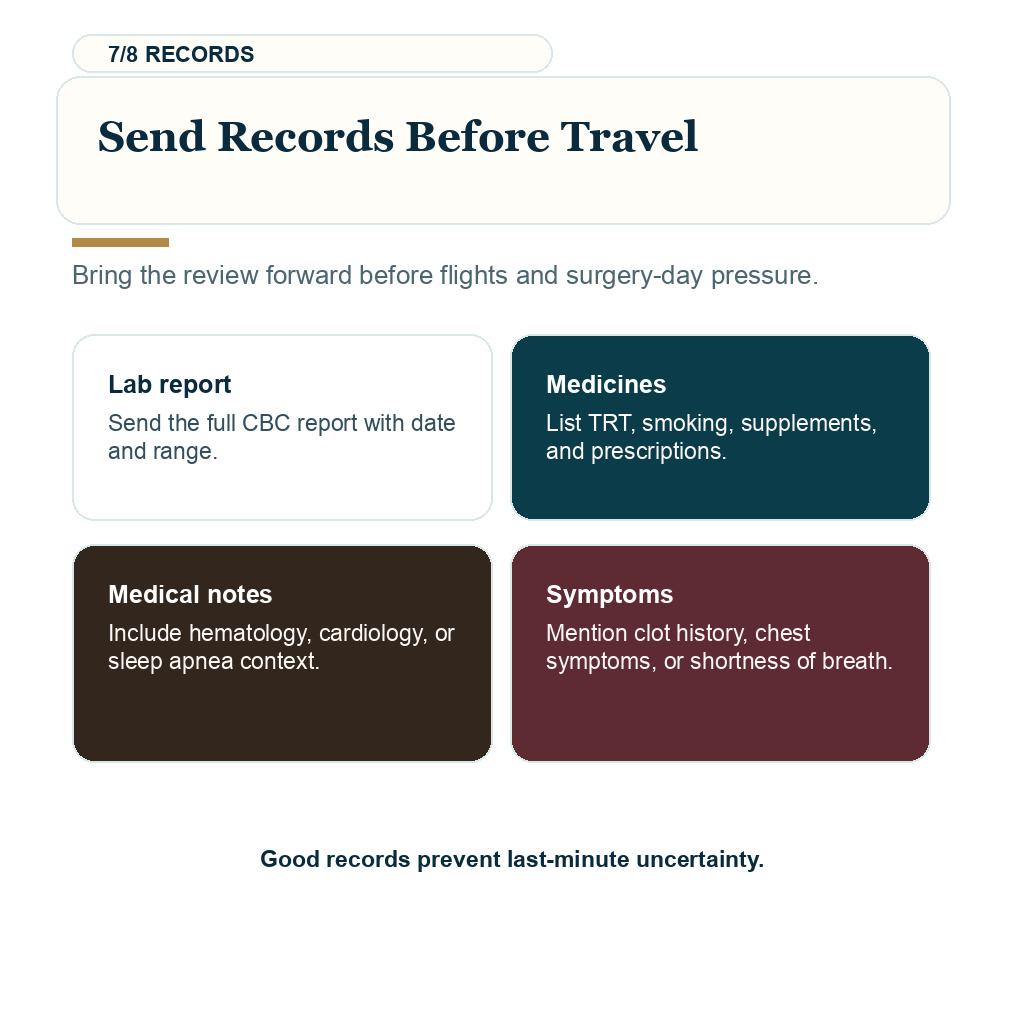
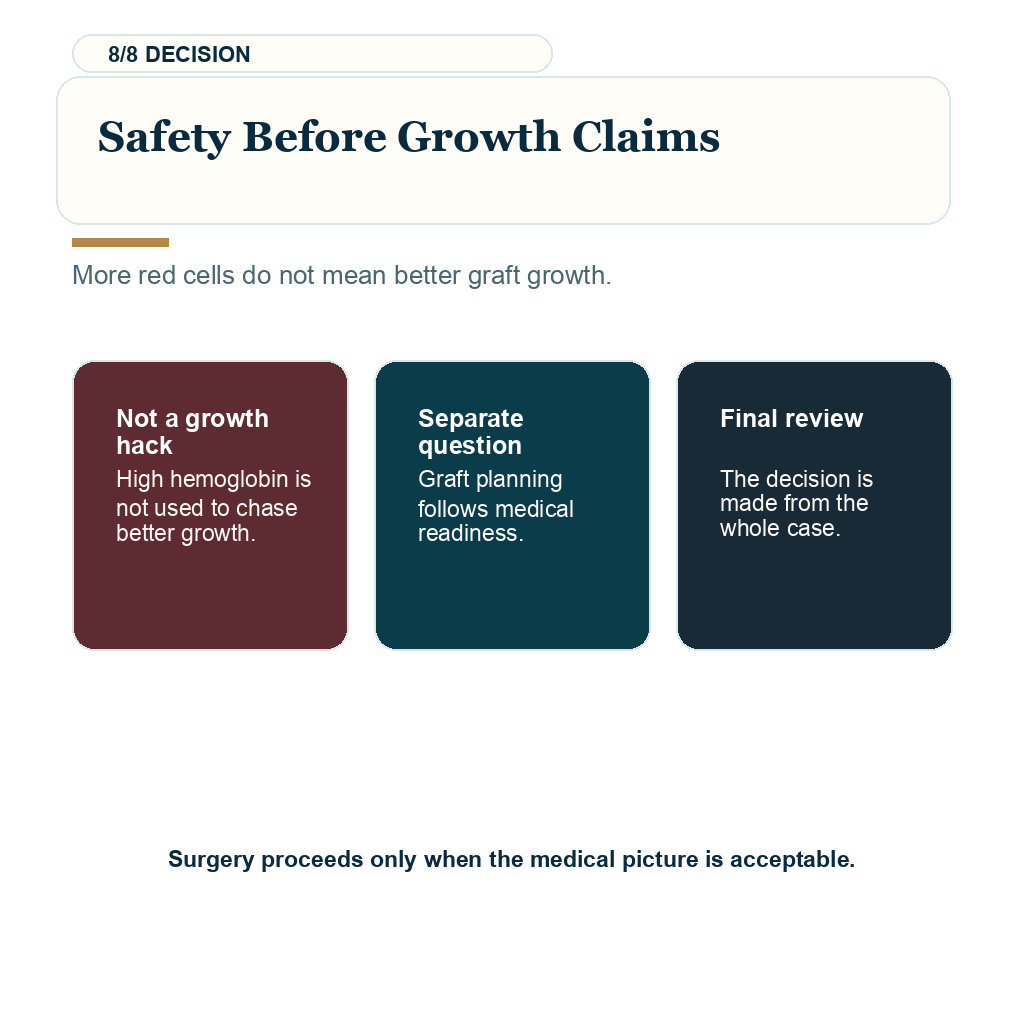
Use the 8 blood test review slides below to separate repeat results, possible causes, clot risk context, TRT disclosure, hydration, blood donation history, records before travel, and safety versus growth assumptions. Swipe sideways, use the arrows, or choose a number below the image.

The operation should wait when the cause is unclear
The operation should wait when the high hemoglobin or hematocrit is clearly outside the expected range and has not been explained. It should also wait when you have symptoms such as chest pain, shortness of breath, new neurological symptoms, severe headache, visual disturbance, swelling in one leg, recent clot, or a known diagnosis such as polycythemia vera that is not controlled.
I am also more cautious when high red blood counts appear together with uncontrolled high blood pressure before a hair transplant, heart disease or a stent before a hair transplant, active smoking, untreated sleep apnea, or prescribed medicine used because of clot risk.
If you are on blood thinners before a hair transplant, aspirin for a cardiac reason, or another medicine used to reduce clot risk, the decision must involve the prescribing doctor. Do not stop or start these medicines by yourself to make a hair transplant date work.
A generic message that says you are fine for surgery is weaker than a note that explains the abnormal result. The safest clearance tells us what was checked, what still needs follow up, and whether there are limits on session length, travel, medication changes, or postponement timing.
Dehydration and repeat testing
Dehydration is one common reason a hematocrit result looks high. A concentrated blood sample can make the red cell percentage appear higher because the plasma portion is lower. The useful step is not to guess. The useful step is to repeat the test when you are well hydrated and not acutely ill, then compare both results.
If the repeat test is normal and there are no symptoms or risk factors, the first result may not change the surgical plan. If the repeat test is still high, I treat it as a real signal. A persistent result deserves a medical explanation before an elective procedure.
Do not try to manipulate the result by drinking excessive water right before the blood draw or by donating blood without medical advice. Repeated or unnecessary blood donation can lower ferritin or iron stores, create a different medical problem, and still fail to explain why the value was high. The aim is a clear medical picture, not a temporarily improved number that hides the reason it was high.
The timing of the repeat test also matters. A repeat CBC done after a long flight, alcohol, fever, vomiting, diarrhea, hard training, or poor fluid intake may create the same uncertainty again. If the first result is important enough to question surgery, the repeat should be done under ordinary stable conditions and shared before travel plans become fixed.
TRT or testosterone use
TRT can raise hematocrit in some people. If you use TRT before a hair transplant, disclose it together with recent bloodwork, blood pressure, sleep apnea history, acne or scalp inflammation, and any clotting or heart history.
A hematocrit around or above 54 percent while using TRT is not a casual finding. It is a review signal, not a number to hide or quickly manipulate. I would not tell you to adjust testosterone, donate blood, or start aspirin from a hair transplant article. The doctor managing TRT should decide the medical correction, and the hair transplant should be planned only when you are stable enough for an elective procedure.
Send the context with the number, including TRT dose changes, recent illness, dehydration, smoking, or poor sleep. That background helps decide whether surgery should wait. After the number comes down, I still want the treating doctor to explain why it changed and whether the plan is stable enough for elective surgery.
TRT itself is not the reason grafts would fail. The concern is whether the hormone plan, blood count, blood pressure, donor pattern, future hair loss, and overall medical condition are being managed openly. The wider planning around testosterone therapy is how those medical details affect donor use, native hair risk, hairline design, and surgery timing.
If the TRT doctor adjusts the dose, interval, route, or recommends therapeutic phlebotomy, the transplant date should follow the stabilized plan rather than the first improved number. I want to see that the correction is durable enough for travel, a long procedure, and early recovery.
Send who manages the TRT plan, what changed, and when the next blood test is due. A single improved result is weaker than a plan the hormone doctor is actually following.
Blood donation to lower the number
Do not donate blood only to make a hair transplant blood test look acceptable. Blood donation or therapeutic phlebotomy can lower the number, but it does not explain why the number was high. It can also leave you with low iron stores, dizziness, fatigue, or the separate timing problem of recent blood, plasma, or platelet donation before FUE.
If a treating doctor advised blood removal because of TRT, polycythemia, or another condition, tell me the date, the reason, how much was removed, the latest CBC result, ferritin if it was checked, and the plan for future treatment. A corrected number is useful only when the medical cause is understood and you are stable enough for an elective procedure.
Sleep apnea, smoking, and heart disease
High hemoglobin and hematocrit can appear when the body is responding to lower oxygen signals. I ask about snoring, diagnosed sleep apnea, CPAP use, smoking, lung disease, heart disease, and altitude because these details can turn an isolated number into a clearer medical explanation.
For someone with sleep apnea and CPAP planning, this is not only about the scalp. It is whether breathing, oxygen level, blood pressure, sleep quality, and safe positioning can be managed during travel and recovery.
If CPAP is prescribed, tell the clinic whether you actually use it, whether you can travel with it, and whether sleeping upright or partly upright after surgery will be realistic. Untreated symptoms, morning headaches, heavy snoring, or poor oxygen control make the high hematocrit discussion more important, not less.
Smoking history also matters before surgery because it can affect oxygen delivery, blood vessels, coughing, and wound healing. I still want the recovery guidance on smoking after a hair transplant followed carefully, but the preoperative risk discussion starts before the operation.
Polycythemia vera needs treating doctor clearance
Polycythemia vera is different from a mildly high result after dehydration. It is a blood disorder that can increase clotting risk and needs ongoing medical management. If you have polycythemia vera, the hair transplant decision moves from a simple clinic review to a clearance question for the doctor treating you.
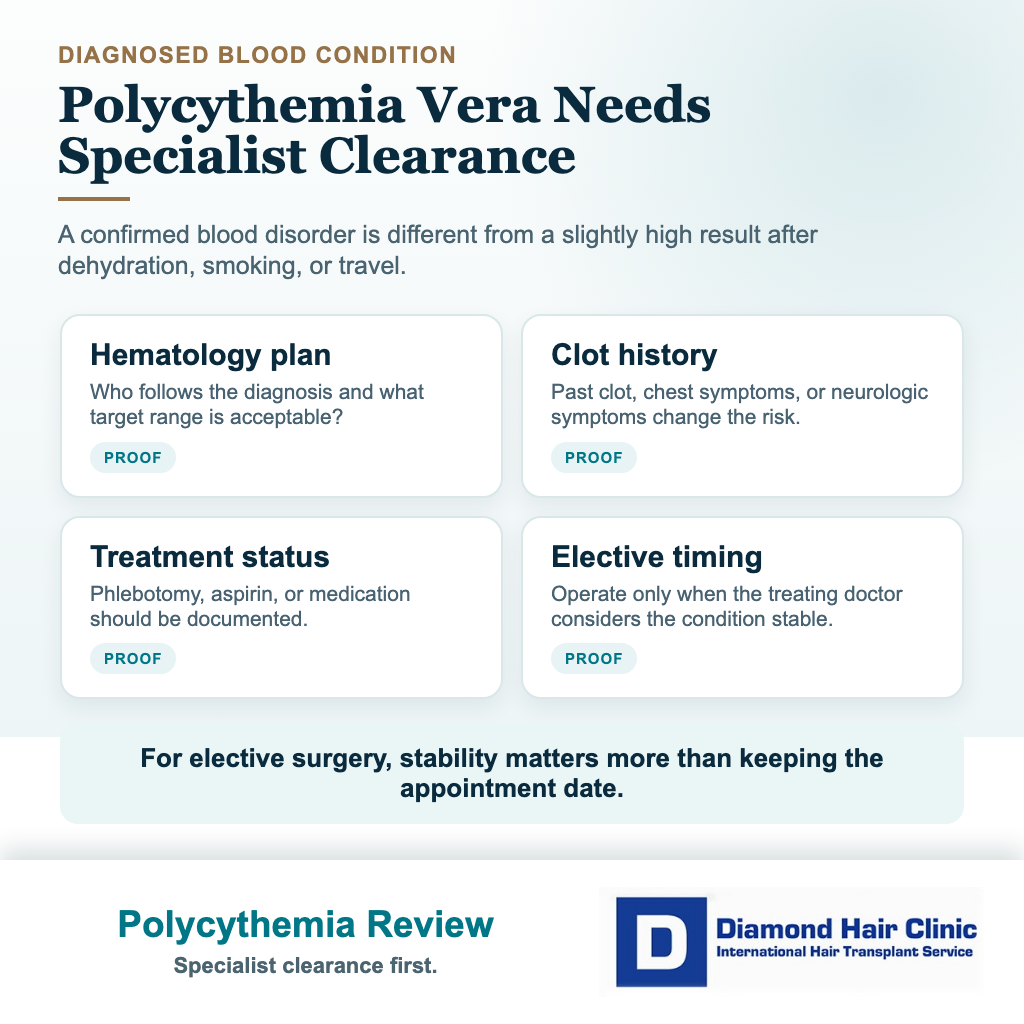
Symptoms such as itching after a hot shower, facial redness, heavy night sweats, unusual headaches, visual disturbance, dizziness, or unusual bleeding do not prove polycythemia vera by themselves. They make proper medical review more important than protecting a surgery date.
For conditions such as polycythemia, I look at control, phlebotomy or medication, aspirin or other clot risk medicine, previous clots, and the hematologist’s view on elective surgery. The hair transplant clinic does not replace the hematologist in that decision.
When polycythemia vera is active, poorly controlled, recently diagnosed, or connected to clot symptoms, the operation should wait. The aim is not to make the scalp surgery sound frightening. The aim is to avoid treating a medically important blood disorder as if it were just a cosmetic paperwork detail.
High hemoglobin and graft growth are separate questions
High hemoglobin by itself does not tell me how many grafts will grow. Graft survival depends more on donor quality, extraction, graft handling, recipient area planning, surgical density, aftercare, and long term hair loss pattern.
The lab result matters because it may reveal a condition that changes timing. If the cause is dehydration and the repeat test is normal, the growth discussion may be ordinary. If the cause is untreated sleep apnea, uncontrolled blood pressure, polycythemia, recent clotting, or poorly managed TRT, surgery may need to wait before we even discuss graft numbers.
A safe operation means more than placing grafts. The timing of surgery must also be medically sensible.
Send the right records before travelling to Turkey
Send the full CBC report, not only the hemoglobin line. The full report needs to show hemoglobin, hematocrit, red blood cell count, white blood cells, neutrophils, platelets, and the lab reference ranges. If you have earlier blood tests, send those too because trend matters.
Also include the date of the test, whether you were fasting, ill, dehydrated, recently travelling, training hard, smoking heavily, or using TRT at the time. If blood donation or phlebotomy happened, send the date, reason, amount removed if known, follow up CBC, and ferritin or iron results if they were checked.
Also send your medication list, TRT dose if relevant, smoking history, sleep apnea or CPAP history, blood pressure readings, past clot or heart history, and any note from the doctor who manages the abnormal result. If a repeat blood test was requested, send the repeat result before committing travel.
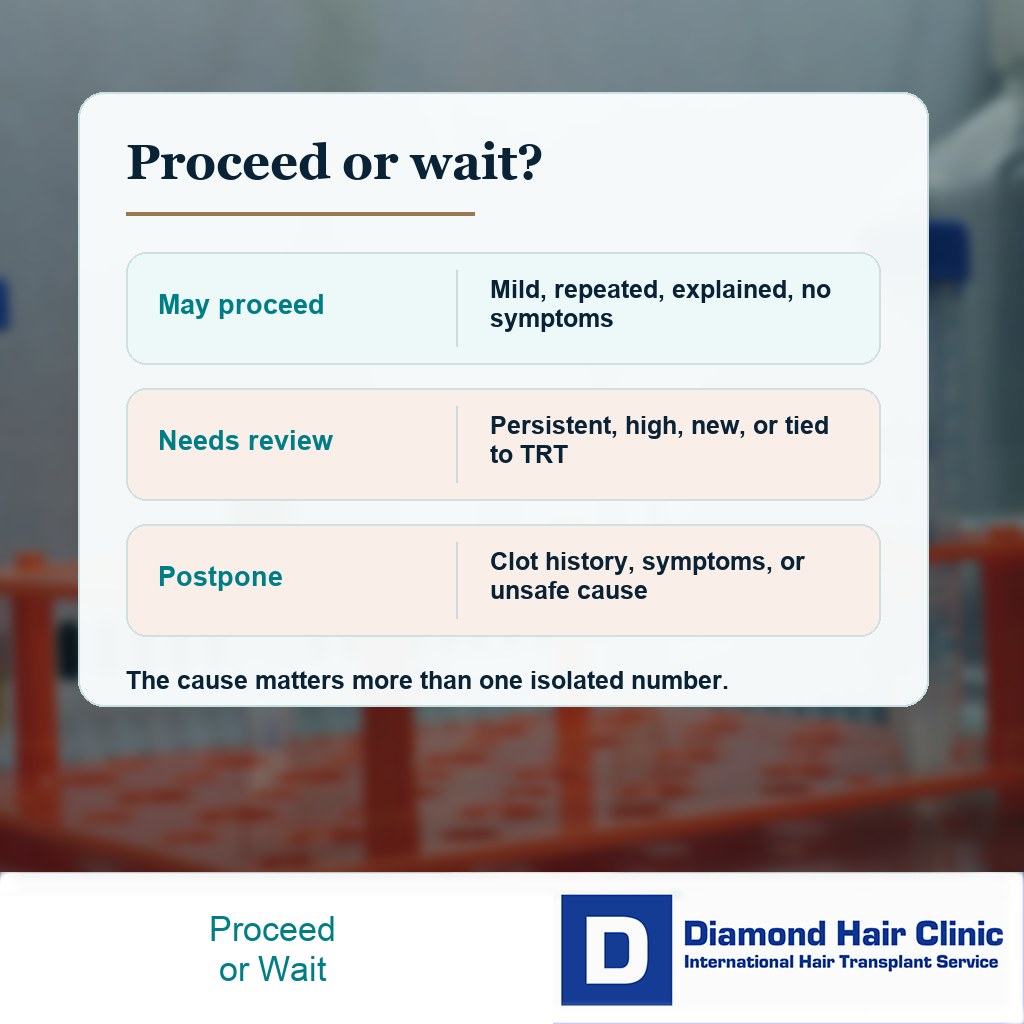
A stable mild elevation is judged differently from unexplained erythrocytosis, clot history, symptoms, or polycythemia vera.
Postponing before flights and hotels is safer than discovering a preventable medical concern after arrival. A delay can feel frustrating, but it protects you, the donor area, and the surgical plan.
This differs from other blood test problems
High hemoglobin or hematocrit is a red cell concentration question. It is different from low ferritin or anemia before a hair transplant, where the concern is low iron stores or reduced oxygen carrying capacity. It is also different from low white blood cells before a hair transplant, where infection defense becomes the central issue.
A blood count concern is not cleared by comparing stories. The exact value, repeat pattern, symptoms, and treating doctor context decide whether travel should wait.
It is different again from low platelets before a hair transplant, where bleeding and clot formation need separate assessment. A CBC is one report, but each abnormal line has its own meaning.
A simple message that says your blood test is high is not enough. The useful details are which value is high, how high it is, whether it was repeated, and what medical story sits behind it.
Blood results set the pace for surgery
I treat high hemoglobin or hematocrit as a review point, not an automatic rejection. If the result is mild, explained, repeated safely, and not connected to warning signs, surgery may still be planned. If the result is persistent, unexplained, very high, connected to symptoms, or linked to clot, heart, lung, sleep apnea, or TRT concerns, the medical issue should be clarified first.
A hair transplant can wait. Your safety, donor capacity, and long term planning should not be put at risk because a clinic wants to protect a date on the calendar. Send the bloodwork early, tell the full medical story, and let the operation be planned on a day when the medical picture is stable.