Beta Blockers Need Blood Pressure Review
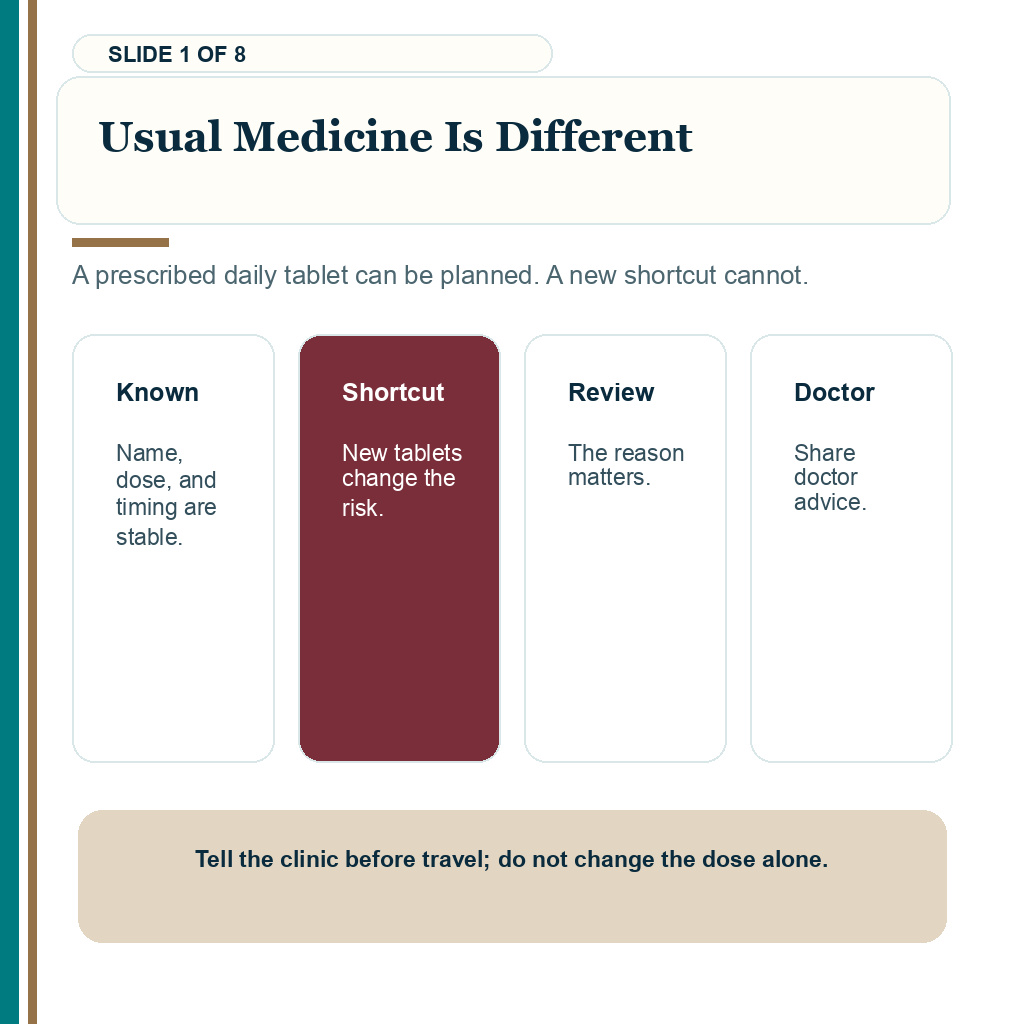
If you already take a prescribed beta blocker every day, do not stop it or change the dose on your own before FUE. Tell the clinic the exact medicine name, dose, timing, and reason for use. If you do not normally take a beta blocker, do not take one just to push a high blood pressure reading down on the day of surgery. That can create a new safety problem instead of showing stable control.
FUE is usually performed under local anesthesia, but it is still a medical procedure. Blood pressure, pulse rate, anxiety, adrenaline in the local anesthetic, fasting, sleep, travel stress, and other medicines all meet on the same day. If a reading looks acceptable only because you improvised with tablets, I cannot treat that as stable medical control, even when the number looks better on the monitor.
Bring your usual blood pressure and pulse readings if you track them at home. One anxious reading after travel is not the same as your normal baseline.
Prescribed beta blockers can be planned around FUE
Often, yes, if the beta blocker is already prescribed and your body is stable on it. Many people take medicines such as bisoprolol, metoprolol, atenolol, nebivolol, carvedilol, propranolol, or similar tablets for real medical reasons. The practical distinction is simple. A familiar prescribed medicine can usually be planned around. A new experiment on the surgery day cannot.
A regular beta blocker is easier to plan around when it is declared early. I review why it was prescribed, how long it has been used, resting pulse, dizziness, rhythm symptoms, and any instruction from the prescribing doctor. That is very different from taking a hidden tablet after seeing a high reading on the morning of surgery.
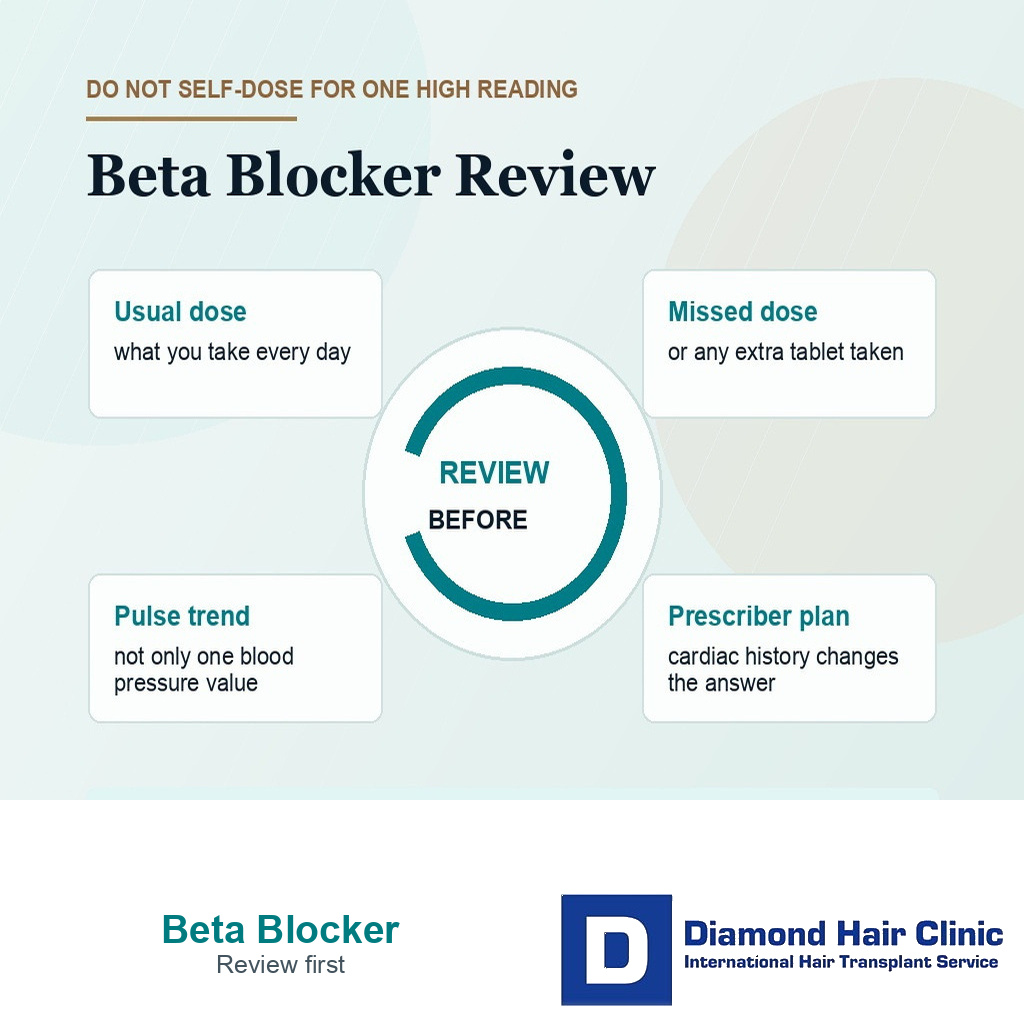
Beta blockers should be reviewed as part of the medical plan, not used as a late fix for anxiety or one high reading.
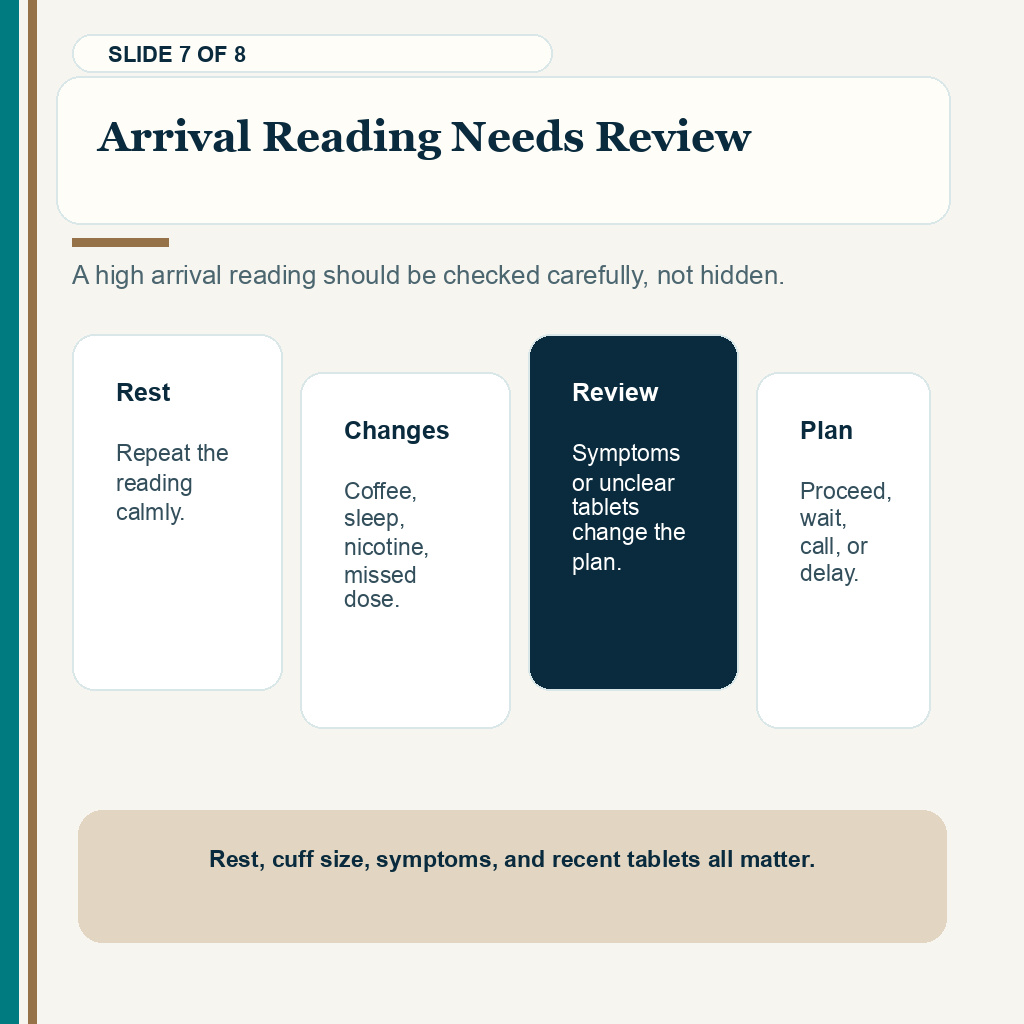
High blood pressure and hair transplant surgery needs the same kind of review. I do not judge blood pressure control from one measurement alone. I look at the pattern, symptoms, medical history, and whether the number is stable without late improvisation.
Daily beta blocker details the clinic needs
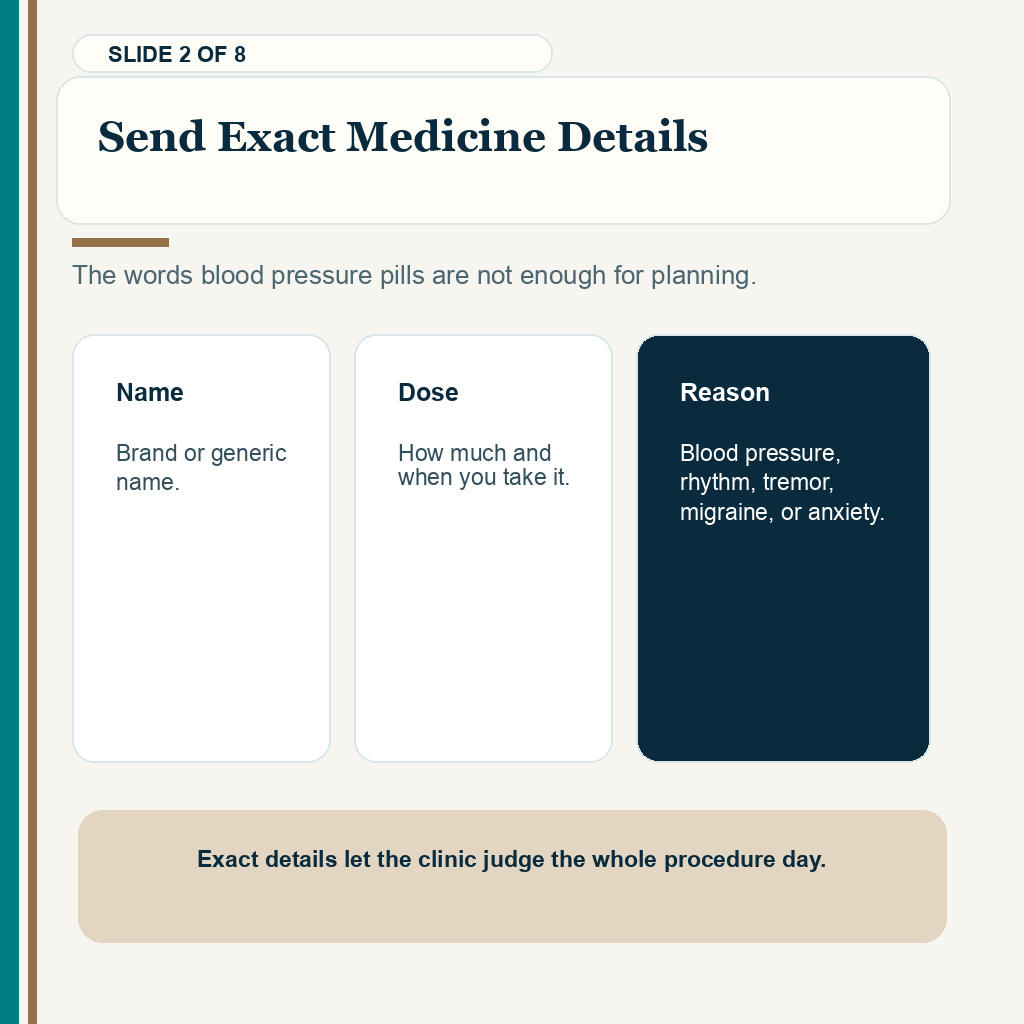
If you are already prescribed a beta blocker, planning starts before travel or before the operation date. Do not arrive with only the words “blood pressure pills” in your mind. Bring the medicine name, dose, timing, and prescribing doctor details. Include beta blocker eye drops, such as timolol, because they are easy to forget when listing medicines. If the medicine is for rhythm problems, previous heart symptoms, tremor, migraine, or palpitations linked to anxiety, say that clearly. These are different situations.
For many stable people, the usual medication routine may continue, but that decision belongs to the treating doctor and surgical team. Do not suddenly stop a prescribed beta blocker on your own, because abrupt changes can make pulse or blood pressure rebound. Some people also take aspirin, anticoagulants, oral minoxidil, diabetes medicine, sedatives, stimulants, or supplements. If diabetes medicine or fasting is part of the plan, say that clearly, because beta blockers can make some low blood sugar warning signs less obvious. I also need to know whether you monitor glucose and what your diabetes plan says for surgery morning. During a long procedure, I need you medically steady, not just cleared by one acceptable reading.
Pulse matters too, not only blood pressure. A reading such as 125/80 can still be concerning if the pulse is very low, you feel dizzy, or you have taken extra medication to force the number down. The medicine plan must be stable enough to trust, not merely convenient enough to pass one checkpoint.
Missed beta blocker doses need medical guidance
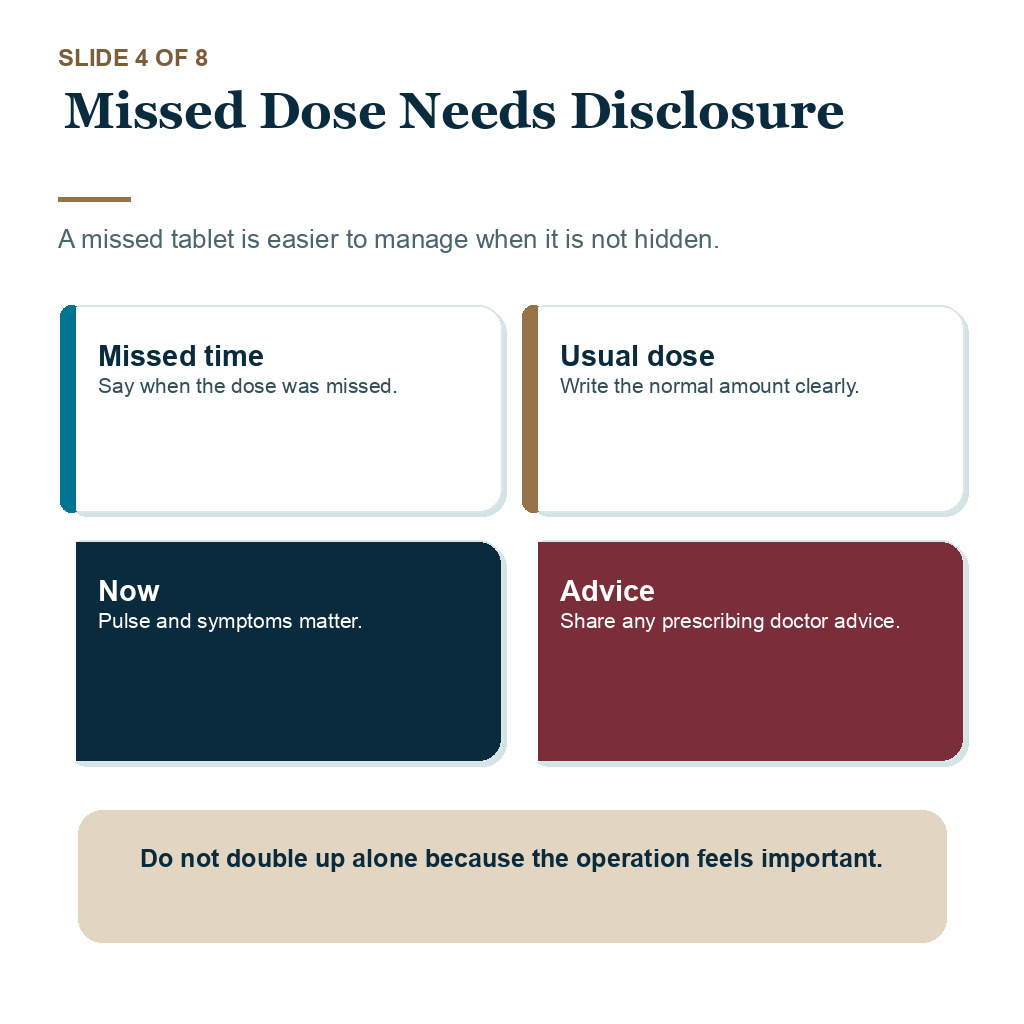
If you realize on surgery morning that you missed your usual beta blocker, do not take a double dose on your own and do not hide the mistake. Tell the clinic the usual dose, the missed time, your current pulse and blood pressure if you know them, and whether you feel dizzy, weak, short of breath, or unwell. A missed dose is a planning issue. A hidden double dose is a new medical uncertainty.
The response depends on the medicine, dose, reason for use, timing, pulse, blood pressure, and the prescribing doctor’s instructions. Sometimes the usual tablet may still be taken. Sometimes the team may wait, recheck measurements, or contact the prescribing doctor. The unsafe step is guessing alone because the operation feels important.
Medicine details should be sent before travel for exactly this reason. A missed dose is easier to manage when the clinic already knows the exact beta blocker and why it was prescribed.
Extra beta blocker doses can create risk
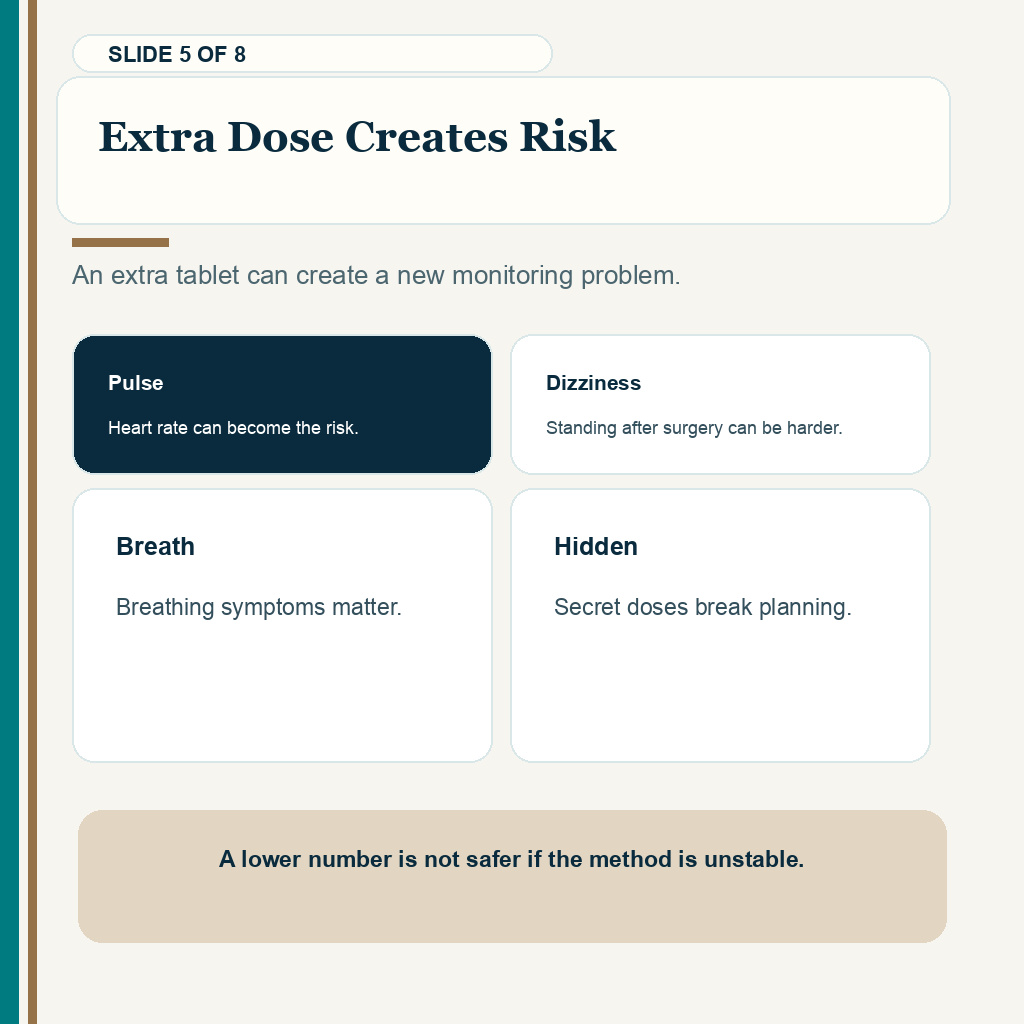
Taking a beta blocker outside the prescribed plan means using the medicine differently from the way it was prescribed. That can mean borrowing a tablet from someone else, taking an extra half tablet, restarting an old medicine, taking propranolol for nerves without telling the clinic, or mixing it with a sedative because you are afraid the operation will be cancelled.
The risk is not only that the blood pressure may fall. Beta blockers can slow the pulse and change the body’s response to stress. An extra dose can contribute to low pulse, dizziness, fainting, breathing difficulty, or unstable blood pressure. If this happens during travel, while standing after the procedure, in the toilet, or at the hotel, you may be in more danger than you were from the original high reading. Chest pain, severe shortness of breath, almost fainting, confusion, or breathing trouble after an unplanned dose needs local medical help, not another attempt to hide the mistake.
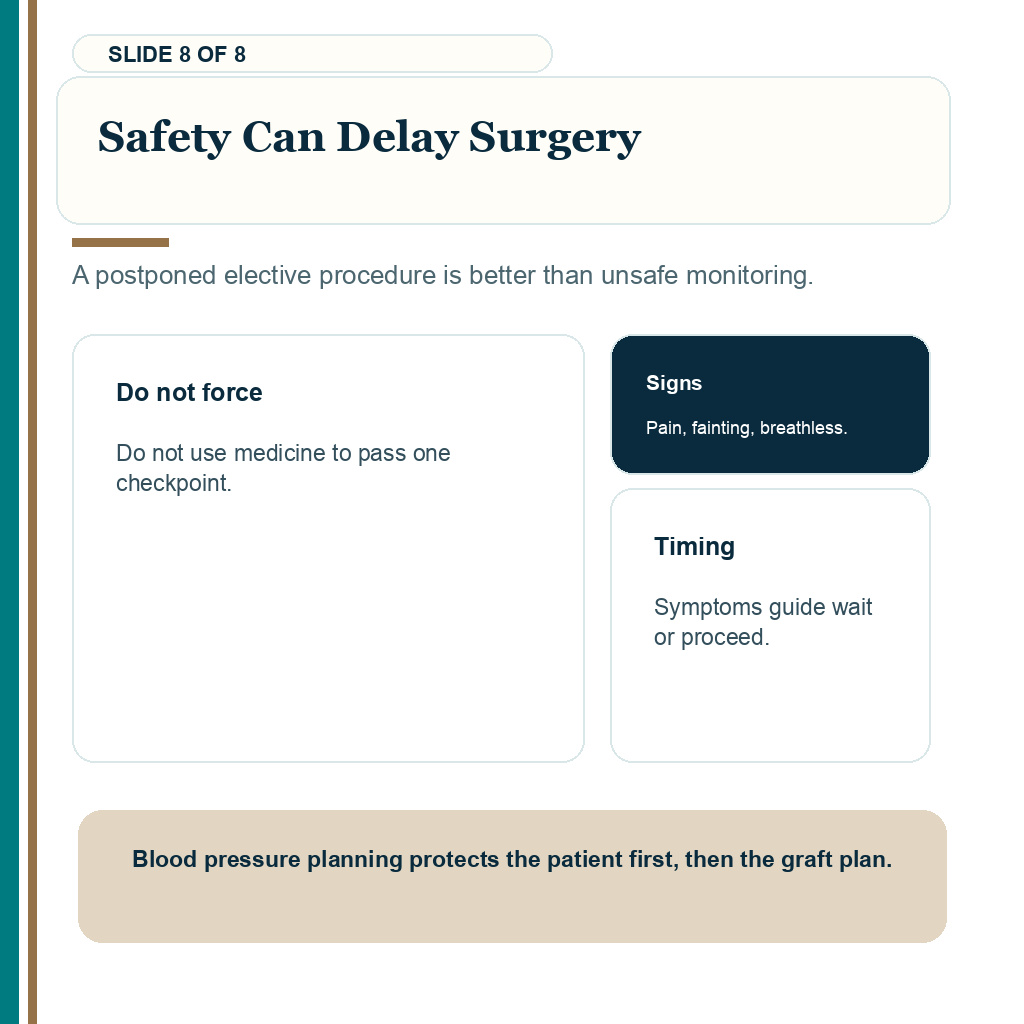
After months of planning, travel, payment, and anxiety, the pressure to continue can be strong. I understand that. But the medical decision cannot be forced by disappointment. If the reading is unsafe unless medication is improvised, the timing may need to change.
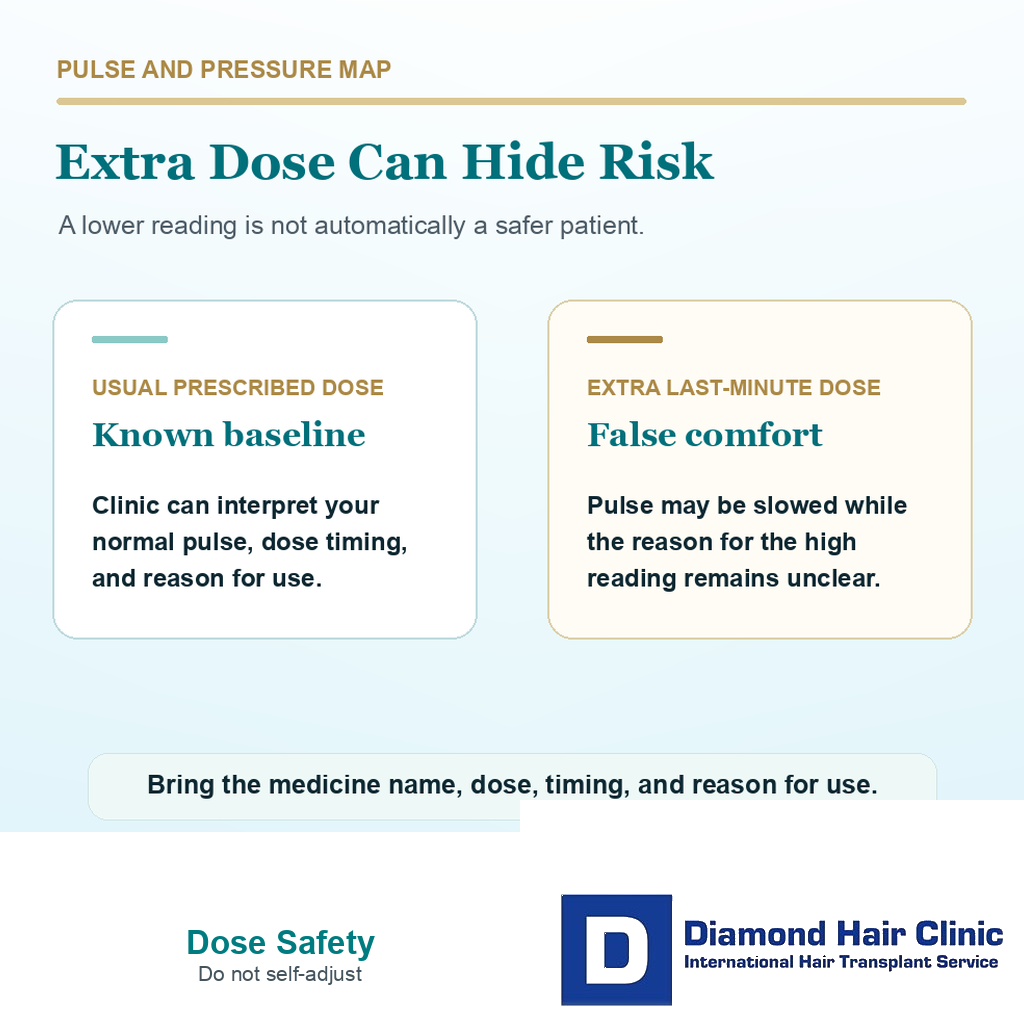
Beta blockers can change pulse and blood pressure readings, so dose timing should be reviewed instead of adjusted alone.
Home numbers are more useful when you say how they were measured. A rested seated reading tells a different story from one taken after stairs, coffee, or a tight cuff.
Pulse and blood pressure both matter
Beta blockers reduce the effect of signals similar to adrenaline on the heart and blood vessels. Depending on the medicine and your baseline, they can lower heart rate, reduce force of contraction, and help control certain rhythm symptoms or blood pressure patterns. That is useful when prescribed properly. It can be risky when used suddenly or without supervision.
The pulse is especially important. If your usual resting pulse is around 58 beats per minute on a beta blocker and you feel well, that may be acceptable for you. If you take an extra dose and arrive pale, weak, and dizzy with a much lower pulse, the situation changes. The issue is no longer only high blood pressure. It becomes a broader circulation and monitoring problem.
Occasional use still belongs in the medical history. A tablet taken for performance anxiety, public speaking, tremor, or palpitations can still affect pulse and blood pressure on the procedure day. I ask about the last dose, usual effect, and any combination with alcohol, sedatives, caffeine, ADHD medicine, or other stimulants.
Adrenaline in local anesthesia needs medication context
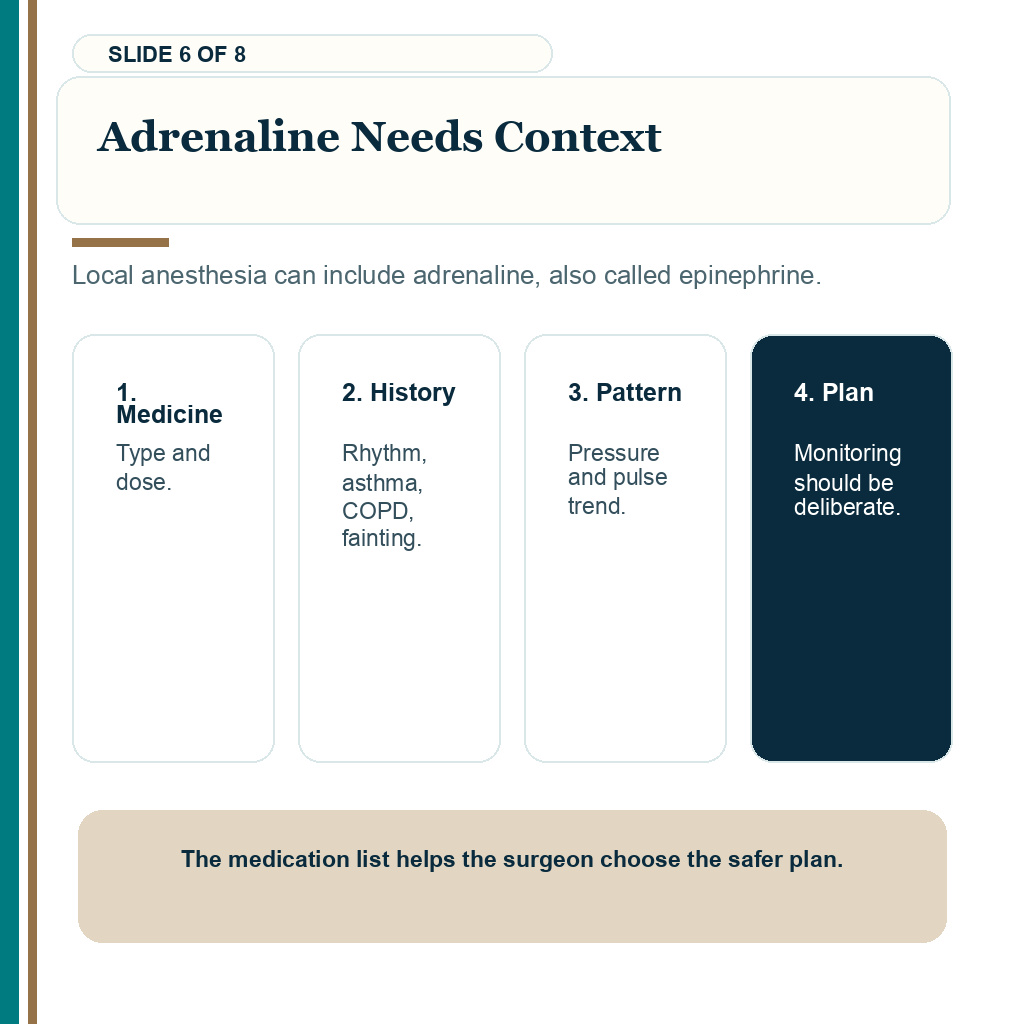
Hair transplant local anesthesia often uses adrenaline, also called epinephrine, to help the anesthetic last longer and reduce bleeding. This is common in many medical and dental procedures. For many people it is safe when the dose is controlled and monitoring is in place. It needs more attention when there is unstable blood pressure, rhythm symptoms, stimulant sensitivity, heart disease, or certain medication combinations.
Beta blockers are part of that medication review. Nonselective beta blockers, such as propranolol, deserve particular caution because they may change the way the body responds to adrenaline. This is not an instruction to stop the medicine by yourself. Sudden changes can also be dangerous. It means the surgeon must know, the dose must be clear, and the anesthesia plan must be chosen with medical awareness rather than surprise.
Adrenaline in hair transplant anesthesia becomes more important when beta blockers, pulse, blood pressure medicine, rhythm symptoms, anxiety medicine, or heart history are part of the case. If a clinic treats local anesthesia as routine for everyone without asking those questions, the preoperative review is too shallow.
These 8 beta blocker safety slides separate usual medicine, exact dose details, pulse, missed doses, extra dose risk, adrenaline context, arrival readings, and when surgery should wait. Swipe sideways, use the arrows one slide at a time, or choose a number below the image.