



First night anxiety after FUE
The first night is when you may be tired, medicated, swollen, uncomfortable, and afraid of ruining the result. You may fall asleep upright and wake up sideways. You may see fluid on the pillow and immediately imagine that many grafts are gone. This is exactly when a first night after FUE triage plan helps more than repeated checking.
The fear is understandable because the surgery is expensive, the donor area is limited, and the result matters emotionally. But fear does not give a diagnosis. I separate the mechanical details. Was there direct rubbing? Did the recipient area press into the pillow? Was there blood from the donor area? Was the contact brief or repeated for hours? Did the scalp look changed afterward?
A neck pillow after a hair transplant does not make sleep perfect, but it can reduce rolling and protect the head position during the most vulnerable early phase.
Sleeping pressure timing
The first few days matter most because the grafts are still settling in the recipient channels and the scabs are forming. Clinics often give strict instructions for elevated sleeping during this window. The exact protocol can differ, especially when the crown, temples, beard, or donor area has been treated.
By around day 10, many clinics become less worried about graft dislodgement because the grafts are much better anchored and scab removal is often underway or already completed. That does not mean the scalp becomes ordinary skin overnight. Pressure can still irritate the donor area, create soreness, disturb scabs, or make swelling feel worse.
When I judge a sleep accident, I use the timing of when hair transplant grafts become secure together with the visible scalp findings, not as a reason to ignore bleeding or pain.
Donor seepage is different from recipient graft trauma
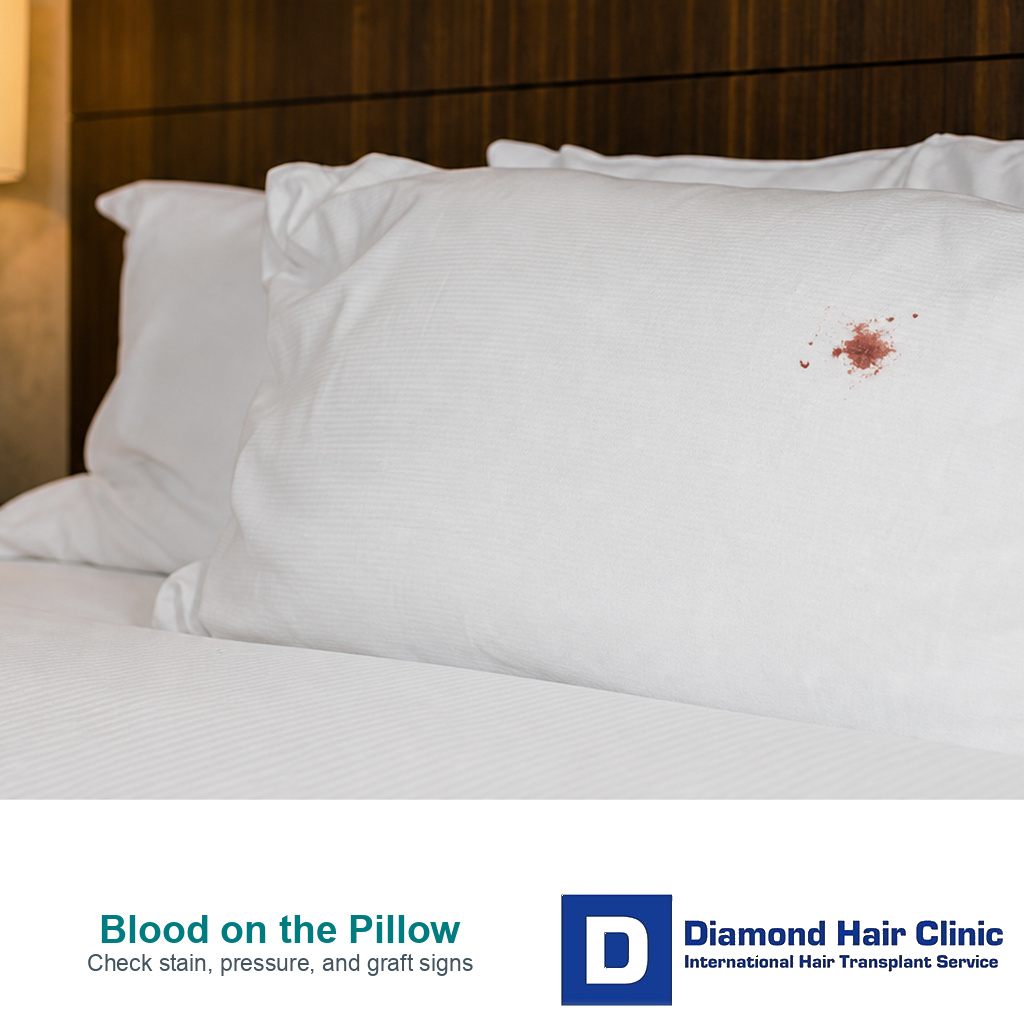
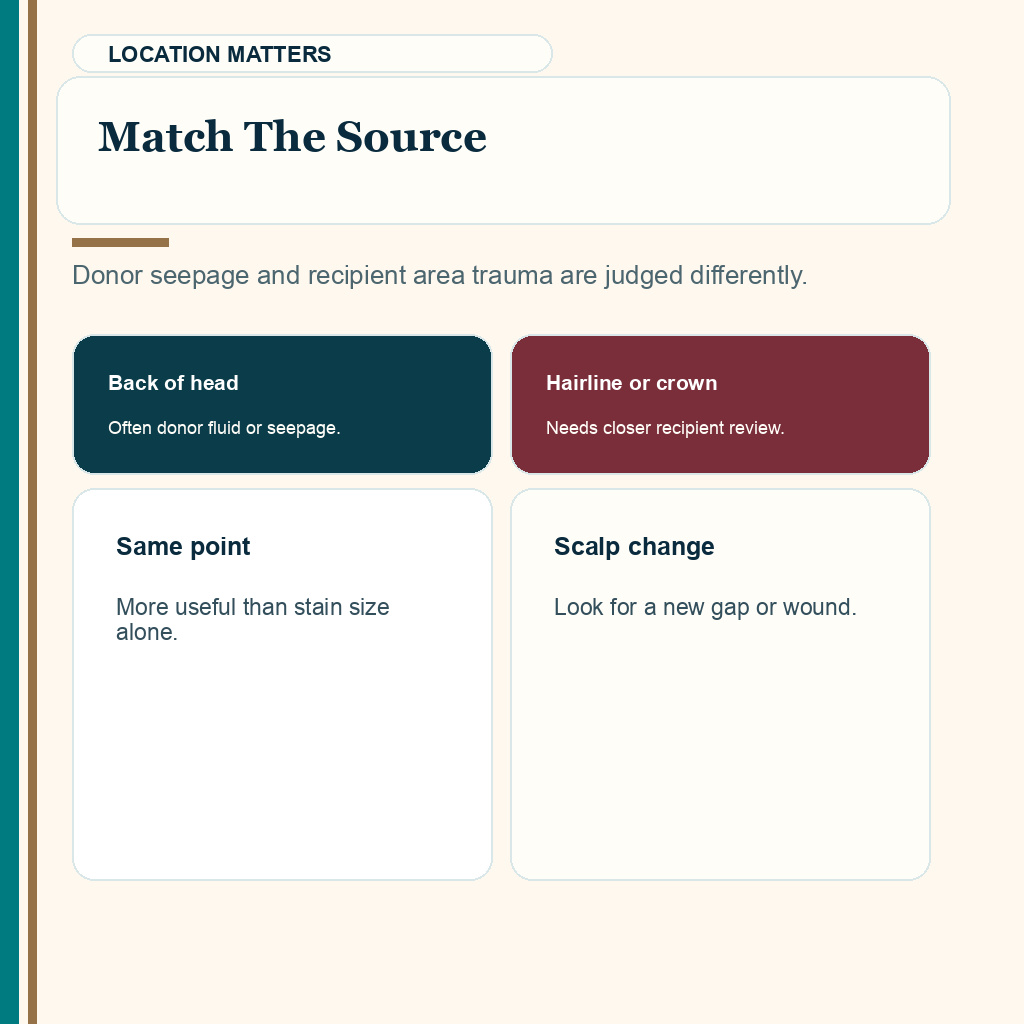
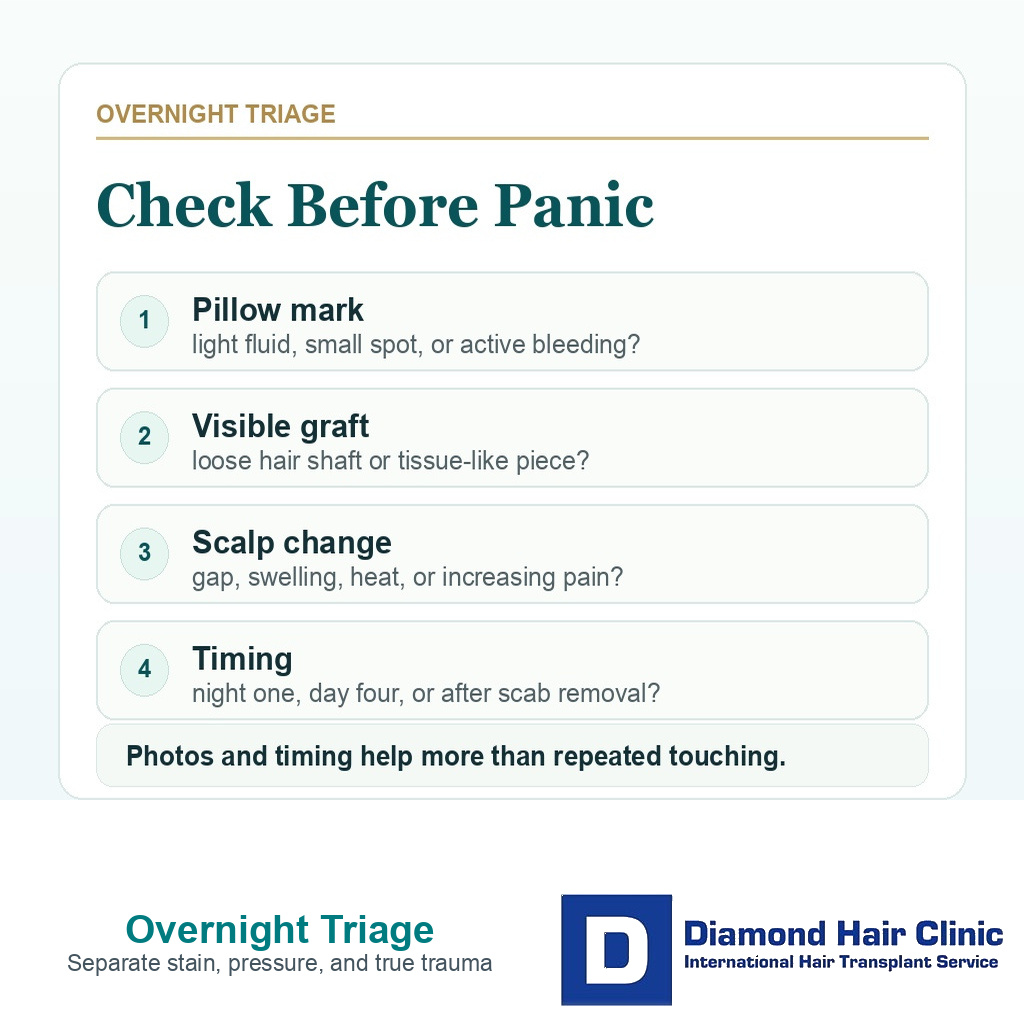
The donor area can ooze or stain the pillow because it has many tiny extraction points. This is especially possible in the first night or when the back of the head rests against a pillow, towel, or travel cushion. Match the stain to the part of the head that touched the fabric. A diluted pink or yellowish patch behind the head often points to donor seepage. A bright red point that lines up with the hairline, temple, or crown needs closer review of the recipient area. The stain may look alarming even when the recipient grafts were not touched.
Recipient trauma is different. I pay closer attention when the blood spot lines up with the transplanted area, when there is a visible disrupted site, when pain appears in the same point, or when the patient knows the grafts rubbed against fabric. The location matters because donor seepage and recipient trauma are different problems.
If the concern followed a knock, fall, or direct impact, I treat the situation more like a bumped head after a hair transplant. A pillow pressure episode is usually lower force than a direct impact, but the scalp still needs to be judged from photos and timing.

Blood on the pillow should be matched to the donor or recipient area before assuming graft loss.
Side sleeping can be lower risk when there is no visible damage
Gravity or a side position alone rarely moves grafts inside the skin when the recipient area was not touched. Graft damage usually needs contact, rubbing, pressure, picking, bleeding, infection, or poor healing conditions. Gravity alone is not the usual problem.
The real concern is whether the side position allowed the recipient area to rub against the pillow, blanket, hand, or arm. If there was no bleeding, no visible graft, no new gap, and no changed skin pattern, the risk is usually lower than the fear feels at that moment.
Still, do not convert that sentence into permission to sleep carelessly. The early instructions exist because prevention is easier than repairing a problem. If the episode happened on night one, improve the sleep setup the same day instead of testing whether it happens again.
Details to send to the clinic
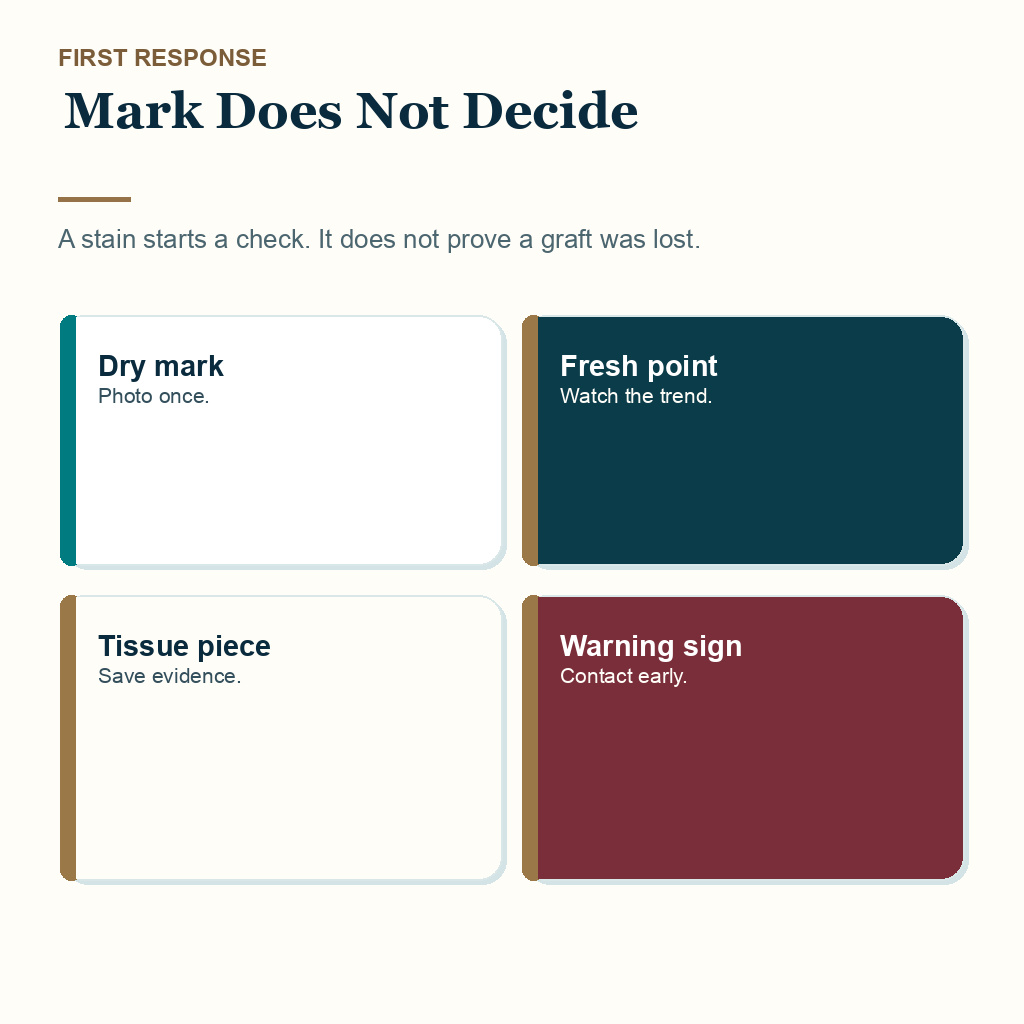
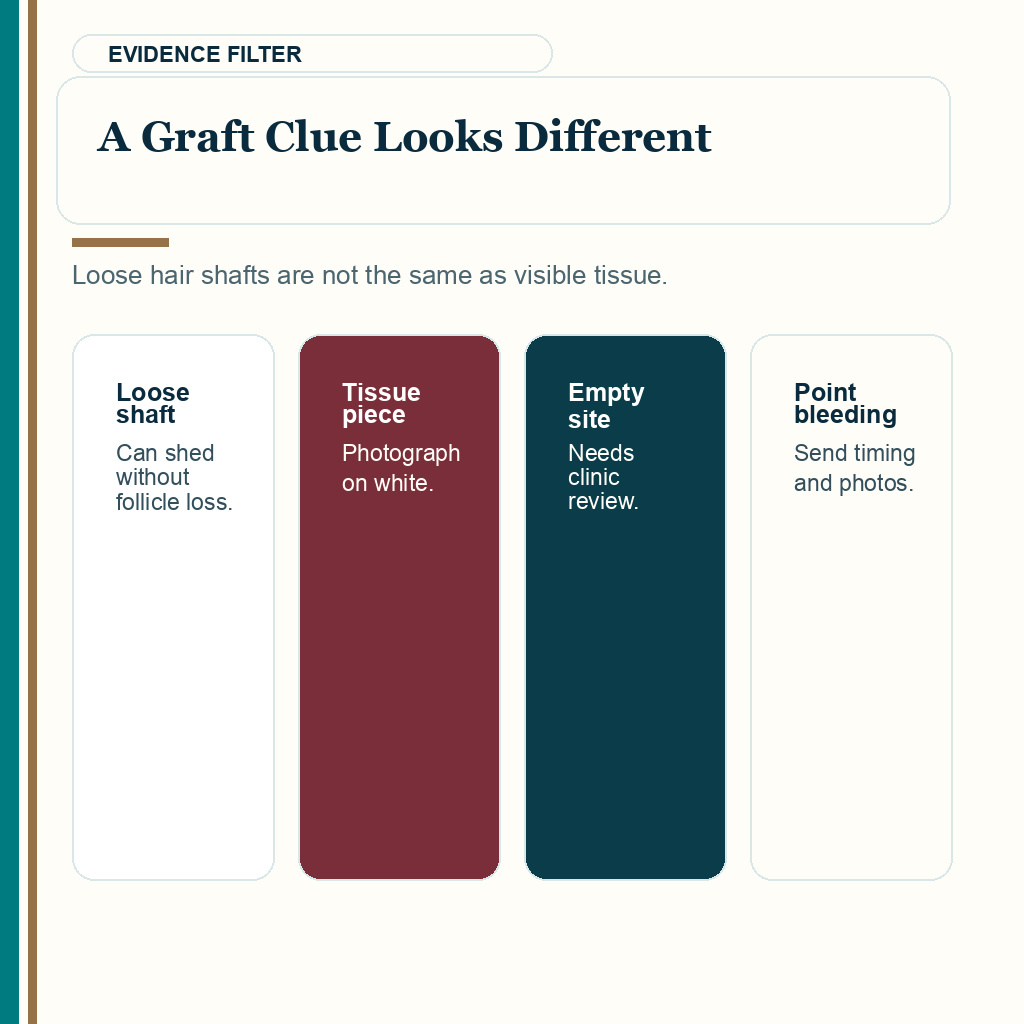
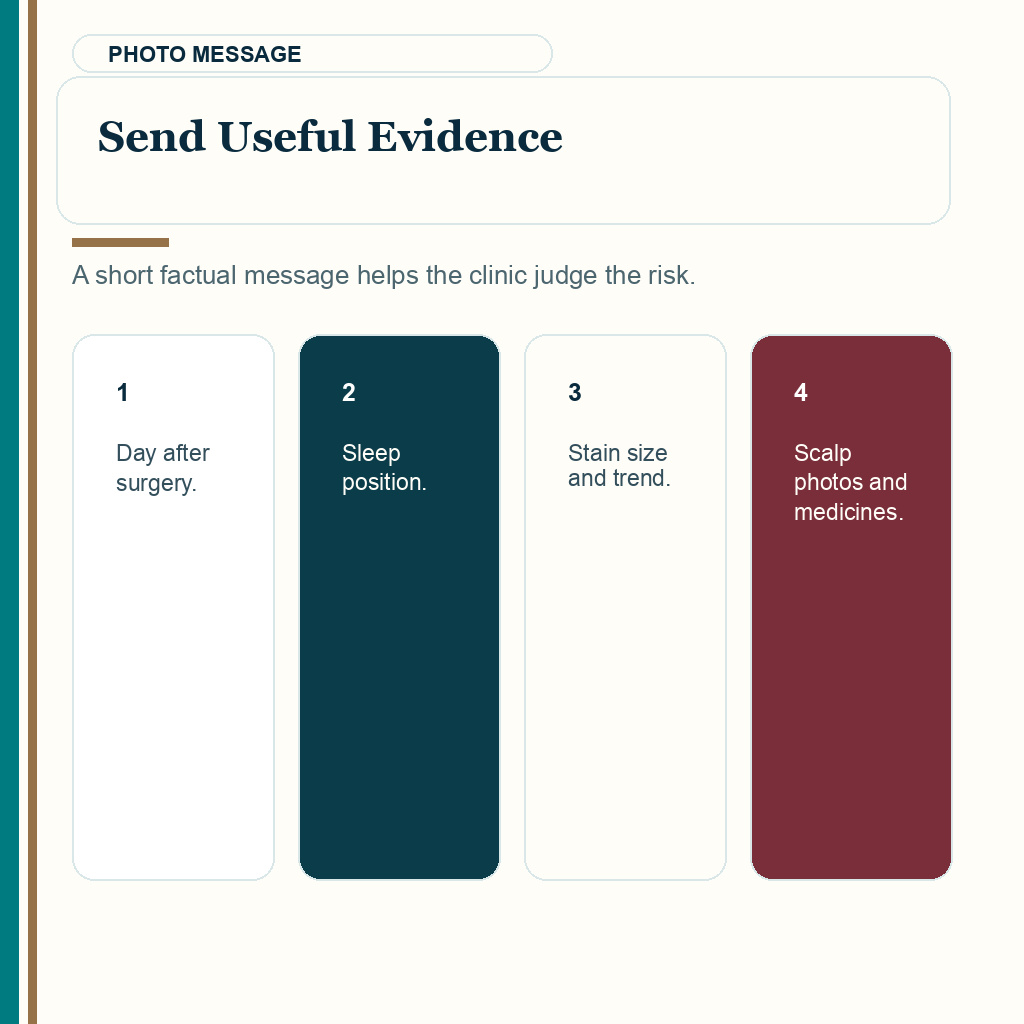
Send the day after surgery, the time you woke up, the position you found yourself in, the area that touched the pillow, and whether the mark came from the donor area or recipient area. Add clear photos of the pillow stain and the scalp. If a hair or piece of tissue came out, photograph it beside a clean white background without pressing it back onto the scalp.
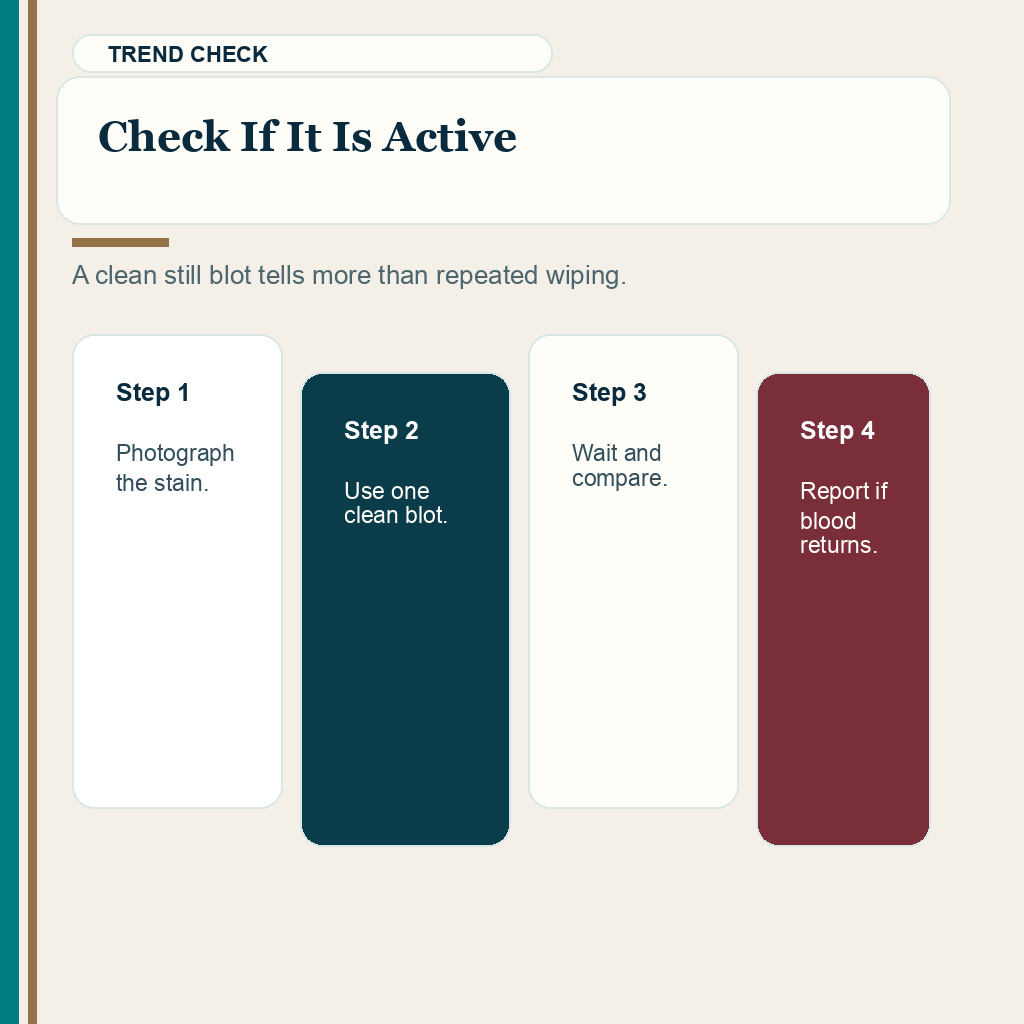
Before asking how many grafts were lost, map the stain. The useful details are where your head touched, whether bleeding repeated, and whether the same scalp point changed afterward.
Describe the amount in plain words. Was it one dry dot, a coin sized stain, a wet patch, bleeding that returned after one clean still blot, or fabric that became soaked? Say whether a new pillow cover or towel became stained again after you changed it. A small dried mark is judged differently from bleeding that continues after you changed the pillow cover or gauze.
Also mention pain level, fresh bleeding, swelling, headache, dizziness, vomiting, blood thinning medicine, alcohol, smoking or nicotine, sleeping pills, and whether you scratched in your sleep. If the sleep accident happened after nausea or retching, I review it through the same pressure risk frame as vomiting after a hair transplant.
The best message is short, factual, and based on photos. Repeated anxious messages without photos make it harder for the clinic to judge. One clear message with timing, location, and images is usually more useful.
Reducing the chance of rolling over again
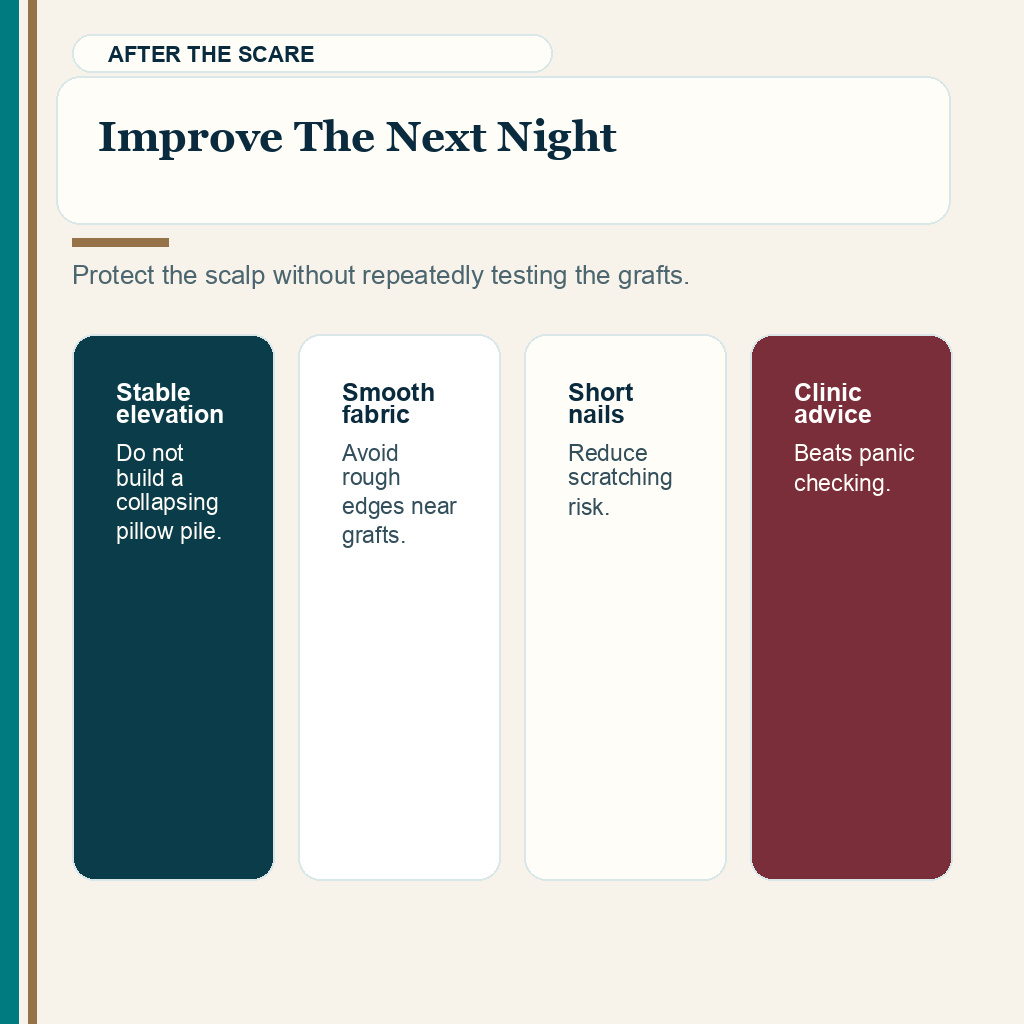
Use a stable elevated position, not a pile of pillows that collapses during the night. A recliner, wedge pillow, firm back support, and neck pillow may work better than soft stacked pillows. Keep the room cool enough that sweating and restlessness do not increase.
Trim fingernails before surgery. Keep clean pillow covers or towels ready for fluid from the donor area. Wear clothing that does not need to be pulled over the head. Avoid alcohol and unapproved sedatives, because a patient who sleeps too deeply may not wake when the head position changes. If sleep medication is being considered, treat sleeping pills after a hair transplant as a decision approved by the clinic, not an experiment.
Use smooth, clean fabric near the scalp. A towel can protect the pillow from donor seepage, but rough folded fabric should not sit against the recipient area where it can catch scabs or hairs. Keep the setup simple enough to repeat while tired, with stable elevation, clean smooth fabric under the donor area, and no loose towel edge near the grafted hairline.
Extreme methods to stop scratching can create new problems if they are improvised in panic. Start with prevention that does not create a new risk. Keep nails short, hands clean, sleep position stable, and instructions clear. If the patient has a history of strong sleep scratching, share that with the clinic before surgery, not after blood appears on the pillow.

Bleeding or pain that needs medical review
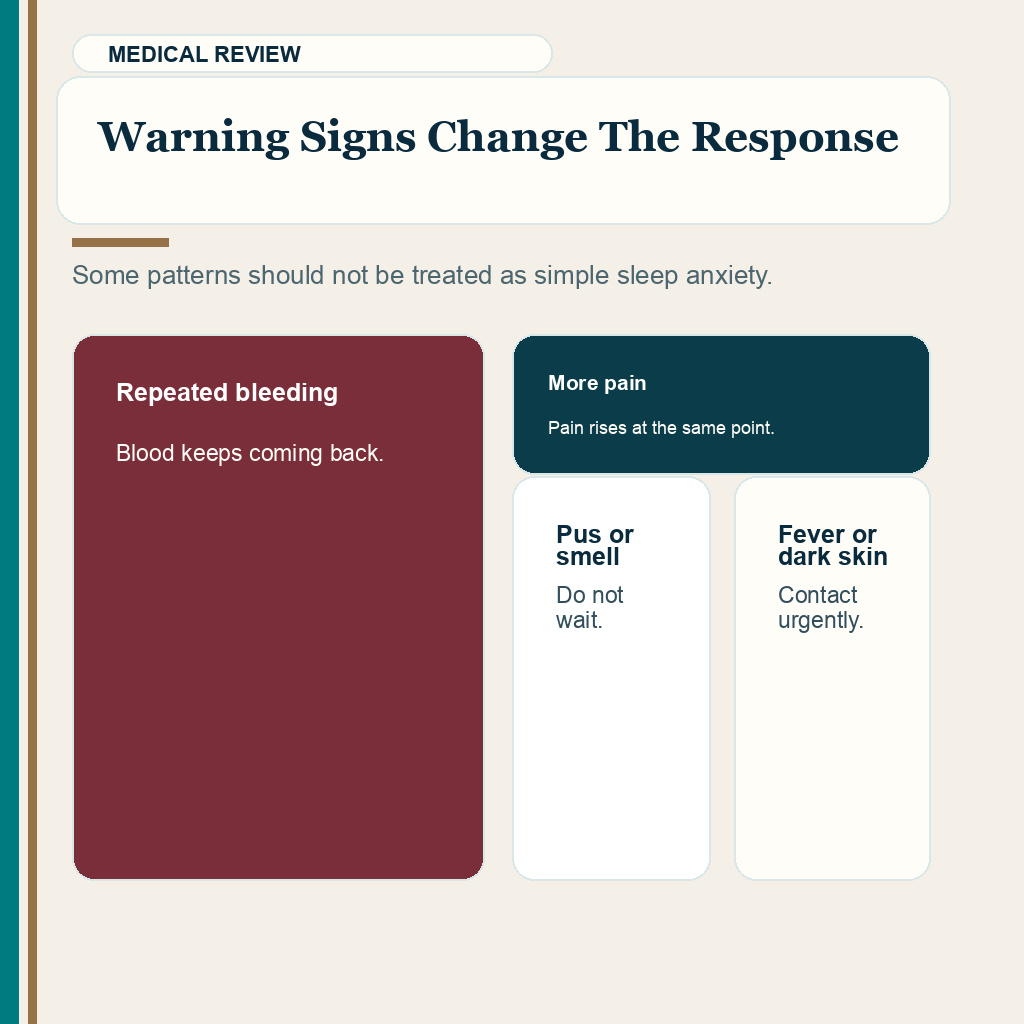
Get clinic review quickly if bleeding continues, returns repeatedly, or appears with increasing pain, expanding swelling, discharge that looks like pus, bad smell, fever, spreading redness, black or grey skin change, or a clear wound opening. The same applies if a visible piece that looks like a graft came out, especially in the first few days.
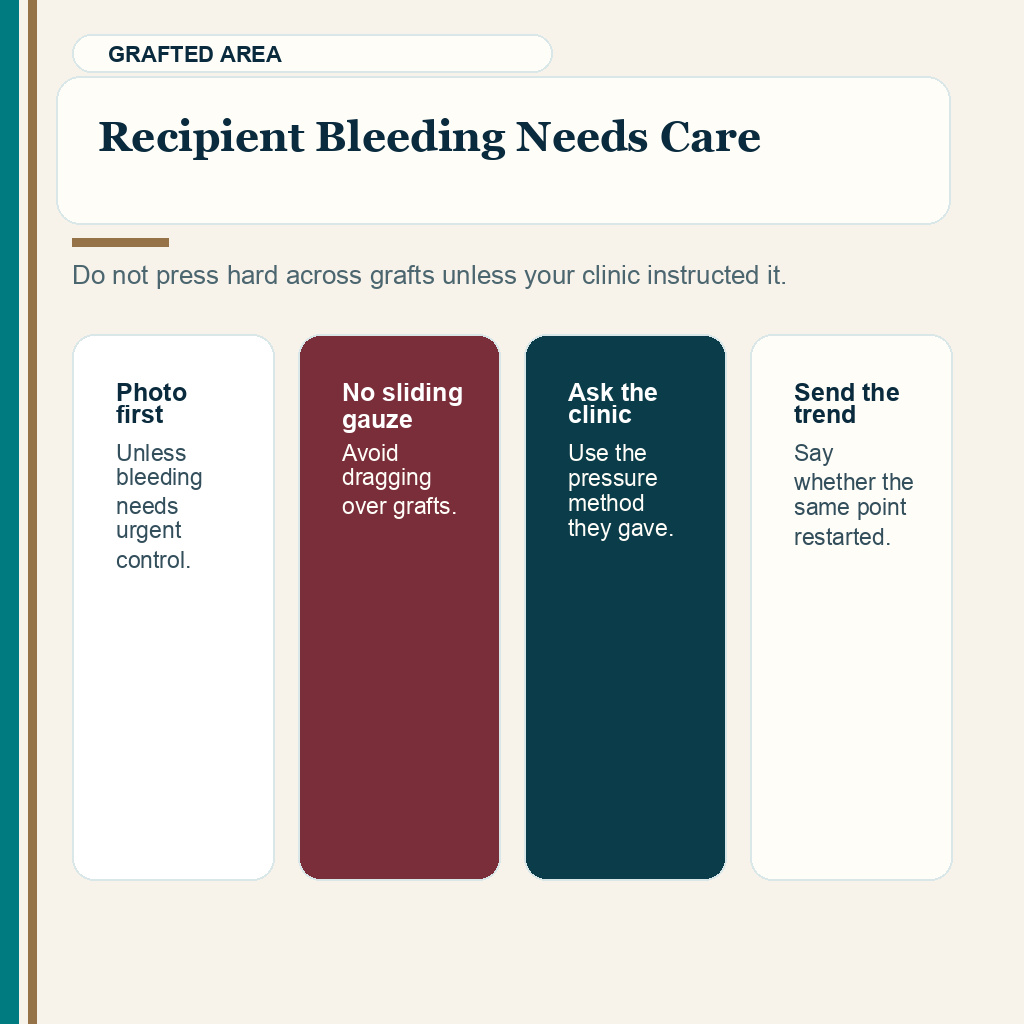
Do not wait if bleeding will not slow after steady pressure, if fabric keeps soaking, or if you are on blood thinning medicine. For a point in the donor area, hold clean gauze still rather than dabbing on and off. For the recipient area, use only the pressure method your clinic has instructed. Tell the clinic how long pressure was held, whether the blood soaked through, and whether the same point started again. That is no longer only a worry about sleep position. The scalp may still be fine, but the bleeding pattern needs medical judgment.
Head pressure, migraine, or strong headache after a bad night can also confuse the picture. If headache is the main symptom, headache after a hair transplant needs its own review because pressure, dehydration, blood pressure, or medication issues may need stronger attention.
Do not hide a warning sign because you are embarrassed. Patients often feel guilty when they roll over, scratch, or touch the grafts. I am not judging guilt. I am trying to decide whether the scalp is safe, whether bleeding needs control, and whether the sleep plan needs adjustment.
Pillow contact becomes less stressful with time
After the early higher risk window, pillow contact becomes less frightening, especially once the grafts are anchored and the scabs have been removed according to the clinic’s protocol. Even then, the scalp may remain tender, numb, itchy, or sensitive for weeks.
That sensitivity can make you think the grafts are still loose when the issue is actually nerve irritation, donor soreness, scab tightness, or dry skin. If the main issue is the urge to check or touch the area, touching grafts after a hair transplant becomes the more relevant risk.
After that milestone, still avoid tight hats, headphones, hard pillows, massage, or aggressive washing just because one recovery step has passed. The scalp becomes safer gradually. Less risk of graft displacement does not mean unlimited pressure is wise.
Judging one sleep accident
One sleep accident rarely decides the whole result by itself. A hair transplant result depends on graft quality, handling, placement, blood supply, infection control, aftercare discipline, donor capacity, native hair stability, and months of growth. A brief sleep position mistake is only one piece of the picture.
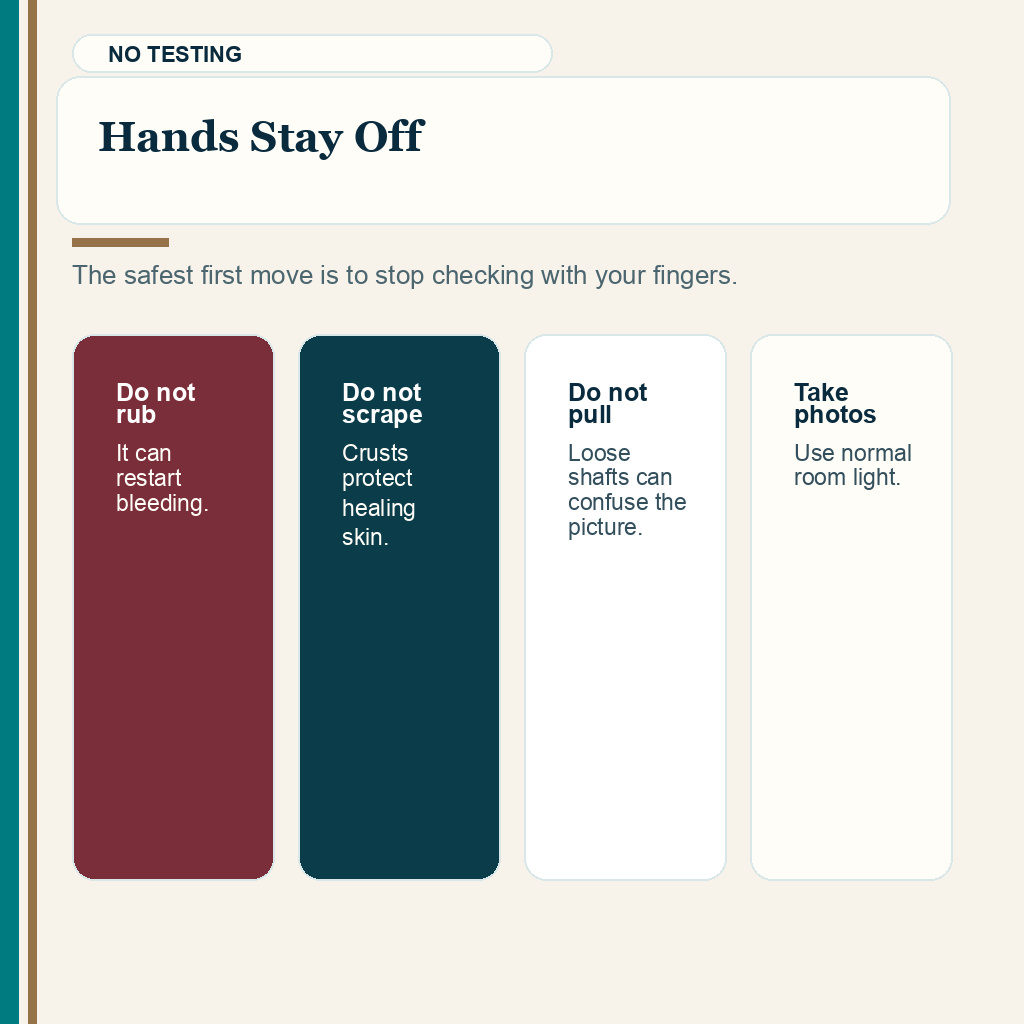
Use the accident as useful information. Check the scalp once, take clear photos, send the right details, improve the sleep setup, and stop repeatedly testing the grafts. If the clinic says the scalp looks clean, accept the instruction and continue the protocol.
You are in a better position when you protect the grafts after a mistake than when you keep touching the scalp out of fear. Hair transplant recovery needs discipline, but it also needs proportion. Rechecking the same spot again and again is not aftercare.
Read this review excerpt
First wash completed and visual instructions given to my daughter.