



Bad Hairline Graft Removal Needs a Disciplined Repair Plan
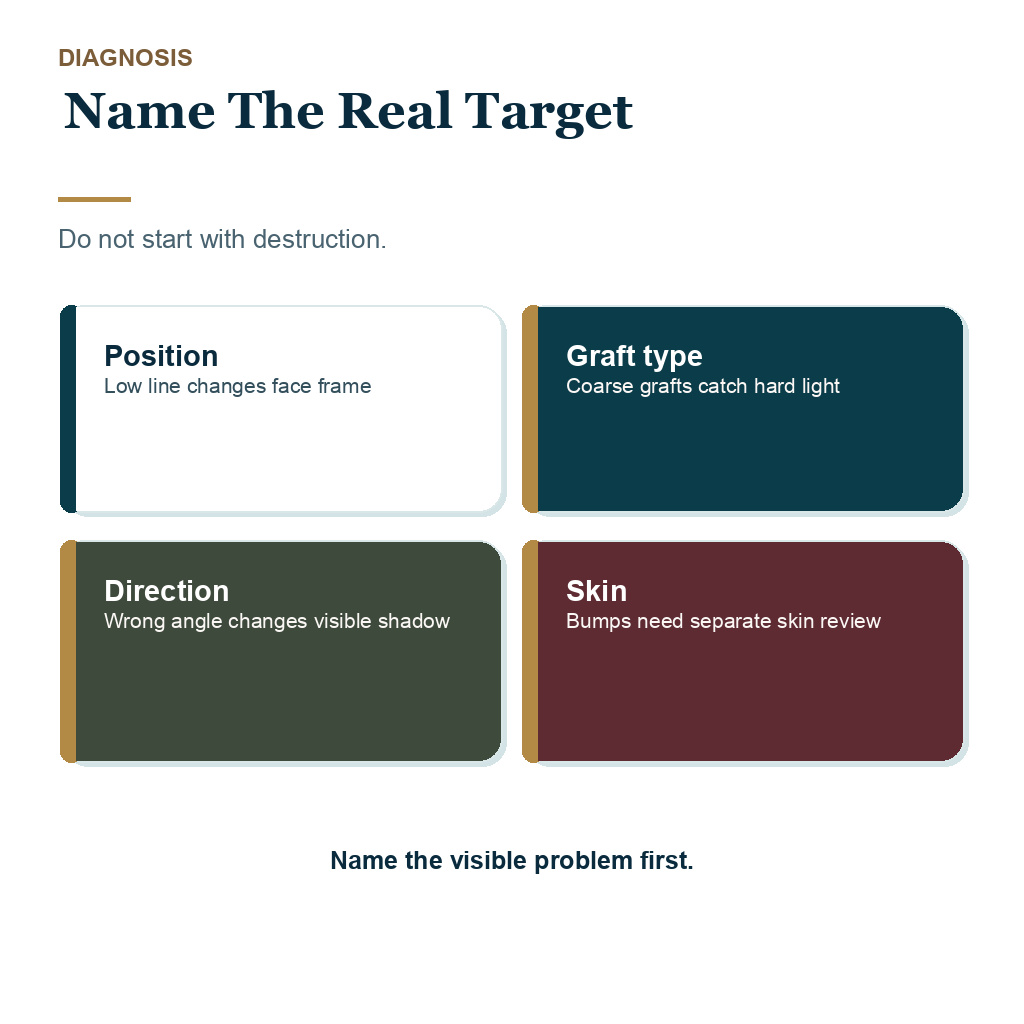
A low, dense, or artificial front line can draw attention for different reasons. The position may be wrong, the grafts may be too coarse, the exit angles may look unnatural, or the surrounding skin texture may be noticeable. Removal should wait until the surgeon has mapped which problem is creating the visible pattern, because each one needs a different repair plan. Only then can you compare repair prices sensibly. Removing a few coarse grafts is not the same job as changing a low border, correcting poor direction, or working around skin texture and limited donor reserve.
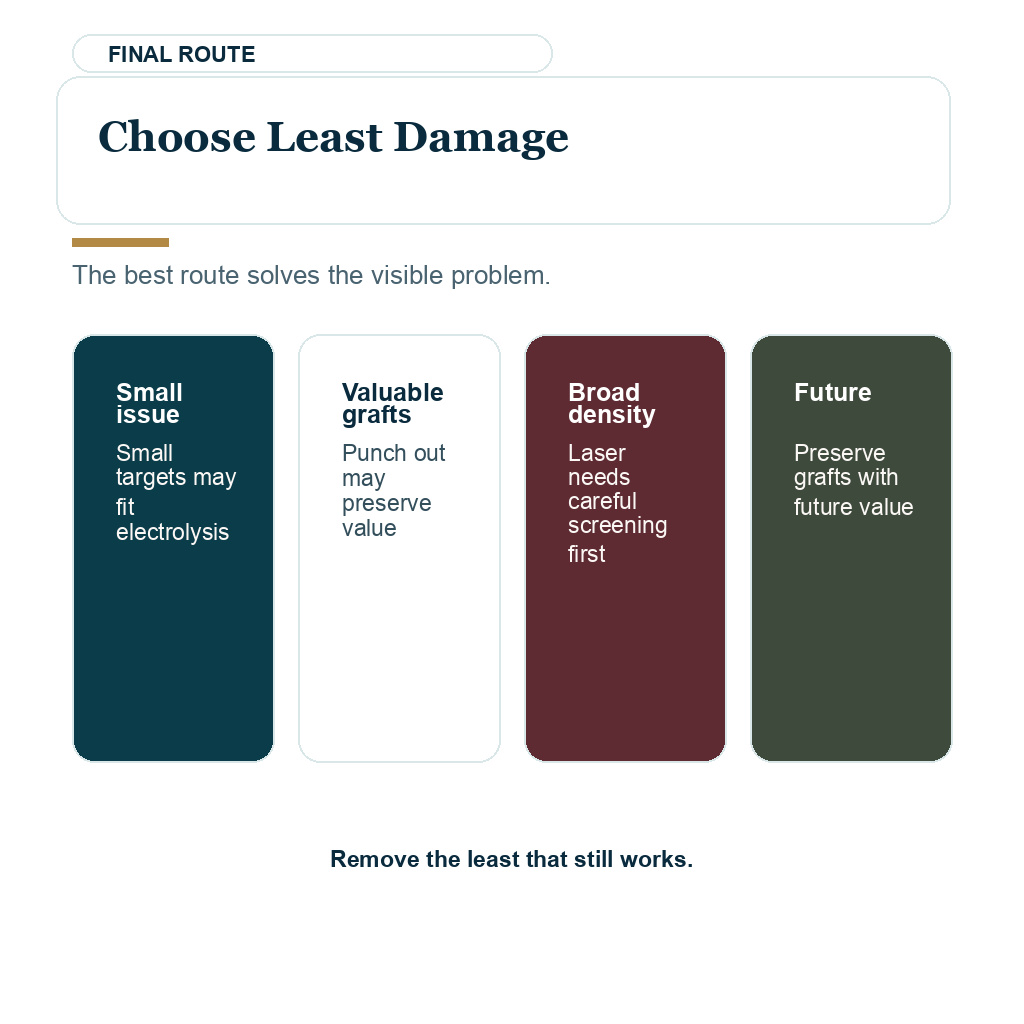
Electrolysis, laser hair removal, and FUE punch out can all reduce visible transplanted hair. They are not the same treatment. One destroys follicles one by one. One reduces hair with light energy and repeated sessions. One surgically removes grafts and may sometimes allow reuse. The right method depends on the exact problem in the first few millimeters of the hairline. If you are considering the light based option specifically, laser hair removal for transplanted hair explains the timing, pigment, and precision limits in more detail.
Choose the removal method after the wrong hairs have been mapped, not from the option that sounds easiest or fastest. A few coarse hairs at the edge, a low border, poor angles, and visible skin texture do not need the same repair plan. Mapping should protect useful grafts as well as identify the wrong hairs.
A small number of wrong hairs is different from trying to erase an entire transplanted hairline. The larger the area, the more I worry about visible skin marks, lost donor value, and how the new hairline will be rebuilt afterward.
After earlier removal sessions, I raise the threshold for taking more grafts out. The last visible hairs may bother the patient most, but the skin, scars, and future hairline design decide whether another removal step helps or simply creates a new repair problem.
I see this situation most often after a very low, dense, straight, or pluggy front line. You may want every transplanted hair gone, but that is rarely the first decision. The plan has to protect the skin, the remaining donor supply, and the long-term shape of the face. Bad hairline graft removal needs diagnosis before destruction.
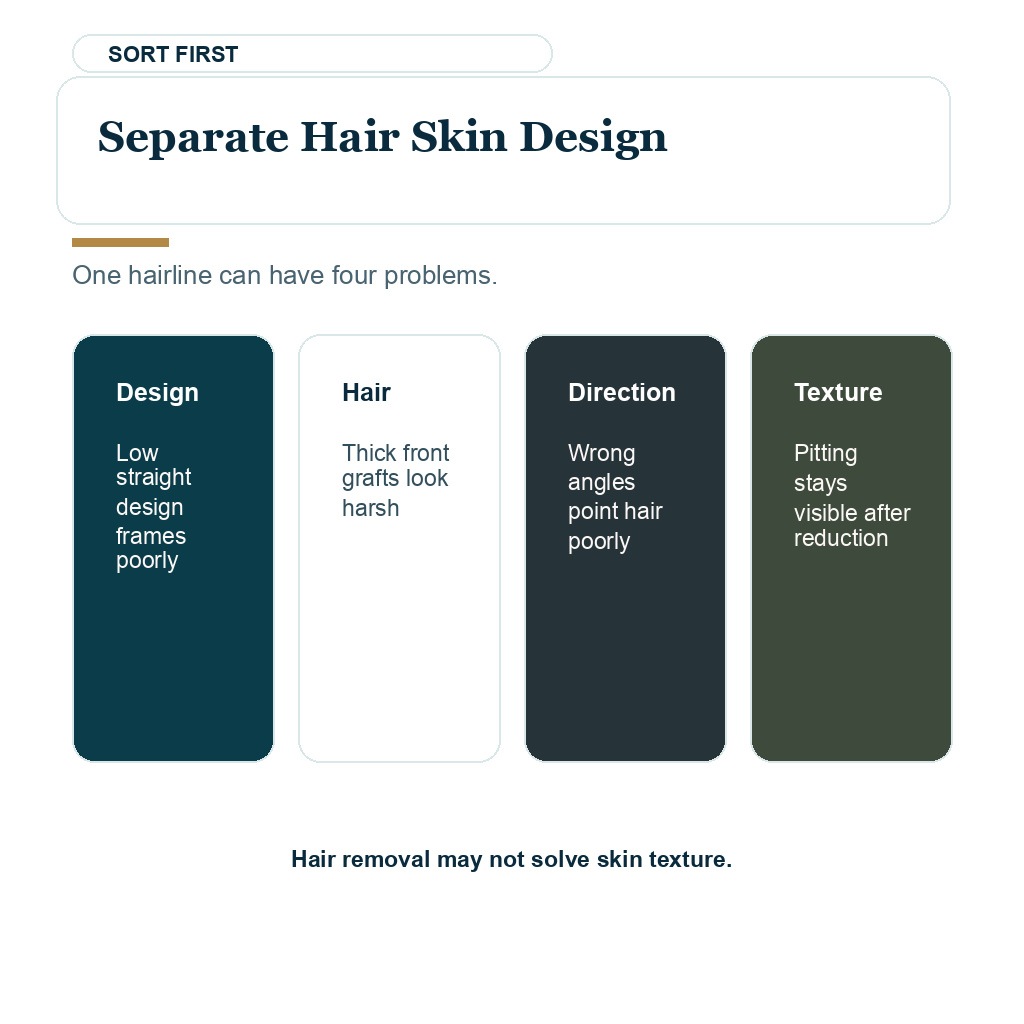
Hair, skin, and design need separate repair targets
The same hairline can look unnatural for several reasons. A line placed too low can make the forehead look tight and artificial. Thick grafts at the front edge can create a pluggy outline. Wrongly angled hairs can point forward or sideways in a way that catches light. Pitting, ridging, or cobblestoning can make the skin itself look operated on, even if some hairs are removed.
These differences matter because the treatment target changes. When the transplanted line sits too low, I first need a new design target before any hairs are destroyed. When the front row looks harsh, I may mark only the worst coarse grafts for reduction. If the visible issue is raised hairline texture after FUE, hair removal alone may leave the surface problem visible.
Removing or weakening front edge grafts can improve the hair outline, but it may still leave a raised or pale skin line visible. If the patient is worried about shaving later, I review the hairline shape, skin surface, native hair behind the transplant, and donor visibility together. The plan may point toward selective removal, camouflage with softer grafts, dermatologic scar review, or no surgery, but it should not treat every problem as a graft count problem.
Only after that diagnosis does the method make sense. Removing transplanted hair is only part of the decision. The clinical target is a hairline that looks more natural at conversational distance and under strong light.

Different removal methods solve different parts of a bad transplanted hairline. The first decision is whether the main issue is hair, skin, or design.
Can electrolysis remove selected bad hairline grafts?
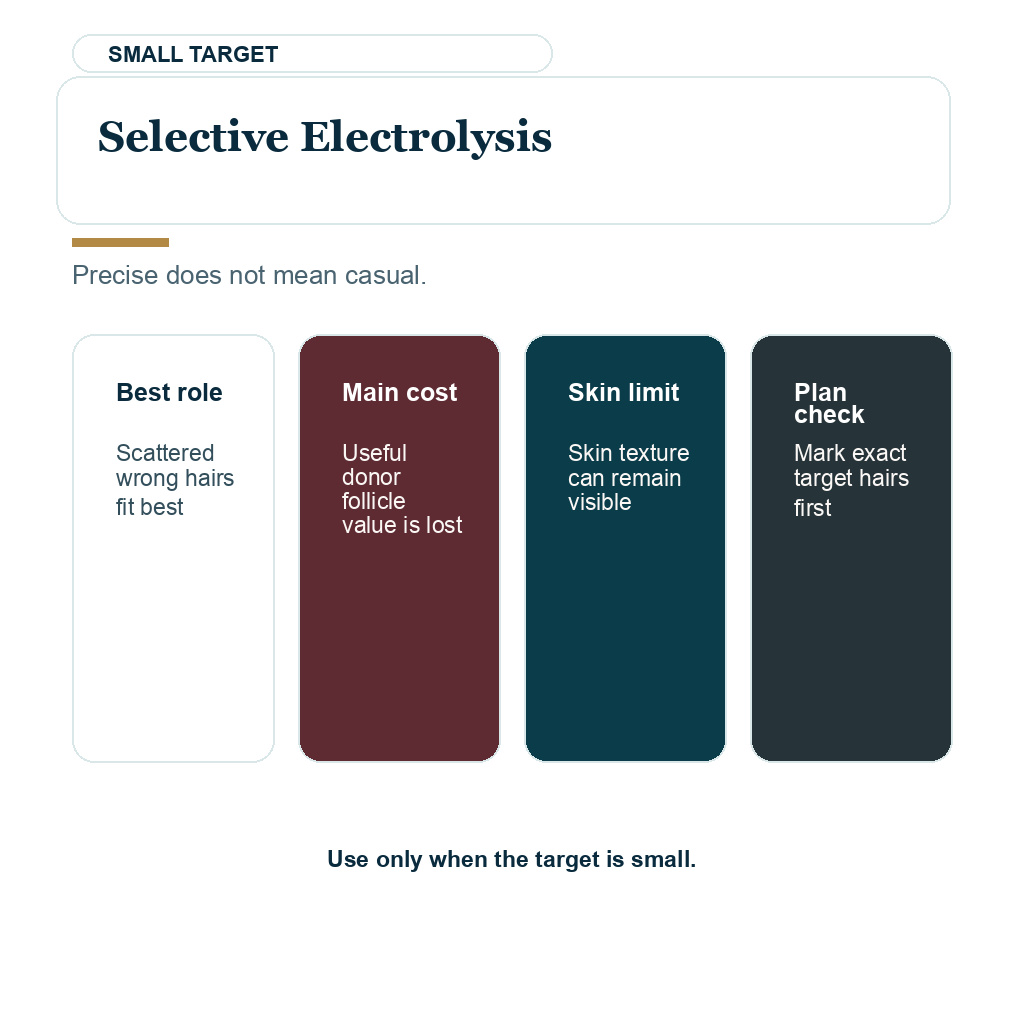
Electrolysis treats individual follicles. For a bad transplanted hairline, that precision can be useful. A skilled electrologist may target scattered coarse hairs, visible doubles, or grafts that sit at the wrong edge of the line. This is especially relevant when the surgeon wants to soften the outline rather than surgically open the whole recipient area again.
The tradeoff matters. Once a transplanted follicle is successfully destroyed by electrolysis, it is no longer available as donor hair. That may be acceptable for a small number of badly placed hairs. It becomes a more serious decision if much of the donor area has already been used, hair loss is still progressing, or future repair work may be needed.
Electrolysis also does not rebuild the skin. If the front edge has visible pitting or cobblestoning, removing the hairs may reduce the harsh look, but the texture may still need separate assessment. This is one reason a pluggy hairline repair plan should look at both the hairs and the recipient surface.
Electrolysis is most useful for a few specific hairs, not for the whole architecture of the hairline. It can be a precise tool, but it should not be treated as a casual cleanup.
Is laser hair removal exact enough for a transplanted hairline?
Laser hair removal sounds simple because many people already know it from body or facial hair treatment. On a transplanted hairline, the situation is more delicate. A hairline is a designed border. A few millimeters can change whether the forehead looks natural, low, rounded, or artificial. Laser does not select one graft with the same surgical precision as a punch or one follicle with the same direct targeting as electrolysis.
Laser results also depend on hair color, skin color, device choice, energy settings, and the number of sessions. Pigment change, irritation, and texture change are possible risks. These risks matter more in a visible front hairline than in a hidden body area. A small patch test and measured planning may be safer than trying to erase the line quickly.
Laser may have a role when the goal is general reduction in a dense transplanted zone and the clinical conditions are suitable. It is usually less attractive when the task is to remove only a few wrong grafts at the exact front edge. In darker skin tones, recently tanned skin, or already irritated skin, the threshold for caution should be higher.
I do not choose laser only because it feels easier. The method must match the hairline problem and the skin risk.
Can FUE punch out preserve graft value in selected cases?
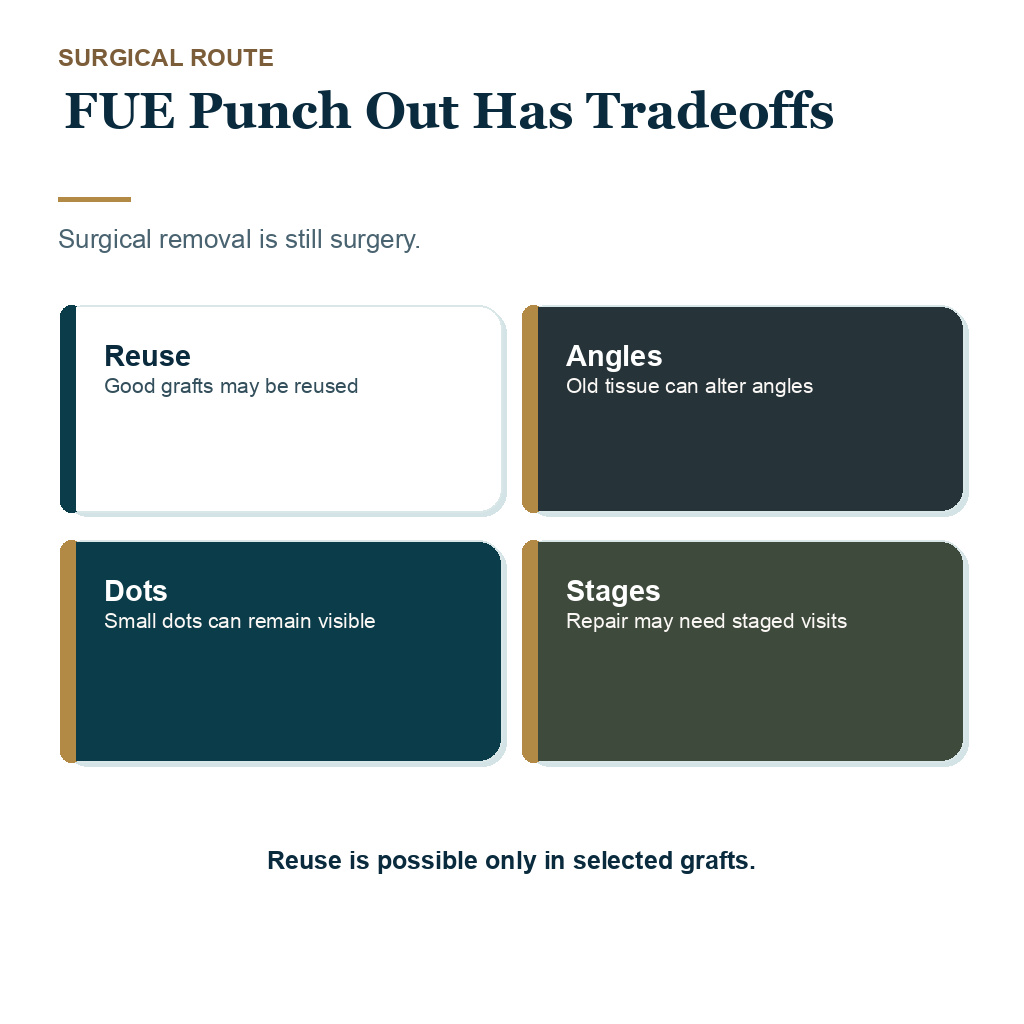
FUE punch out means removing selected transplanted grafts with a small circular punch. In selected cases, a removed graft may be placed elsewhere, so reuse is worth discussing when donor supply is limited. I do not count that graft as saved until it is actually removed and inspected, because scar tissue, angle, and transection can change what can be reused.
In practice, punch out repair is more demanding than ordinary FUE harvesting. The grafts are sitting in the recipient area, where there may already be scarring, altered angles, or dense placement. Removing them can leave tiny extraction marks. Sometimes removing the graft and the small raised tissue around it can help a bump or ridge look flatter. In other cases, the extraction mark becomes the new visible issue. If many grafts are removed from the frontal hairline, those marks may be visible in a short haircut or under strong light. The surgeon also has to decide whether the removed grafts are healthy enough and suitable enough to reuse.
This does not mean punch out is wrong. It can be the better choice when the grafts are too low, too coarse, wrongly angled, or too valuable to destroy. It is also closer to a true surgical repair strategy than simple hair reduction. The target marks also need space between them. If too many close grafts are chased at once, the extraction marks can become the new problem. The skin may need time to settle between stages, and the repair may need more than one session.
When people read about FUE hair transplant, they often think only about harvesting donor grafts from the back of the scalp. In repair work, FUE principles can also be used to remove selected transplanted grafts from the hairline. The difference is that the tissue is less forgiving and the cosmetic margin is smaller.
Repair examples are useful only when they match the method being proposed. A gallery of hairlines softened with camouflage grafts or lowered with a new border does not show how the surgeon handles FUE punch out. For a removal plan, I want to see complete cases that used punch out, including healed close views of the removal sites and the final hairline at the haircut length the patient normally keeps. Those examples cannot predict your result, but they tell you more than a general repair gallery.
Why do plucking and shaving not remove transplanted follicles?
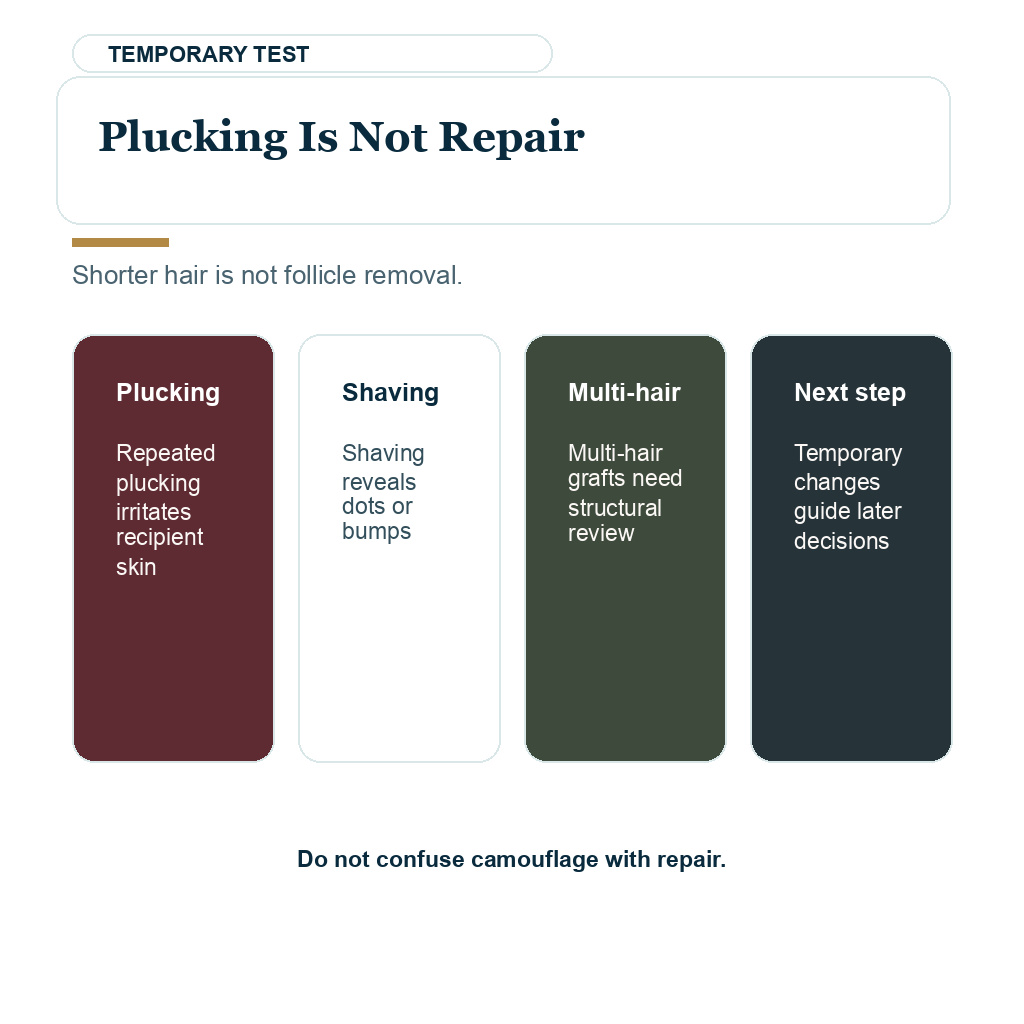
Plucking a transplanted hair may make the line look softer for a short time. It does not reliably remove the follicle. If the follicle survives, the hair can grow again. Repeated plucking may irritate the skin, create ingrown hairs, or make the area less reliable to assess.
Shaving can be useful as a visual test. If you buzz the front and the hairline still looks strange because of dots, bumps, or low placement, the issue is not only hair length. If the problem improves only when certain coarse hairs are shorter, that may support selective reduction rather than full surgical revision.
Do not use a buzzed view to set a removal target by counting visible hairs on each side. Hair length, exit angle, and the number of hairs in each graft can make those totals misleading. The repair target should be the grafts that create the visible problem, not matching two numbers.
Plucking should not be used to turn grafts containing multiple hairs in the hairline into natural singles. A graft containing multiple hairs is a structural placement problem. Pulling hairs out from the same graft does not redesign the original surgical choice. If those grafts are truly wrong at the front border, the options are usually camouflage, selective destruction, selective punch out, or a broader repair.
Temporary camouflage can help you cope, but it should not replace a proper repair assessment.
Timing can change the repair decision
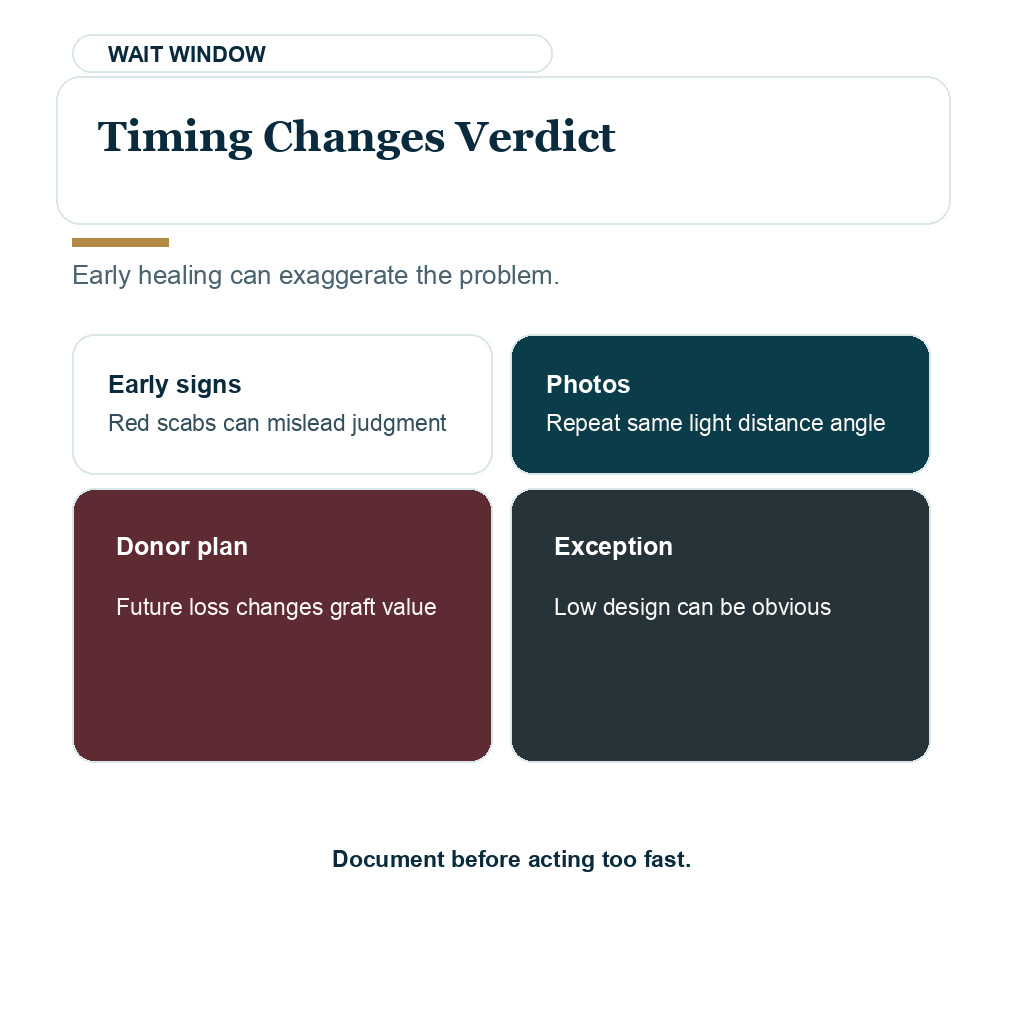
Early after surgery, it is easy to misread the hairline. Scabs, redness, swelling, shock loss, short stubble, and uneven early growth can make a result look worse than it will become. Acting too early can destroy grafts that might have settled acceptably or can add inflammation to skin that is still healing. If one side looks lower from the front but the top or angled views tell a different story, do not choose laser, electrolysis, punch out, or camouflage from that first impression. Map what catches the eye, then separate true low placement from density, direction, coarse grafts, skin texture, and viewing angle.
Before repair choices, a front and top view hairline check helps separate a real low border from density, direction, and viewing angle problems.
There are exceptions. A very low design may be obvious from the immediate postoperative photos. A row of coarse grafts placed far below a natural boundary may also be visible before full growth. Even then, the method and timing should be planned with precision. Sometimes the best decision is to document the situation, wait for skin recovery, and schedule staged correction instead of starting removal while the area is inflamed.
The waiting period is not passive. Good photos under repeatable lighting, close examination of direction and density, and review of donor availability all help. If hair loss is still progressing, the surgeon has to decide whether removal will create a better long-term plan or only solve one visible problem while exposing another.
Between removal and rebuilding, I plan the visible transition as carefully as the final hairline. Some patients spend a short stage with old grafts reduced before the new edge is complete. Before treatment, I talk through hairstyle, temporary camouflage, redness, and the likely wait before the next step.
A second opinion before repair decisions can be useful here. A disciplined review can prevent both extremes. One extreme is removing too much too soon. The other is accepting an artificial hairline because every concern was dismissed as early anxiety.
These 10 repair slides for a poor hairline separate diagnosis, skin texture, electrolysis, laser limits, FUE punch out tradeoffs, timing, review mapping, when to wait, and the least damaging route. Swipe sideways, use the arrows one slide at a time, or choose a number below the image.

What should a proper removal review include?
My review starts with photographs, but photographs are not enough. I review the hairline at rest, with the eyebrows relaxed, under normal room light and stronger light. I check whether the first row is too low, too straight, too dense, too dark, or too coarse. I also look for pitting, ridging, color change, and scars in the skin.
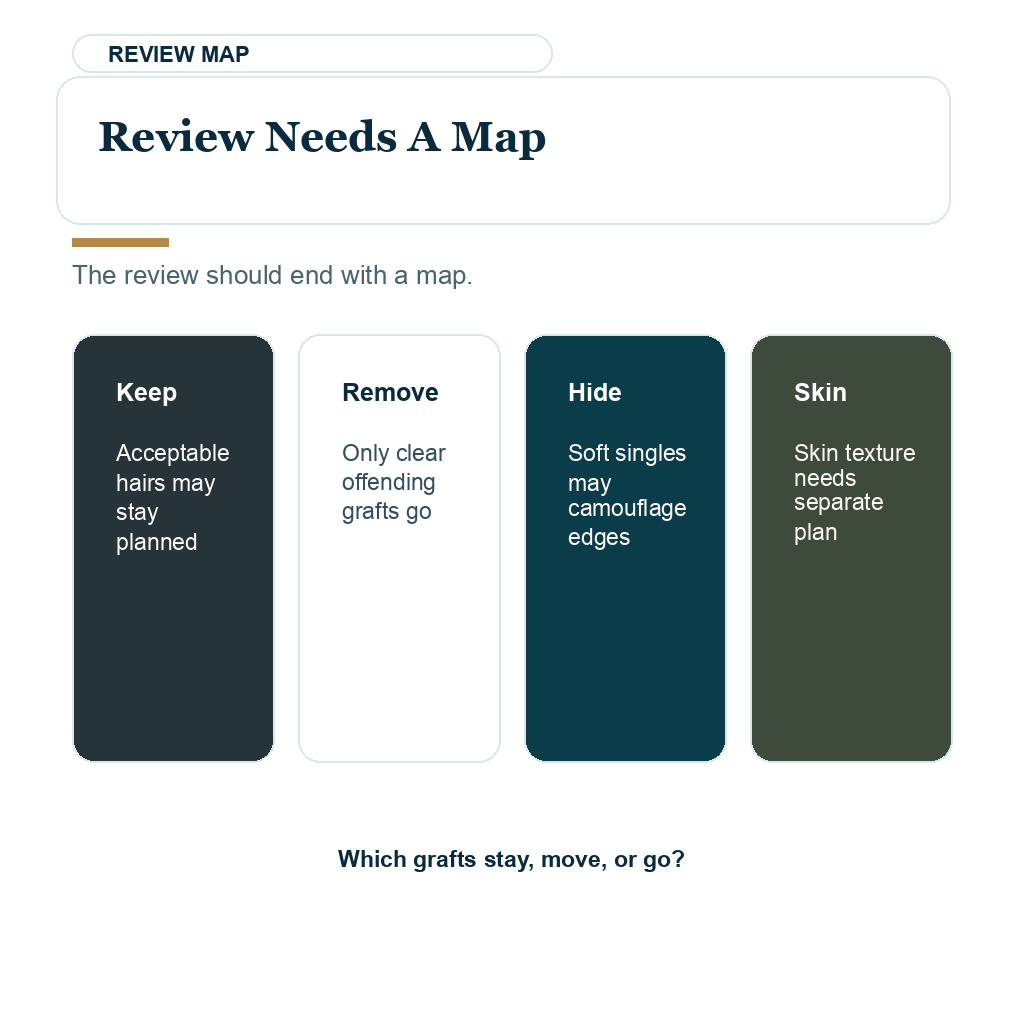
Then I separate the grafts into groups. Some grafts may be acceptable and worth keeping. Some may need to be removed. Some may be better hidden behind softer grafts with one hair. The plan changes with a weak donor area, advanced future hair loss, or a history of aggressive graft harvesting.
Before wide removal, mark the worst grafts separately from the grafts that might be hidden or softened. A small test area can show how the skin heals before the whole front edge is changed. Keep those target marks and the reason for each one in the record, so a later session does not drift into treating every visible hair.
For a small number of obvious wrong hairs, electrolysis may be enough. For a low transplanted line with valuable grafts, FUE punch out may deserve discussion. For a dense area where exact edge control is less important, laser might be considered only after skin and hair characteristics are reviewed. For skin texture, referral for dermatologic scar or resurfacing assessment may be part of the plan.
A useful review should end with a staged map, not a vague promise. It should name which hairs are being targeted, which are being preserved, what skin changes may remain after hair reduction, how the donor supply will be protected, and what haircut length is realistic after each option.
If one doctor removes the grafts and another rebuilds the hairline, both should agree on the same endpoint before the first irreversible step. The handoff should record the planned new border, which grafts were removed or preserved, how the skin healed, whether any grafts were saved for reuse, and what still needs correction. The rebuilding surgeon should not inherit only a few phone photos and a verbal summary.
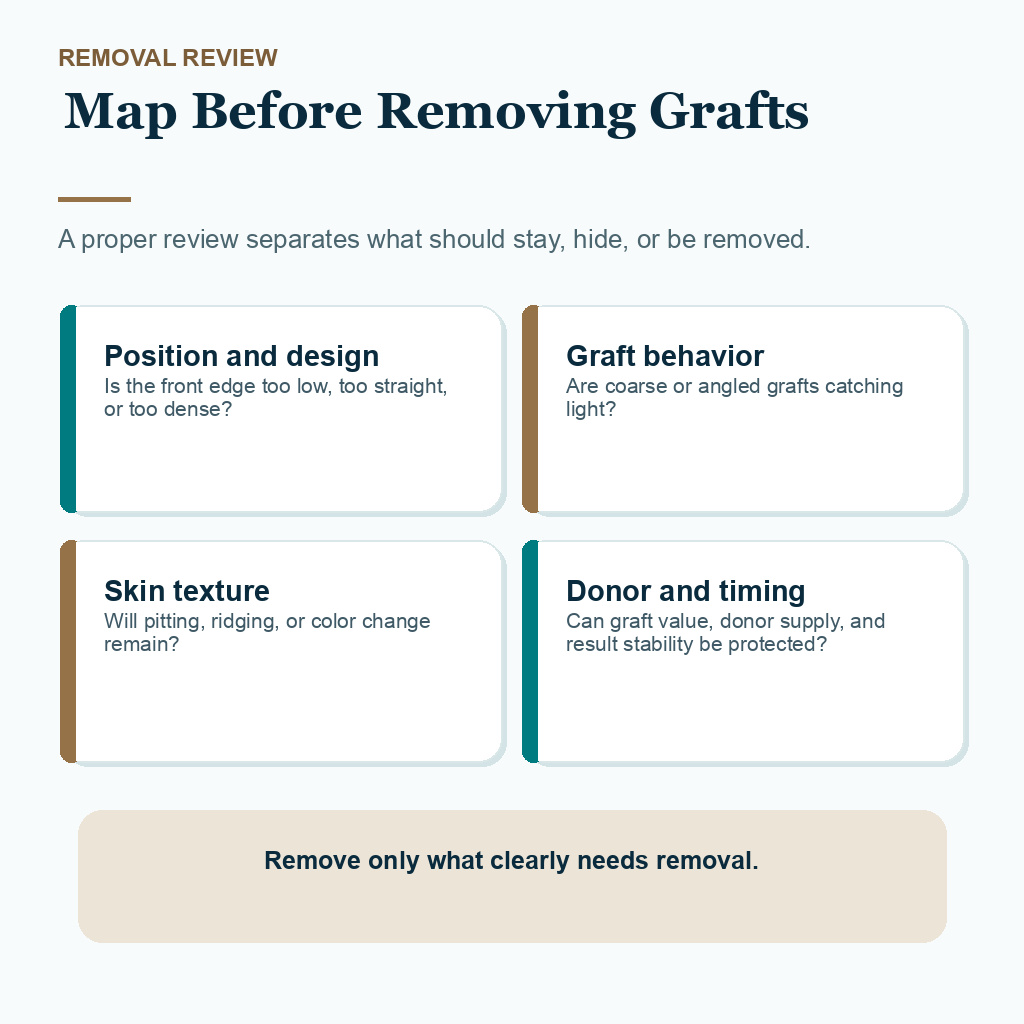
Before any irreversible removal step, review hairline position, graft type, skin texture, donor value, timing, and reuse potential together.
Graft removal should sometimes wait
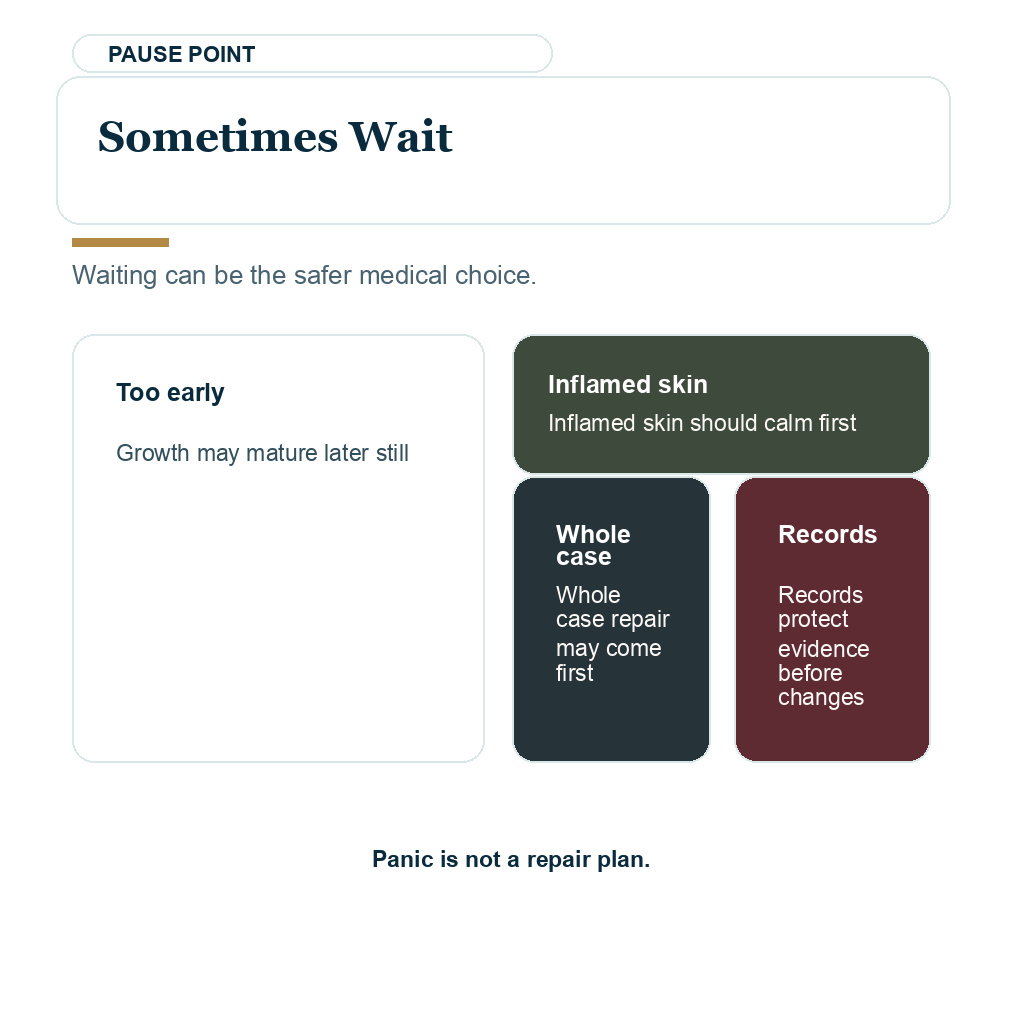
Removal should wait when the result is still too early to judge, when the skin is inflamed, or when the decision is coming from panic rather than evidence. It should also wait if the proposed new hairline has not been planned. Destroying or removing grafts without a better design can leave you with a different problem rather than a better result.
Removal may also be the wrong first step when the whole case still needs complete bad hair transplant repair. A low front line, empty mid scalp, depleted donor area, and ongoing hair loss cannot be solved by treating a few visible hairs. The repair plan has to decide what is realistic for the whole scalp.
Financial pressure and clinic disputes can distort this decision. If you are thinking about a complaint, refund, or medicolegal route, document the current state with repeatable close photos, normal distance views, and any clinic records before changing it. In poor hair transplant result repair decisions, records and repeatable photographs matter before any corrective step.
In some cases, leaving the grafts alone for a while is the safest medical choice. That does not mean the concern is imaginary. It means the timing is not right yet.
Remove less when less is enough
Bad hairline graft removal should start with marking what truly harms the hairline. A few misplaced grafts, a dense artificial row, and a low design that needs full reconstruction are not the same repair problem.
The method has to match the target. Selective electrolysis, staged FUE punch out, skin treatment, redesign, or waiting can all be reasonable in different cases. If short hair is part of the future, the plan also has to discuss dots, scarring, and shaved head regret after hair transplant planning.
Removing fewer grafts with a clear purpose can be stronger than destroying useful hair because the old result feels upsetting. A good repair should leave the skin calmer, the outline softer, and the next option easier to choose.

Read this review excerpt
We also had a levelled conversation about my hairline and results I could expect based on my donor density area.