


Hair Transplant Timing After Weight Loss Surgery
After major weight loss surgery, I first want to see stable weight, consistent nutrition, a settled shedding pattern, and a donor area that can be trusted before judging transplant timing.
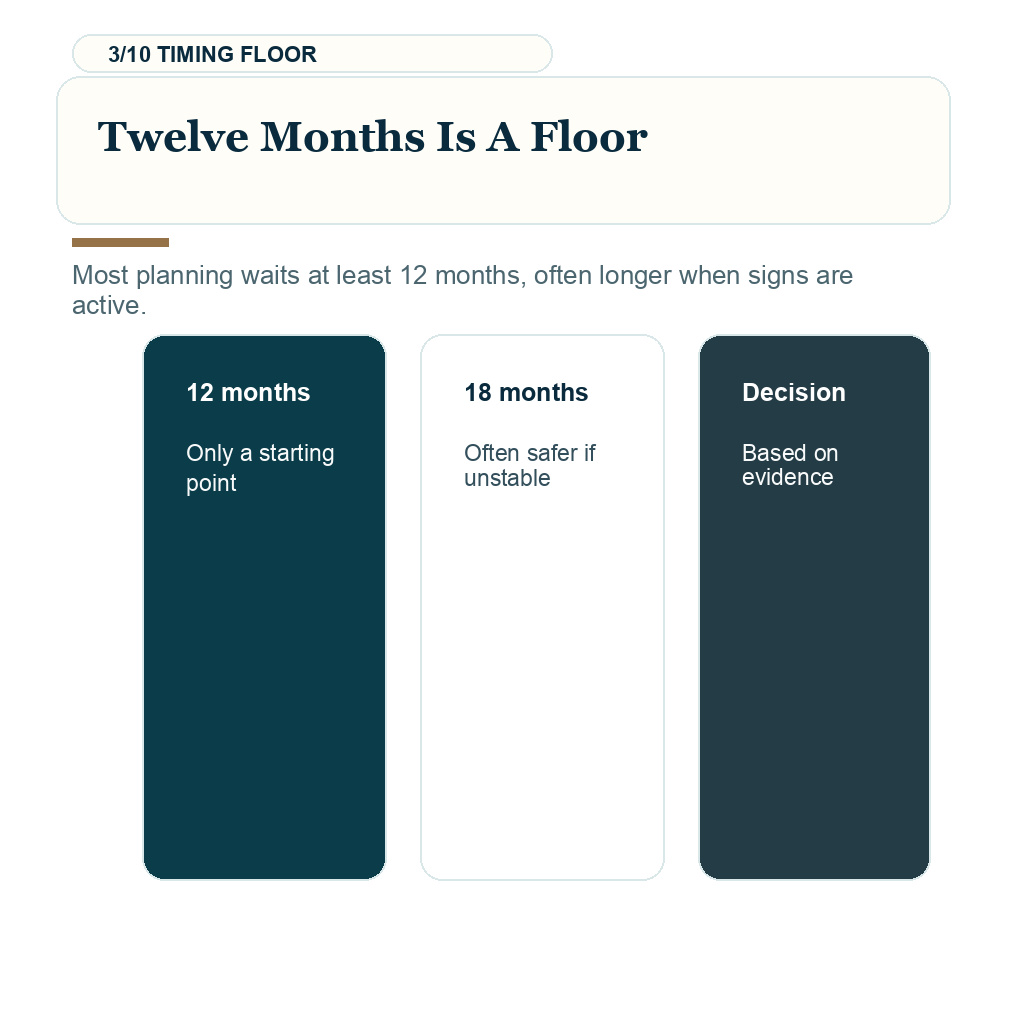
In most cases, I do not begin serious surgical planning until at least 12 months after bariatric surgery. If the body is still changing, protein intake is low, ferritin or vitamin levels are being corrected, or shedding is still active, waiting closer to 18 months is often safer.
This waiting is not for its own sake. Transplanted grafts are a limited resource. Before donor grafts are used, the diagnosis has to separate permanent pattern hair loss, temporary shedding, or a combination of both.
The risky moment is when the scalp is still reacting to the operation, rapid weight change, reduced intake, or nutritional stress. A hair transplant may still be technically possible in that period, but technically possible does not always mean right for the patient. I am cautious when any major surgery around the hair transplant date is close enough to affect recovery or shedding. A changing weight graph can make both shedding and donor judgment less reliable.
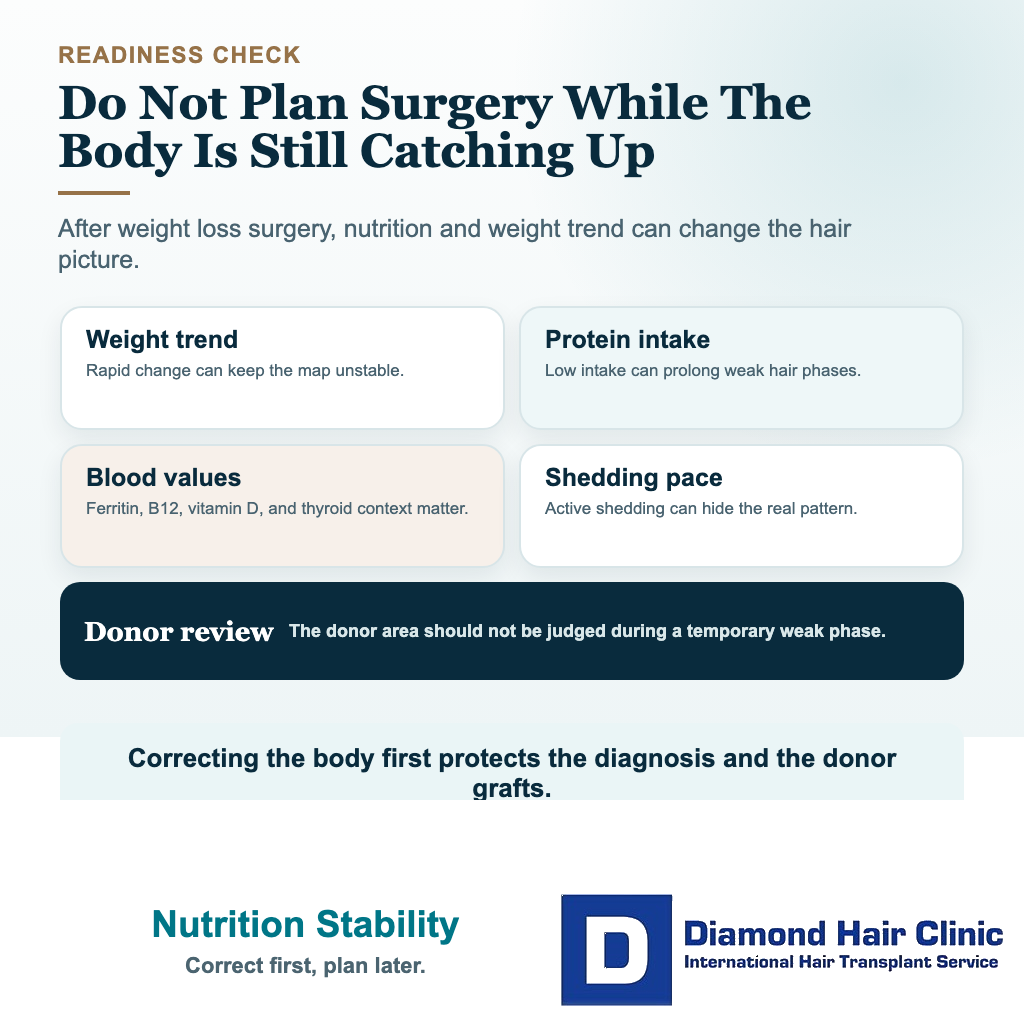
After this kind of surgery, graft placement is only one part of the decision because the scalp, donor area, and nutrition still have to be stable. The plan has to confirm that the scalp is ready, the donor area is reliable, and the hair loss pattern is stable enough to create a result that will still make sense in the future.
Hair loss after bariatric surgery often has several causes
After gastric sleeve, gastric bypass, or another bariatric operation, the body can go through a strong metabolic change. The surgery itself, lower calorie intake, rapid weight reduction, lower protein intake, and nutritional deficiency can push more hairs into a resting phase. This can create sudden shedding that feels frightening because it may affect the whole scalp rather than one small area. Ordinary dieting during hair transplant recovery is a smaller version of the same stability question, but bariatric surgery adds absorption and deficiency risks.
Many patients become worried because the shedding does not usually begin immediately after the operation. They may feel that the first weeks have passed safely, then suddenly notice heavy hair fall a few months later. That timing can feel confusing because the scalp may be responding to a stress that happened earlier.
A common mistake is to assume that every visible thinning after this kind of surgery needs a transplant. Sometimes the hair is reacting to physical stress and nutrition, and the better decision is to stabilize the body first. Sometimes the weight change simply reveals male or female pattern hair loss that was already present but less obvious before.
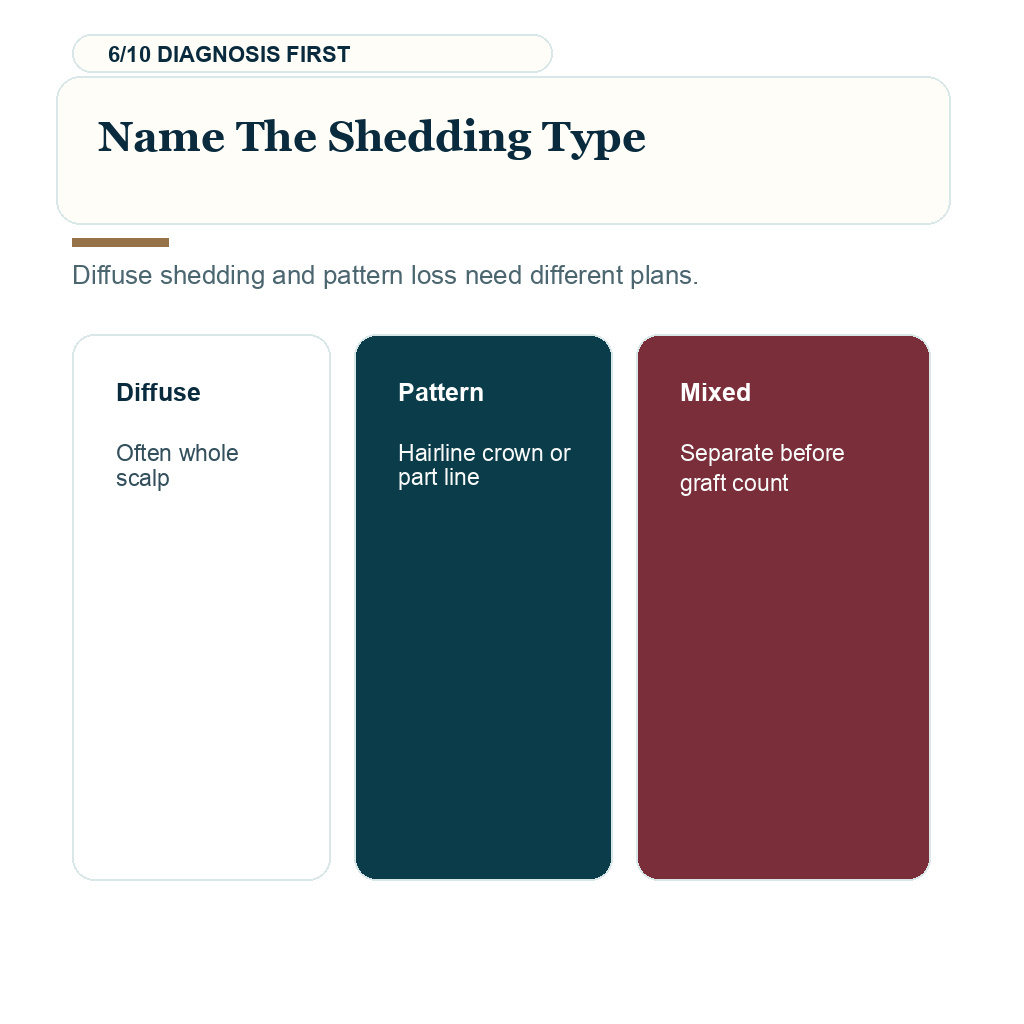
In this type of case, the first clinical separation is temporary shedding versus permanent miniaturization. Temporary shedding needs time, correction, and monitoring. Permanent hair loss may eventually need surgical planning, but only after the temporary part has settled enough to see the real pattern.
Typical changes in the months afterward
Patients often want one exact date, but the scalp does not always follow a perfect calendar. Still, there is a practical timeline that helps keep the decision grounded.
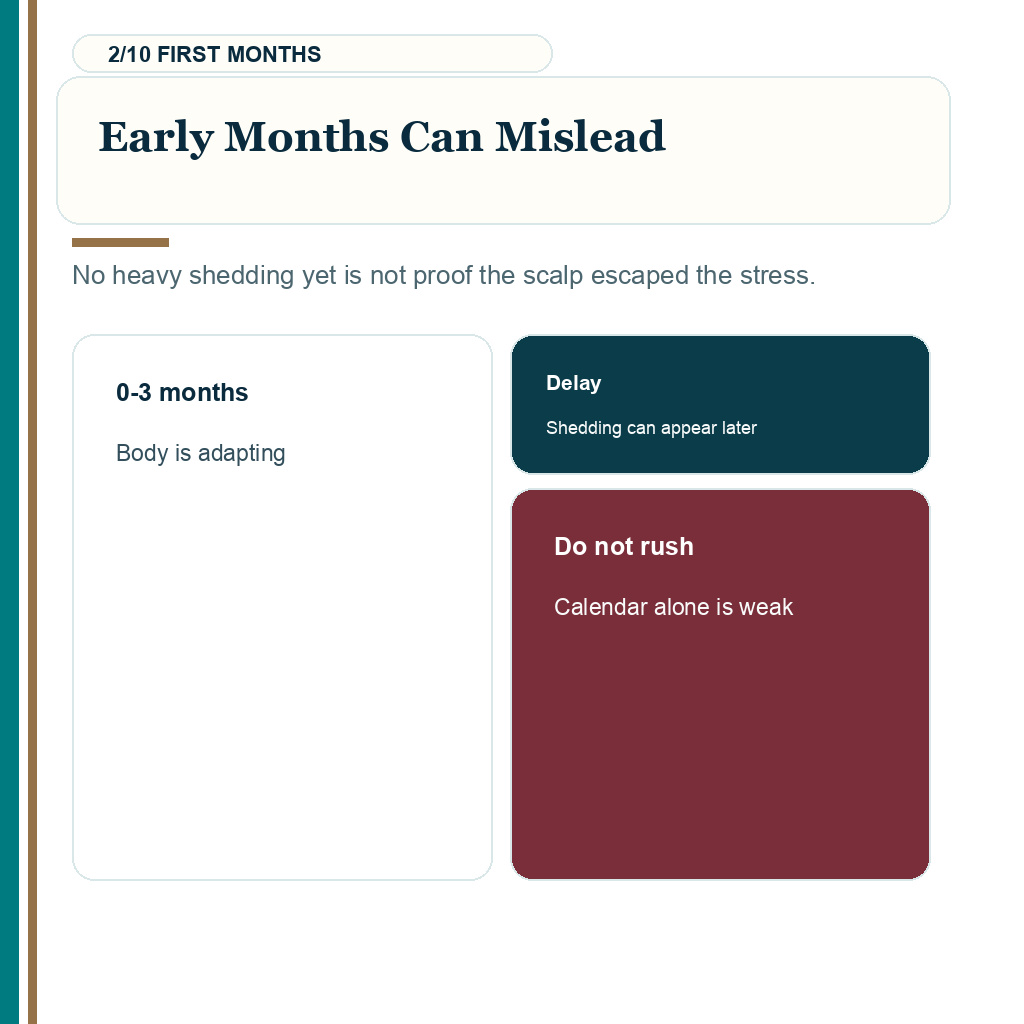
During the first 3 months, the body is adapting to the operation, lower intake, rapid weight change, and healing. Some patients may not notice much shedding yet. That is not proof that the scalp has fully escaped the stress. It may simply be too early for the shedding to appear.
Between month 3 and month 6, many patients notice the strongest shedding. Patients often panic at this stage, especially when they see hair in the shower, on the pillow, or in their hands after brushing. Surgical planning is usually premature here because the visible thinning may still be part of a temporary response.
Between month 6 and month 12, shedding may begin to slow, but the hair may still look weak. Regrowth does not immediately create density. New hairs need time to emerge, thicken, and become cosmetically meaningful. A patient can be improving biologically but still look thin in normal light.
At this point, many patients misunderstand the timeline. Less hair in the shower is a good sign, but it is not the same as a stable surgical map. The practical issue is whether density is rebuilding on its own or whether a permanent pattern remains after the body has settled.
If shedding starts later, continues strongly beyond the early phase, or keeps returning, the review should look more closely at nutrition, medication, thyroid status, iron storage, and whether another diagnosis is present. A transplant should not be used to cover a medical question that has not been answered.
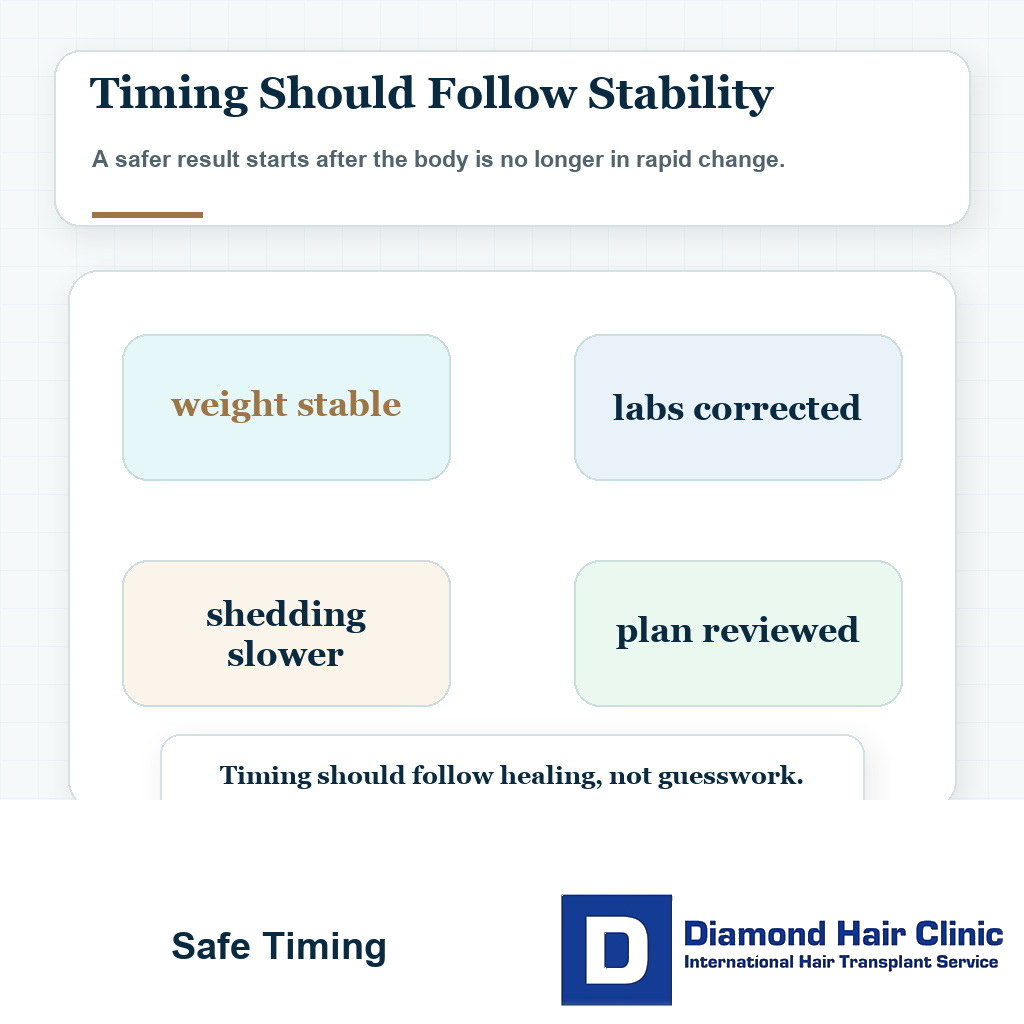
Between month 12 and month 18, the picture often becomes more useful for surgical planning. Weight may be more stable, nutrition may be more predictable, and the temporary shedding phase may have settled. At that point, it is usually safer to decide whether the patient has a remaining permanent pattern that can be improved with surgery.
Rushing a hair transplant during the shedding phase after bariatric surgery can build the surgical plan on unstable information. If the hair is still changing every month, the map is not ready.
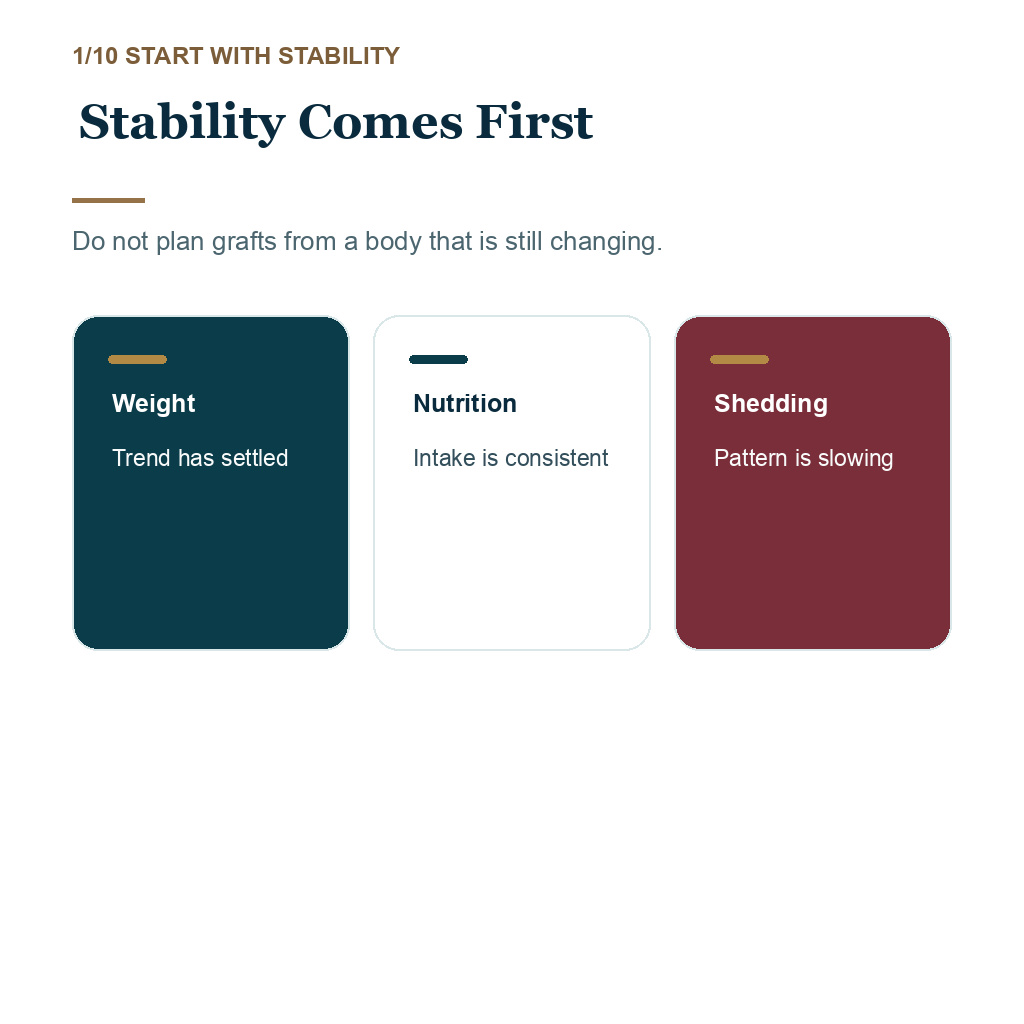
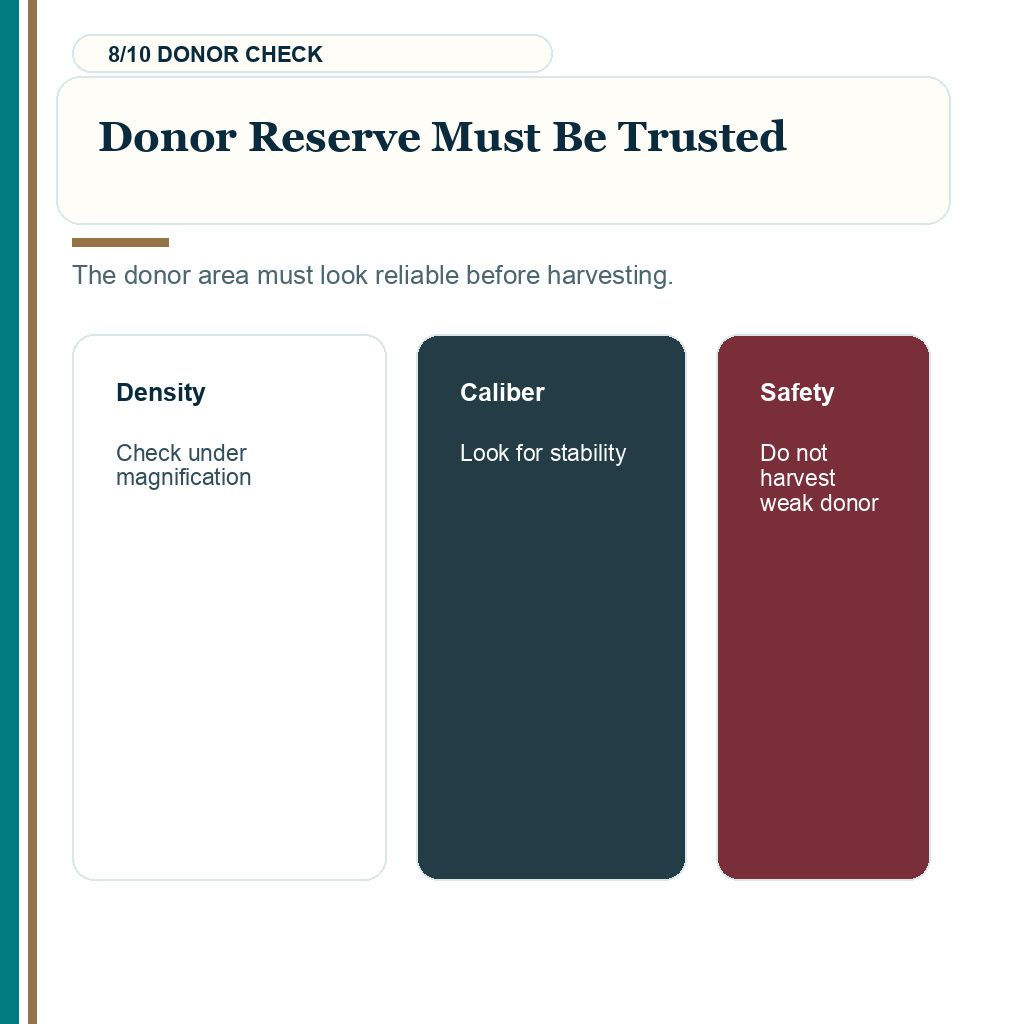
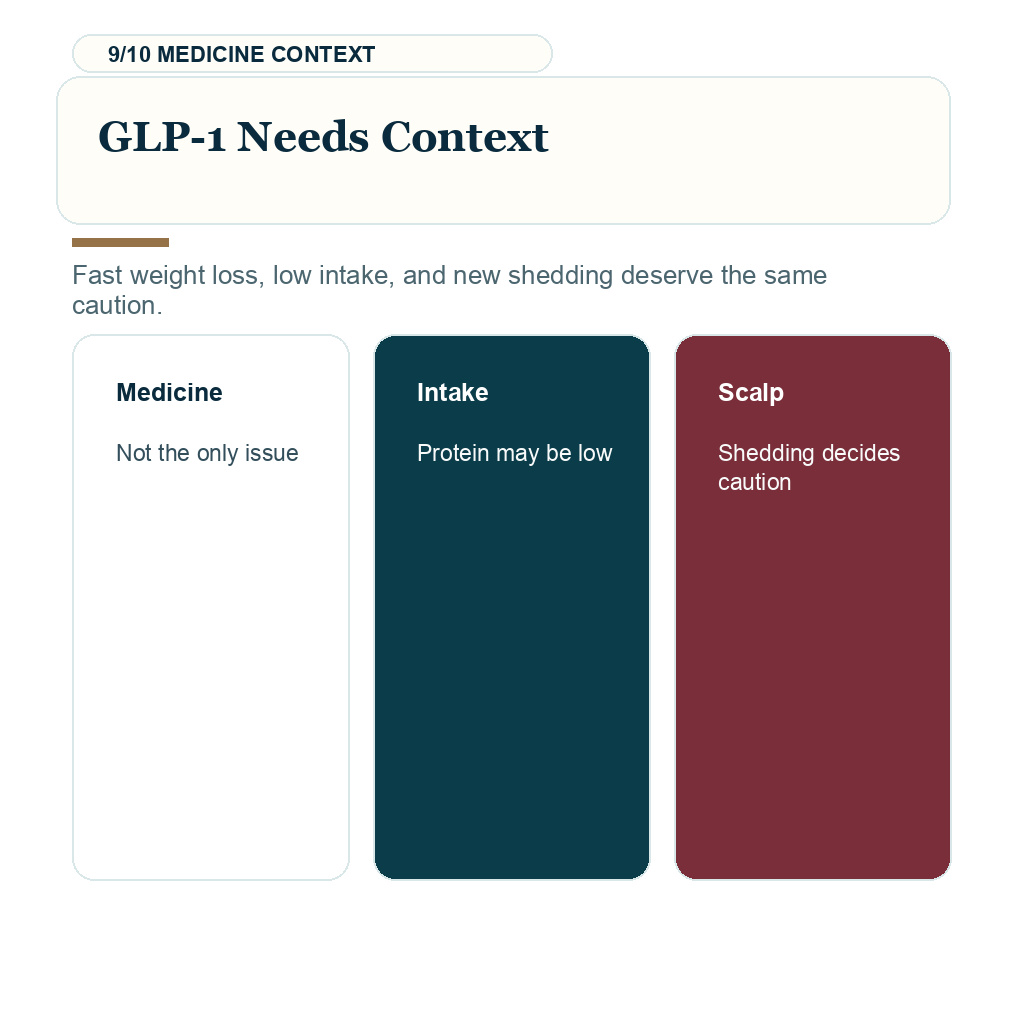
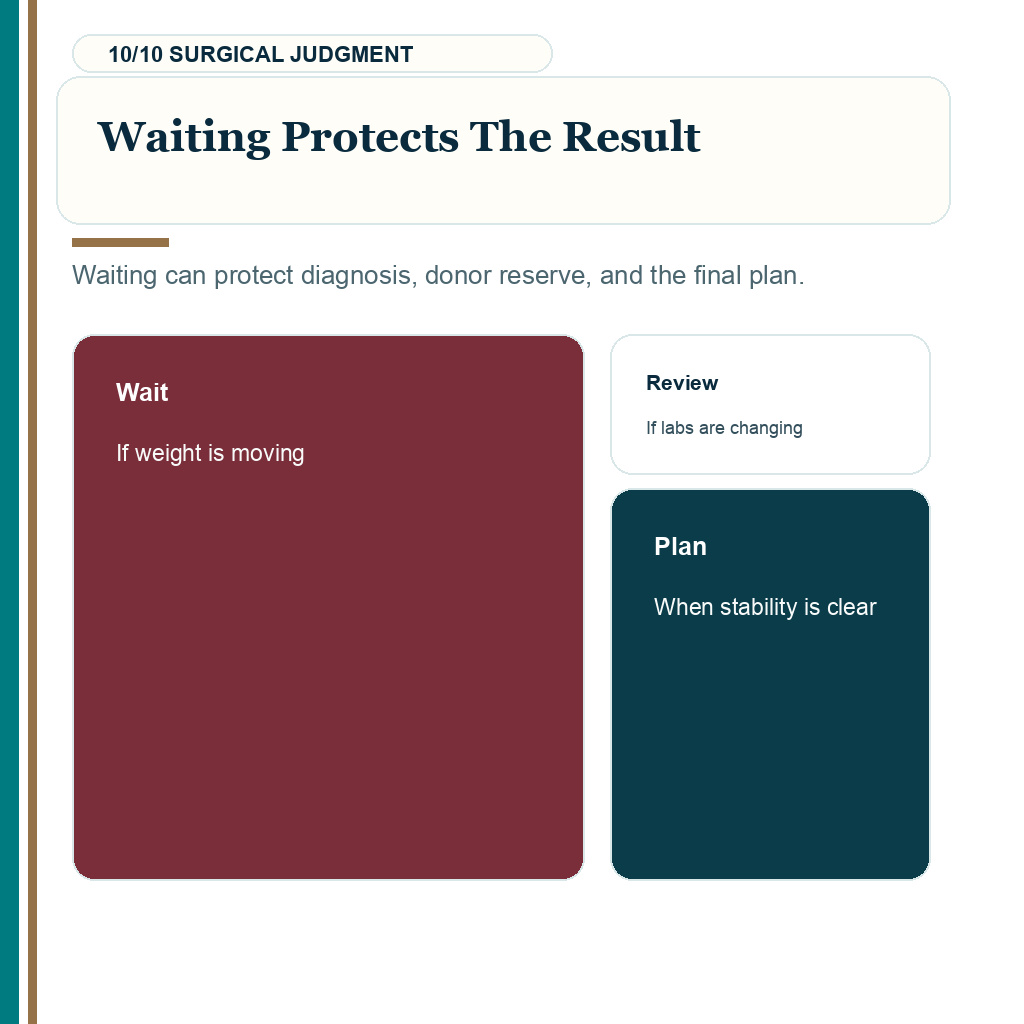
These 10 stability review slides separate weight trend, early shedding delay, the 12 to 18 month planning window, nutrition and blood values, protein support, shedding diagnosis, diffuse thinning, donor reserve, GLP-1 weight loss context, and when waiting protects the result. Swipe sideways, use the arrows one slide at a time, or choose a number below the image.

Waiting before planning a hair transplant
In most cases, surgery should not be planned during the first 12 months after bariatric surgery. If the patient is still losing weight quickly, still changing diet, still correcting deficiencies, or still shedding heavily, waiting closer to 18 months is often safer. The exact timing depends on stability, not only the calendar.
A patient may feel ready emotionally before the scalp is ready medically. The signs I need are a stable weight trend, stable blood values, no active heavy shedding, and a donor area that looks reliable under magnification. That helps me decide whether someone is truly a good candidate for a hair transplant, not just whether the patient wants surgery.
If shedding has recently stopped, I usually watch the hair for several months before making a final surgical plan. Operating too early can create disappointment because the patient may continue to lose native hair after the transplant and then blame the surgery for a process that was already active.
Careful timing often prevents avoidable confusion. After weight loss surgery, waiting is not always passive. Sometimes waiting is the decision that protects the donor area, the diagnosis, and the final result.
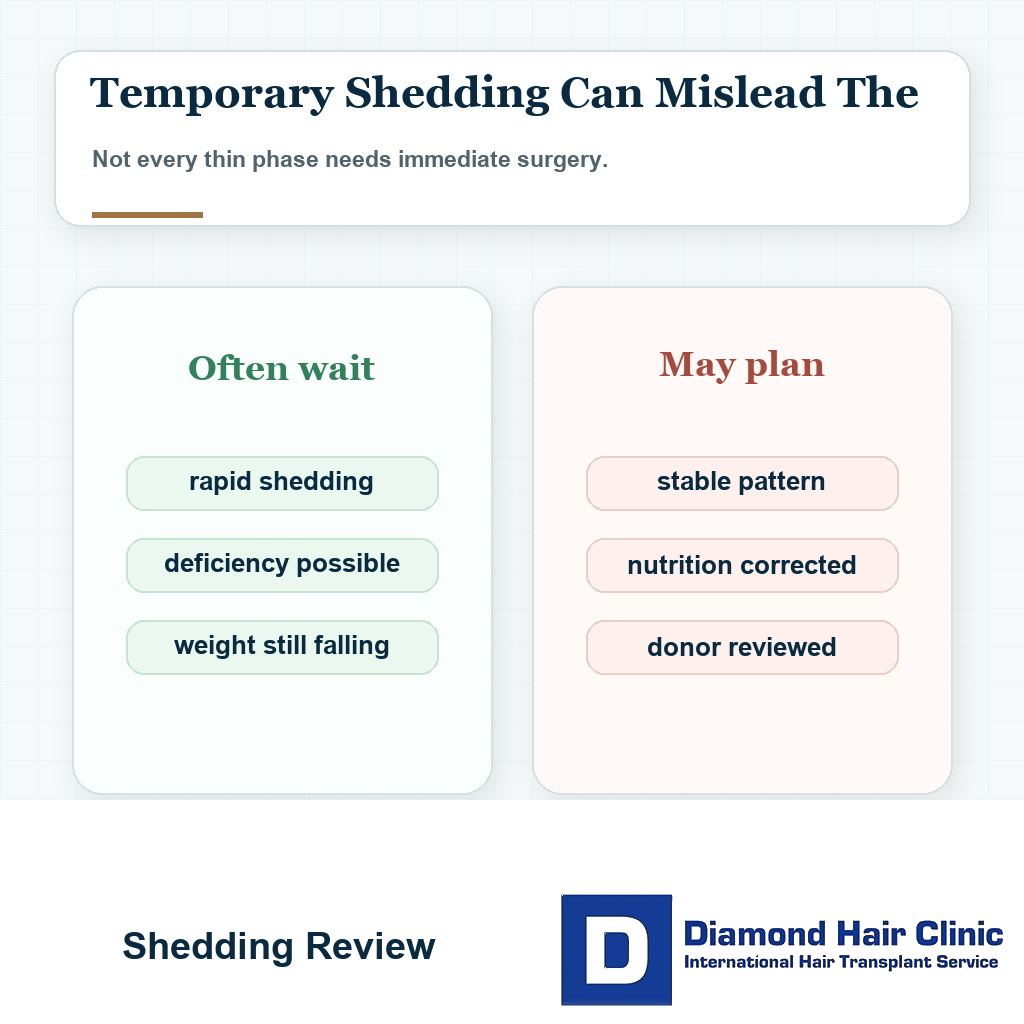
Stability before surgery means more than the calendar
Stable enough does not mean perfect, and it does not mean every hair has returned. It means the picture is predictable enough to plan from. The weight trend should be relatively steady, the bariatric team should be satisfied with nutrition, blood values should be corrected or being corrected under medical supervision, and shedding should have slowed enough to show what is truly left.
Goal weight is not the same as a ready scalp. Protein intake, blood values, and shedding behavior have to look steady, not only the number on the scale.
The donor area also has to look dependable under examination. If the donor is shedding together with the rest of the scalp, it should not be treated as a permanent reserve too early. A donor area that looks weak during a temporary shedding phase may look different later, and that difference can change the entire graft plan.
Gastric sleeve and gastric bypass can change timing
Gastric sleeve and gastric bypass can both be followed by hair shedding, especially when weight change is rapid or intake is limited. The exact procedure matters, but it does not necessarily decide whether a patient can or cannot have a hair transplant.
The stronger question is the condition of the patient now. The review should include whether the weight is still dropping quickly, whether protein intake is consistent, whether ferritin, blood count, B12, vitamin D, zinc, thyroid markers, and other relevant values are stable, and whether the patient is still vomiting, struggling to eat, or needing major supplement correction. These details matter more than the name of the operation alone. Bring the bariatric follow up notes if they explain protein goals, supplement changes, or vomiting that could affect shedding.
Bypass procedures often need especially close nutritional review because malabsorption can matter more in some patients. Sleeve patients still need caution because reduced intake, low protein, and rapid weight change can also affect the scalp.
A sleeve or bypass history alone does not approve or reject a patient. The case is judged by stability, nutrition, shedding behavior, donor strength, and diagnosis.
Separating temporary shedding from permanent thinning
Temporary shedding usually feels sudden, diffuse, and emotionally frightening. The patient may notice hair in the shower, on the pillow, or when brushing, but the hairline pattern may not be the main change. The whole scalp can feel weaker.
Permanent pattern hair loss behaves differently. In men, it often shows miniaturization in predictable areas such as the hairline, temples, middle scalp, and crown. In women, it may appear as progressive thinning through the central scalp, widening of the part line, or a more complex diffuse pattern.
This has to be judged by more than photographs. Photos are useful, but they can also mislead. Lighting, hair length, wet hair, oiliness, camera angle, and styling can exaggerate or hide thinning. The scalp needs examination, with comparison between donor and recipient area and attention to miniaturized hairs.
If the whole scalp is thin, this is not a case to rush. Transplanting into an unstable diffuse pattern can use grafts without solving the deeper problem. These cases follow the same principles as diffuse thinning and hair transplant planning. A transplant can improve selected areas, but it cannot safely correct every form of diffuse shedding.
Blood and nutrition checks before surgery
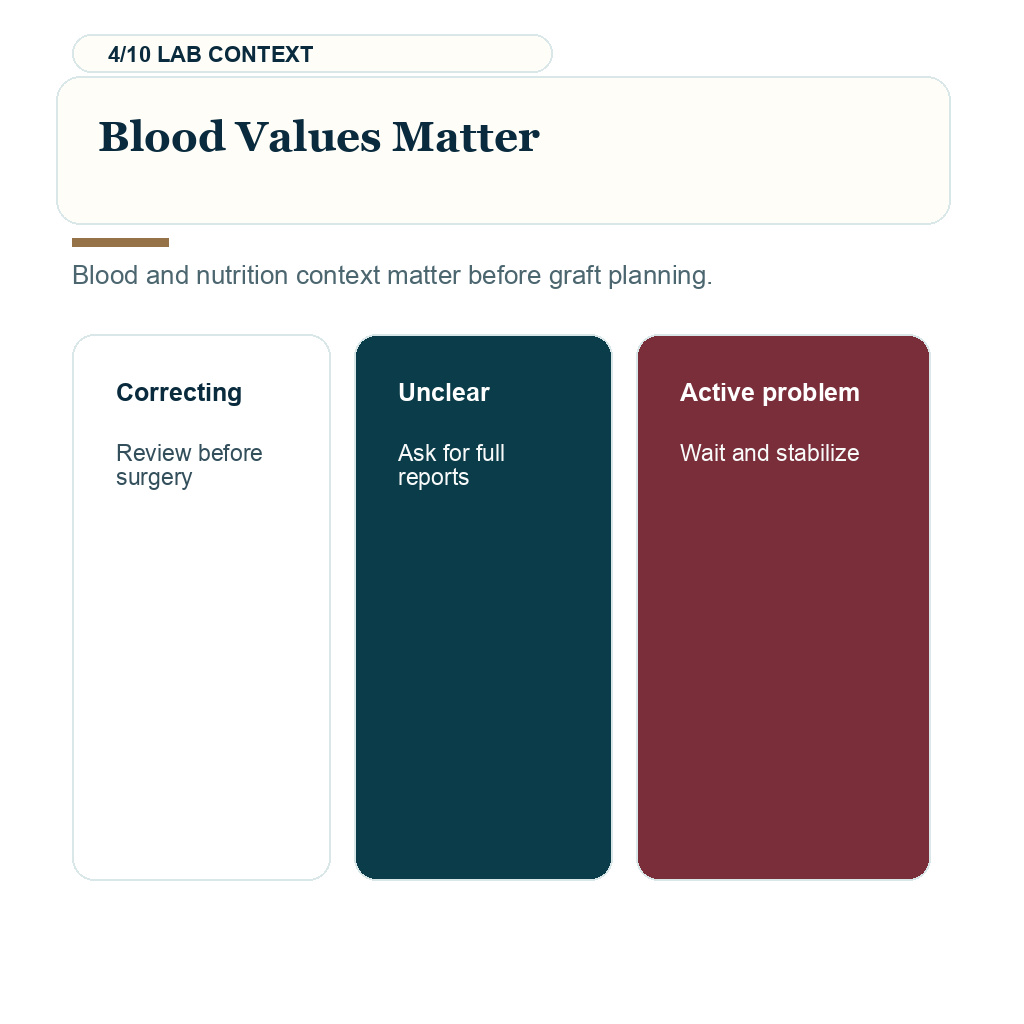
After bariatric surgery, blood and nutrition checks matter. Ferritin, full blood count, vitamin B12, folate, vitamin D, zinc, thyroid markers, and general protein status may all influence whether the scalp is ready for surgery. A low value is not a small detail when the patient is asking me to move thousands of grafts.
It helps to understand the role of blood tests before a hair transplant because a hair transplant is a local scalp operation, but the scalp is still part of the body. If the body is nutritionally unstable, the recipient area and donor area cannot be treated as if they exist separately from that condition.
If ferritin is low, anemia is present, or nutrition is not stable, the patient may need correction and follow up before surgery becomes sensible. These problems can quietly imitate or worsen hair loss. Low ferritin and anemia before hair transplant can change the timing of surgery, and thyroid problems before hair transplant can make the diagnosis less straightforward.
Correct nutrition, deficiencies, and active shedding before using donor grafts. Surgery should happen when the patient is ready, not when fear is asking for a fast visible answer before the medical picture is ready.
Vitamins and protein support recovery but may not stop shedding
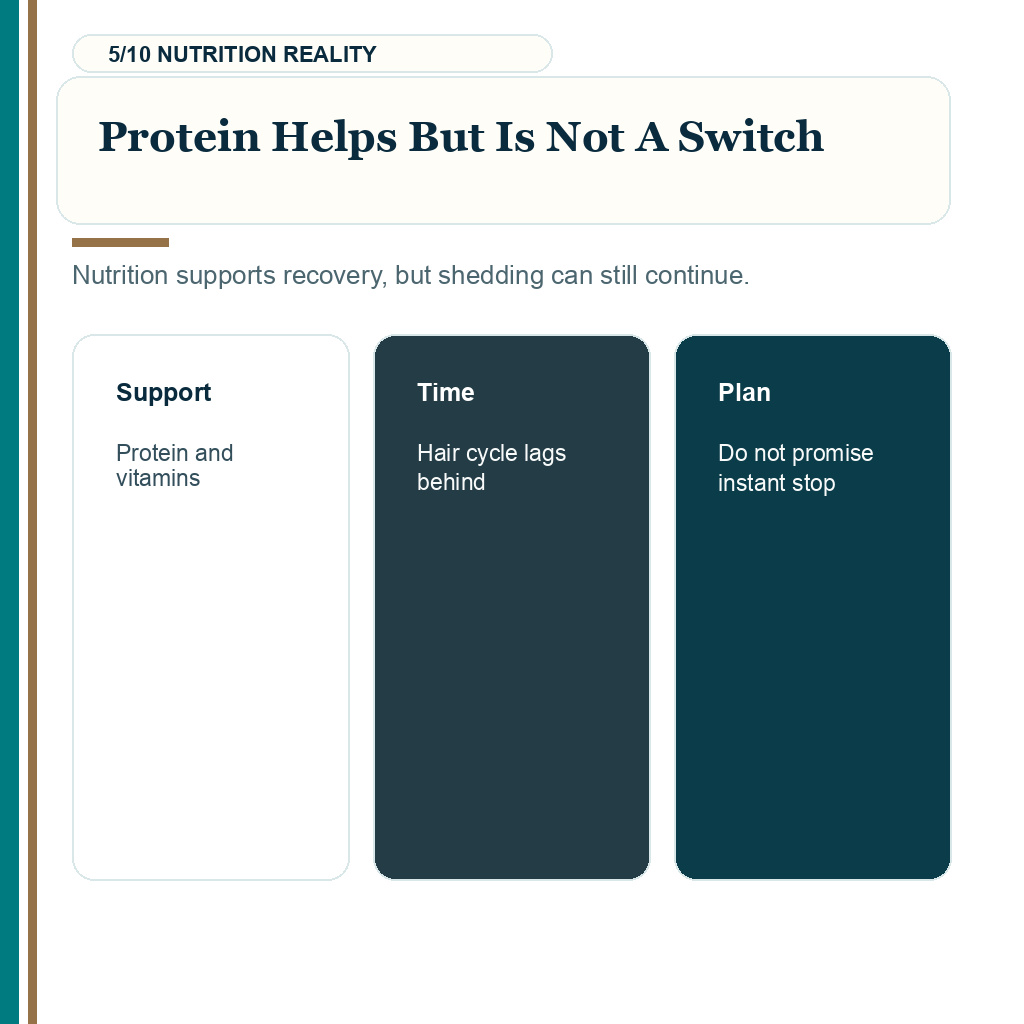
Vitamins and protein can support recovery when intake is low or a true deficiency exists. They can matter when the body is missing them, but they should not be presented as a switch that immediately stops shedding.
If hairs have already entered the resting phase, shedding may continue for a period even after nutrition is improved. That delay frustrates patients. They may begin taking the correct supplements, improve protein intake, and still see hair fall for a while. That does not always mean the correction is useless. It may mean the hair cycle needs time.
Random supplement use also deserves caution. More is not always better. A patient after this surgery should not keep adding hair vitamins while ignoring proper follow up with the bariatric team, dietitian, or medical doctor. The plan should not chase every product that promises hair growth. It should identify what the body actually needs.
Vitamins after a hair transplant can support the body when needed, but they do not replace diagnosis, timing, donor management, and surgical planning.
Poor nutrition can affect healing and graft planning
I am careful with the wording here. I do not tell a patient that every low vitamin level automatically destroys transplanted grafts. Hair transplant growth depends on many factors, including graft handling, incision quality, implantation technique, scalp health, blood supply, aftercare, and the patient’s biology.
But nutrition should not be ignored. Wound healing, inflammation control, tissue recovery, and scalp quality are not separate from the body’s general condition. If a patient has active anemia, very low ferritin, poor protein intake, uncontrolled deficiency, prolonged vomiting, or ongoing heavy shedding, surgery should wait until the situation is corrected.
Graft survival is not only about putting grafts into the scalp. It is also about whether the recipient area is a healthy environment for healing. A patient who is still medically unstable after the operation may not be giving the transplant steady healing conditions.
The safer approach is conservative. The operation should be performed when the patient can support healing, not while the body is still struggling with rapid change.
Diffuse thinning needs careful transplant planning
A transplant may help if there is a clear permanent pattern and enough stable donor capacity. It may not help if the whole scalp is thinning from active shedding, malnutrition, or an unstable medical cause. In that case, adding grafts can be like trying to design a hairline while the foundation is still moving.
The recipient area must be chosen with discipline. If the front is clearly miniaturized but the crown and middle scalp are still changing, the plan may need to stay conservative or delay the crown. If the patient asks for full coverage too early, a more conservative plan may protect the future better than a dramatic one.
A transplant can look thin even when grafts grow if the diagnosis was unclear, native hair was unstable, or grafts were spread across too many changing areas.
Direct surgeon planning matters in these cases. The plan should not place the highest possible number of grafts. It should place the right grafts in the right areas, at the right time, with a design that still makes sense years later.
Planning is different for many women afterward
It can be more complex. Female hair loss after this kind of surgery is not always the same as a classic male hairline or crown pattern. A woman may have telogen shedding from surgery, low ferritin, thyroid issues, low protein intake, female pattern hair loss, shedding related to medication, postpartum shedding after pregnancy, or several factors at the same time.
Surgery needs extra caution for a woman whose hair became thinner after the operation. If the thinning is diffuse and the donor area is also affected, a transplant may not be the right first answer. The donor area must be strong enough to provide grafts, and the recipient area must have a clear pattern that can be improved surgically.
For women, the emotional pressure can be very strong because diffuse density loss is often difficult to hide. Still, emotional urgency cannot replace diagnosis. The review should confirm whether the hair is recovering, whether blood values are corrected, whether the part line pattern is stable, and whether the donor area is truly safe to use.
When the permanent component becomes clear and the donor is reliable, surgery may be considered. But if the main problem is still temporary shedding, the better treatment is patience, correction, and monitoring.
Rapid weight change can affect donor assessment
Rapid weight change does not always damage the donor area. But it can make the whole scalp look thinner for a period of time. If the donor area is shedding, weak, or nutritionally affected, it should not be harvested too early.
The donor area is the patient’s limited lifetime reserve. Once grafts are removed, they cannot be put back into the donor. Examination has to consider donor density, hair caliber, extraction safety, scalp health, and whether the donor looks stable enough to support the plan.
A patient who has lost a large amount of weight may need more patience before the donor gives a trustworthy picture. If the donor is naturally limited, the plan becomes even more conservative. After a major weight change, some patients want a fast visible change because they have already transformed their body. That feeling is understandable, but donor grafts still cannot be spent as if the future does not matter.
Overharvesting is not always obvious on the day of surgery. The damage may become more visible later when the donor is short, depleted, or uneven. Donor planning must be especially careful in any patient whose scalp is already going through a diffuse shedding phase.
Prior transplant planning after bariatric surgery
I understand this concern. Some patients had a hair transplant first, then later had gastric sleeve or gastric bypass, and then became frightened when the transplanted area looked thinner during the weight loss period.
Often, transplanted hairs are more resistant than the native hairs around them. But the whole scalp can still look weaker during diffuse shedding. Native hair can shed. Hair around the transplant can thin. Hair texture and volume can temporarily decrease. Even the visual contrast between transplanted and native areas can change.
Repair surgery should not be rushed too early from panic. I compare old photos, current photos, donor condition, recipient area density, and the timing of the shedding. The first question is whether the thinning is mainly in native hair, transplanted hair, or the whole scalp.
If a previous transplant now looks thin because native hair around it has continued to miniaturize, the plan is different from a case where the whole scalp is temporarily shedding after bariatric surgery. If the first surgery also had design problems such as pluggy grafts, wrong direction, or poor distribution, then the case becomes even more delicate. In those situations, I may use principles similar to hair transplant repair planning, but only after the shedding related to weight loss has stabilized.
Ozempic or similar medicines add another planning factor
Weight loss medicine and surgery are not the same situation, but they can create a similar question. If the patient is still losing weight quickly, eating less protein, or shedding more than usual, the hair should settle before surgery.
The medication itself is not the only issue. The more useful question is what is happening to the body and scalp during the weight change. If the patient is eating very little, losing weight quickly, and noticing new diffuse shedding, I review timing as part of recovery from major surgery.
The same judgment applies to hair transplant while taking Ozempic. This does not always mean rejection, but timing cannot be ignored. If the weight is still moving and the hair is still shedding, waiting until the picture is clearer is usually safer.
Before surgery, the review should include the medication list, current dose changes, nutrition, and the reason for the treatment. Medication review belongs before a hair transplant instead of treating the hairline as an isolated cosmetic problem.
Medical treatment may come before using donor grafts
Sometimes yes. If shedding is still active after the operation, medical and nutritional stabilization may be wiser than surgery. The aim is not to delay the patient forever. The aim is to avoid using grafts for a problem that may partly improve once the body recovers.
Medication decisions are personal. Finasteride, minoxidil, dutasteride, or other treatments may be useful for some patients, but they must fit the patient’s medical history, sex, tolerance, age, and diagnosis. I do not use the same medical plan for every patient.
For men with male pattern hair loss, future native hair loss must be considered carefully. Some patients can use medication. Some cannot. Some do not want to. In those cases, the surgical design has to be more conservative. With hair transplant without finasteride, surgery can still be possible, but it should not be planned as if future loss no longer exists.
A plan should protect existing hair before donor grafts are used to chase every thin area. After a major weight change, this principle matters even more because the patient may have both temporary shedding and permanent pattern loss.
Shock loss can be confused with weight change shedding
Patients can become confused by different types of shedding. Weight change shedding usually relates to the body’s response to surgery, rapid weight loss, nutritional stress, or other systemic factors. Shock loss after a hair transplant is a different situation and usually appears after the transplant itself.
This distinction matters when a patient already had a transplant or is planning one soon after the operation. If a patient has active shedding before surgery, then has a transplant, then loses more native hair afterward, it can become difficult to separate the original shedding from after surgery shock loss.
Operating when the native hair is already unstable can create avoidable confusion. A patient may later ask whether the transplant caused the thinning, when in reality several processes may have overlapped. It is better to reduce that confusion before surgery, not explain it afterward.
The relevant comparison is native hair shock loss after hair transplant. In these patients, the deciding detail is to avoid creating a situation where two shedding problems happen too close together.
Clinic promises become risky after major weight change
The risky promise is usually the quick one. A clinic may see a thin scalp and offer a large graft number immediately, without asking why the hair is thin, whether the weight is stable, whether the donor is affected, or whether blood values are ready. That type of plan can sound attractive because it gives the patient an immediate answer.
A big graft number after a major weight change can hide weak thinking. If the patient is still shedding, a dense plan may not look dense for long. If the donor is not assessed properly, the operation can create donor thinning that is harder to repair than the original concern.
For international patients, careful clinic choice matters when choosing a hair transplant clinic in Turkey. The consultation should make the patient clearer about limits, timing, donor protection, and what surgery cannot solve.
You should not feel pushed to book before the medical picture is stable. A clinic that gives a fast graft number without asking about bariatric timing, weight stability, nutrition, and active shedding is not giving a complete surgical opinion.
Preparation before asking for a transplant plan
If you had bariatric surgery and want a serious transplant opinion, two hairline photos are not enough. The consultation needs enough context to understand what is happening to your scalp and your body.
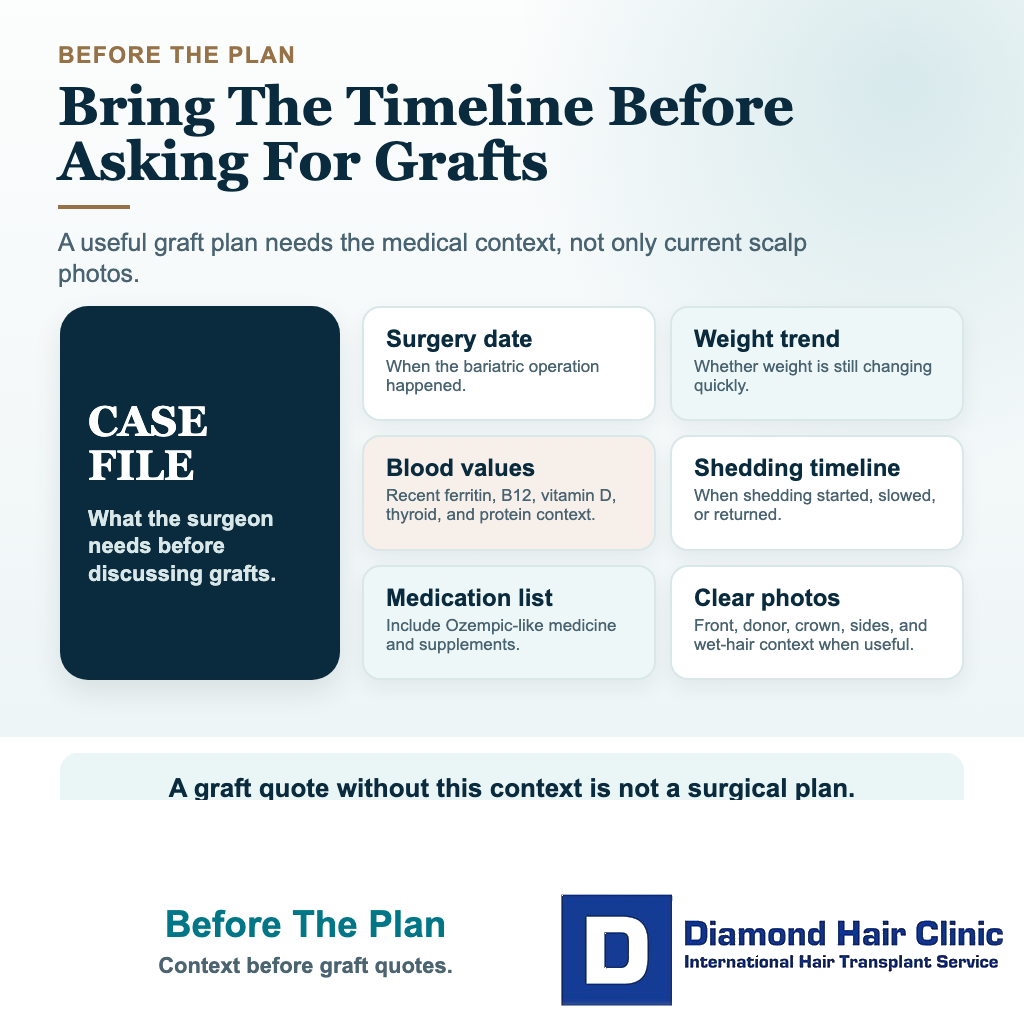
The first details are the date of the bariatric surgery, the type of operation, and the weight trend over the last 3 to 6 months. Gastric sleeve, gastric bypass, gastric band, revision surgery, and other procedures can raise different nutrition questions. The weight trend shows whether your body is still changing quickly or whether it has begun to settle.
The shedding history matters too, including when it started and whether it is improving, worsening, or unchanged. Recent blood tests are useful when you have them, especially ferritin, blood count, B12, folate, vitamin D, zinc, thyroid markers, and protein related values. Current supplements and medications matter too, including bariatric vitamins, iron, B12 injections, vitamin D, zinc, thyroid medication, minoxidil, finasteride, Ozempic, Mounjaro, or similar medicines. A supplement list helps, but recent blood values and real protein intake still decide whether the timing is trustworthy.
Clear photos of the hairline, top, crown, temples, and donor area are also needed. Dry hair, normal light, and no concealer are much more useful than flattering photos. This information does not always mean surgery will be approved. It helps decide whether the case is ready for planning or whether waiting would protect the patient better.
Waiting can be safer than surgery
Waiting is better if you are still losing weight rapidly, still shedding heavily, still correcting deficiencies, or still recovering from the bariatric operation. I am also cautious if your donor area looks temporarily weak or if your hair loss pattern cannot yet be separated from diffuse shedding.
In these cases, waiting is not a lack of action. It is part of protecting the result.
Surgery should wait if the main reason for operating is fear from a sudden shedding episode. Anxiety is understandable, especially after a major weight change, but panic is not a good surgical indication. The decision should be made when the scalp is stable enough for clear planning.
Waiting is also safer if the patient expects the transplant to restore every area at once. After this kind of surgery, a staged, modest operation focused on the front first may fit the scalp better. Sometimes the best surgery is smaller than the patient hoped, because donor management matters more than density in the short term.
Surgery makes sense only after stability is clear
The decision starts with diagnosis, not with a package. The review begins with when the bariatric surgery happened, how much weight has changed, whether the weight is still moving, when the shedding started, whether it has slowed, and what the blood values show. The donor area and thinning pattern also need examination before graft numbers are discussed.
If the hair loss is temporary, the right answer may be patience, nutrition correction, and medical follow up. If there is permanent pattern hair loss and the body is stable, a transplant can be planned with more confidence. If both are present, the temporary part should be separated from the permanent part before making the decision how many grafts should be used.
After bariatric surgery, the plan should not transplant into confusion. The safer target is a stable diagnosis. If the shedding is temporary, correction and time may protect the patient better than surgery. If permanent pattern hair loss remains after the body has recovered, then a hair transplant can be planned with clearer judgment and much less guesswork.
A hair transplant after bariatric surgery is not only an approval decision. It is a timing decision, a nutrition decision, a donor management decision, and a planning decision for the long term. When those pieces are stable, surgery can be considered. When they are not stable, waiting is often the more responsible treatment.