



Pain Relief Choices Should Follow the Clinic Plan
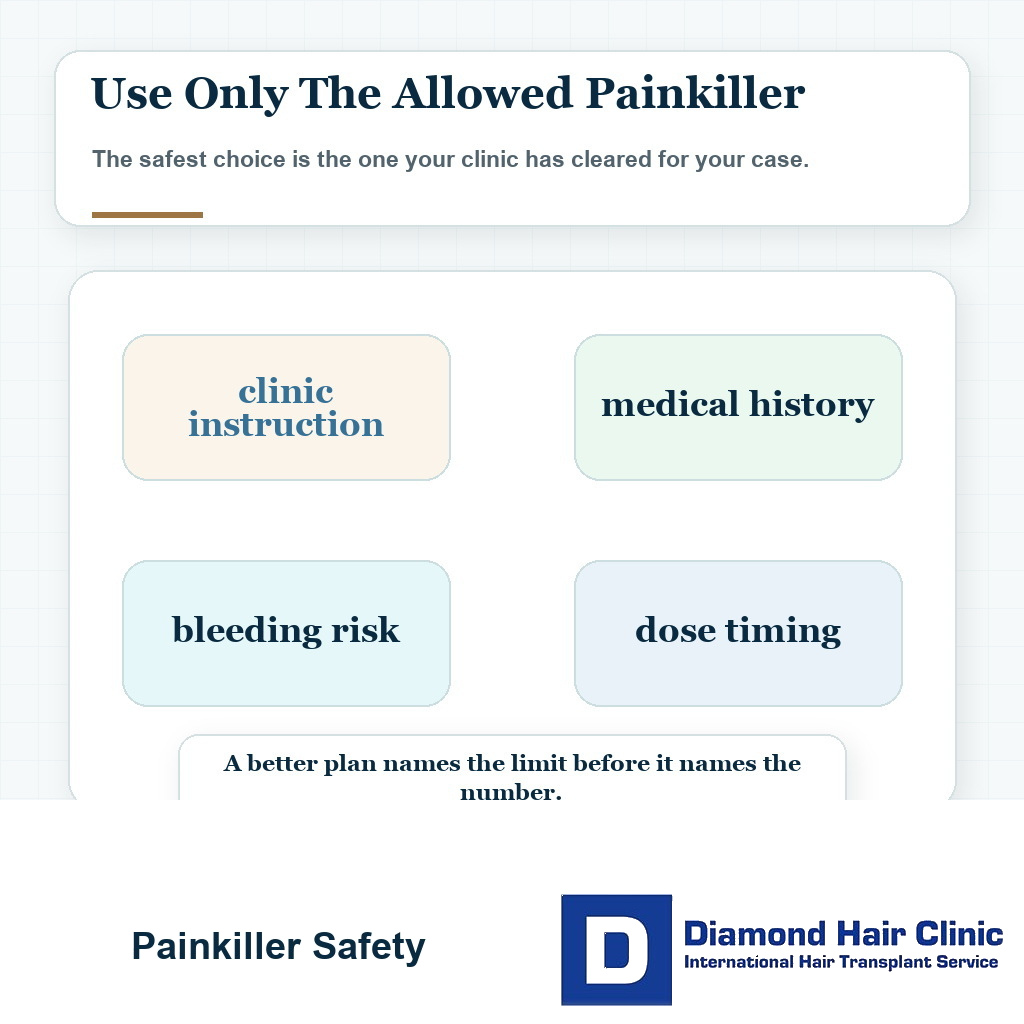
After a hair transplant, take only the painkiller your surgeon or doctor has approved for you. Many patients need only mild pain relief for the first few days, but the exact medicine depends on bleeding risk, stomach history, blood pressure, migraine medicine, other medications, and the clinic’s protocol. Headache after a hair transplant needs the same context, because the medicine question changes when pain is sudden, severe, or paired with warning symptoms. A similar trigger review applies when hiccups appear after a hair transplant, because medicine timing, stomach irritation, sleep disruption, or repeated vomiting can change the advice. Do not choose between paracetamol, ibuprofen, aspirin, or stronger tablets on your own after surgery. A written medicine record also helps because the clinic can see what was given in the chair and what is approved for home.
Do not borrow pain tablets from another patient, hotel, or travel companion. Use only medicine that matches your medical history and the written clinic plan.
Painkillers after hair transplant surgery should make recovery more comfortable, not cover up a problem. Mild soreness, tightness, burning, or donor area tenderness can be part of normal healing. Increasing pain, one sided severe donor pain, fever, pus, spreading hot redness, or pain that keeps getting worse needs medical review instead of simply taking more tablets. If bowel movement changes appear while you are taking stronger medicine, review constipation after a hair transplant as a medicine and hydration issue. When pain mainly keeps you awake, sleepless nights after FUE helps separate sleep discomfort from a medicine timing question or a warning sign.
The simplest painkiller is the one your clinic approves
A suitable painkiller after a hair transplant is usually one that does not thin the blood and has been approved by the treating doctor. In many countries, paracetamol or acetaminophen is commonly used for mild pain after surgery, but the dose and suitability must still be checked. Liver disease, alcohol use, combination cold medicines, and other prescriptions can change what is safe.
Follow the medication plan given by the clinic rather than creating a personal plan from online advice. Diamond Hair Clinic gives patients a clear medication routine after surgery. If a broader medication question comes up, it should be checked against that plan rather than handled casually.
An approved mild painkiller is usually enough when the scalp feels sore but is gradually settling. If pain is not controlled and the dose keeps rising, I do not treat that as a normal medication question. I treat it as a reason to examine the donor area, recipient area, swelling, and general condition. If swelling is the main worry, a clinic approved cold compress after a hair transplant is different from taking extra medication.
Another safety issue is doubling ingredients by accident. This can happen when one tablet is sold as a painkiller and another is sold as a cold medicine after a hair transplant or sleep aid, but both contain the same active ingredient. The package may look different, the brand name may be different, and the patient may still be taking too much of the same medicine. Cannabis use after a hair transplant needs the same review if it may change sleep, alertness, or medication effects.
With paracetamol or acetaminophen, the danger is often not one normal dose. It is taking several products that contain the same ingredient across the day, especially when a painkiller overlaps with a cold, flu, or sleep product. Do not combine two products that contain the same active ingredient unless the clinic has confirmed the exact plan. If pain keeps breaking through the approved schedule, that is a reason for clinical review, not to keep adding tablets.
This matters especially for patients travelling from another country. Brand names can change, and a familiar box may still contain an ingredient that overlaps with another tablet. The ingredient, dose, timing, and medical history matter more than the name on the front of the package. A dental prescription before or after a hair transplant also needs an ingredient check before it is combined with recovery medicine.
For travel days, write painkiller times in local time. Long flights can make the day feel longer, and a tired patient can take an extra tablet because the schedule feels unclear.
Avoid guessing with ibuprofen or aspirin
Ibuprofen, aspirin, and similar medicines are not all the same. Some can affect bleeding tendency, stomach irritation, kidney stress, blood pressure, or interactions with other medication. A patient may think he is only choosing a common painkiller, but after surgery the timing and personal medical history matter. For a patient planning a hair transplant with epilepsy, pain relief should be chosen with seizure medication history in view.
Before surgery, many clinics ask patients to stop certain medicines and supplements because bleeding and swelling can be harder to control. Some medicines need to be discussed before the operation, so I connect painkiller decisions with blood thinners and hair transplant surgery rather than treating every tablet as harmless.
Aspirin is a good example of why copying another patient’s plan can be unsafe. One clinic may prescribe or avoid it for a specific reason. Another patient may be taking it for a heart condition and should not stop without his doctor. The wrong decision can be either taking something unnecessary or stopping something medically important.
A prescribed aspirin plan is different from using aspirin on your own for pain. If aspirin is part of your clinic protocol or heart treatment, the question is who approved it, why it is being used, and when it should start or stop. I separate those situations further in aspirin and hair transplant surgery.
Ibuprofen needs the same respect. Some patients tolerate it well in normal life, but that does not by itself make it the right tablet immediately after a hair transplant. Stomach sensitivity, kidney function, blood pressure, bleeding tendency, and the timing after surgery all matter. A common medicine can still be the wrong medicine for one particular patient on one particular day.
For pain relief after surgery, these 5 slides keep tablets tied to clinic instructions, aspirin, ibuprofen, bleeding risk, stomach sensitivity, and kidney function. Swipe sideways, use the arrows, or choose a number below the image.


If ibuprofen or aspirin was taken by mistake
If you took one tablet by mistake, do not panic and do not try to correct it with another medicine. Stop guessing, write down the exact name, dose, time, and reason you took it, then send that information to the clinic.
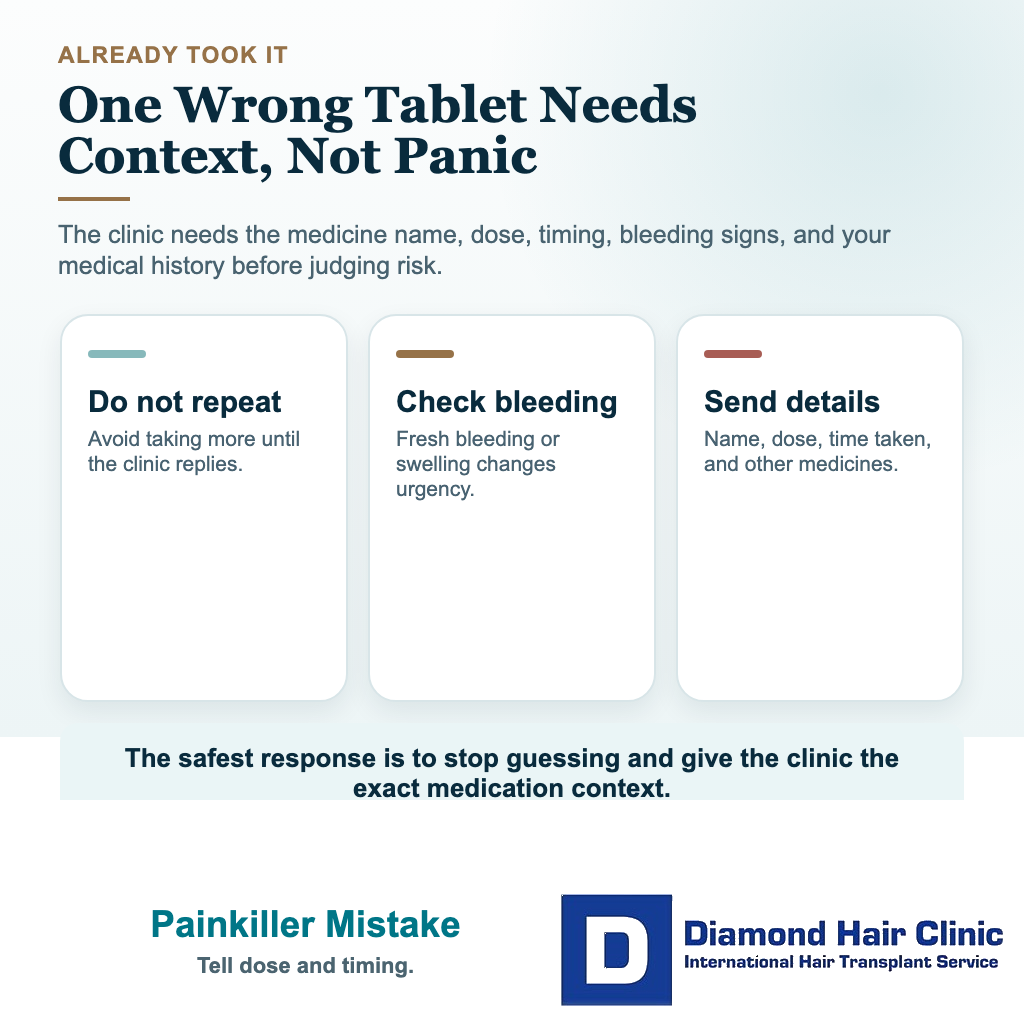
Most single mistakes do not simply ruin grafts, but the clinic still needs to know. Bleeding, swelling, bruising, stomach symptoms, dizziness, or blood pressure changes may need to be interpreted differently when a tablet was taken outside the plan.
If there is active bleeding, repeated oozing, dark expanding swelling, severe headache, vomiting, chest symptoms, faintness, or a general feeling that something is wrong, seek medical help instead of waiting for a routine reply. The important point is not shame about the mistake. It is giving the doctor the full timeline and symptoms before advice is given.
Normal pain should gradually settle
Most patients describe the early discomfort as tightness, soreness, tenderness, or a burning feeling rather than deep severe pain. The donor area can feel more sensitive than the recipient area, especially when sleeping, turning the head, or touching the pillow.
The anesthetic injections during surgery are usually the most uncomfortable part for many patients. After the operation, pain should generally move in the direction of settling, even if the scalp still feels strange.
I become more concerned when pain is sharp, worsening, strongly one sided, associated with heat, discharge, fever, unusual swelling, or a donor area that looks increasingly angry. In that case, more pain medication is not enough. The area needs medical assessment.
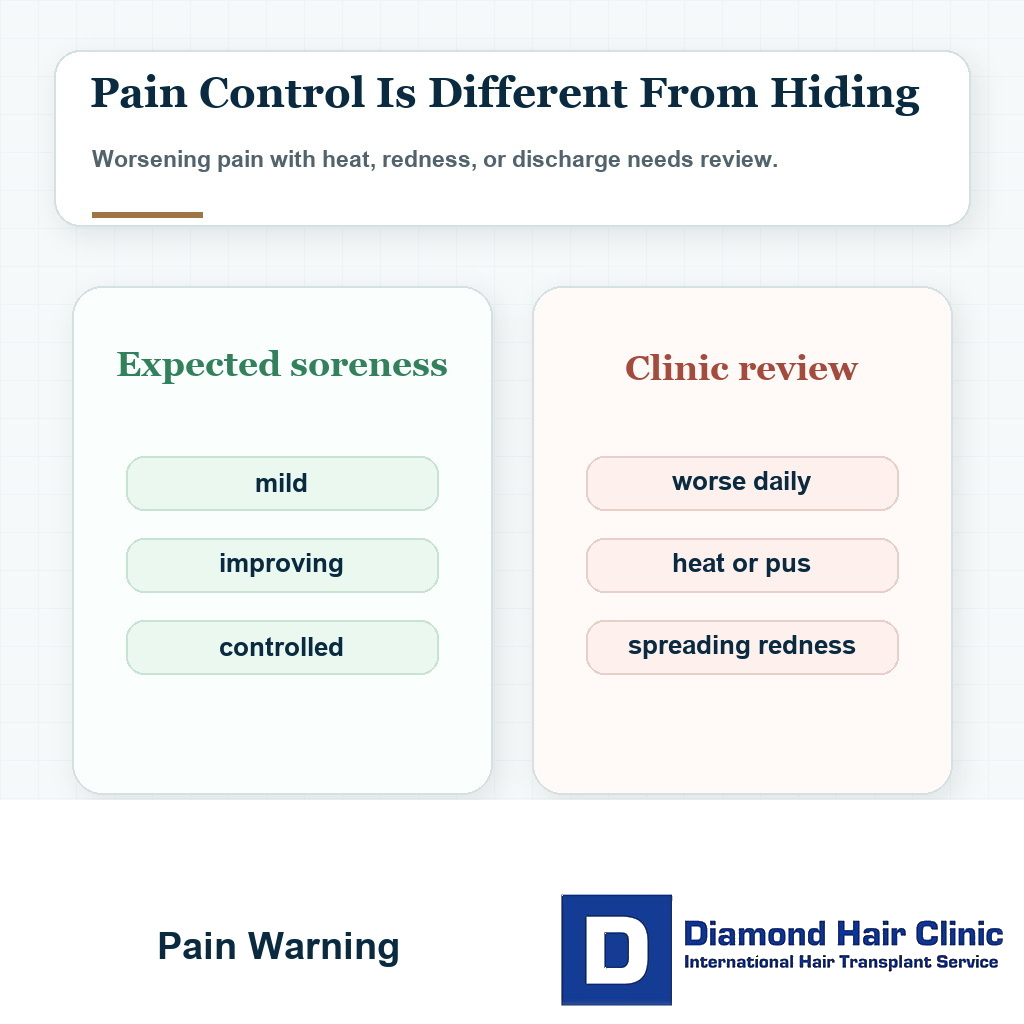
Pain needs review when it changes direction
Pain needs review when it does not match the normal direction of healing. A scalp can feel tender after surgery, but it should not look or feel progressively worse day after day. If the donor area becomes severely painful, swollen, hot, wet, or unusually sensitive on one side, contact the clinic.
I take severe donor symptoms seriously because pain can sometimes point to inflammation, infection, pressure, or an extraction pattern that needs closer assessment. Patients who are worried about this specific situation can compare their symptoms with the warning signs described in severe pain in the donor area after hair transplant.
Pain in the recipient area needs its cause checked. Mild crusting and redness can be normal, but pain with spreading hot redness, pus, bad smell, fever, black tissue, or a wound that appears to open should not be managed only with tablets. Painkillers can reduce the feeling, but they do not treat the reason.
A photo can help, but it cannot replace medical judgment when pain is changing quickly. Lighting, hair length, scabs, and normal redness can make the scalp look alarming. Pain that is increasing gives the doctor another clue, especially when the visual change and the symptom are moving in the same bad direction.
Some painkillers can increase swelling or bleeding risk
Some painkillers can matter more when the scalp is still fresh from surgery. If a medicine increases bleeding tendency or affects blood pressure in a particular patient, it can make the early recovery less predictable. That point should not be taken to mean every medicine is dangerous. It means this is not a place to improvise.
The first recovery period is already a time when swelling, tenderness, and sleep position can influence how comfortable the patient feels. I usually explain swelling after hair transplant as part of the same early healing picture, because patients often confuse pressure, swelling, and pain.
If the patient has hypertension, kidney disease, stomach ulcer history, heart disease, or uses medication for circulation, the painkiller conversation becomes more medical. A hair transplant is elective surgery, but the patient is still a whole patient. The scalp plan must respect the rest of the body.
I factor in the way pain affects behavior. A patient who is under treated may sleep badly, touch the scalp more, or become anxious. A patient who is over sedated may be careless with graft protection. The same alertness issue matters when judging driving after a hair transplant. Good pain control sits between those problems.
Blood pressure and heart medication change the decision
Patients with high blood pressure, heart disease or stents, blood thinners, or aspirin used long term need a planned medication decision, not a casual adjustment. Tell the clinic exactly what you take, why you take it, and who prescribed it. Stopping a necessary medicine only because of a hair transplant instruction can create the wrong risk.
This explains why medical history matters before surgery. A patient with controlled blood pressure may still be a candidate, but the plan should include safe anesthesia, bleeding control, medication timing, and recovery instructions. I include high blood pressure and hair transplant planning in the same safety discussion.
If a cardiologist or primary doctor gave a medicine for a serious condition, that doctor may need to be involved before anything is stopped. Do not create a bigger health risk for the sake of a small comfort decision.
Painkillers before the operation need approval
Do not take painkillers before the operation unless your clinic or doctor has approved them. A tablet taken casually the night before surgery can still matter if it affects bleeding, blood pressure, sedation, stomach irritation, or interaction with medication used during the procedure.
Patients sometimes take a painkiller before arriving because they are nervous about injections. I understand the fear, but this needs review, not hidden. If anxiety is the reason, there are safer ways to plan the day than taking unknown medication shortly before surgery.
Another practical record keeping issue matters here. If you take something before surgery and do not mention it, the surgical team may judge bleeding, blood pressure, or dizziness without knowing the full reason. Clear disclosure is not a formality. It changes how safely the day is managed.
Preparation is part of recovery. Painkiller safety starts before surgery, with complete medical history, medication disclosure, and clean written instructions. I connect pain control with the broader hair transplant aftercare plan, not only the moment when discomfort appears.
Avoid mixing painkillers with alcohol or sleeping tablets
I do not advise mixing painkillers with alcohol after a hair transplant. Alcohol can worsen dehydration, sleep quality, swelling, judgment, medication safety, and fasting after a hair transplant when tablets need food or water. Some painkillers also become more dangerous when combined with alcohol, especially if the liver, stomach, or alertness is affected.
Be cautious with sleeping tablets, sedatives, or strong calming medicines unless a doctor has specifically approved them. If you feel drowsy, dizzy, nauseated after a hair transplant, or unsteady, you are more likely to rub the grafts, sleep badly, miss medication timing, or ignore a warning sign. When nausea is the main symptom, nausea after FUE keeps the focus on fluids, vomiting, and warning signs.
If a stronger prescription painkiller is used, treat it as a medical instruction, not a way to push through the first nights. Drowsiness, nausea, dizziness, constipation, or poor judgment can make graft protection and travel less safe, so the clinic should know how you are responding.
Patients often ask separately about alcohol after hair transplant and sleep after hair transplant, but the topics meet in real recovery. Pain relief should help the patient rest safely. It should not make the early healing period less controlled.
Pain relief should not hide a problem
Good pain relief should reduce normal soreness while the scalp improves. It should not be used to push through worsening symptoms. If you need more tablets each day, or the pain returns stronger as soon as the medicine wears off, I review why.
Look at the whole picture. Is the pain improving or worsening? Is there heat, discharge, swelling, fever, bad smell, black tissue, or spreading redness? Does one side feel very different from the other? These details matter more than the pain score alone.
Visible scalp changes should also be judged carefully. If pain appears together with increasing redness, wet scabs, pus, or pimples, review the warning signs in redness, scabs, and pimples after hair transplant and ask for review instead of only increasing medication.
Questions before taking any extra tablet
Before taking an extra tablet, approval should fit your medical history, your operation, and your current symptoms. The answer can change if you have bleeding, swelling, stomach disease, liver disease, kidney disease, blood pressure problems, heart medication, alcohol use, or another prescription. Using kratom for pain after a hair transplant deserves separate disclosure, because mixing it with recovery medicine can make symptoms harder to read.
Confirm the name, active ingredient, and dose rather than saying only painkiller. Brand names differ between countries, and combination medicines can contain ingredients the patient does not notice. Two tablets with different names may contain the same active ingredient, which can accidentally double the dose.
Also ask how long the painkiller is expected to be needed. If the clinic expects only mild discomfort for a short time, but you still need frequent tablets several days later, that mismatch matters. The answer may be straightforward reassurance, but it may also reveal a problem that should be seen earlier.
Good communication protects the result. If a patient sends a message to the clinic, the useful information is the medicine name, dose, timing after surgery, pain location, photos if needed, and whether symptoms are improving or worsening. That gives the doctor something real to judge. If the pain is described as electric zaps, add the details from electric shock sensations after FUE before changing tablets.
Pain relief should be agreed before you need it
After FUE, pain control should not become a late guess. Before surgery, know the exact medicine your clinic allows, the dose, and the signs that mean you should contact the clinic instead of taking more tablets.
Most patients need a simple plan. Use only the approved medicine, avoid alcohol, do not mix painkillers without medical advice, and tell the team if pain is getting sharper or spreading rather than settling.
When soreness is improving, stay patient with the recovery instructions. When pain is worsening, the question is no longer just which tablet is safe. The clinic needs to understand the cause so the grafts, scalp, and general health are protected.