Red Light Devices During Graft Healing
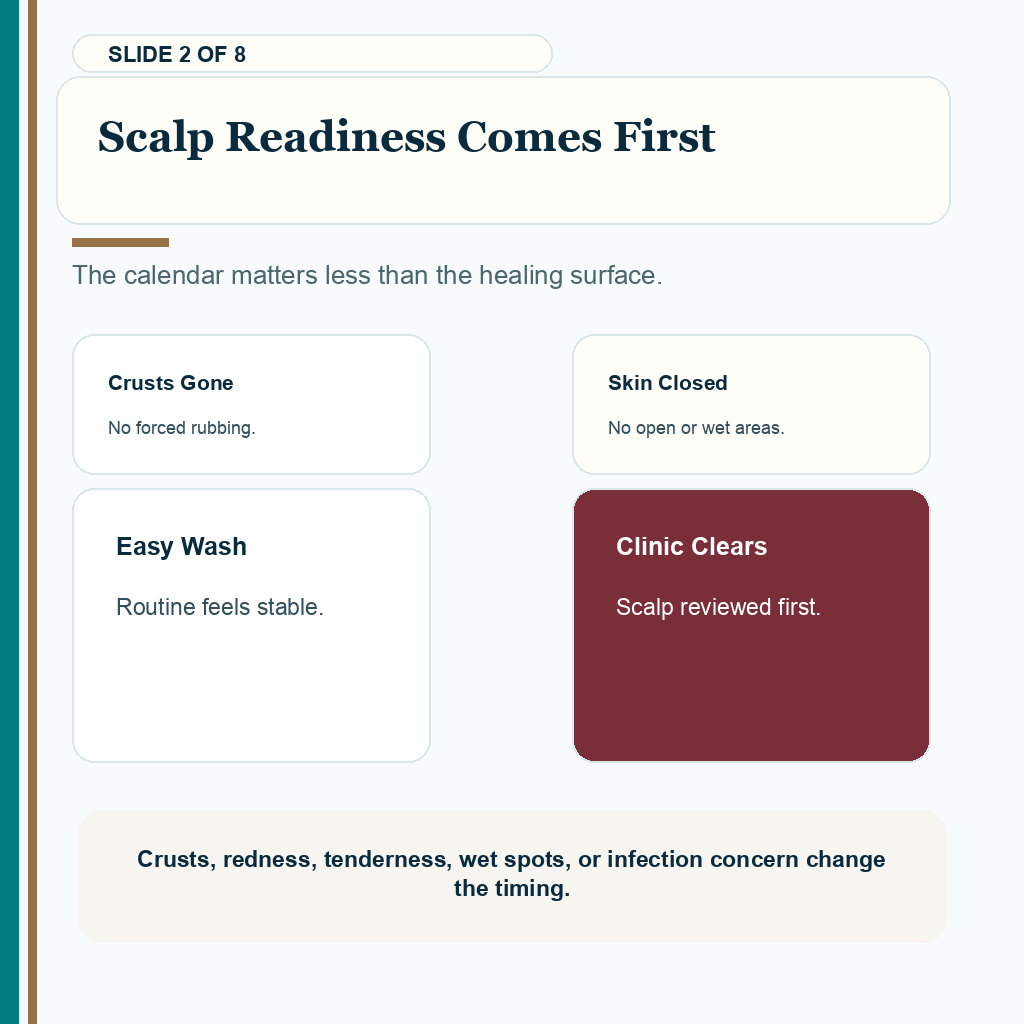
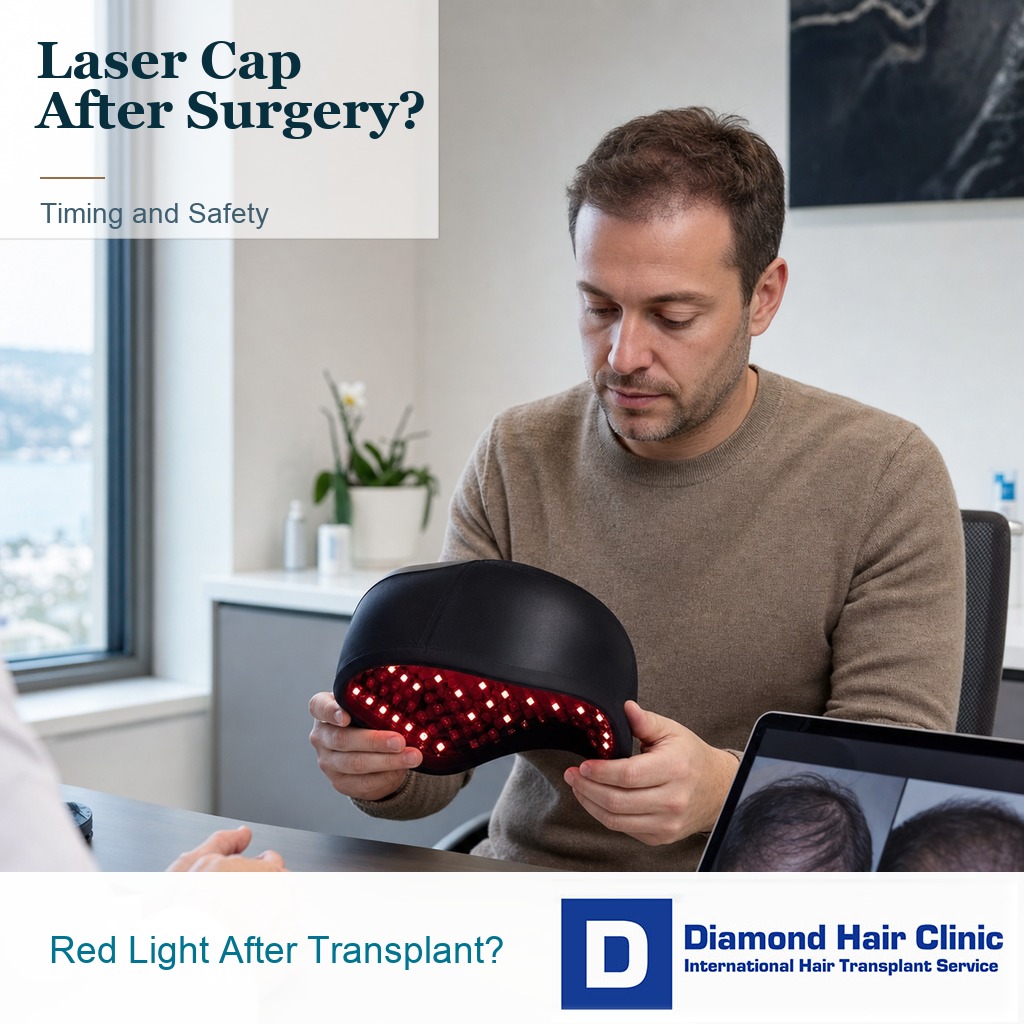
Red light therapy or a laser cap can be used after a hair transplant in carefully chosen patients, but it is not urgent and it is not necessary for every case. For a home device that touches the scalp, I usually wait until the crusts are gone, the skin is closed, and the clinic has cleared the scalp. In many patients that means around 10 to 14 days, and sometimes longer.
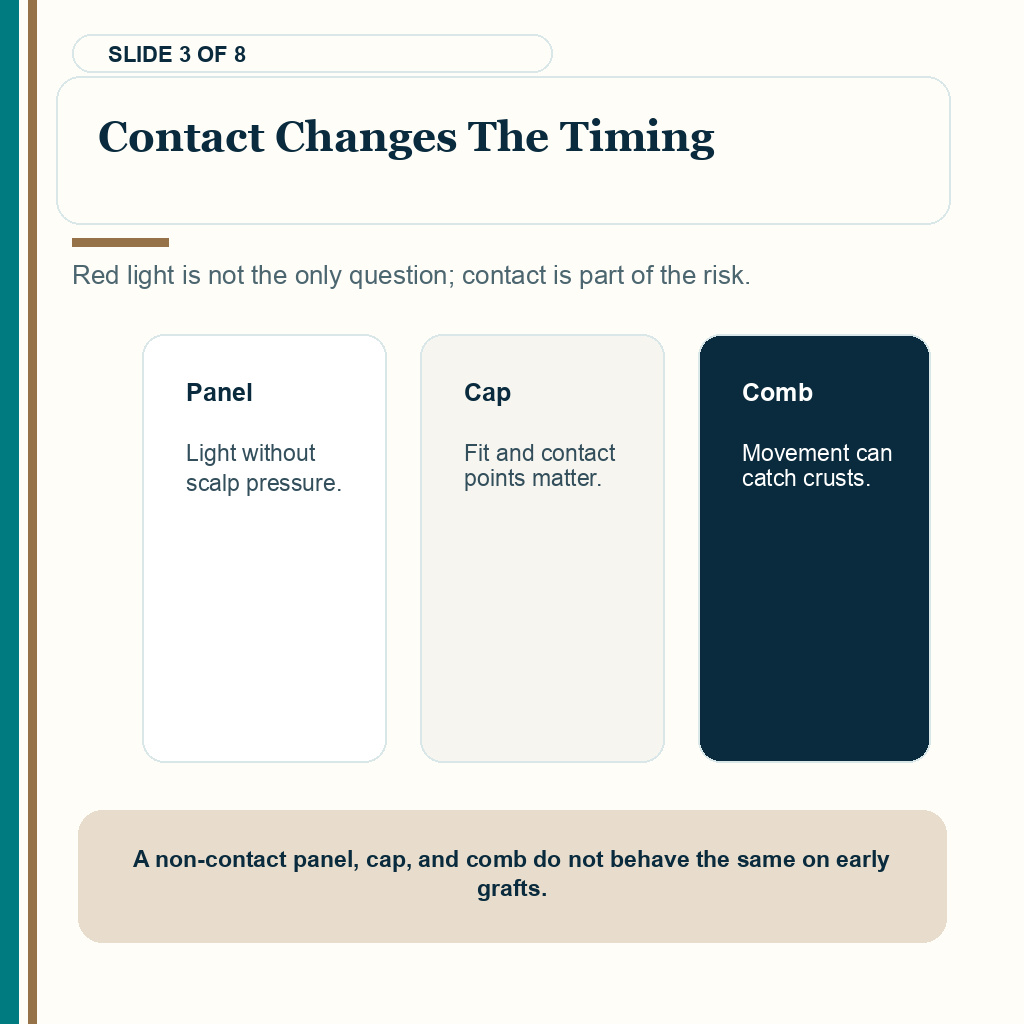
A clinic panel that does not touch the scalp is different. It may be used earlier only when the surgical team controls the timing, distance, heat, eye protection, and hygiene. That distinction is separate from sunbeds after FUE, where UV exposure is the main concern. A home cap, helmet, or comb adds contact, pressure, sweat, and cleaning issues, so I judge it more carefully.
Judge the device before judging the light claim. A panel above the scalp, a cap resting on healing skin, and a comb that touches hair create different recovery risks. If the scalp is still irritated, crusted, or difficult to photograph clearly, adding a cap or comb makes recovery harder to read.
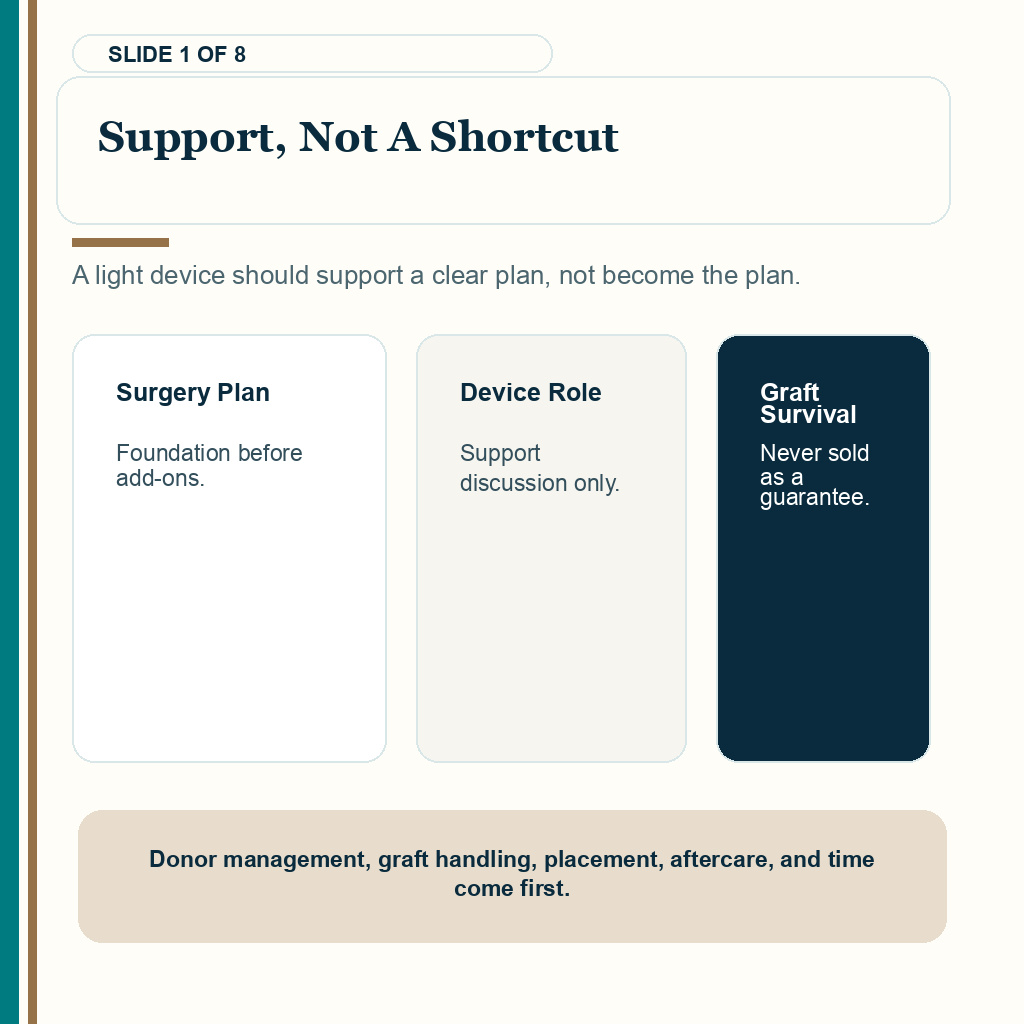
The transplanted grafts should not depend on a light device to survive. They depend first on careful extraction, gentle graft handling, correct placement, a healthy recipient area, clear hair transplant aftercare, and time. Red light therapy may have a place when native hair and scalp quality are part of the larger plan, but it cannot rescue poor surgery or careless early healing.
Be careful with HBOT after hair transplant for the same reason. A support device or chamber should not be presented as the reason grafts will grow. The surgical plan and healing basics still carry the heavier weight.
When red light therapy can be considered after surgery?
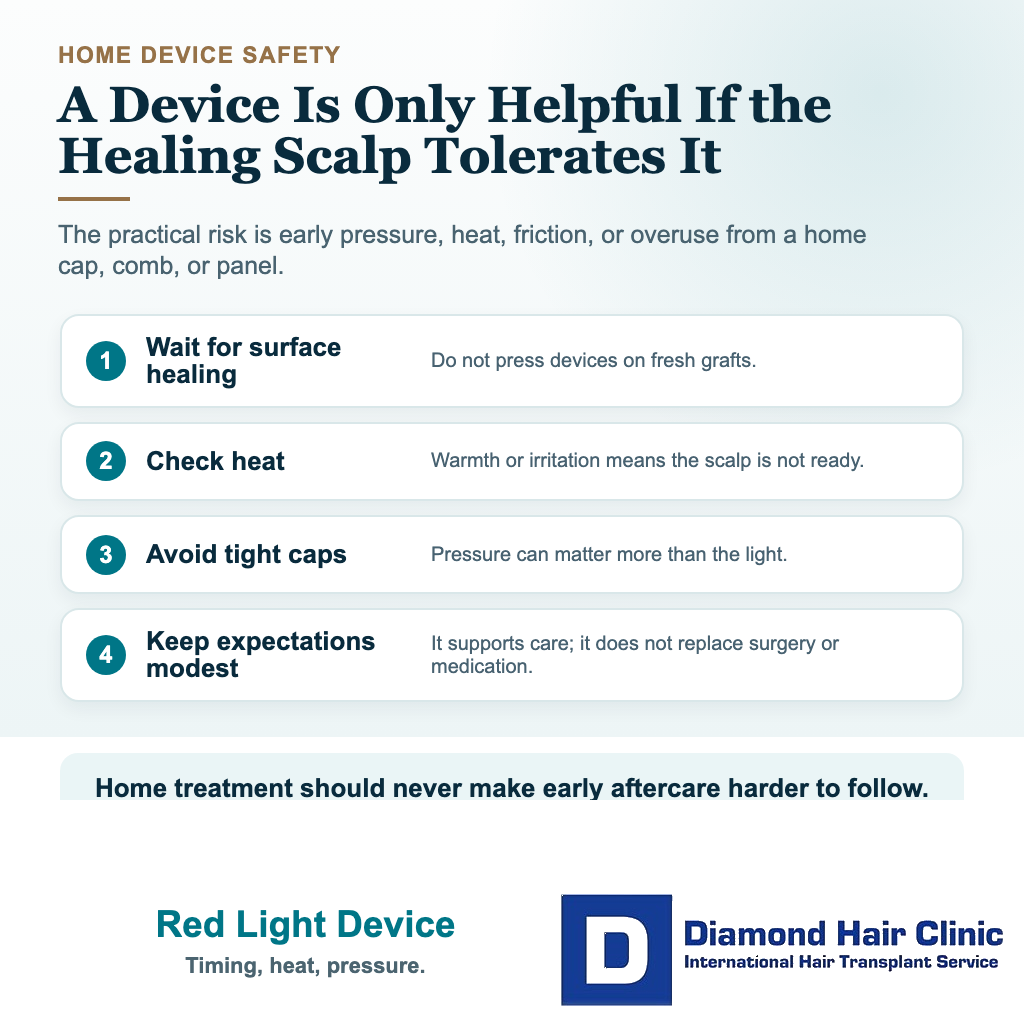
The timing depends on the device and the scalp in front of me. A clinic device that stays above the head without contact is not the same as a home cap that rests directly on the recipient area. The panel is mainly a light exposure question. The cap is also a pressure, friction, heat, sweat, and hygiene question.
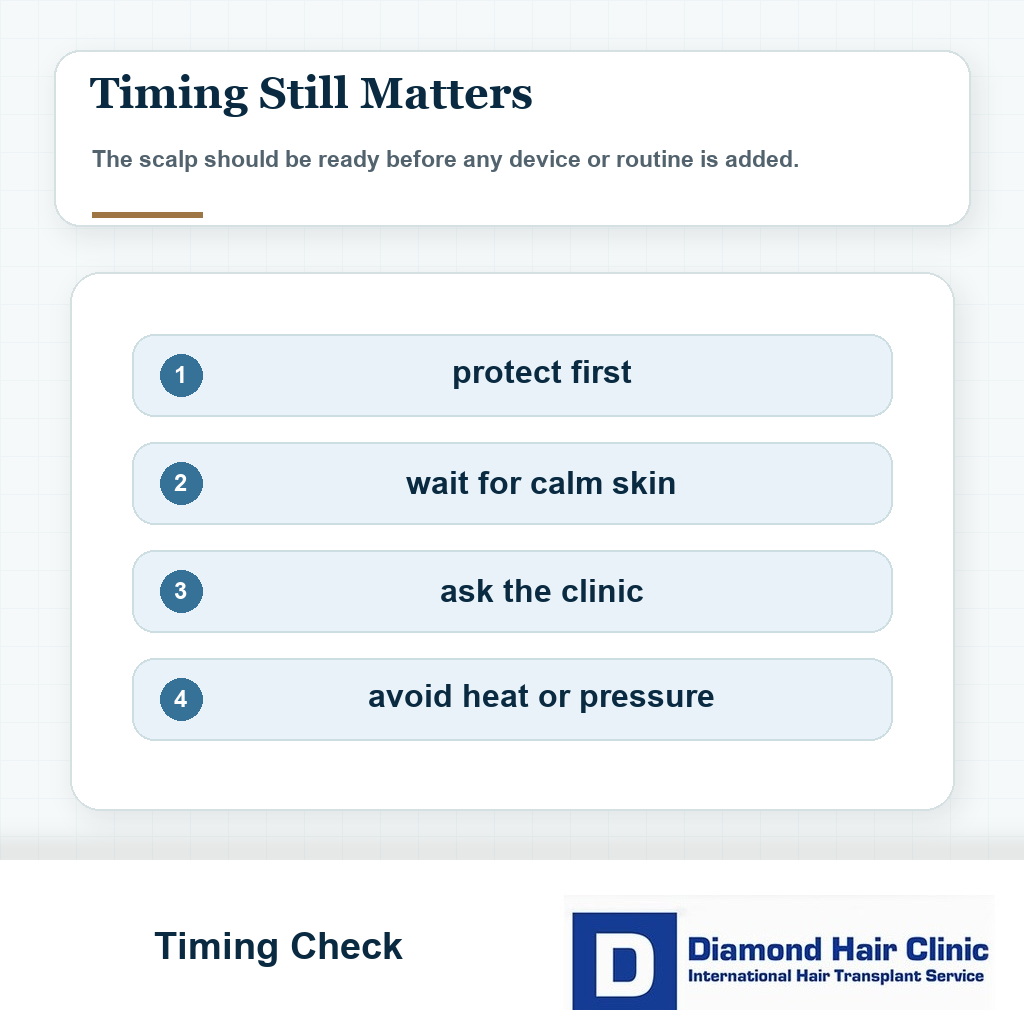
For a home cap, the early graft protection period should pass first. Diamond Hair Clinic already treats the first 10 to 14 days as a protected period after surgery. During that window, the scalp is still settling, crusts are still changing, and unnecessary pressure or rubbing should be avoided.
If the recipient area is still red, painful, wet, crusted, itchy, or sensitive, waiting is wiser than adding another routine. A few extra days without light therapy will not damage a transplant. Pressing a device onto a healing scalp too early can create avoidable irritation.
When the skin is closed, crusts have fallen naturally, washing is comfortable, and there is no sign of infection or unusual tenderness, the conversation becomes easier. At that stage, a clean device used gently and correctly is very different from placing a cap on fresh grafts in the first few days.
Timing depends on the healing scalp
A hair transplant is not only a hair procedure. It is also thousands of tiny healing points in the donor and recipient areas. Even when the skin looks settled from a distance, the surface may still be tender, dry, tight, or covered with crusts.
I judge timing from the scalp, not from a marketing schedule. If crusts are still present, rubbing from a laser cap can disturb them. If the skin is irritated, heat or sweat can make the irritation worse. If you are already anxious, a new device can become another reason to inspect the scalp every hour.
The separate question of when to touch grafts after a hair transplant matters here. Red light itself is not the only issue. A laser cap is also contact. A comb is also movement through hair and over healing skin.
Hygiene matters too. A device that has been used before surgery, kept in a bathroom, or shared with someone else should not touch healing skin unless it has been cleaned properly. Early after surgery, the scalp deserves a clean, predictable routine.
What red light therapy can realistically support?
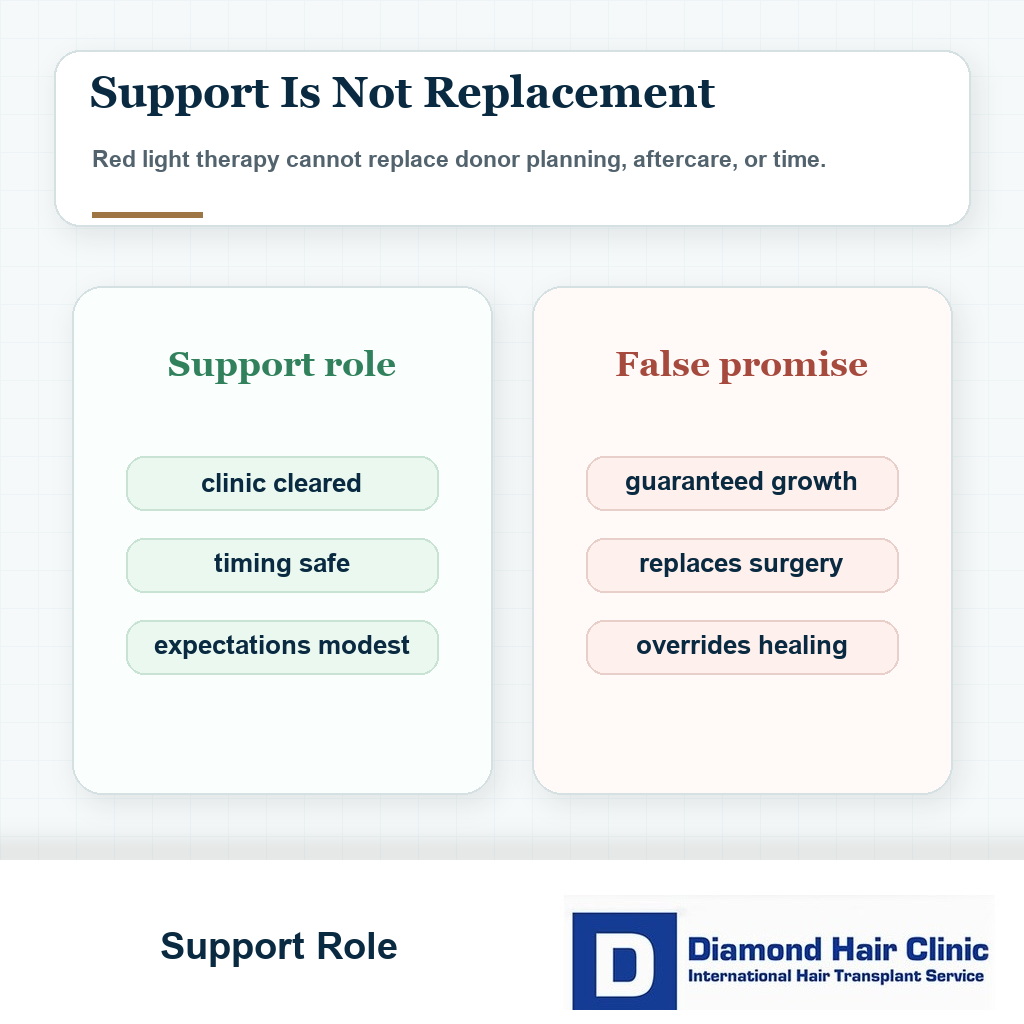
Low level light therapy is usually discussed as a supportive treatment for androgenetic hair loss and hair quality. In the transplant setting, the most reasonable role is support, not replacement. It may be part of a broader plan for native hair, scalp comfort, and maintenance in carefully chosen patients.
The reason I stay cautious is that support in hair loss treatment does not always mean every fresh transplant needs early device use. Light therapy can be useful support in selected situations. It does not prove that every patient needs a cap, that earlier use is better, or that graft survival depends on it.
I avoid presenting it as a switch that makes every graft grow stronger. A well planned transplant should already give the grafts a good chance to heal and grow. If the surgery itself depends on a device to work, you should question the explanation. I also review mesotherapy after hair transplant carefully when it is presented as an automatic extra.
Before I recommend it, I review what we are trying to improve. Is the goal native hair support, scalp comfort, a manageable routine, or reassurance during the waiting months? These are different reasons. If nobody can explain the reason, the device may simply be another product attached to the surgery.
Define the goal first. Native hair support, scalp comfort, and reassurance are different reasons to use the same device.
Used with the right expectations, it may be reasonable. Used as a guarantee, it becomes misleading.
It should not be promised to make grafts grow better
I keep that promise narrow. Transplanted graft growth depends mainly on graft quality, handling, survival during the procedure, recipient area design, aftercare, and patient biology. Light therapy may support the environment in some patients, but it should not be sold as the deciding factor.
It is very common to look for extra treatments when growth feels slow, shedding starts, or the early result looks thin. I understand that fear, but it can lead to poor decisions. Normal shedding and slow early growth do not always mean a treatment is missing.
With tracking hair transplant growth, staged photos are more useful than daily mirror panic. If you use a laser cap and then compare photos taken in different light, with different hair length, the device may look more powerful than it really is because the comparison is not reliable.
Light therapy should never be used to hide a weak plan. If grafts were spread too thinly, if the donor area was overused, or if native hair kept miniaturizing around the transplant, a device cannot rewrite the surgical math.
Choosing between a laser cap, comb, or clinic panel
The device type changes the risk. A clinic panel that does not touch the scalp avoids pressure on the recipient area. A cap may distribute light evenly, but it sits on the head. A comb requires repeated movement, and that can be a problem if the scalp is still healing.
Early after surgery, I avoid any device that requires rubbing, dragging, clipping, pressing, or repeated repositioning over the recipient area. Even if the light itself is low energy, the way the device is used can still irritate the scalp.
A cap also has to fit the actual transplanted area. Some caps press on the frontal hairline. Some touch the temples. Some sit more on the crown. If the device presses exactly where grafts were placed, timing and comfort matter more.
If you already own a device, I look at the type of device, the contact points, the schedule, the session length, and how it sits on the scalp. The more cautious plan is often a delayed restart with gentle use after the clinic confirms the skin is ready.
Partial use still needs a map. A device used only on the crown or donor area may still touch the hairline or temples depending on its shape, so the clinic should know where it sits before timing is decided.
Risks in the first 10 to 14 days
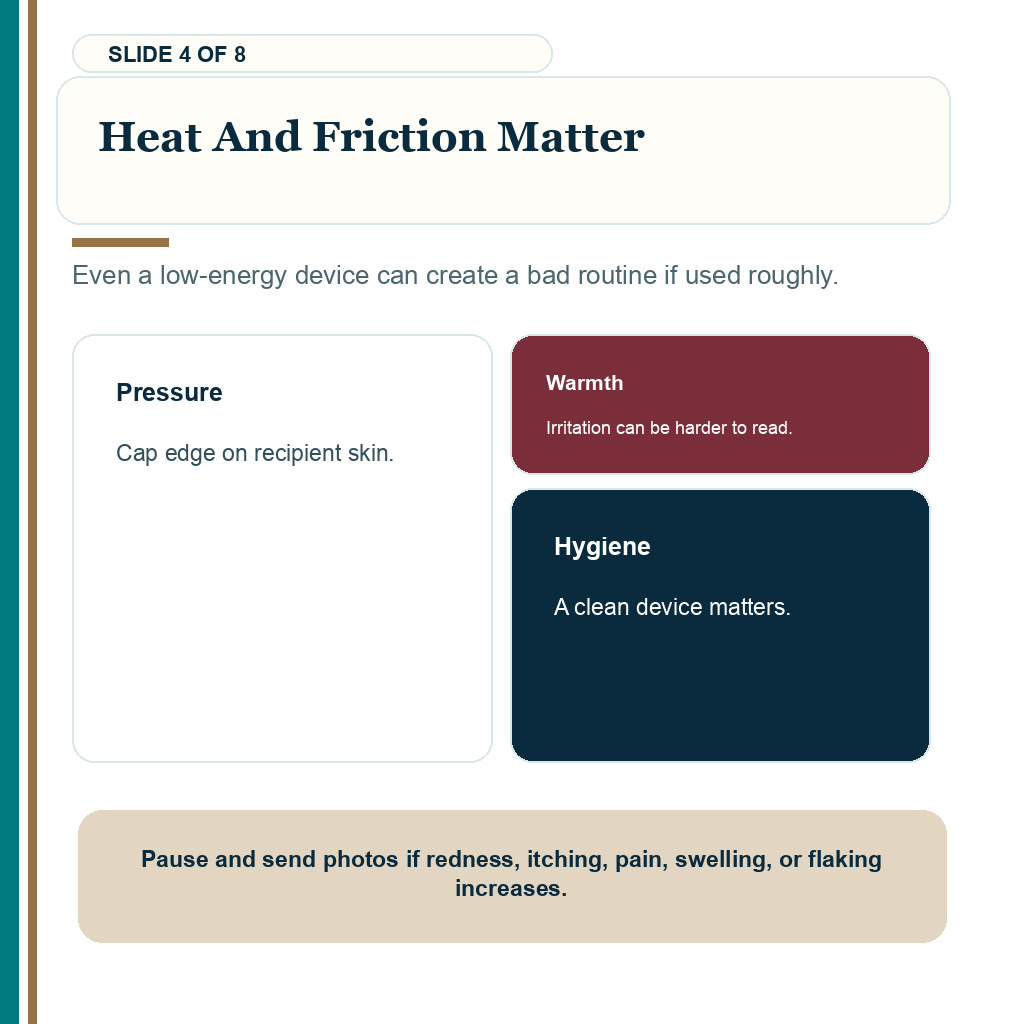
The main risks are pressure, friction, scratching, overheating, sweat, poor cleaning, and anxious overuse. The first 10 to 14 days are when the recipient area needs protection.
A cap that presses on the hairline, temples, crown, or mid scalp can create pressure exactly where you need to be gentle. A comb can catch crusts or short hairs. A device used too long can make the scalp warm and sweaty. None of this is helpful when the skin is still fresh.
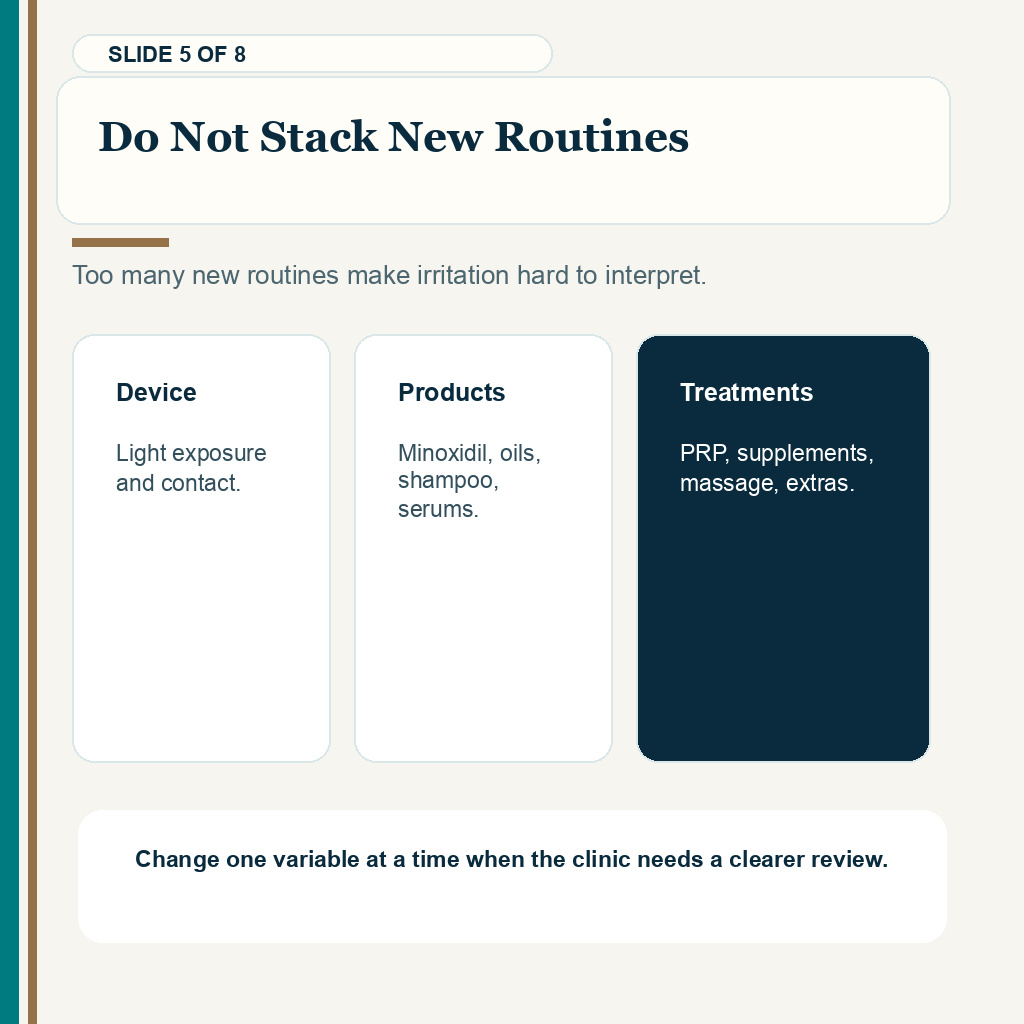
The other risk is a crowded routine. A person may restart topical products, buy a laser cap, book PRP, change shampoo, take recovery peptides or supplements, and inspect shedding every day. If the scalp reacts, nobody knows which change caused the problem. If the real reason is month three or month four anxiety, I would slow the decision down. Red light, PRP, microneedling, minoxidil, oils, and new shampoos should not all start together just because growth feels quiet. One controlled change gives the clinic a cleaner way to read irritation, shedding, or comfort than a recovery routine that changes everything in the same week.
The same sequencing matters with topical metformin after FUE donor scar claims. Avoid stacking light devices, serums, creams, and supplements while the donor area is still reacting.
If the scalp becomes more red, itchy, swollen, painful, or flaky after starting a device, pause the device and send clear photos to the clinic. Continuing just because the device was expensive is not good clinical thinking.
Safety details with home devices
The device should be clean, comfortable, and used only for a modest session length. More time is not always better. A healing scalp does not need an aggressive routine.
Eye protection matters, especially with stronger panels or devices used near the face. Follow the device instructions and the clinic instructions together. If those instructions conflict, the surgical aftercare instructions should come first during the early healing period.
Do not treat every red lamp, sauna style light, beauty panel, laser comb, and medical device as the same thing. The practical question is how much heat, glare, contact, pressure, and handling the device creates on your healing scalp.
A salon lamp should be checked for more than its color name before it goes near healing scalp. Some devices are hair devices, some are beauty panels, and some are tanning booths with UV or heat exposure. When the device details are unclear, pause and let the clinic review the light type, contact points, and hygiene plan.
If you take medication that makes your skin more light sensitive, or if you have a condition that reacts strongly to light, that needs medical review before you start a home device.
Avoid combining several new things on the same day. If red light therapy, microneedling, topical minoxidil, PRP, a new shampoo, oils, supplements, and massage all begin together, irritation becomes difficult to interpret. Add one change at a time, only when the scalp is quiet enough for the clinic to read the reaction clearly.
A device should never be used over open skin, wet scabbing, unusual warmth, pus, increasing pain, or spreading redness. If those signs appear, contact the clinic rather than adding more treatments. A possible infected hair transplant deserves direct review when symptoms are worsening.
Comparing red light therapy with PRP, minoxidil, and finasteride
These treatments do not do the same job. Finasteride or dutasteride works on the DHT side of male pattern hair loss. Minoxidil supports the growth cycle and hair caliber in responsive native hair. PRP is a supportive scalp treatment in selected cases. Red light therapy also sits in the supportive category.
Red light therapy should not become the reason to spend grafts more aggressively. If a patient avoids finasteride or minoxidil, I still judge the donor reserve and native hair risk before deciding whether surgery or another session is sensible.
I compare support options by the problem in front of us. If you have ongoing native hair miniaturization, the discussion around finasteride before and after hair transplant may matter more than a device. If topical irritation or native hair support is the question, minoxidil after hair transplant needs careful timing.
The same comparison applies to PRP and exosomes after hair transplant and to PRP treatment for hair loss. Supportive treatments can have a place, but they are not the foundation. The foundation is diagnosis, donor management, recipient area design, graft handling, aftercare, and long term planning.
You can spend a lot of money on supportive treatments and still have a weak result if the hairline was too low, the donor area was poorly managed, or the crown was overpromised. The first priority is the surgical plan.
When avoiding it or waiting longer is safer?
Wait longer if the scalp is not settled. Redness that is increasing, wet scabbing, bleeding, strong itching, tenderness, folliculitis, swelling, infection concern, or unusual warmth should be reviewed before adding a device.
Wait as well if you are already changing medication or recovering from a difficult early period. If shedding, irritation, and product changes all happen together, it becomes harder to know what is causing what. A steadier routine gives cleaner information.
Scalp conditions make timing more individual. Seborrheic dermatitis, psoriasis, folliculitis, very sensitive skin, or recent irritation from topical products can make device timing less straightforward. The device may not be the problem, but adding it before the skin is settled may make symptoms harder to read.
Do not use a device over open skin, wet crusting, active infection, or a painful area unless your surgeon has examined the scalp and clearly approved it.
Promises about red light therapy that are too strong
Be careful with any promise that makes red light therapy sound essential for graft survival, guaranteed density, faster final results, or a way to correct poor surgery. Those claims are too strong.
A device being cleared or marketed for androgenetic hair loss is not the same as proof that it is needed for graft survival after surgery. It also does not mean every cap, comb, or schedule is suitable for a fresh recipient area.
A clinic may offer light therapy as part of aftercare. That can be reasonable. It becomes misleading when you are made to feel that refusing an added treatment will make the transplant fail. Proper planning should not depend on pressure selling, added devices, or panic after you are already committed.
A hair transplant guarantee matters because patients often hear confident promises when they are most anxious. The more worried you feel, the easier it becomes to sell certainty.
Before and after photos used to promote a device also need caution. If someone had surgery, medication, PRP, styling changes, and different lighting at the same time, the photo does not prove that the device caused the improvement. Hair transplant before and after photos still need careful reading because several variables may have changed together.
Another concern is a device promoted without diagnosis. If you have a weak donor area, unstable hair loss, diffuse thinning, or unrealistic coverage expectations, the answer is not to add a light device and continue as if the plan is solved.
Red light therapy may help native hair support
Native hair is often the more relevant reason to discuss supportive treatment. Transplanted grafts are moved from the donor area, but native hair around them can keep miniaturizing if the underlying hair loss continues.
If red light therapy helps you maintain or improve some native hair quality, the visual result may look better. But do not confuse native hair support with permanent correction of genetic hair loss. Native hair still needs diagnosis and, in many male patients, a discussion about medical maintenance.
With native hair shock loss after a hair transplant, the first step is identifying whether the thinner hair is transplanted hair, shocked native hair, miniaturizing native hair, or part of a normal shedding phase.
This distinction matters when judging any supportive option. If you feel the laser cap helped, I still ask where the improvement appeared, how it was measured, and whether other treatments changed at the same time.
A thin result needs diagnosis before devices
A thin looking result has to be diagnosed before treatments are added. The cause may be early timing, lighting, wet hair, weak native hair, poor graft survival, low density planning, crown math, a large area covered with too few grafts, or unrealistic expectations.
Red light therapy may be part of a supportive plan, but it should not delay a proper review. If the result is still early, time and consistent photos may be enough. If the plan was weak, a device will not turn a low density design into dense coverage.
A device routine can also confuse the review if it starts at the same time as medication changes, new shampoos, supplements, or a different haircut. I want the growth concern documented with matched photos first, then the support routine can stay secondary.
I explain the broader issue in why some hair transplant results look thin. Many patients blame the wrong thing because they judge the result without separating donor quality, graft count, hair caliber, coverage area, and native hair loss.
Before adding red light therapy because of worry, first define the worry. Is the scalp healing poorly, is growth delayed, is native hair shedding, or are you reacting to harsh lighting and short hair? The answer changes the plan.
These 8 red light device review slides separate support role, scalp readiness, device contact, heat and friction, routine stacking, marketing claims, native hair diagnosis, and the review record. Swipe sideways, use the arrows one slide at a time, or choose a number below the image.