


Bending Forward Needs Careful Early Timing
You should avoid bending forward at the waist during the first 48 hours after a hair transplant. If you need to pick something up, tie your shoes, pray, brush your teeth, or get into a car, keep your head upright and lower your body by bending your knees. A quick small movement usually does not destroy grafts, but repeated head down posture, pressure on the scalp, rubbing, bleeding, and early swelling can make recovery more difficult.
I word this carefully because many people worry after one normal movement. A quick bend is different from repeated head down posture, straining, rubbing the grafts, or hitting the scalp while the skin is still fresh.
Bending recovery planning map
Sort the bend by timing, repetition, and scalp contact
A quick bend with no contact is not the same as repeated head down posture, lifting, swelling pressure, bleeding, rubbing, or hitting the grafts in the first recovery days.
Usually observe
One brief movement usually creates worry, not damage
Return upright, keep the head raised, avoid testing the grafts, and continue the normal aftercare routine.
Do not use this reassurance for repeated bending, heavy lifting, or careless movement in the first 48 hours.
The bend included rubbing, a hard bump, bleeding, visible graft movement, strong pain, or a fall.
No bleeding, no scalp contact, no visible graft loss, no painful swelling, and no repeated posture.
Plan movement
Repeated head down posture needs stricter first day planning
Squat with the knees, sit to tie shoes, use a cup at the sink, and ask for help with floor level tasks.
Do not call bending safe when cleaning, luggage, prayer positions, or low sinks repeat the posture.
The head stays below the heart, strain builds, swelling increases, or the scalp comes close to hard surfaces.
A plan for the first 48 hours, help with lifting, easy clothing, and no repeated head down tasks.
Clinic review route
Contact, bleeding, or impact matters more than posture alone
Stop touching the area, take clear photos, keep the scalp protected, and send the exact story.
Do not reassure only from the word bending if there was rubbing, pressure, bleeding, or a visible open area.
Bleeding continues, pain increases, redness spreads, discharge appears, or a true graft seems displaced.
Photos, timing, what touched the scalp, bleeding amount, pain level, and whether symptoms are worsening.
More conservative plan
Some cases should stay cautious beyond one simple rule
Use the first week as a protection period when swelling, dizziness, or large treatment areas are present.
Do not copy a simple timeline if the session was large or both hairline and crown were treated.
Blood pressure is unstable, dizziness continues, swelling is strong, or travel and luggage require repeated bending.
Session size, treated areas, swelling level, bleeding history, blood pressure concerns, and travel duties.
For the first two days, keep the routine conservative. Keep the head above the heart, move slowly, avoid sudden strain, and protect the recipient area from touch. After the first few days, movement becomes easier, but the skin, scabbing, swelling, and comfort still matter before everything is treated as normal.
Bending matters most in the first 48 hours
The first 48 hours are the most delicate period because the grafts have just been placed into tiny openings in the recipient area. They are not floating loosely, but they are also not as secure as they will be later. During this window, direct friction, scratching, rubbing, pressure, bleeding, or a hard bump matters more than a gentle change in posture.
Bending forward can also increase pressure in the scalp and face. That can make swelling more noticeable, especially around the forehead and eyes. Someone who already has swelling, high blood pressure, heavier bleeding during surgery, or a very large session needs more caution with head position than someone who had a smaller, quiet procedure. If you are thinking about a cold compress after a hair transplant, use it only where it will not press the grafts.
In the first two days, keep your head higher than your heart whenever you can. That same principle also explains why I give careful guidance about sleeping after a hair transplant, because night posture can affect swelling and accidental graft contact as much as daytime movement.
Who should be more careful with bending?
Some people should be stricter than others. I use a more conservative rule when the operation was large, the frontal hairline and crown were both treated, swelling is already visible, bleeding was heavier than usual, blood pressure is difficult to control, or you feel dizzy when standing up.
Extra planning is also needed if you immediately need to look after children, lift bags, pray with repeated low positions, work in a kitchen, clean a house, travel through airports, or use low sinks and mirrors. The risk in these cases is not one small movement. It is repeated movement, tiredness, and a higher chance of bumping or rubbing the scalp. For parents, I also separate bending from the wider question of caring for young children after hair transplant surgery, because lifting, bedtime, and sudden contact need their own plan.
If your case is in this group, treat the first 48 hours as strict and the first week as cautious. Keep essential movement slow, use your knees instead of dropping the head, and ask for help with lifting or floor level tasks. That plan protects the scalp without making you afraid of every normal step.
Can one quick bend ruin the grafts?
One quick bend is unlikely to ruin a properly performed hair transplant if there was no bleeding, no rubbing, no direct trauma, and no graft visibly came out. People often remember one moment, then spend the next days checking the mirror and imagining the whole result has been damaged. That is usually worry, not evidence.
What worries me more is repeated head down posture in the first days, bending while lifting something heavy, pulling a tight shirt over the scalp, scratching scabs, or bumping the recipient area against a cupboard, car roof, pillow, or towel. Those situations create mechanical force. A posture change alone is much less dangerous than friction or impact.
Grafts become more stable as the days pass. In the early period, pulling on hairs or attached crusts can be risky. Around the end of the first week and especially after the scabs have been handled correctly, the risk becomes much lower. Testing grafts is never useful. Steady protection, correct washing, and no unnecessary touching are safer until the scalp has settled.
If your concern is really whether scabs or hairs mean graft loss, my separate explanation about lost grafts after scabs come off may help you judge that situation more accurately.
Picking things up, tying shoes, and brushing teeth safely
During the first two days, do not fold forward from the waist with your head hanging down. If something falls on the floor, bend your knees, squat slowly, or ask someone else to help. If you need to tie your shoes, sit on a chair and bring the foot up instead of dropping your head toward the floor.
For brushing your teeth, stand upright and use a cup if needed. You can spit without making a dramatic movement. The scalp does not need perfect stillness, but it does need you to avoid sudden head drops, stretching, and accidental knocks.
Getting dressed matters too. Clothing that opens at the front is safer in the first days because it avoids dragging fabric over the grafts. My guidance on touching grafts after a hair transplant connects to the same idea. It is not only hands that touch the scalp. Clothing, towels, pillows, car roofs, and careless movement can touch it as well.
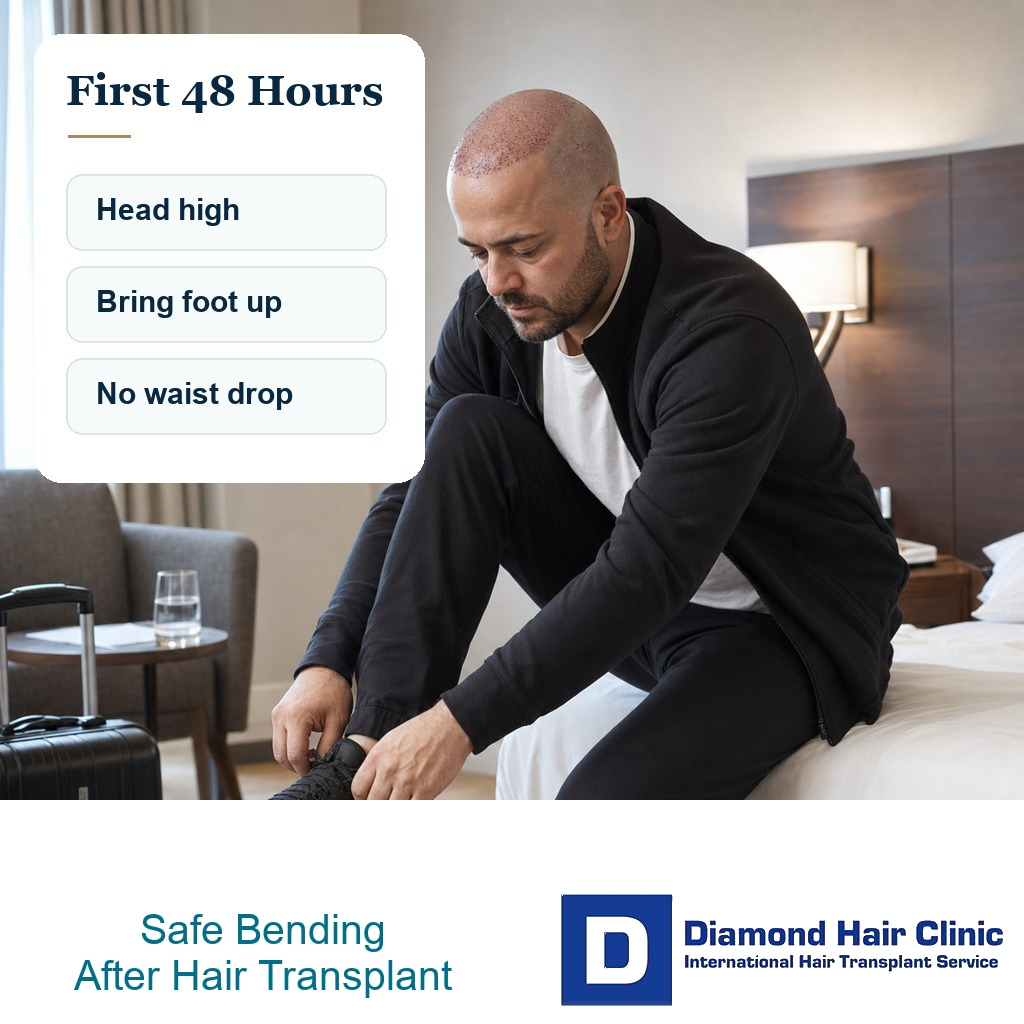
Safe movement in the first 48 hours means bringing the foot up or lowering the body without dropping the scalp toward the floor.
When can you pray, kneel, or put the forehead near the floor?
Prayer is one of the most common reasons people ask about bending. My medical advice is to protect the grafts during the first 48 hours and avoid full head down positions that bring the forehead close to the floor. If you pray, use a modified position that keeps the head elevated and avoids contact between the scalp and any surface. The same medical limits shape prayer after a hair transplant. Keep the head elevated, avoid floor contact, and modify movement until the clinic clears more normal positions.
Medically, the concern is not the act of prayer. The concern is pressure, repeated bending, forehead contact, sweat, rubbing, and the possibility of touching the grafts while standing up or kneeling down. A clean modified position is safer than trying to force a full posture too early.
After the first few days, many people can gradually move more normally if there is no bleeding, no strong swelling, and no graft contact. Stay gentle until the scabs are clearing and the scalp is stable. If your own clinic gave stricter timing, follow the clinic that examined and operated on you.
Bending can affect swelling
Bending can make swelling worse because fluid naturally moves downward with gravity. After a hair transplant, swelling may travel from the scalp toward the forehead, eyelids, and upper face. If you spend long periods looking down at a phone, laptop, suitcase, sink, or floor, you may notice more heaviness around the forehead.
Swelling alone is usually temporary, but it can be uncomfortable and alarming. The concern rises when swelling increases with pain, redness, heat, discharge, fever, or a feeling that the scalp is getting worse instead of settling. Those signs need proper review.
For ordinary swelling, keep the head elevated, avoid heavy effort, sleep correctly, drink water, avoid unnecessary salt, and do not massage the transplanted area. I discuss warning signs in more detail in swelling after a hair transplant.
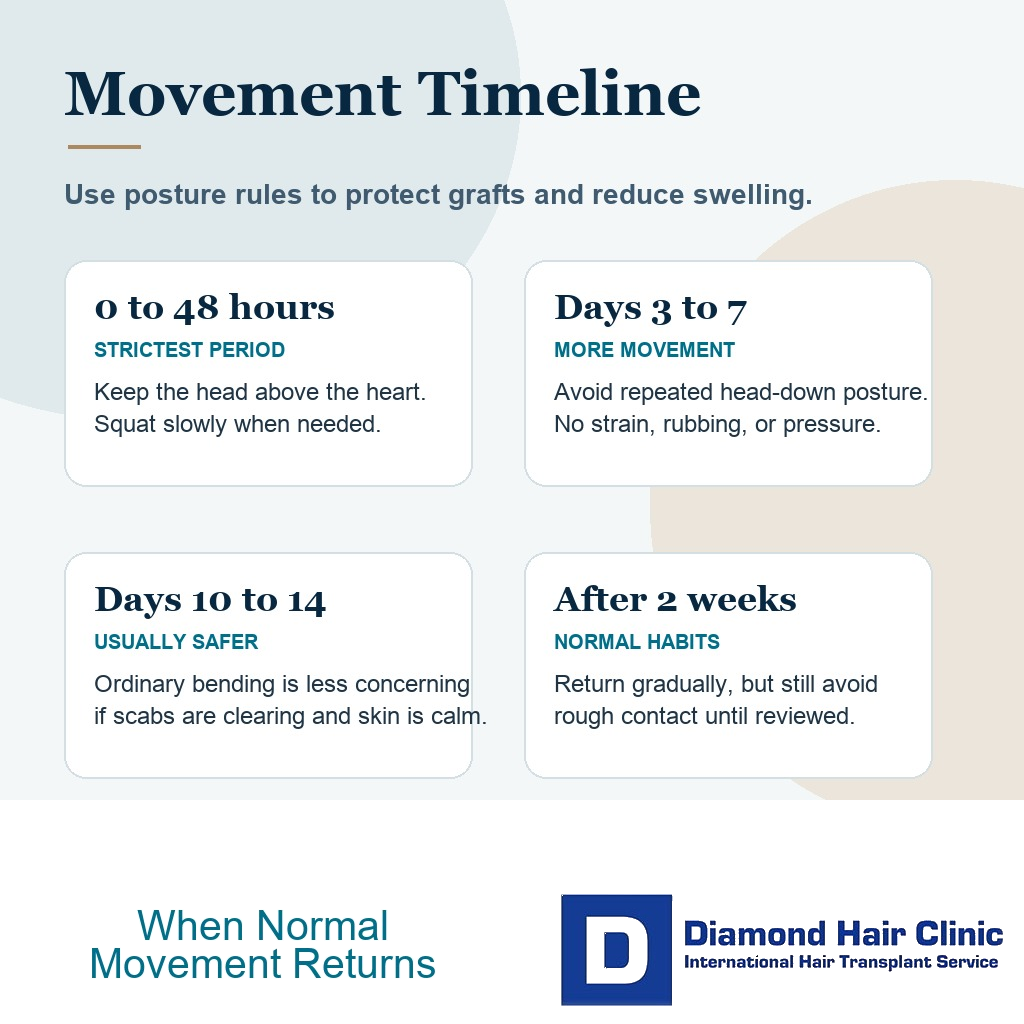
The timeline matters because early posture rules are strictest before the grafts and skin become more stable.
Bending is different from exercise
Bending to pick up a light object is not the same as exercise. Exercise raises heart rate, blood pressure, sweating, body heat, and the chance of accidental contact. Heavy lifting also creates strain, and that strain can matter in the first recovery period even if the scalp is not directly touched.
Gentle daily movement is different from gym work. A slow squat to pick up a phone is different from deadlifts, push ups, running, football, cycling in heat, or carrying heavy luggage. People sometimes ask whether they can return to normal life early, but normal life has many levels.
If your job or routine involves lifting, bending repeatedly, sweating, wearing a helmet, or working in heat, you need more time than a desk worker. Exercise after a hair transplant is the better guide for training, while this page is about daily posture and safe movement.
What if you bent over by mistake?
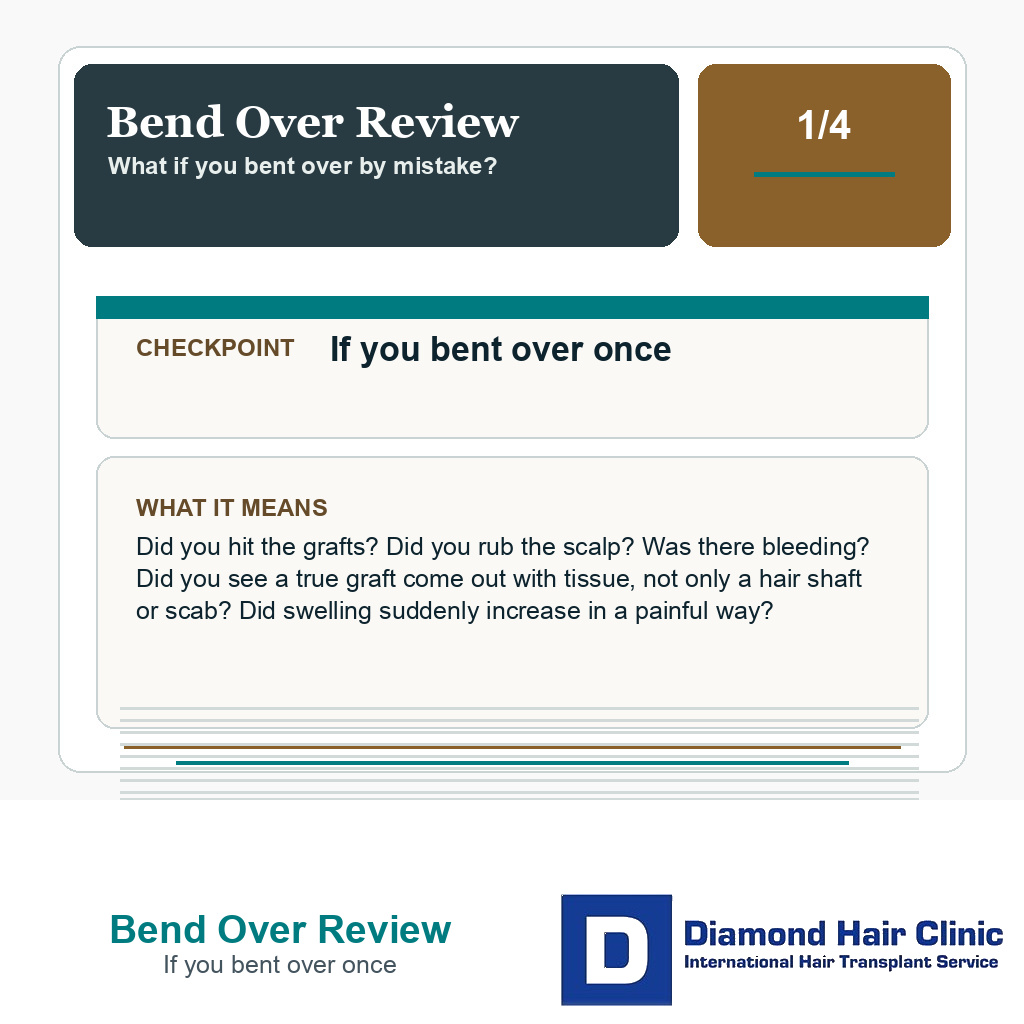
If you bent over once by mistake, check the facts once. Did you hit the grafts? Did you rub the scalp? Was there bleeding? Did you see a true graft come out with tissue, not only a hair shaft or scab? Did swelling suddenly increase in a painful way?
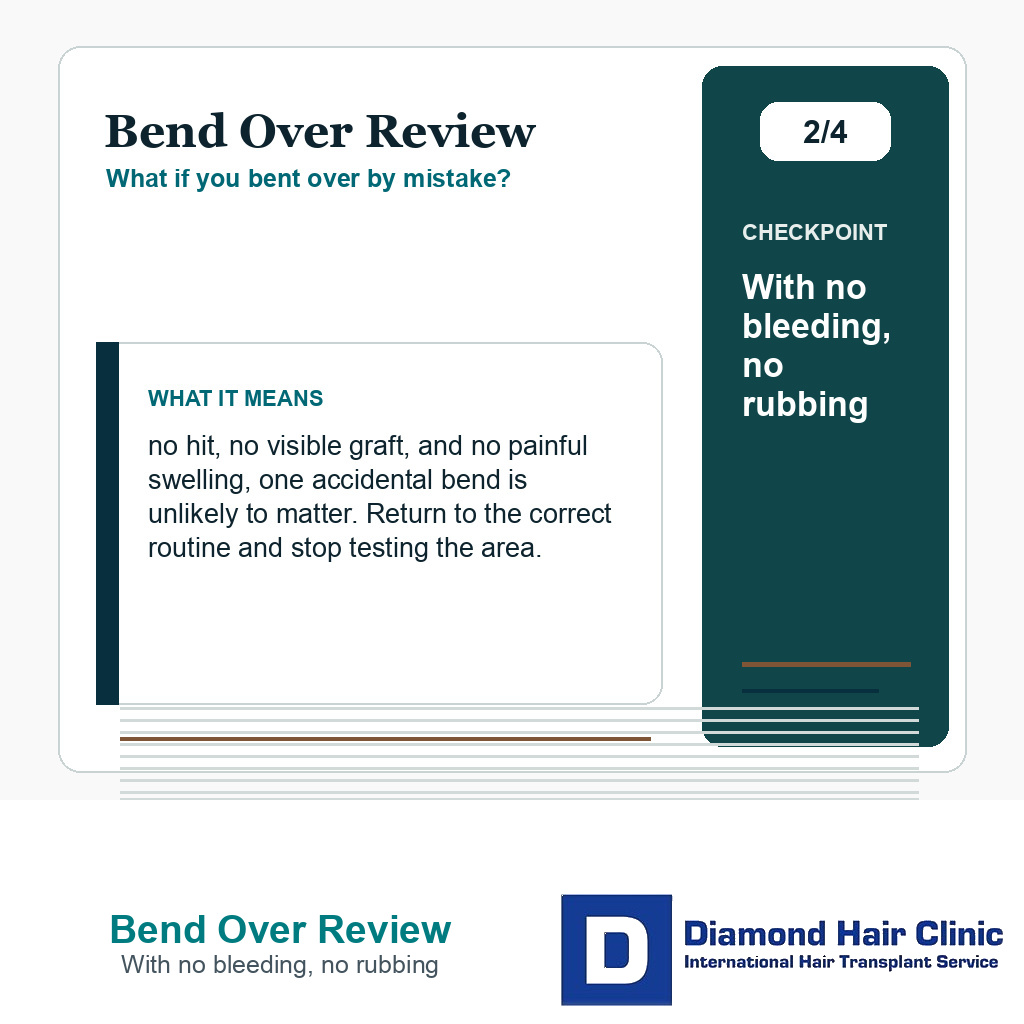
With no bleeding, no rubbing, no hit, no visible graft, and no painful swelling, one accidental bend is unlikely to matter. Return to the correct routine and stop testing the area. Repeated checking, touching, photographing, washing too aggressively, or trying to remove scabs too early can create more risk than the original bend.
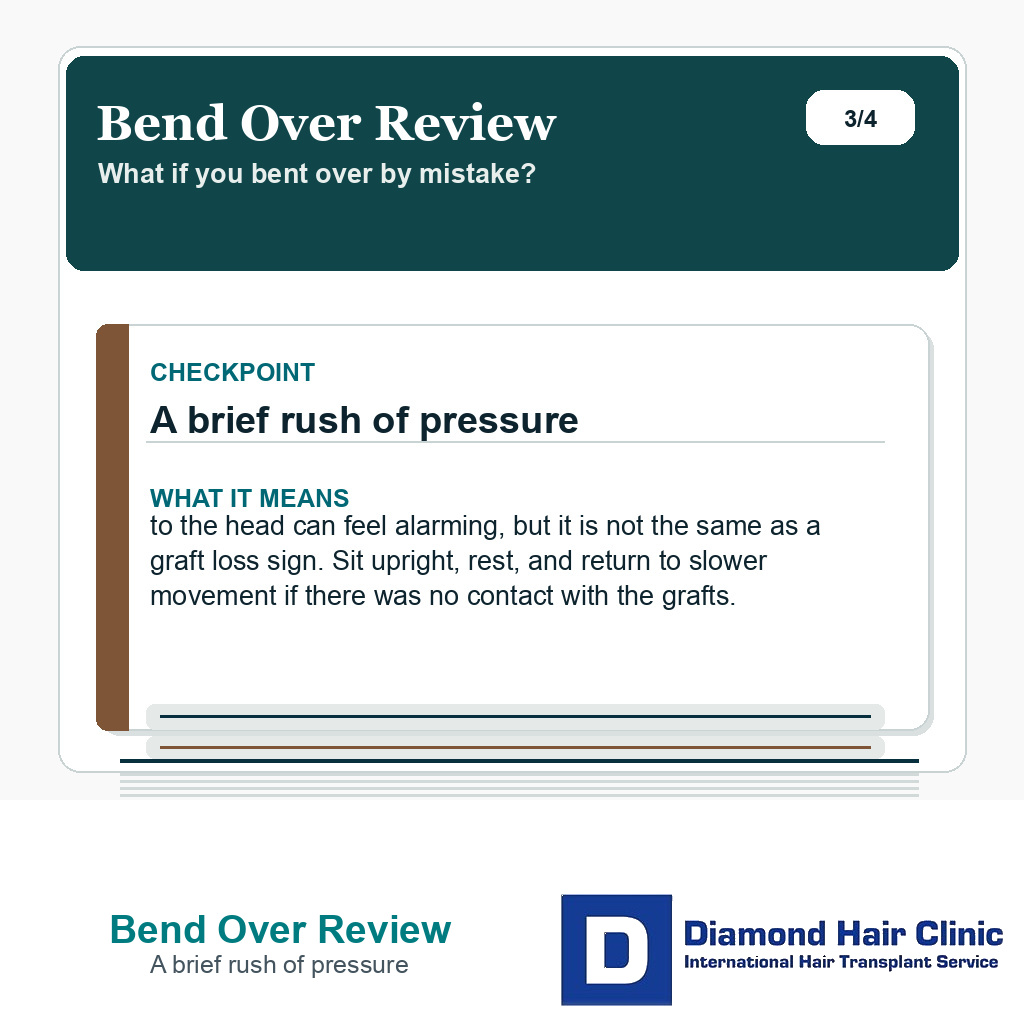
A brief rush of pressure to the head can feel alarming, but it is not the same as a graft loss sign. Sit upright, rest, and return to slower movement if there was no contact with the grafts. Dizziness that continues, fainting, chest symptoms, or repeated near fainting needs medical discussion rather than being treated as an ordinary bending question.
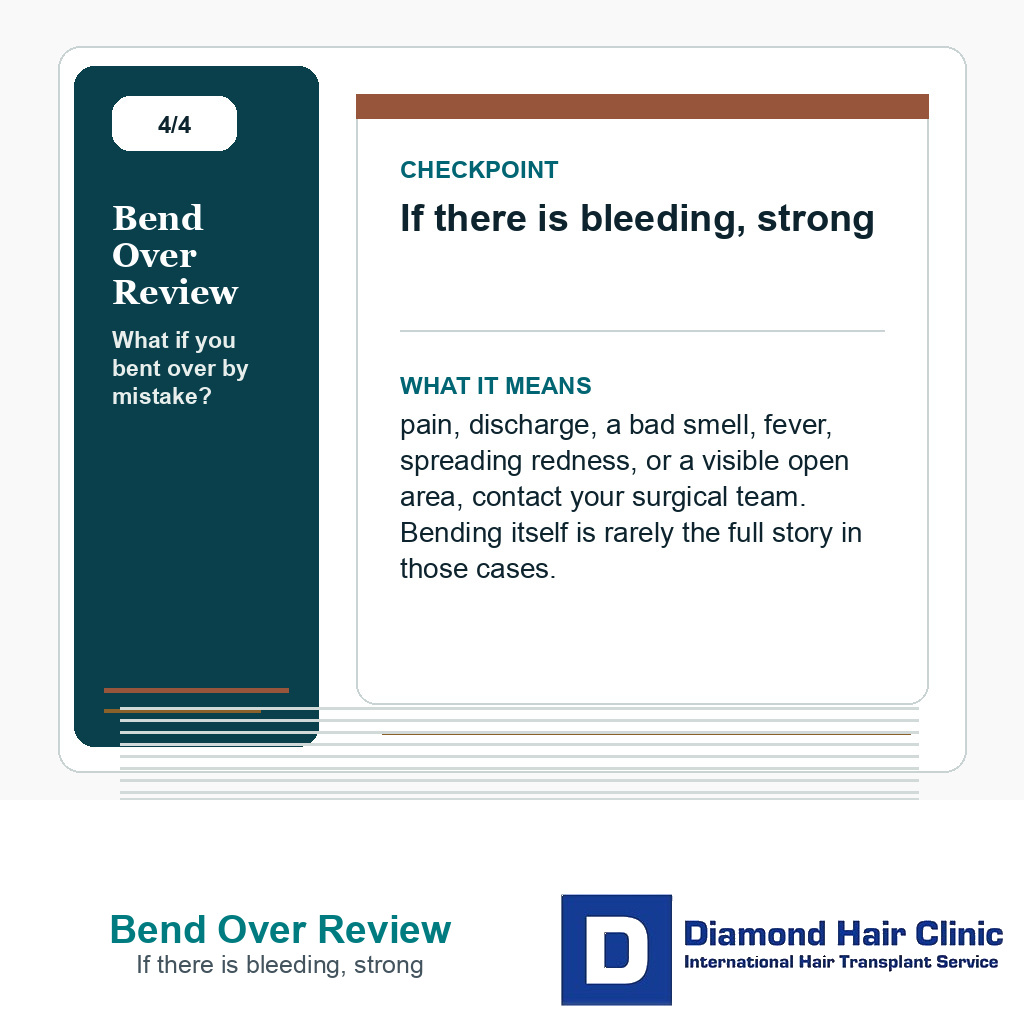
If there is bleeding, strong pain, discharge, a bad smell, fever, spreading redness, or a visible open area, contact your surgical team. Bending itself is rarely the full story in those cases. The skin condition matters more, and the scalp needs closer review.
These 4 slides keep bending forward tied to swelling, pressure, dizziness, graft contact, and the first recovery days. Swipe sideways, use the arrows, or choose a number below the image.
When can normal movement return?
Most people can make daily movement more normal after the first 48 hours, but careless head down posture should still be avoided during the first week. By around 10 to 14 days, once the scabs have cleared correctly and the skin looks settled, ordinary bending is usually much less concerning.
The exact timing depends on the surgery and the scalp. A small frontal session with quiet healing is different from a large session involving the hairline, midscalp, and crown. Heavy swelling, persistent crusts, or fragile skin may mean you should stay more conservative.
Judge work timing by what the work actually involves. Desk work is different from construction, firefighting, warehouse lifting, childcare, kitchen work, or jobs requiring repeated head down movement. If your job is physical, read the guidance on time off work after a hair transplant before making the decision too early.
Travel, cars, and luggage need planning
Travel after surgery creates small bending risks that are easy to forget. Getting into a car, reaching for luggage, taking shoes off at security, placing a bag under a seat, or leaning into a hotel sink can bring the head down or place the scalp near hard surfaces.
Move slowly and think ahead. Ask someone else to lift heavy bags during the first days. When entering a car, protect the top of the head from the door frame. When sitting, avoid leaning forward with the forehead low for long periods.
These details are why I treat travel as part of aftercare, not only transportation. If you are leaving the clinic by car, driving after a hair transplant can help with timing. If you are flying after surgery, flying after a hair transplant explains airport and flight planning more clearly.
What clinic advice should make you cautious?
A careful surgical team should explain daily movement in a way you can actually use. “Do not bend” is too vague if you do not know how to brush teeth, pray, pick up a phone, get into a car, or return to work. Instructions should separate brief careful movement from repeated bending, direct graft contact, sweating, lifting, and exercise.
Advice becomes weak when it sounds extreme without explanation, or when it sounds careless and tells you to live normally immediately. Both can create problems. Too much worry can make you handle the scalp too much. Carelessness can expose fresh grafts to friction, pressure, and trauma.
A useful recovery plan is specific. It tells you what to avoid, why it matters, how long the strictest period lasts, and what signs should trigger follow up. Broader hair transplant aftercare still matters, but it should sit alongside your own clinic’s written instructions.
First week movement planning
Plan the first week as a protection period, not as a test of how quickly you can return to everything. Keep your head elevated in the first 48 hours, avoid head down posture, squat instead of bending, wear easy clothing, keep the grafts away from pressure, and move slowly.

From day 3 onward, many people feel more confident, but confidence should not become rough handling. Continue gentle washing with your clinic’s protocol, keep scabs soft rather than picking them, and avoid forceful water or towel rubbing. For washing hair after a hair transplant, gentle technique matters during this phase.
By day 10 to 14, ordinary bending is usually much safer if the skin has settled and scabs have cleared correctly. Still, the result is not protected by one rule alone. It is protected by clean technique, careful movement, good follow up, and a plan that respects both the grafts and the donor area.
Be conservative early without becoming frightened of every small movement. A properly performed transplant should not depend on perfect stillness, but the first days deserve discipline. If you protect the grafts from pressure, rubbing, bleeding, and unnecessary strain, you give the scalp the quiet start it needs.