
Fasting Hydration and Medicine Timing
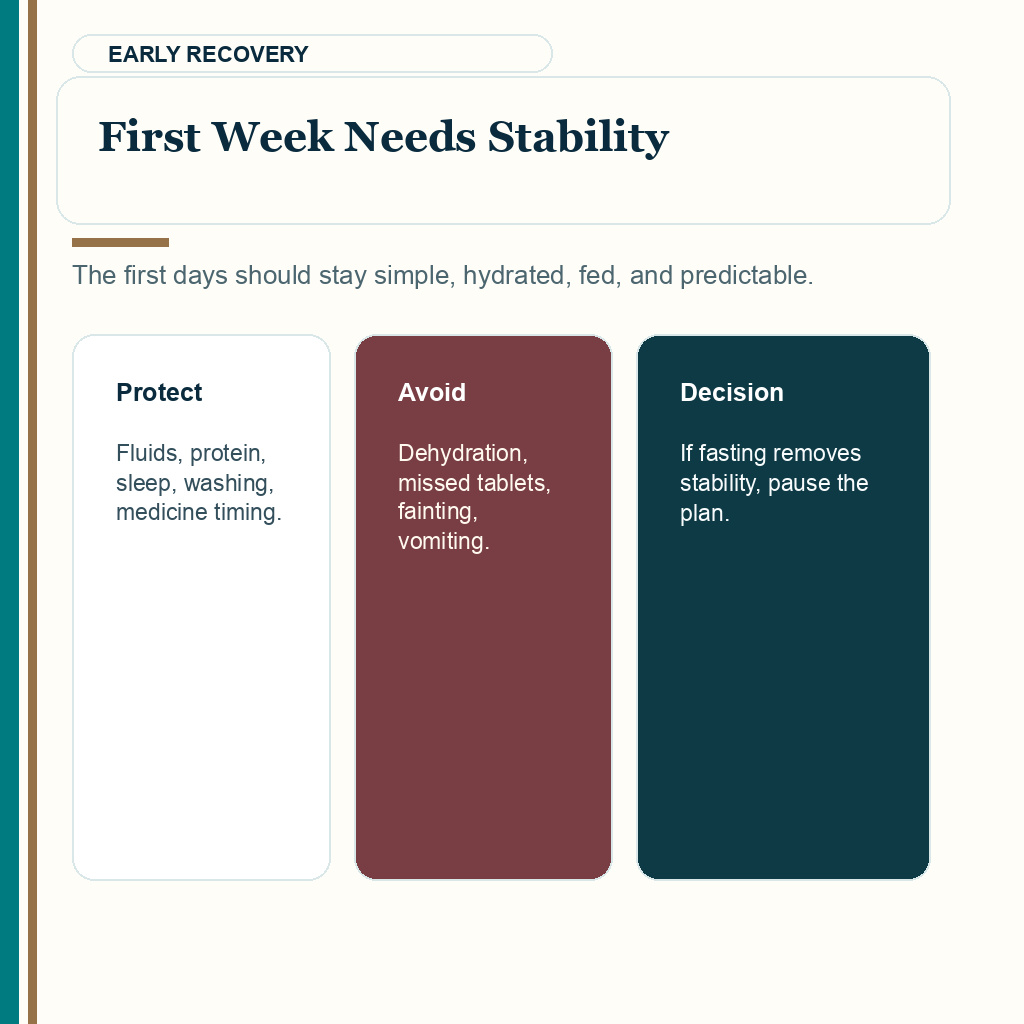
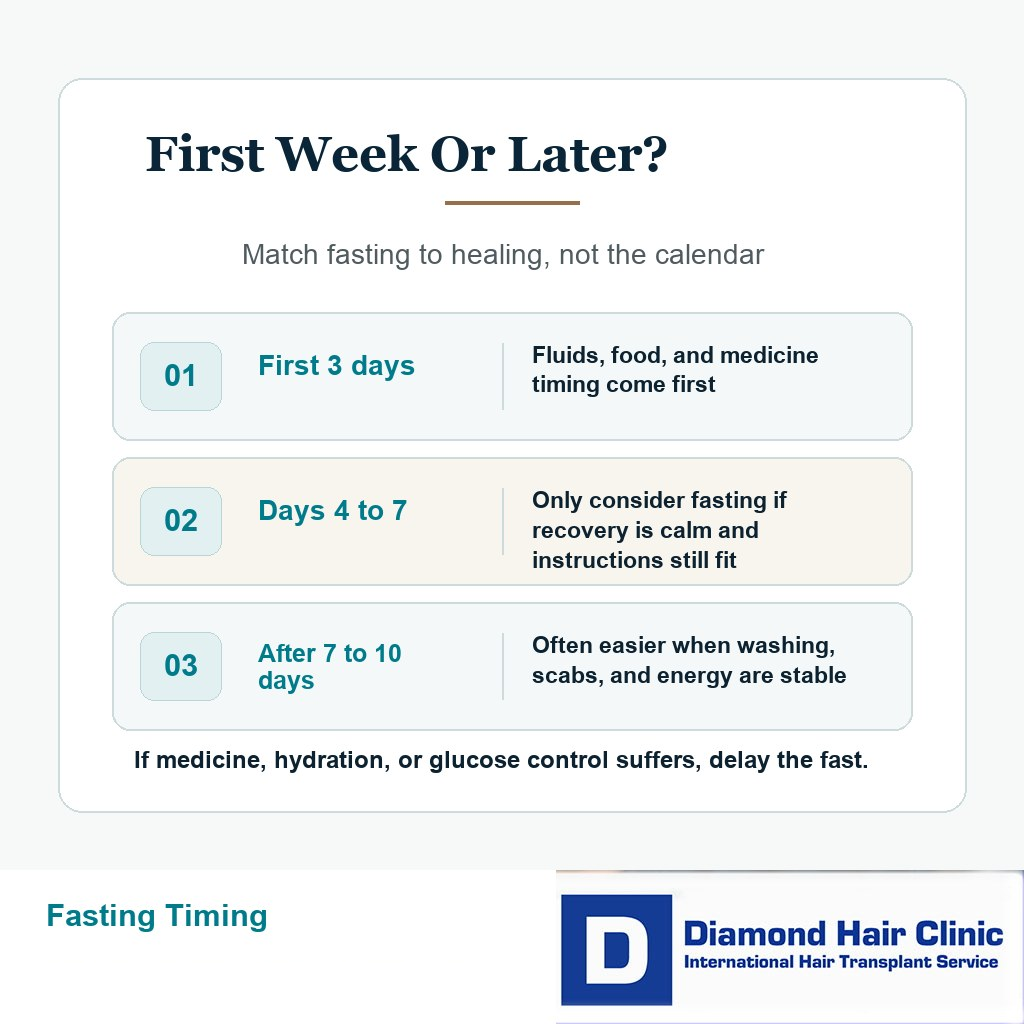
In the first 3 to 7 days after a hair transplant, strict fasting is usually best avoided if it stops you from drinking water, eating useful meals, or taking prescribed medicine on time. In that early window, hydration, protein, sleep, washing, and medicine timing protect recovery more than staying strict with a fast.
After the first week, fasting can become more reasonable for a healthy person if the scalp is settling, there is no bleeding, infection sign, dizziness, vomiting, or missed medication, and the meals outside fasting hours can cover recovery needs. Plain food does little for recovery if the day still ends short on fluid or protein.
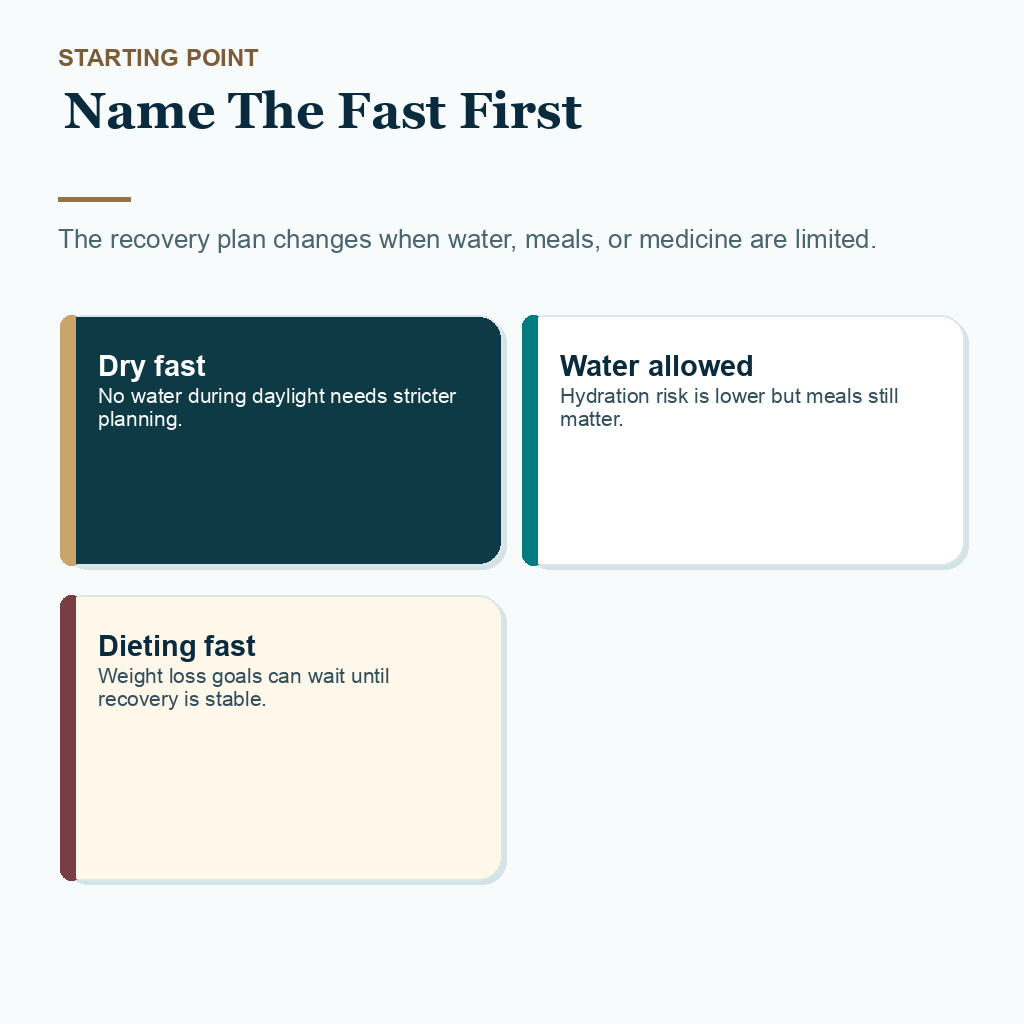
Ramadan or another religious fast deserves planning before surgery. A weight loss fast is different. If the fast is mainly for dieting, strict restriction can wait until the grafts are stable, the skin is closed, and your energy has returned. A weight loss fast also overlaps with dieting during hair transplant recovery, where protein, hydration, and shedding timing can matter more than the fasting window itself.
Do not confuse this with fasting instructions before a procedure. If your surgeon or anesthesia team gives you a specific rule about when to stop eating or drinking before surgery, follow that instruction. Here I am focusing on fasting after the transplant, when the main questions are hydration, food, medicine timing, dizziness, and safe aftercare.
Fasting is harder in the first recovery days
The first few days are not only a graft anchoring question. The recipient area, donor area, swelling, sleep, medicines, and whole body recovery are all happening at the same time. A dry fast is different from a fast where water is allowed, because water is not available during the day and some people also eat too little at night.
Grafts still need local protection from rubbing, pressure, scratching, and unnecessary contact. That timing is closely connected with when hair transplant grafts are secure, but graft anchoring is not the only issue. A graft can be harder to dislodge while the scalp is still swollen, tender, crusted, or sensitive.
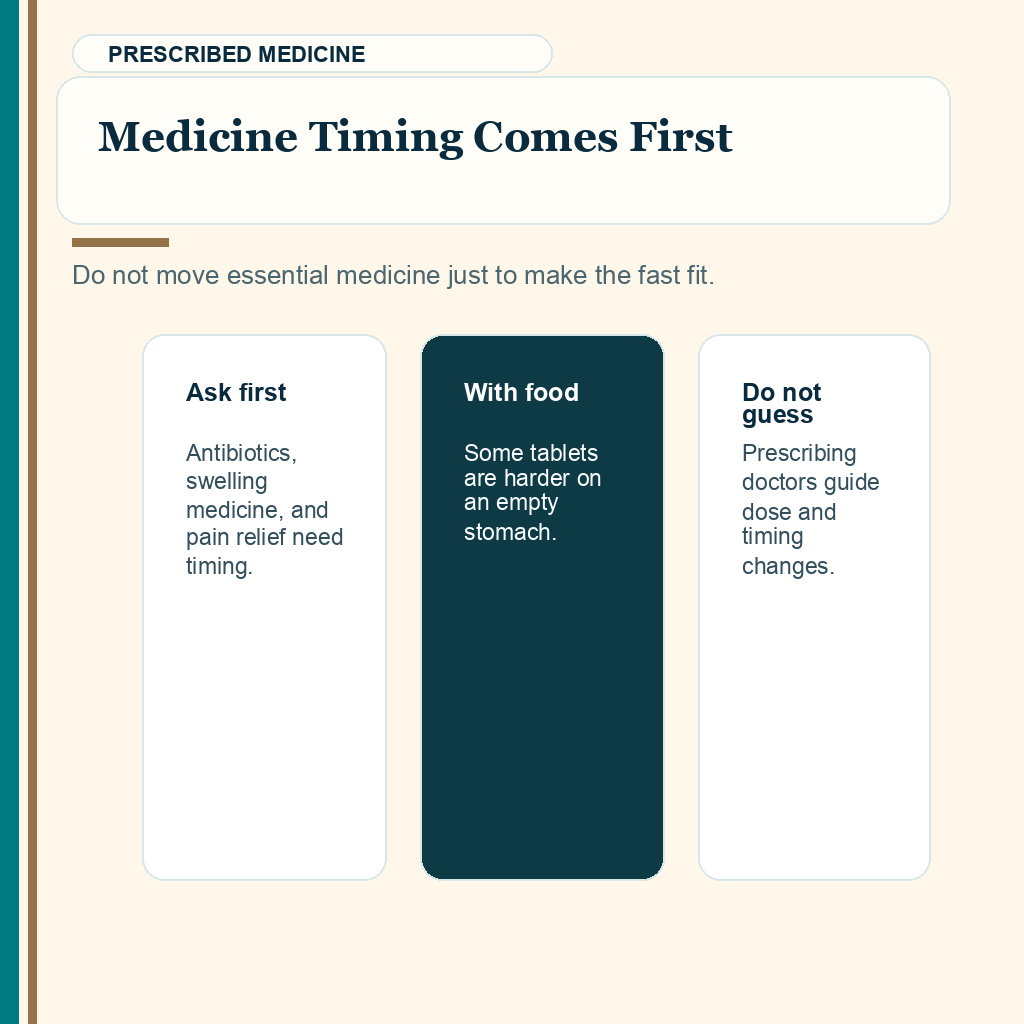
Medicine timing is another practical reason. If the clinic gives antibiotics, medicine for swelling, or pain relief, those instructions need to fit the day properly. Skipping antibiotics after a hair transplant or guessing with painkillers after a hair transplant because of fasting can create a problem that had nothing to do with the fast itself.
The first recovery days work best when they are simple. Drink enough, eat steadily, sleep with the head protected, wash as instructed, and keep the scalp untouched. If fasting removes that stability, delaying the fast is safer than making the first week harder to manage.
Making up a missed fast with a harder one can turn recovery into another stress test. The next day should be steady, not stricter.
If you already fasted too early
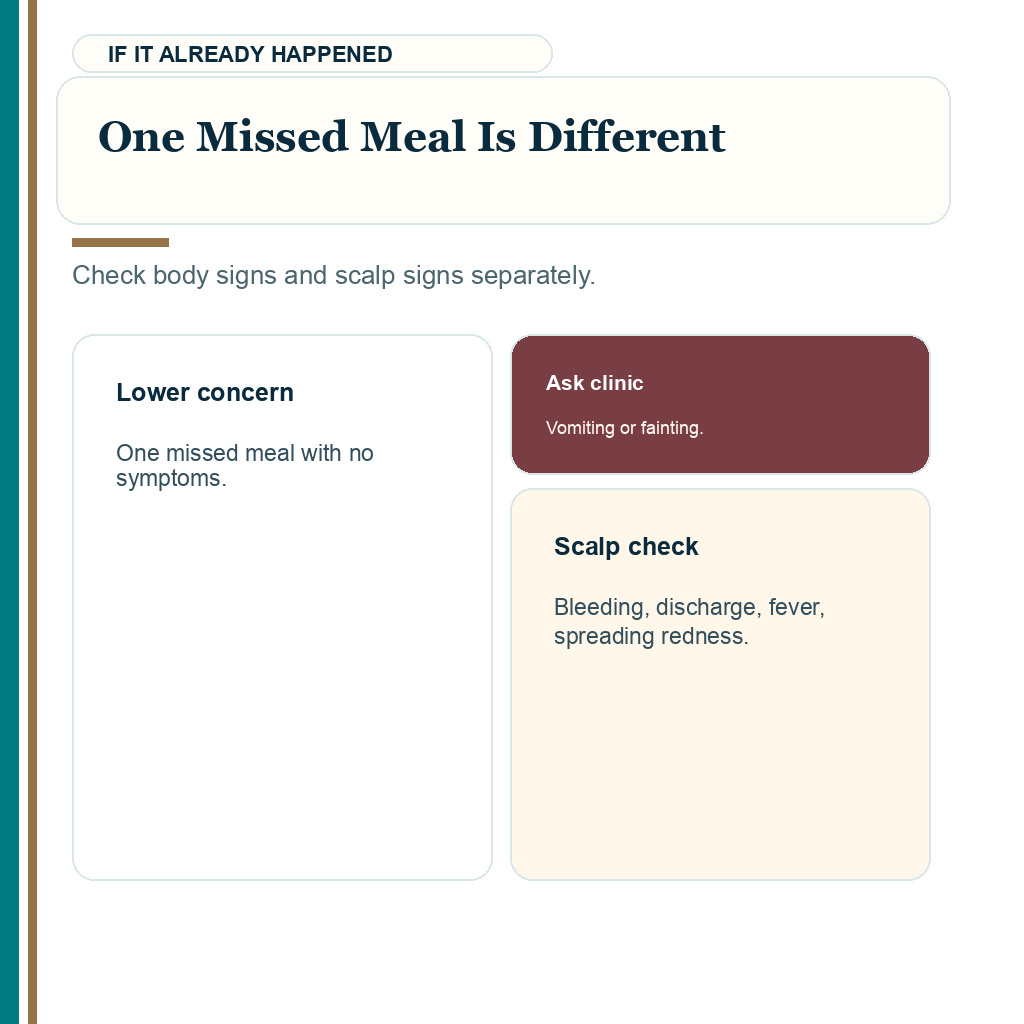
If you already fasted too early, do not assume the grafts are damaged. One missed meal is different from a day of dehydration, missed tablets, vomiting, or fainting. The first check is what happened to the scalp and what happened to your body.
Check whether you became dizzy or faint after a hair transplant, dehydrated, nauseated, weak, or unable to take prescribed medicine. Then check the scalp for fresh bleeding, stronger pain, spreading redness, discharge, or swelling that is getting worse.
If you feel unwell, stop the fast, drink slowly, eat something gentle, and follow the medication instructions you were given. Do not try to make up for the fast with a very heavy meal that causes nausea or poor sleep. Early recovery is not the time to test how much strain you can tolerate.
Rehydration should be gradual, especially if you feel nauseated. Small repeated drinks and a light meal are usually easier than forcing a large amount at once. If you have vomiting, diarrhea, very dark urine, very little urination, confusion, fainting, or a racing heartbeat, treat it as a medical issue rather than only a fasting problem.
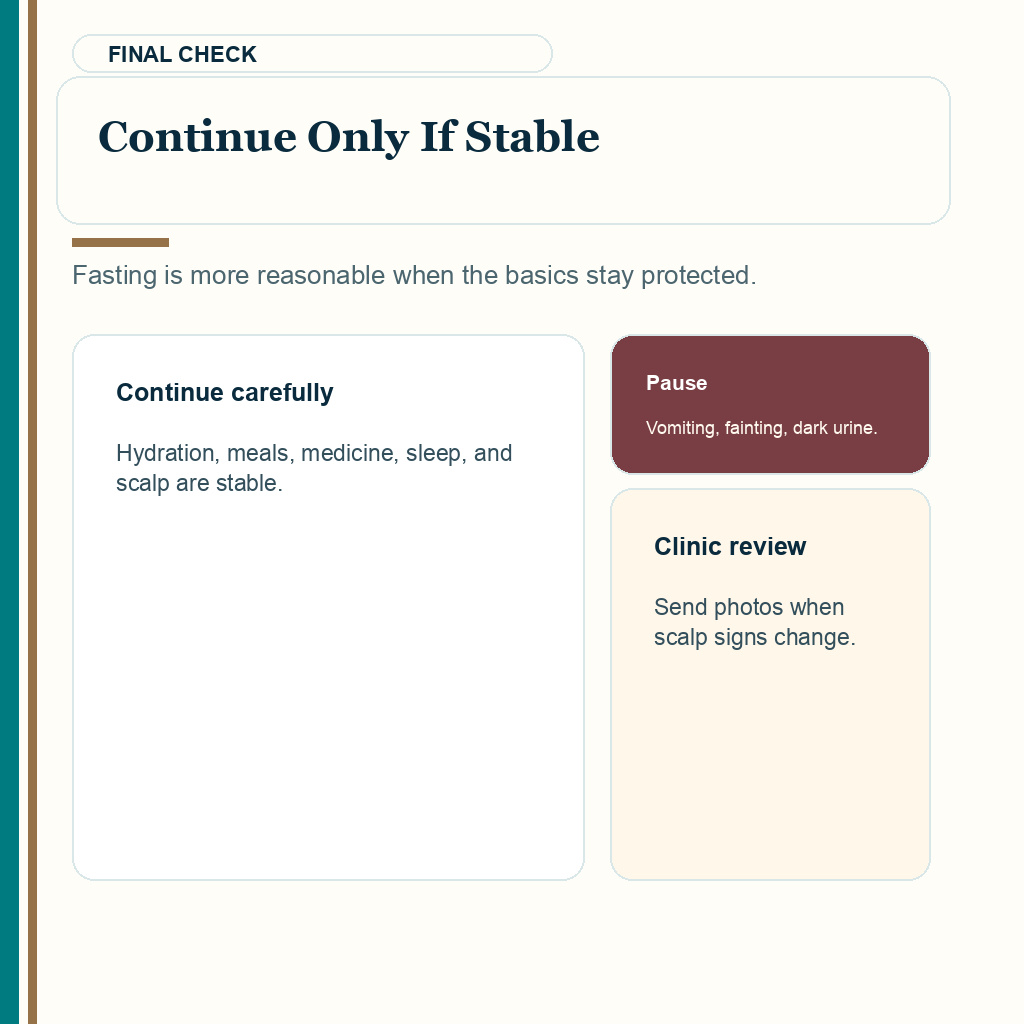
If fasting happened without symptoms and the scalp looks unchanged, return to the recovery plan and avoid repeating the same strain. If you vomit, faint, cannot keep fluids down, miss essential medicine, or see a worrying scalp change, ask for clinic review and send photos rather than judging it alone.
Ramadan fasting is different from many intermittent fasts
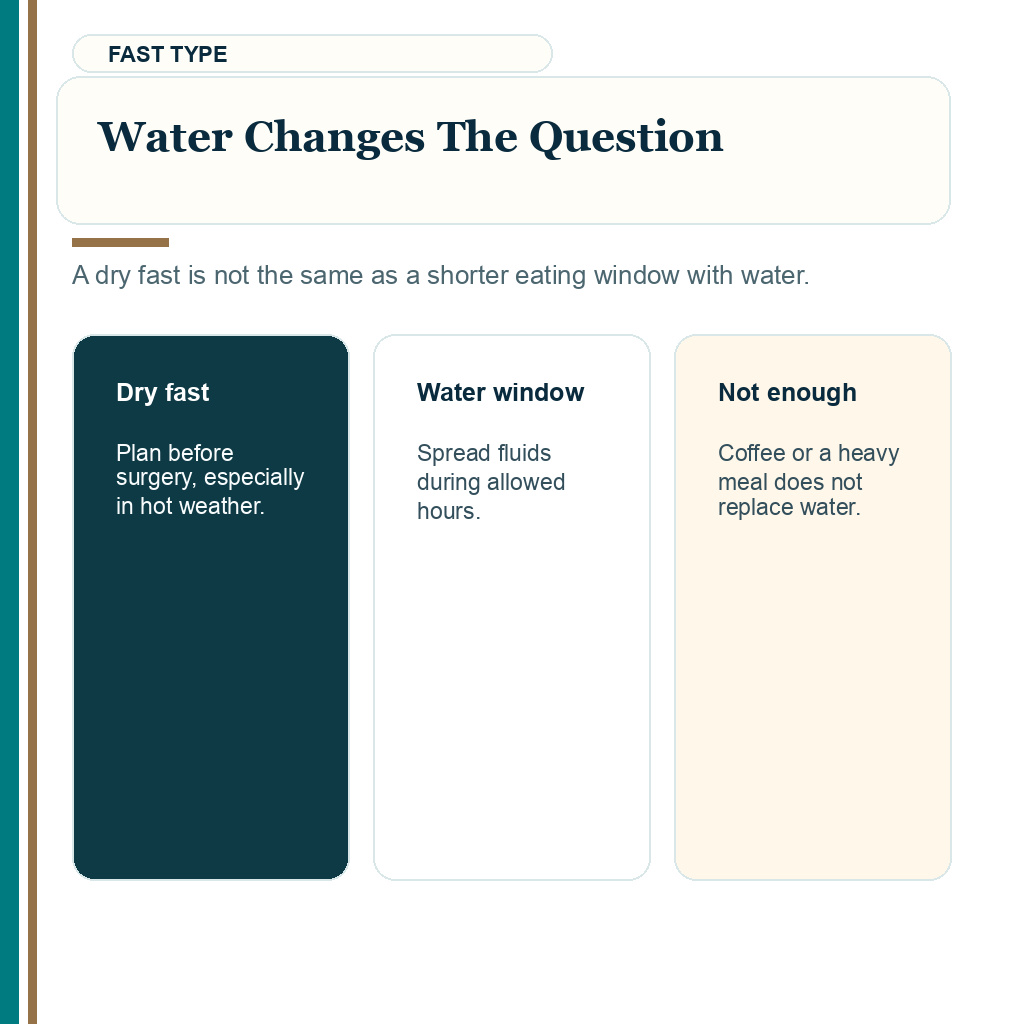
Ramadan fasting usually means no food and no drink from dawn to sunset. Many forms of intermittent fasting still allow water, and some people use a flexible eating window. For hair transplant recovery, that difference matters because hydration is one of the details that keeps the first days stable.
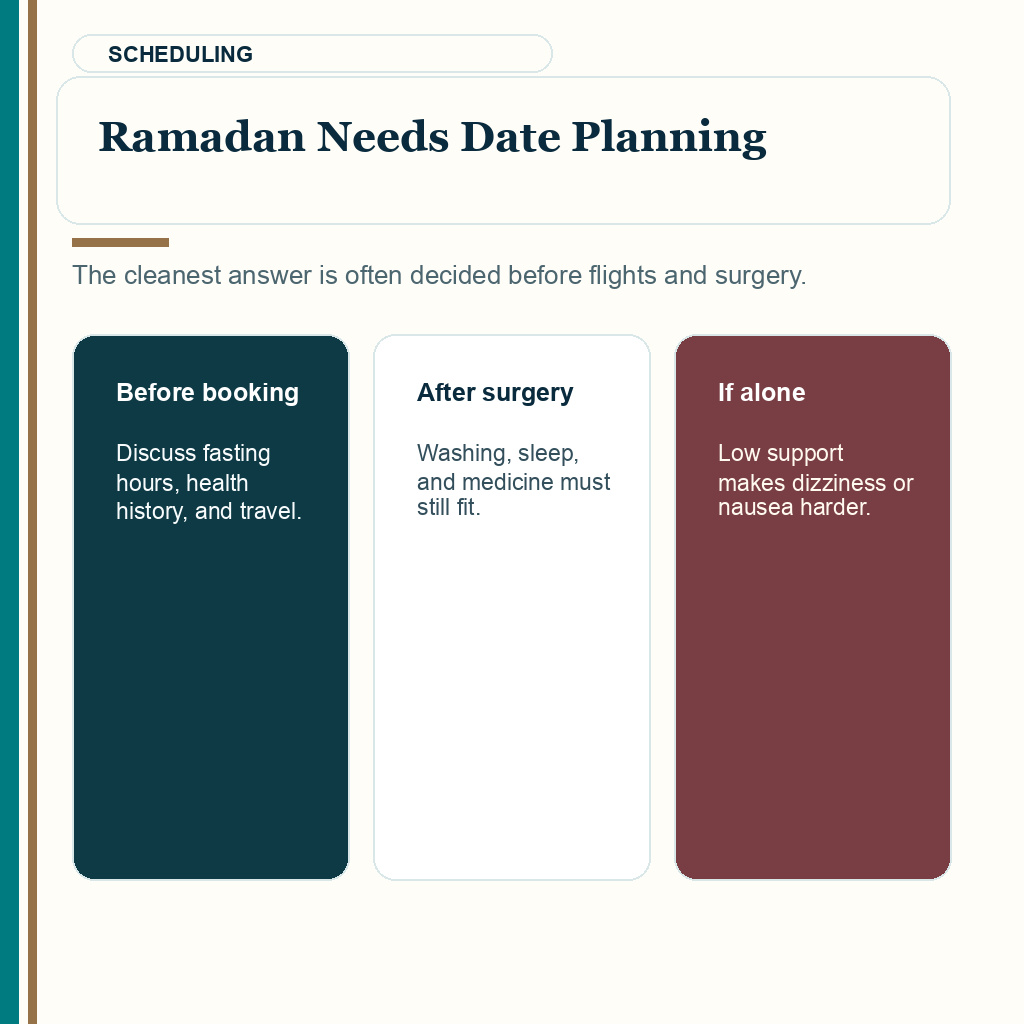
I respect the religious side of Ramadan, but my medical role is to protect the surgery and the patient. If fasting prevents fluids, meals, or medicines from being used safely, the operation should not be forced into that schedule without planning. If the surgery date can move, choose timing that keeps meals, fluids, and medicines predictable instead of forcing recovery into a strained schedule.
Patients should not hide a religious fast from the clinic because they feel judged. My role is not to decide the religious answer for you. My role is to explain when dehydration, missed medicine, poor sleep, or low blood sugar would make recovery unsafe, so you can discuss the timing clearly with your doctor and religious advisor.
Ramadan also changes sleep. Suhoor, iftar, prayer, travel, and hotel routines can shorten the night. Sleep is already awkward after surgery because head position matters. If prayer after a hair transplant will also need modified wudu, head position, or timing, plan it before the operation instead of solving everything while tired in the hotel. If you are also thirsty and trying to manage swelling, recovery can feel much harder than it needed to be.
Patients traveling to Istanbul should settle the timing before flights are booked. Early follow up, washing, and travel timing also decide how many days to stay in Turkey after a hair transplant, because the recovery period matters more than the ticket date.
Fasting becomes more reasonable after the early healing phase
Fasting becomes more reasonable when the first fragile stage has passed and the body is not struggling. I do not judge this from the calendar alone. I look at whether washing is comfortable, scabs are settling or coming away normally, swelling is improving, and there are no warning signs.
For many uncomplicated cases, the first useful reassessment is after several days, and the decision becomes easier after about 7 to 10 days. That timing is not a promise. A small hairline case in a healthy person is not the same as a large session, heavy swelling, diabetes, high blood pressure, long travel, vomiting, poor sleep, or a scalp that is still irritated.
After 10 to 14 days, many restrictions related to grafts are easier, but nutrition and hydration still matter. If your fast is short, meals are balanced, and water intake is good between fasting hours, the concern is lower. If the fast is long, the weather is hot, sleep is poor, and meals are weak, the concern rises.
Longer water fasts, rolling 48 hour or 72 hour fasts, and crash diets should wait. They bring no advantage to graft healing and can make recovery harder by reducing energy, protein intake, and hydration.
Fasting can affect graft recovery indirectly
A short fast by itself is unlikely to pull out grafts. Grafts are damaged more directly by trauma, rubbing, scratching, pressure, infection, or poor surgical handling. Fasting becomes relevant when it leads to dehydration, missed medicine, poor nutrition, dizziness, fainting, vomiting, or weak aftercare.
Think of fasting as an indirect pressure on recovery. If you fast and still drink enough water between sunset and dawn, eat proper meals, take medicine correctly, and keep the scalp clean, that situation is different from barely eating, drinking little, skipping tablets, and moving through the day exhausted.
Separate transplanted grafts from native hair. A short religious fast does not decide the final result by itself. Prolonged eating too little, rapid weight loss, illness, poor protein intake, or uncontrolled medical problems can contribute to shedding or weaker general recovery. That is a broader hair and health issue, not only a graft issue.
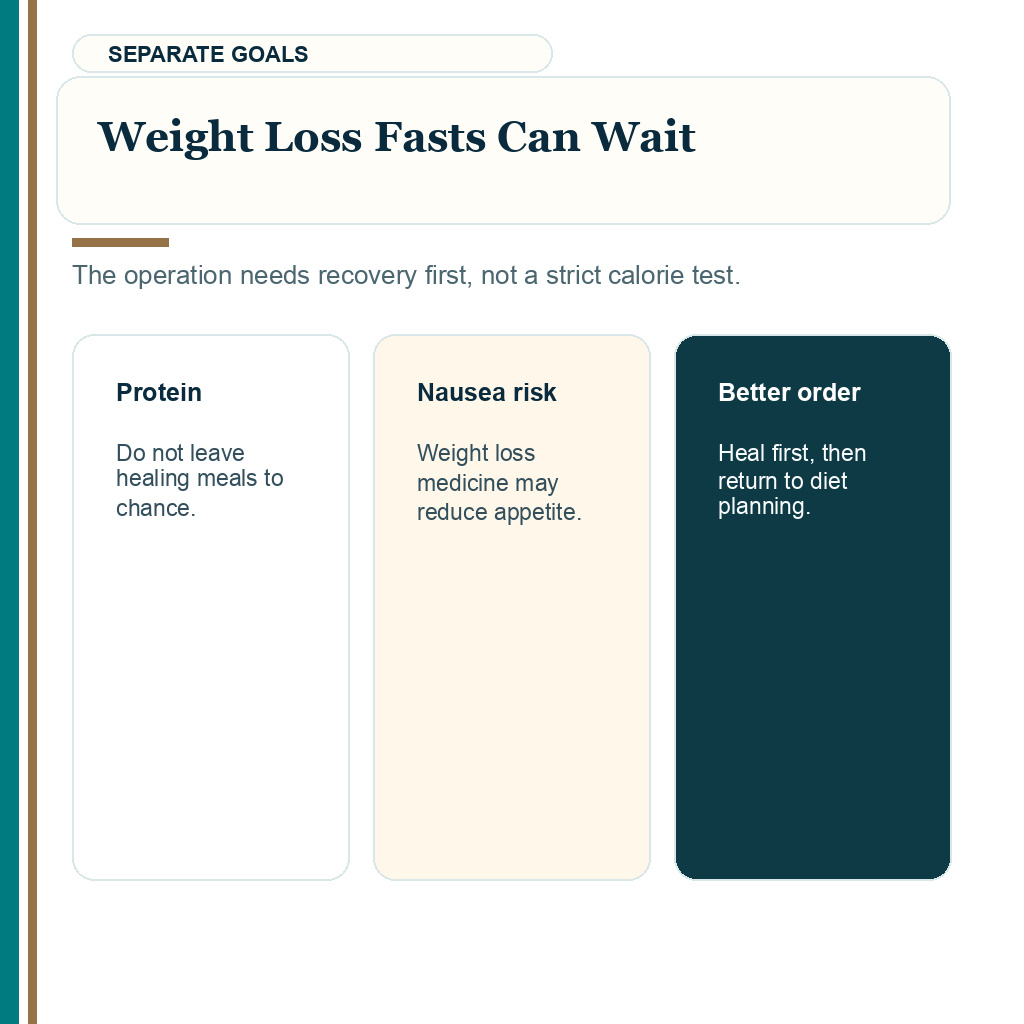
If the purpose is weight loss, separate the goals. Let the operation heal first. Then return to a sensible nutrition plan once the scalp is stable and your doctor is comfortable with your general health. A recovery week is easier to protect when dieting pressure is not competing with food, fluids, and medicine timing.
Food and fluid priorities between fasting hours
Between fasting hours, aim for steady recovery rather than a heavy feast. The body needs fluids, protein, minerals, and enough calories to repair tissue. A useful meal does not need to be complicated. Eggs, fish, chicken, yogurt, legumes, soup, vegetables, fruit, whole grains, and enough water usually serve recovery better than very salty, greasy, or sugary meals.
If the clinic prescribed medicine that should be taken with food, do not move it randomly to protect the fast. Ask how the dose should fit suhoor, iftar, and sleep. Some tablets are harder on the stomach when taken without food, and some schedules cannot safely be compressed into a short eating window without medical review. Hair growth medicine decisions, including minoxidil after a hair transplant, should also be timed as a separate instruction rather than squeezed into fasting hours without review.

The wider advice on what to eat after a hair transplant applies even more when the eating window is short. Protein and fluids should not be left to chance. If you can only eat twice, those meals need to be more deliberate.
Do not leave all water for the last hour before dawn. Spread fluids through the hours when you are not fasting when possible, and be careful with very salty food if it makes the next day harder. If nausea, vomiting, or diarrhea appears, the plan needs to change because hydration becomes the first priority.
Limit heavy caffeine if it makes you sleep poorly, urinate more, or feel dehydrated. Tolerance to coffee after a hair transplant varies, and during fasting the hydration window is already limited. Coffee should not replace water.
Alcohol should be avoided in early recovery, and it fits fasting poorly. It can worsen dehydration, interfere with sleep, and complicate medicine use. If alcohol timing is part of your question, read the guidance on alcohol after a hair transplant before making plans.
Diabetes, blood pressure, and regular medicine change the decision
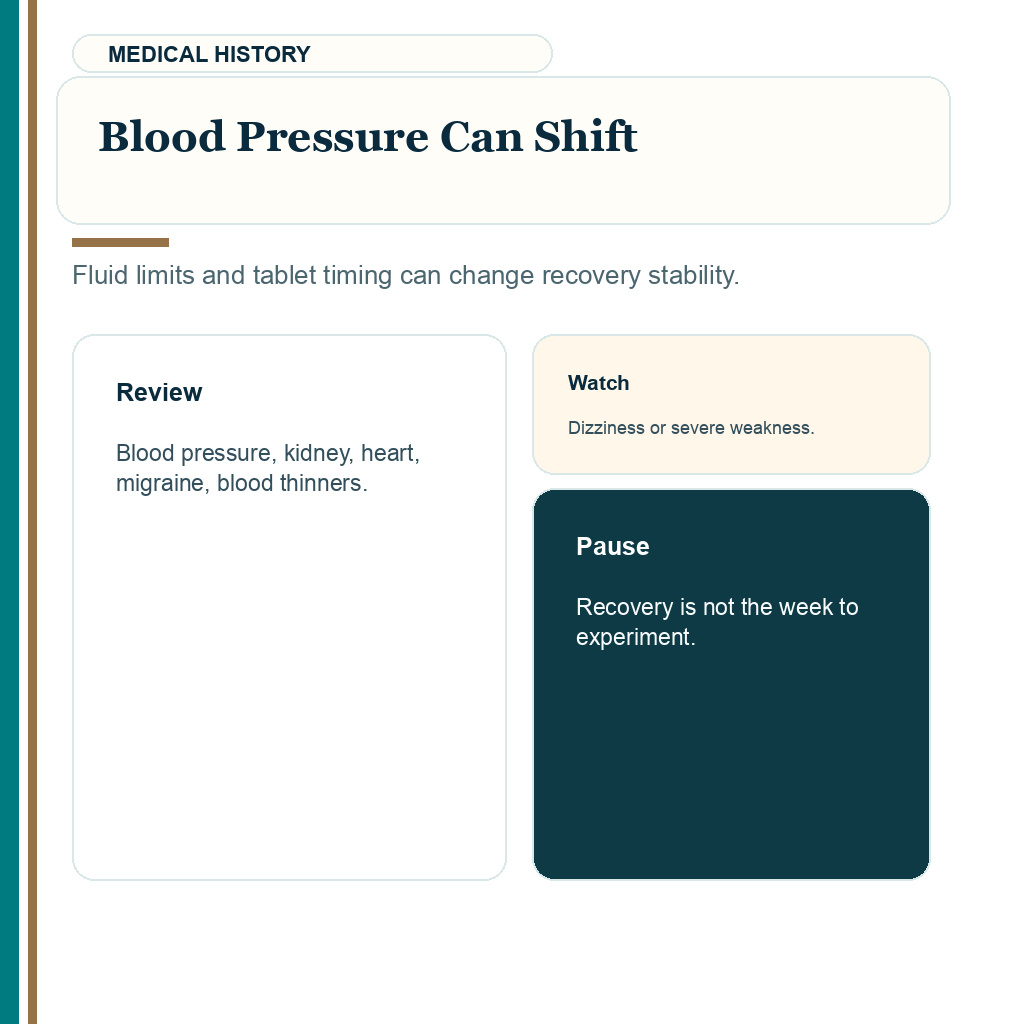
Medical history changes the fasting decision. A healthy person who fasts for one day is not the same as someone with diabetes, blood pressure medication, kidney disease, heart disease, migraine medication, blood thinners, or a recent illness. The issue is not only the hair transplant. It is whether fasting makes your medical condition less stable during recovery.
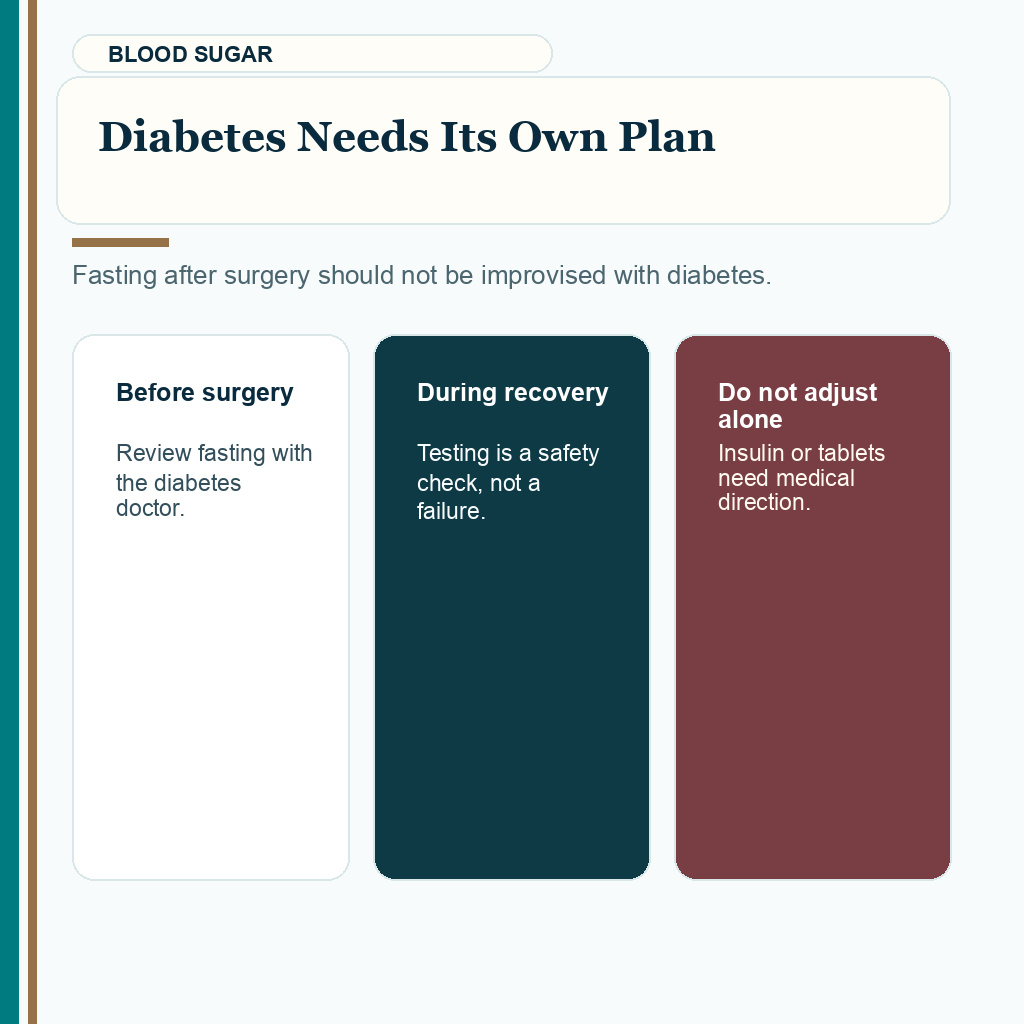
If you have diabetes and are planning a hair transplant, review fasting with the doctor who manages your diabetes before surgery. Low blood sugar, high blood sugar, dehydration, and changed medicine timing can all become serious. Blood sugar testing during a fast is a safety check, not a failure.
Blood pressure also matters. A patient with high blood pressure before a hair transplant may need regular tablets, stable readings, and enough fluid intake. A long dry fast in hot weather can make dizziness or low pressure more likely in some people, while poor medicine timing can push blood pressure in the other direction.
Do not adjust insulin, diabetes tablets, diuretics, blood pressure medicine, or kidney medicine on your own to make fasting fit the recovery week. The prescribing doctor should decide whether timing, dose, monitoring, or postponement is safer. A hair transplant should not be the reason you experiment with essential medication.
Weight loss medication needs separate planning. If you are taking semaglutide or a similar medicine, planning around Ozempic and hair transplant surgery becomes part of the same decision. Fasting, reduced appetite, nausea, and surgery can overlap in a way that makes eating and hydration harder.
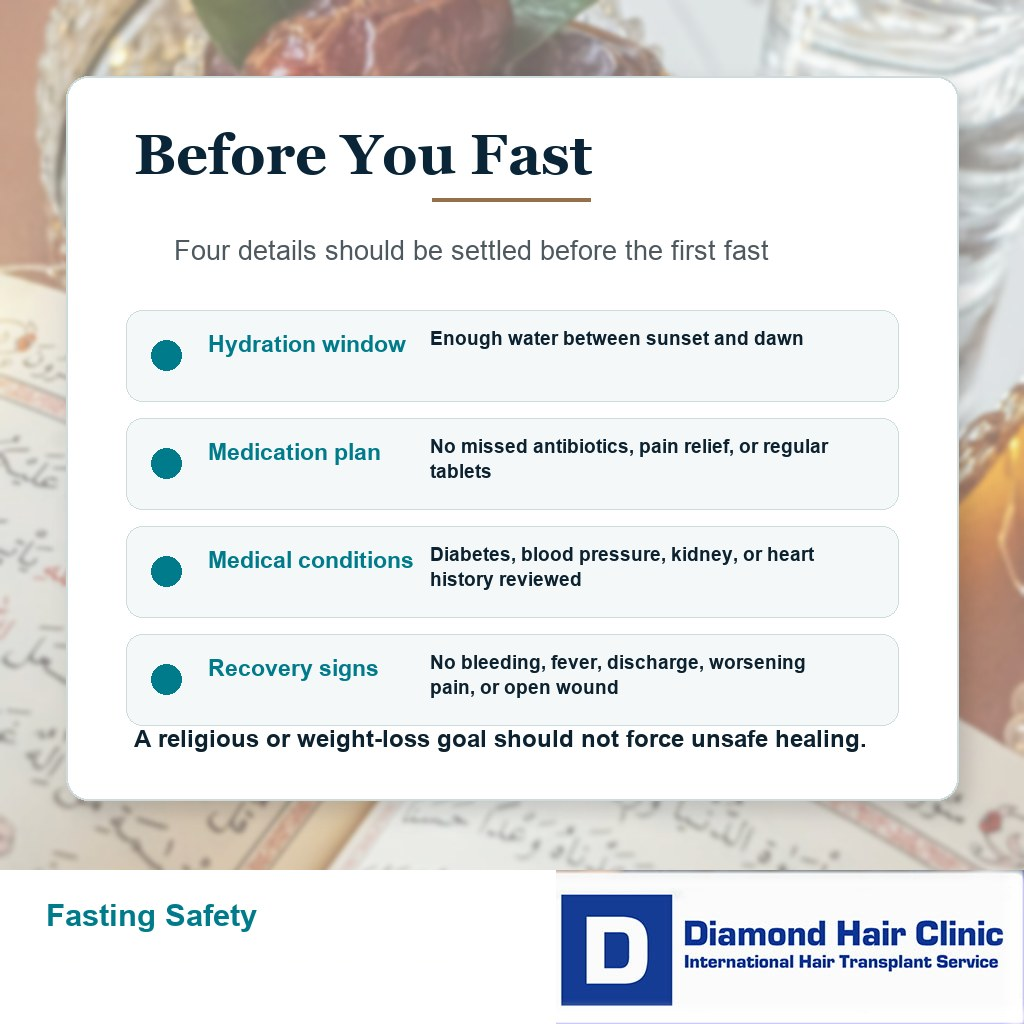
The 10 fasting recovery slides below separate dry fasting, hydration, medicine timing, early symptoms, diabetes, blood pressure, Ramadan scheduling, weight loss goals, and the final continue or pause test. Swipe sideways, use the arrows one slide at a time, or choose a number below the image.