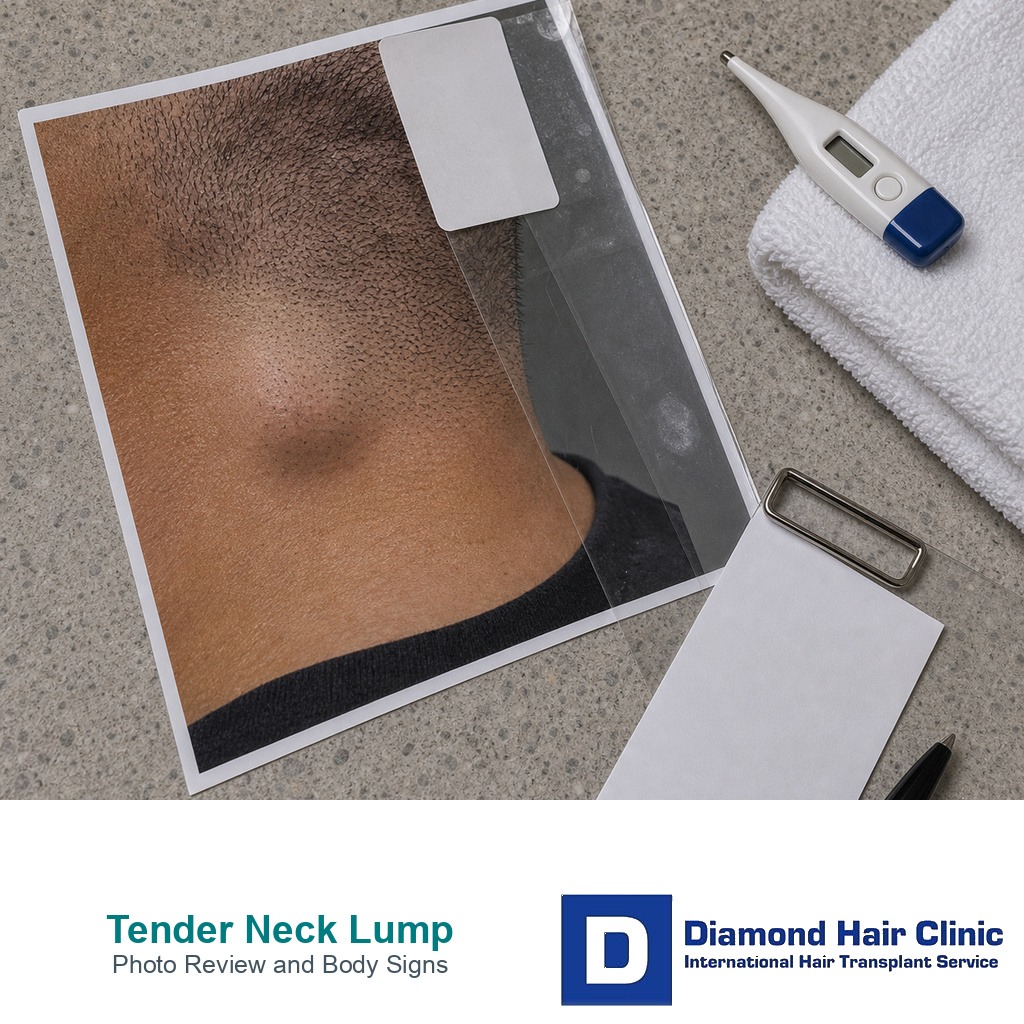
Tender Neck Lump Needs Careful Symptom Review
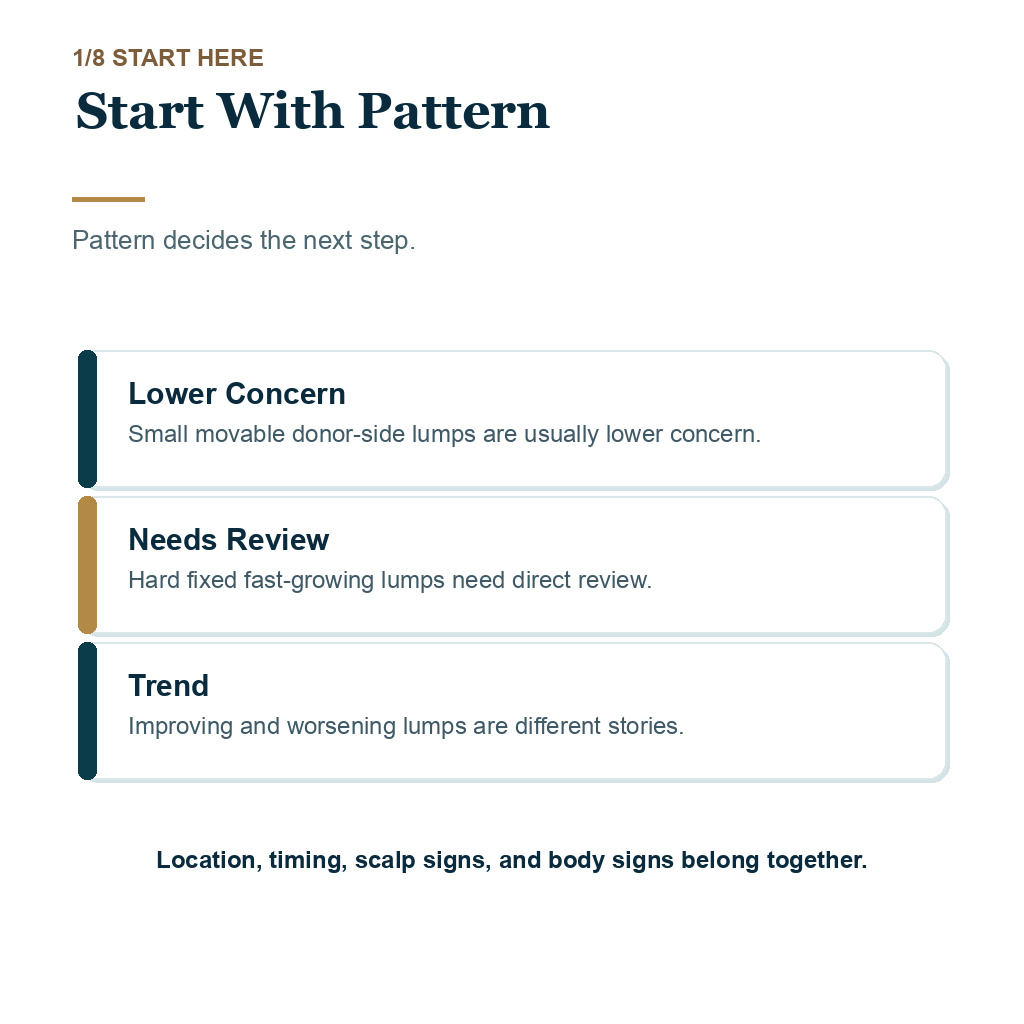
A tender lump behind the ear, under the jaw, or along the upper neck after FUE is often a reactive lymph node, especially when it is small, movable, mildly tender, close to the donor area, and the scalp is settling. That pattern can often be reviewed with photos and symptom details. It is different from a hard or fixed lump, a rapidly enlarging lump, a collarbone lump, or a lump that comes with fever, spreading hot redness, pus, worsening pain, weakness, dizziness, trouble swallowing, or feeling unwell.
I do not decide from the word lump alone. I need to see the scalp, donor area, exact location, day after surgery, medicines being taken, and whether the symptom is improving or getting worse. A photo can show the skin and the position of the lump. It cannot tell me by itself whether a node is fixed, matted, or truly enlarging. If body signs appear, local medical review should happen while the clinic is also informed. Trend and body signs matter more than the word lump.
Neck lump triage signal map
Which neck lump pattern changes the urgency?
Choose the closest pattern before deciding whether this starts with photo review, clinic guidance, local medical review, or same day care.
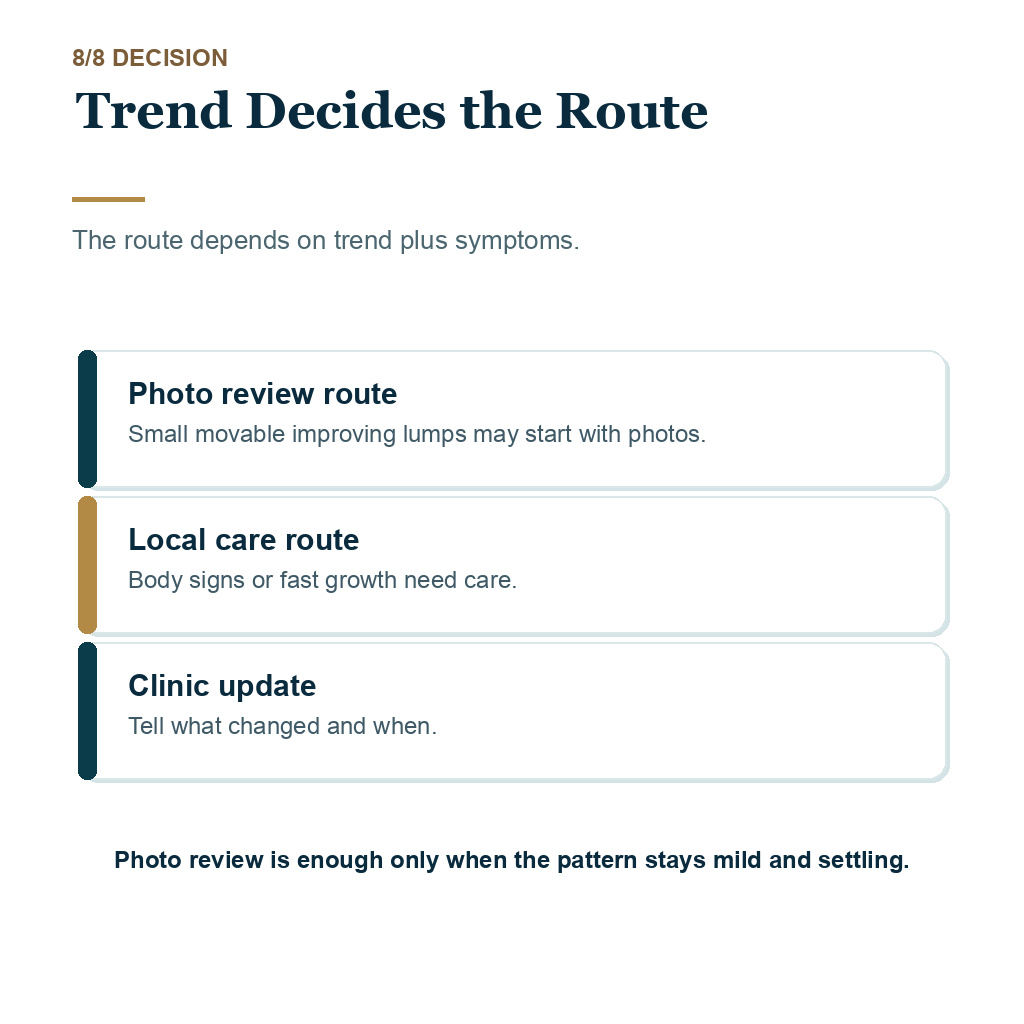
Send clear photos, the exact day after FUE, and whether the lump is getting smaller, larger, or staying the same. A settling local node often starts with clinic photo review.
Review the neck lump together with the scalp, not in isolation. Send scalp photos promptly, follow clinic instructions, and arrange medical review if the skin is hot, draining, opening, or becoming more painful.
This needs examination by touch, not only a photo message. Contact the clinic and arrange local medical review so the lump can be assessed properly.
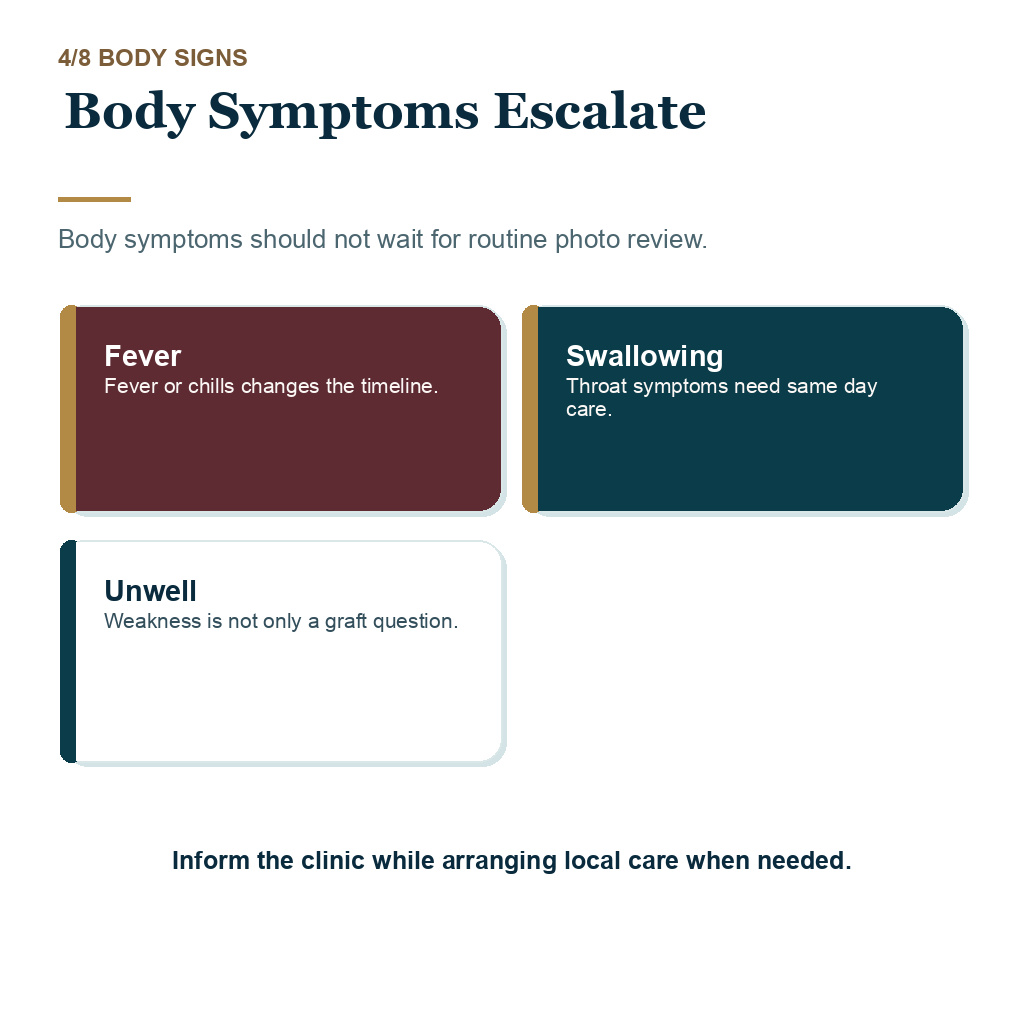
Treat this as a same day medical issue while also informing the clinic. Breathing, swallowing, fever, or feeling unwell should not wait for routine photo review.
Squeezing or repeated testing makes the picture less clear. Record the size once, stop pressing it, and get medical review if it keeps enlarging, spreads, or does not settle as the scalp calms.
Warmth, drainage, spreading redness, fever, or steady enlargement changes the level of urgency. The lump and the skin around it have to be reviewed together.
Home remedies should not replace the trend. Tea, cream, ice, or massage matter less than size, tenderness, skin heat, drainage, fever, and whether the lump is changing.
Take one photo that shows the donor area and one that shows exactly where the neck feels tender. A close neck photo without the nearby scalp can hide the connection the clinic needs to review.
Surgeon checkpoint The useful split is not panic versus waiting. It is whether the lump follows a settling local pattern or comes with scalp, shape, body, or persistence signals that need review.
Neck lump appearing after FUE
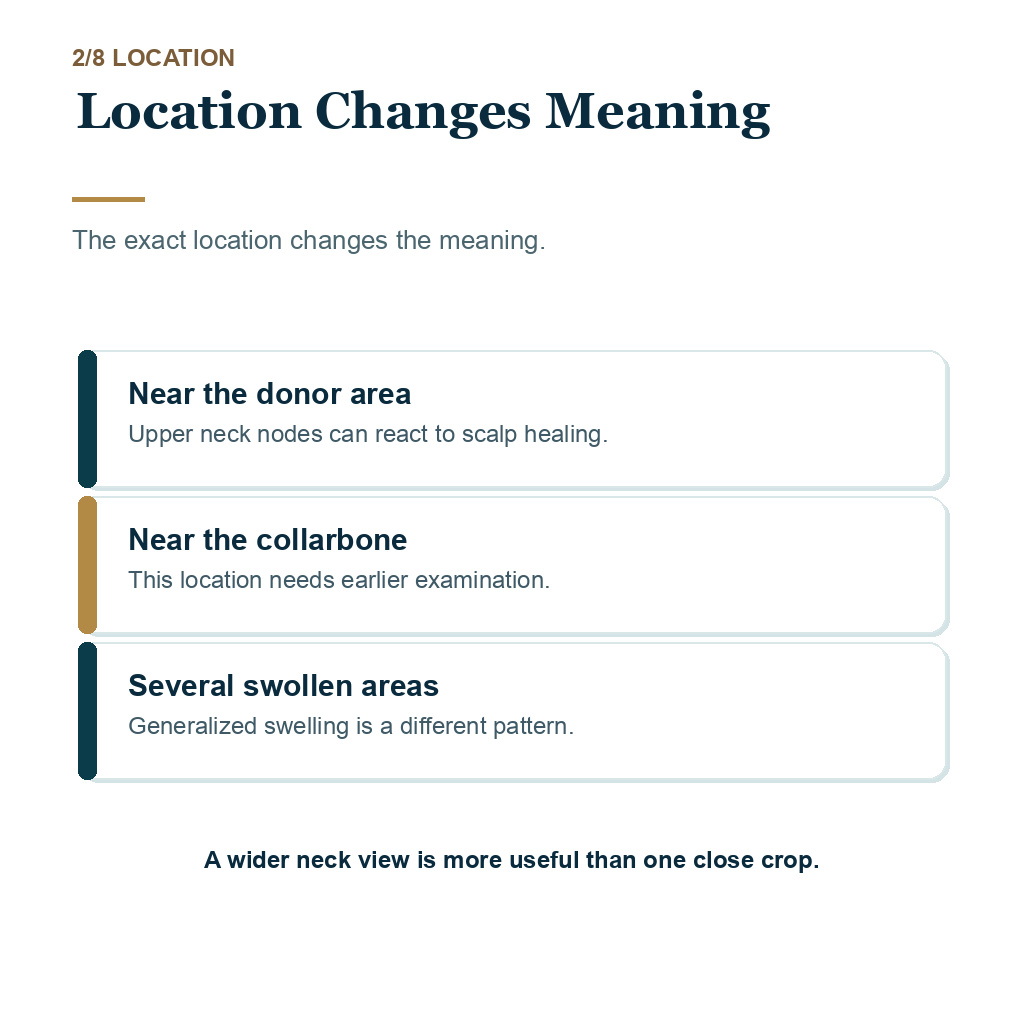
Lymph nodes are part of the immune system. They can become tender or noticeable when nearby skin is healing, irritated, inflamed, or infected. After FUE, the donor area is close to the lymph nodes behind the ear and along the upper neck, so a tender node can appear near the side that feels more irritated.
A tender node does not mean the transplant has failed. It also does not prove that the area is infected. A lymph node is a clue, not a diagnosis. I connect it with the scalp appearance, donor area pain, the wash routine, fever, medicines, and how you feel overall. The same lump may lead to photo review, clinic review, or urgent local review depending on that full pattern.
For hair transplant follow up after surgery, one close photo of the lump is not enough. The useful review connects symptoms, photos, timing, and the surgical details.
Common location of the lump
Most people describe the lump behind the ear, below the ear, under the jawline, on the side of the neck, or at the back of the neck near the donor area. It may feel like a small bean under the skin. Tenderness can be noticed when turning the head, sleeping on that side, washing the donor area, or touching near the ear. A lump above the collarbone, below the collarbone, or far from the donor side drainage pattern deserves a lower threshold for local examination.
The location matters because scalp drainage and inflammation often follow predictable regional pathways. A small tender node near the donor area has a different meaning from generalized swelling in many body areas, throat tightness, facial swelling, or a rash away from the scalp.
If the main problem is forehead or eye puffiness, swelling after a hair transplant is a separate issue from a tender neck node. A soft puffy forehead, a tender lymph node, and an infected scalp point are different findings, even when they appear during the same recovery week.
Small movable lump may be less urgent
A small, soft or rubbery, movable, mildly tender lump can be less urgent when the scalp is otherwise settling, there is no fever, there is no spreading redness, there is no pus, the donor area is not becoming more painful, and the lump is not rapidly enlarging. Mild tenderness can happen when the immune system is reacting to local skin healing. Less urgent does not mean safe to ignore. It means the pattern can be documented and compared instead of treated as an emergency by the lump alone.
That lower risk pattern still deserves documentation. Send photos and timing if you are worried, especially if you are recovering far from the clinic. A stable lump is easier to interpret when the clinic can compare it with the donor area and the previous day’s symptoms.
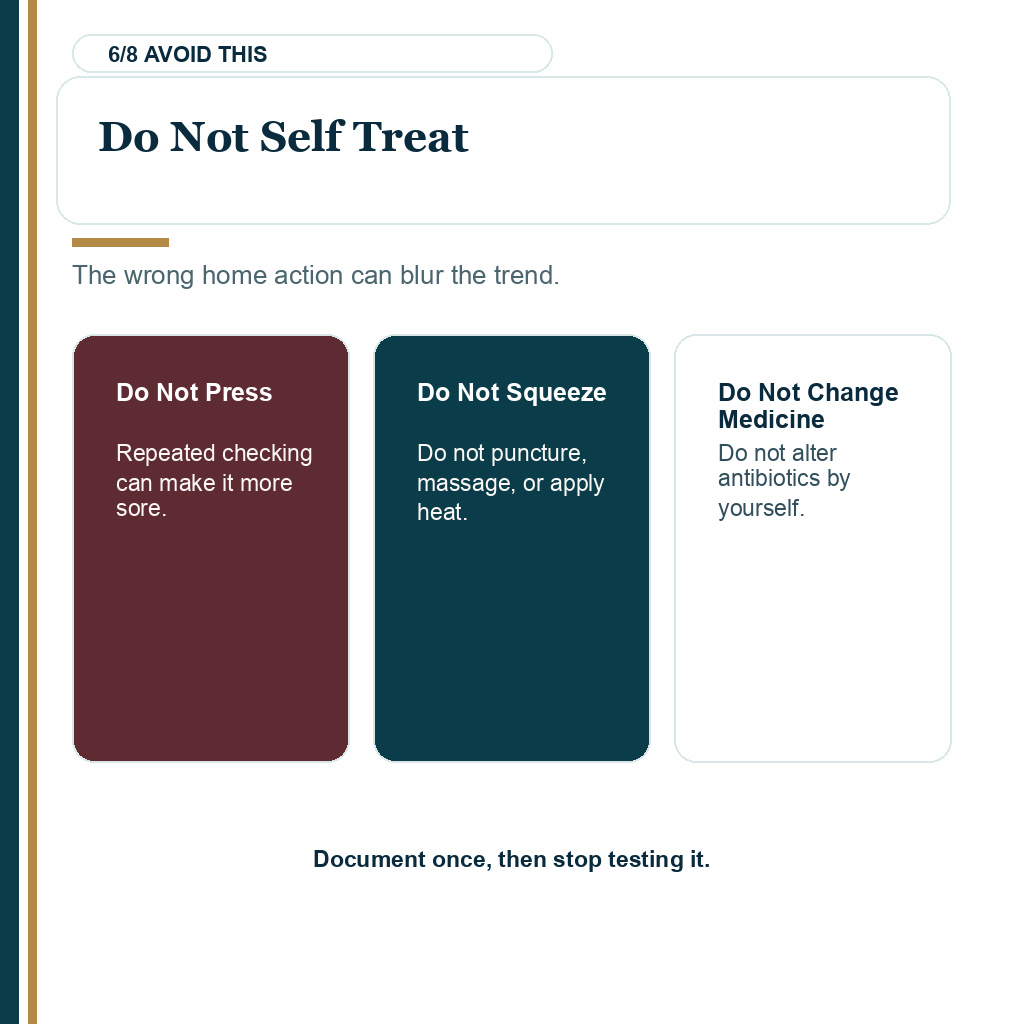
Repeated pressing is a poor way to judge whether the lump is growing. It can make a small tender node feel worse and increase anxiety. Squeezing, massaging, or pressing the node to test it can make the review less reliable. If you need to track size, document it once with a photo and a simple comparison such as pea size or grape size.
Warning signs that change the decision
The answer changes if the lump comes with fever, chills, spreading hot redness, red or warm skin over the lump, thick yellow or green fluid, a bad smell, worsening scalp pain, a wound that seems to be opening, dizziness, weakness, trouble swallowing, or a fast growing hard mass. Those findings move the question away from routine recovery anxiety and toward infection or another medical problem that needs review. A node that becomes less painful and smaller as the scalp settles is a different story from a lump that hardens or grows while the scalp worsens.
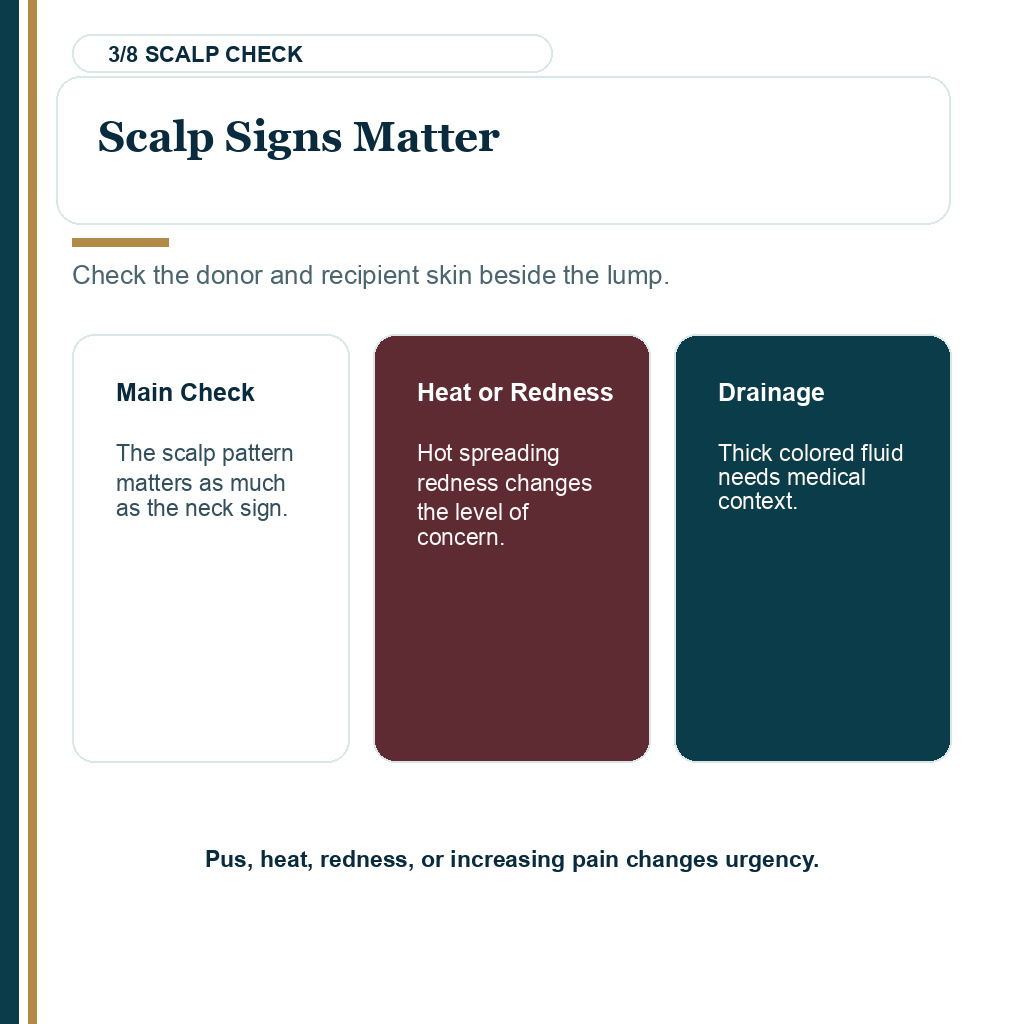
The scalp signs matter as much as the neck sign. If the donor or recipient area has new pus, increasing heat, spreading redness, painful bumps, or a wound that looks open, compare the pattern with redness, scabs, and pimples after a hair transplant. Wet drainage or yellow staining belongs in the same decision as yellow fluid after a hair transplant, because color alone is not enough.
Some warning signs belong outside cosmetic recovery. A high fever, severe illness, confusion, faintness, shortness of breath, trouble swallowing, throat swelling, or rapidly spreading infection signs should be assessed locally. The clinic can still be updated, but urgent body symptoms should not be managed only by waiting for a message reply.
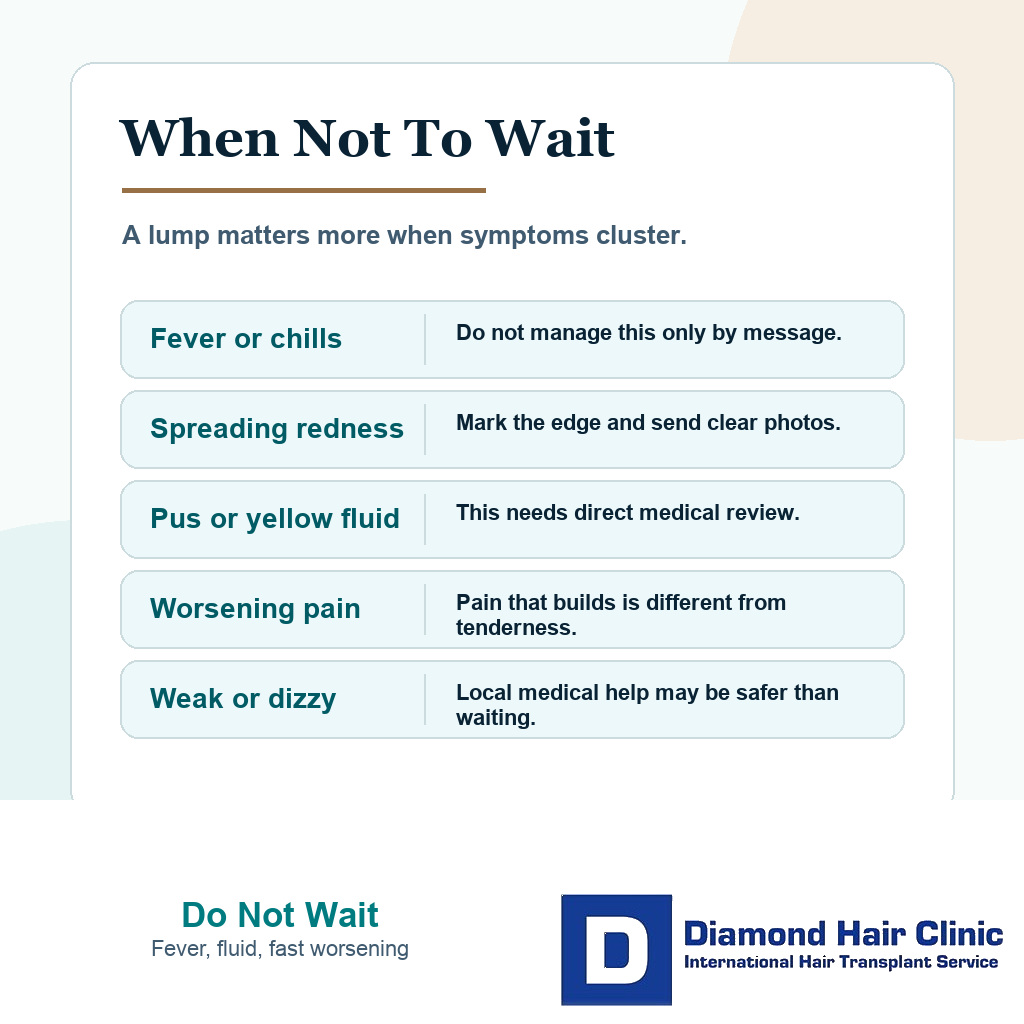
Fever, spreading redness, pus, worsening pain, or weakness changes the urgency of a neck lump.
Photos and details to send
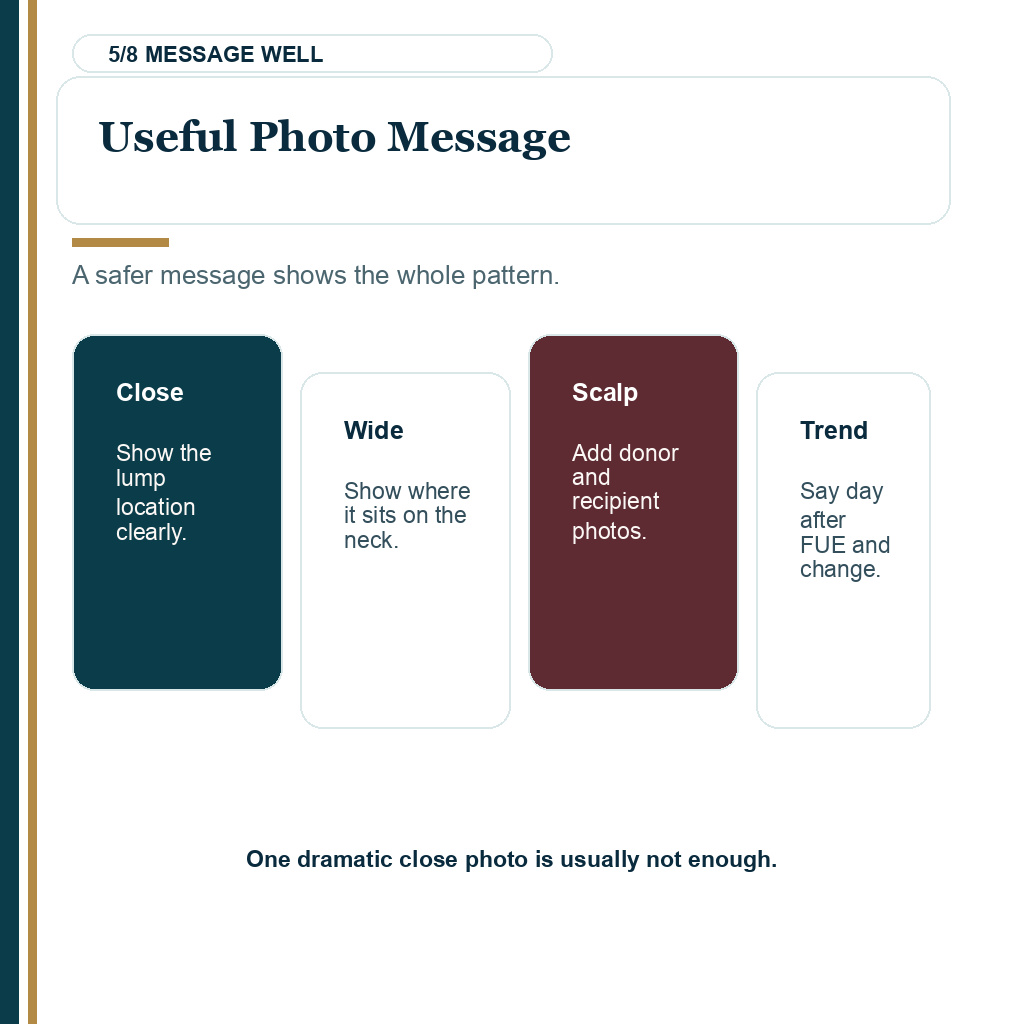
Send one close photo of the lump location, one wider photo showing where it sits on the neck or behind the ear, and clear photos of the donor and recipient areas. If possible, include both sides of the neck for comparison and estimate the size, such as pea size or grape size. If the lump is not visible, point to the location with a clean finger placed near it, not pressing on it. Good lighting is more useful than a dramatic close photo. Do not draw a tight circle on irritated skin just to mark the spot.
Add the day after surgery, when the lump appeared, which side it is on, whether it is on the same side as donor irritation, whether it is getting larger, whether it moves under the skin or feels fixed, whether the skin over it is red or warm, whether it is painful at rest or only when touched, and whether there is fever, chills, sore throat, cough, scalp redness, fluid, odor, trouble swallowing, rash, or worsening donor pain. Also list antibiotics, painkillers, allergy medicines, topical products, and missed doses.
A message that says “is this normal?” gives too little context. A message that says “day five, behind left ear, small movable tender lump, donor area mildly sore, no fever, no pus, redness improving, taking the prescribed antibiotic” lets the clinic judge the pattern more safely. A clear message is safer than repeated checking.
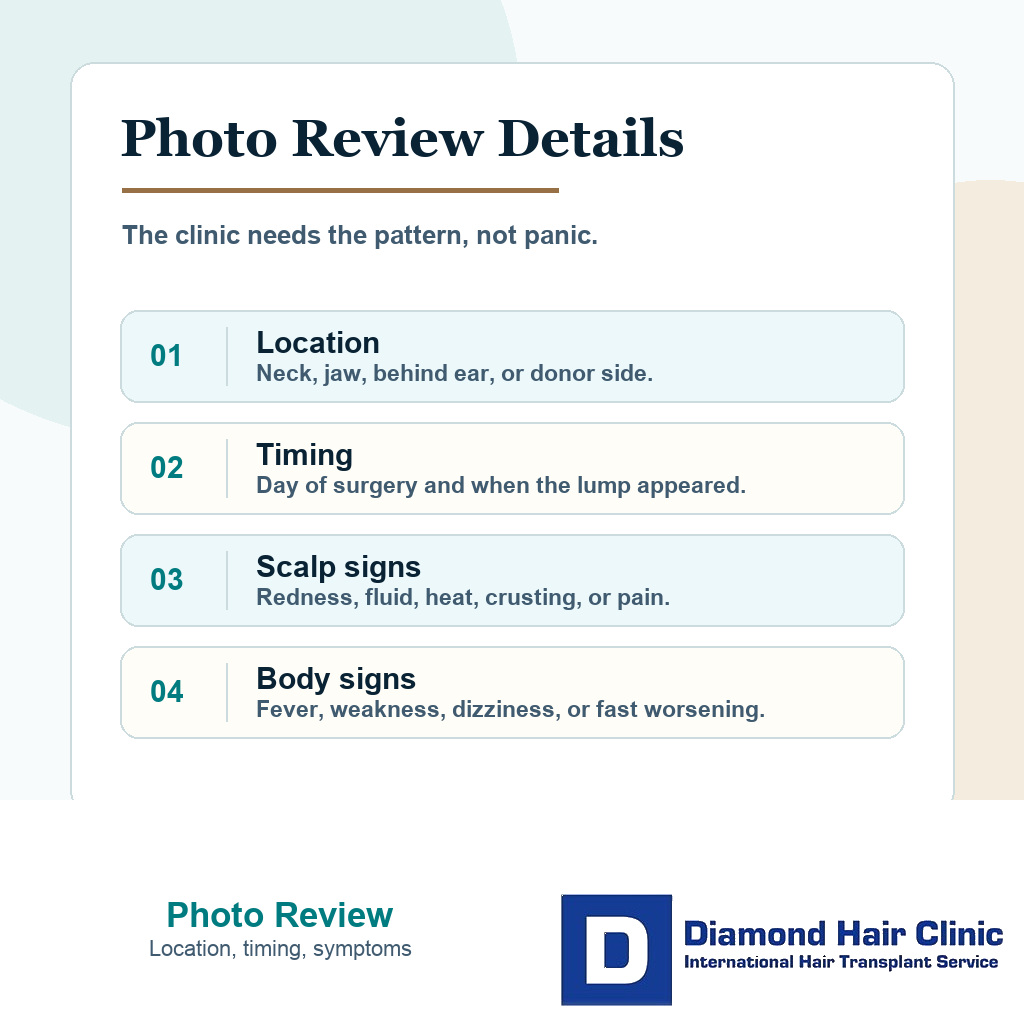
A useful message shows the lump location, the scalp, the timing, and body symptoms together.
Infection, allergy, or irritation possibilities
And those possibilities are judged differently. Infection is more concerning when there is increasing pain, warmth, spreading redness, pus, fever, chills, or a worsening wound. Follicle inflammation can create tender bumps and pustules, so the pattern should be compared with folliculitis and hair transplant planning if bumps or drainage are part of the story. A deep tender node without scalp bumps is not assessed the same way as donor inflammation with pimple like bumps.
Allergy is different. Hives, widespread itching, facial or lip swelling, throat symptoms, dizziness, or symptoms that appear after a medicine or product need a different response. If rash or swelling away from the scalp is present, allergy signs during hair transplant recovery are part of the decision, and it should not be treated as only a graft question.
Irritation can also be minor. Friction from a neck pillow, rubbing while washing, product residue, dry scabs, or sleeping pressure can make a nearby area tender. The decision comes from the whole pattern, not from one word such as node, gland, lump, or swelling. The local trigger also matters, such as pillow pressure, scratching, tight headwear, washing pressure, product use, or a new sore throat.
Home actions to avoid
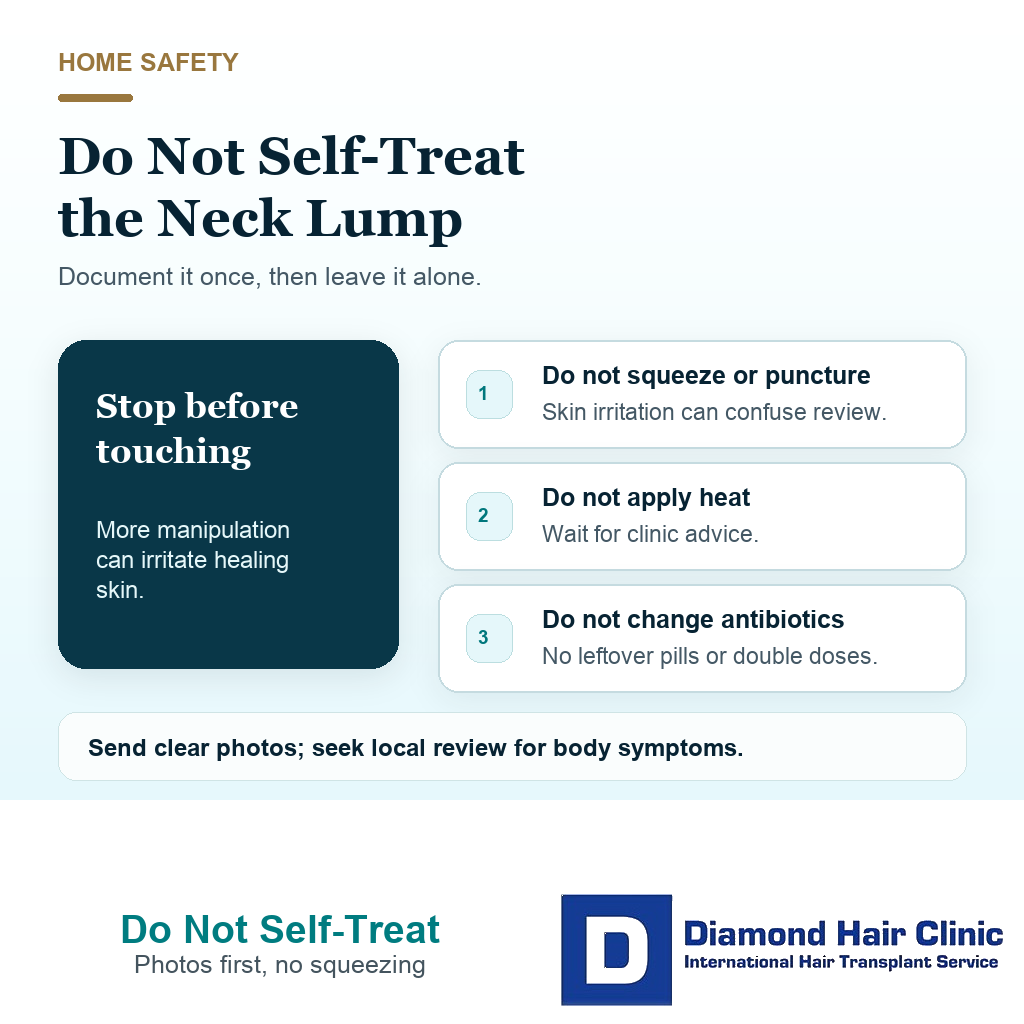
Home treatment can make the picture worse if it starts from panic. Squeezing the lump, puncturing the skin, applying heat without advice, starting leftover antibiotics, doubling a prescribed antibiotic dose, or scrubbing the donor area can irritate healing skin and confuse the clinical picture.
Frequent checking can turn a mild node into a sore node. Check once, document it clearly, send the right photos if needed, then leave it alone unless symptoms change. Follow the clinic’s washing instructions and protect the scalp from rubbing, scratching, and avoidable pressure. Repeated pressure can make the trend harder to judge.
Basic hair transplant aftercare still matters more than checking yourself repeatedly. If antibiotics were prescribed, decisions about antibiotics after a hair transplant should stay with the clinic or prescribing doctor, not with changing the medicine yourself at home.
Local medical review timing
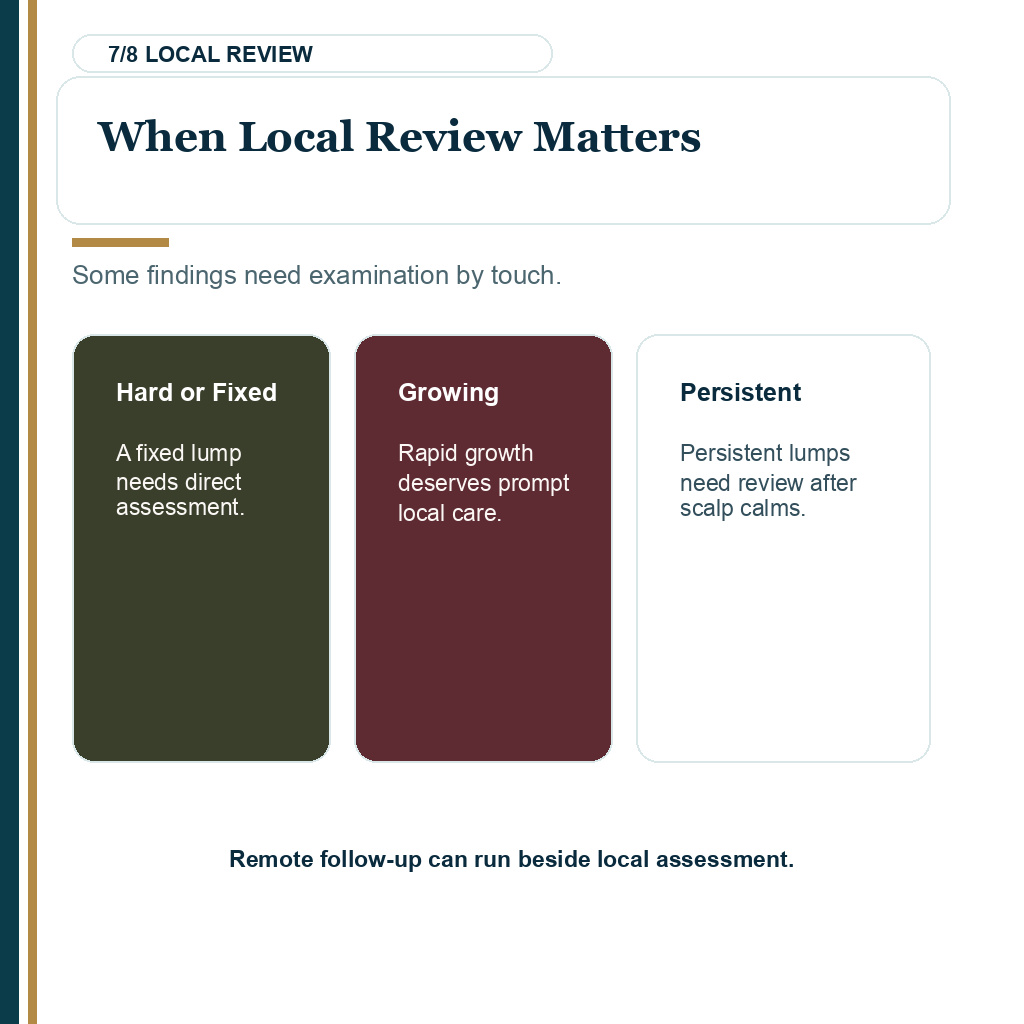
Local medical review matters when the symptom pattern is no longer limited to a small tender lump. Fever, chills, spreading hot redness, thick drainage, severe pain, rapidly increasing swelling, faintness, confusion, shortness of breath, trouble swallowing, throat swelling, or a generally unwell feeling should not be delayed because the transplant clinic is in another country or time zone. Remote transplant follow up can run beside local assessment. It should not replace it when body symptoms are present.
It also matters when the lump itself is near the collarbone, especially above it, feels hard or fixed under the skin, keeps enlarging, appears in several areas that are not nearby, or still does not settle after the nearby scalp has calmed. A collarbone lump, a hard fixed lump, and a small movable upper neck node are not the same finding. Those features should be examined locally instead of being treated as a normal donor area reaction.
If you also have cough, sore throat, body aches, or fever, the problem may not be only the scalp. General illness changes recovery decisions, so cold or flu symptoms after a hair transplant matter at this point. A known immune or blood count problem also makes low white blood cells and hair transplant planning relevant.
For a mild, stable, improving lump, a clinic photo review may be enough. For a worsening infection pattern or body symptoms, local medical review and clinic contact should happen in parallel. Local medical review should not wait for office hours.
These 8 slides show how I separate a mild donor area neck node from its location, scalp findings, body symptoms, and trend signals that need medical review. Swipe sideways, use the arrows one slide at a time, or choose a number below the image.