


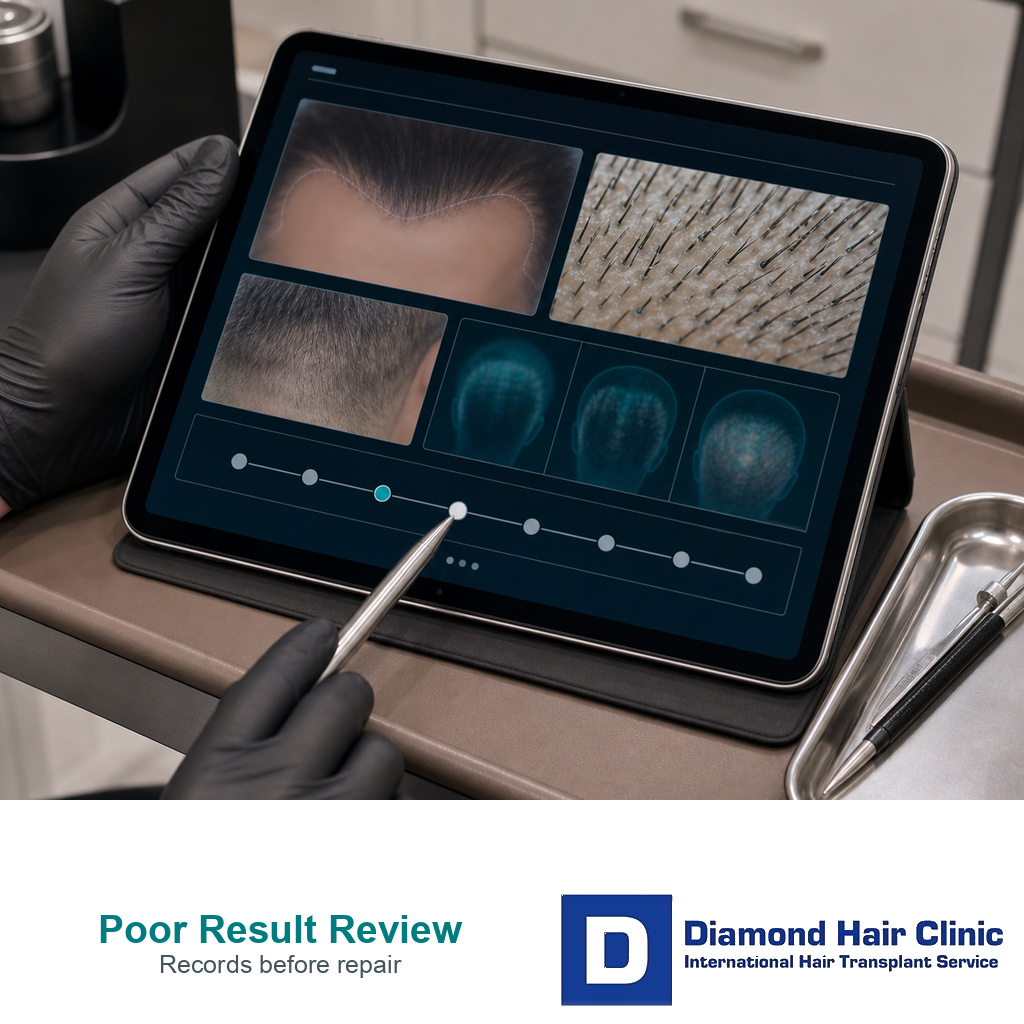
Poor Hair Transplant Result Before Refund or Repair
If you feel your hair transplant result is poor, I do not start by arguing about a refund or booking another operation. I first separate urgent medical warning signs from cosmetic disappointment. Then I review the records, photos, timeline, graft count, donor area evidence, and follow up messages that show what actually happened.
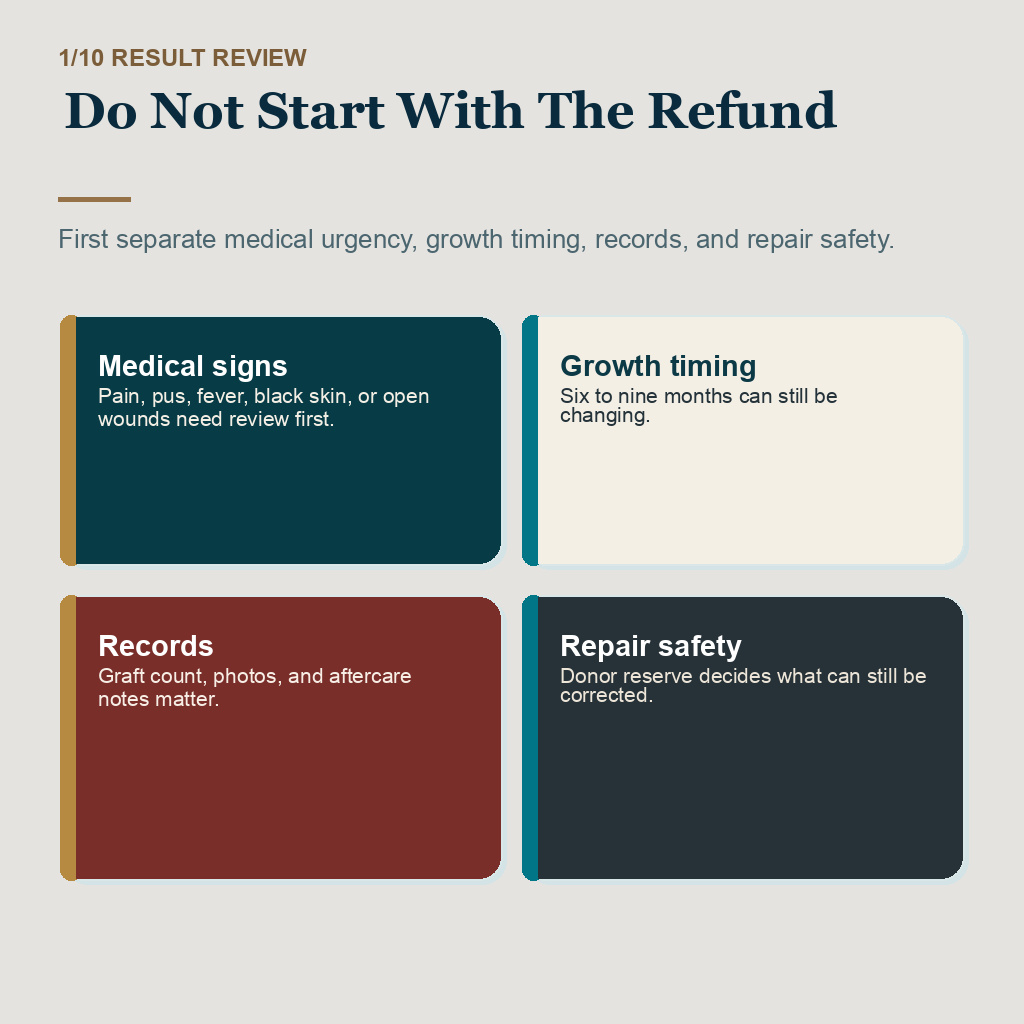
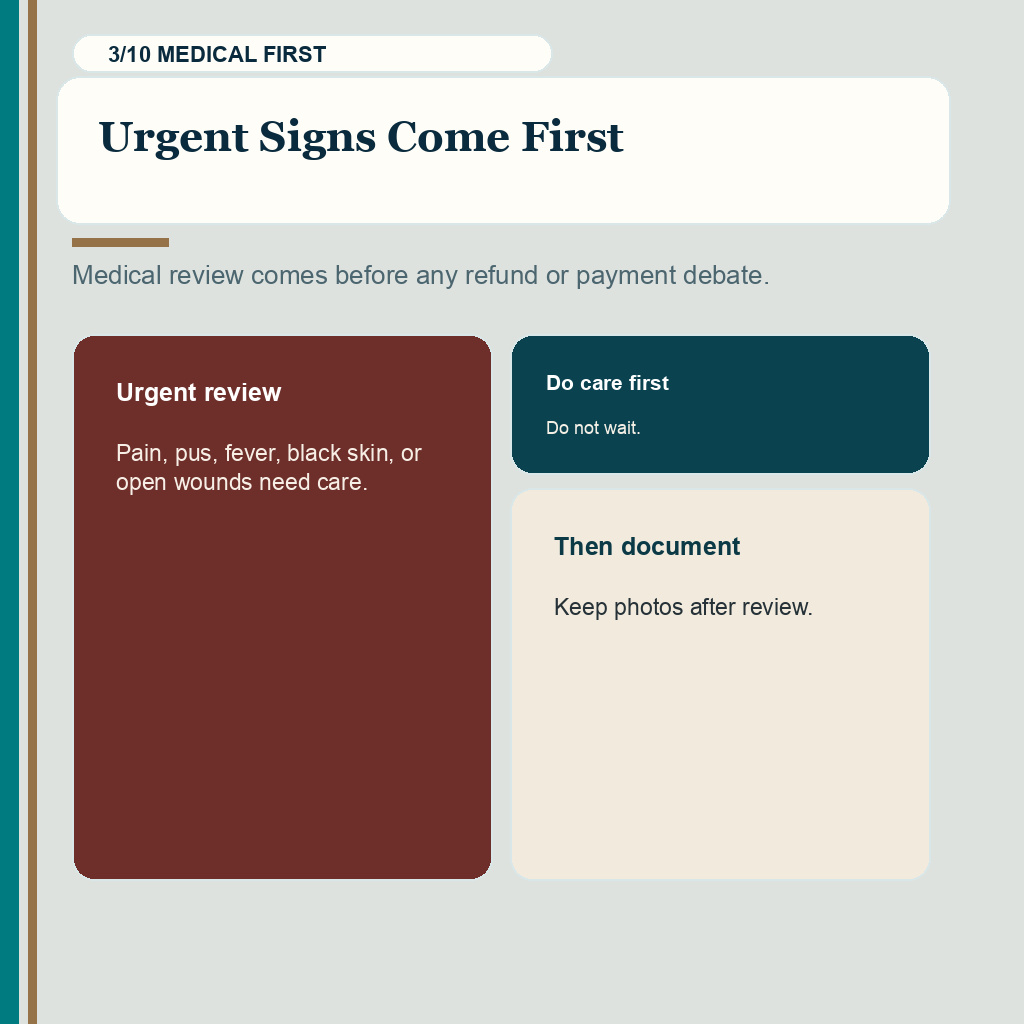
A weak result at 6 to 9 months may still be developing. A front or middle scalp result is usually judged more seriously around 12 months, while crown work and slower growth may need 15 to 18 months. Urgent symptoms come before refund discussions. Fever, spreading redness, pus, increasing pain, black skin, fresh bleeding, or an open wound need medical review quickly.
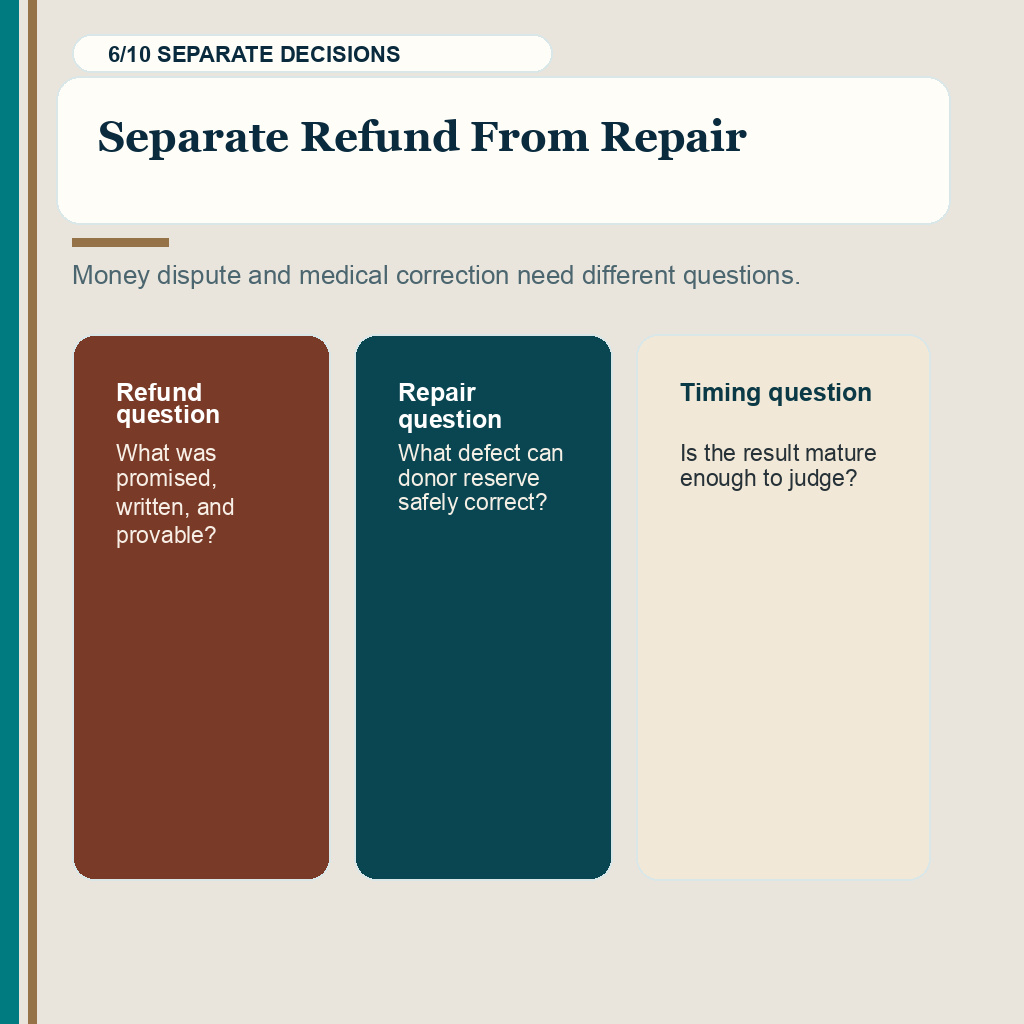
I keep the refund conversation and the repair plan separate. One is about the agreement between you and the clinic. The other is about your scalp, donor reserve, hairline design, graft survival, and whether another procedure can improve the result safely. Clear payment records before a hair transplant in Turkey matter for the dispute, but they still should not decide the next surgical move. If those two problems are mixed together too early, you can make a second surgical mistake while trying to recover from the first one. If the visible problem is a low or unnatural hairline, the repair review may include removing transplanted hairline grafts when appropriate, but that decision should be medical rather than emotional. If the visible defect is a low, harsh, or wrongly angled front edge, bad hairline graft removal planning belongs in the repair review, not in the refund argument itself.
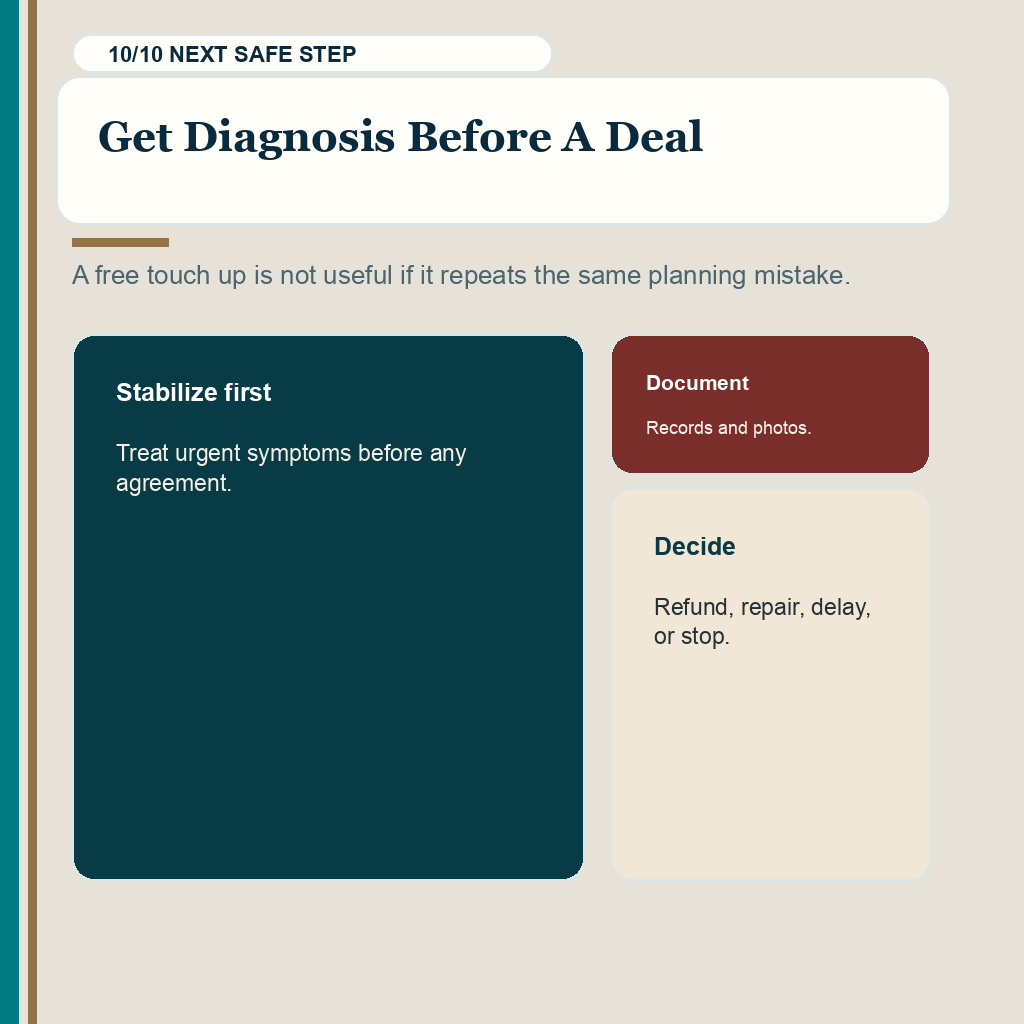
A promised touch up cannot replace a diagnosis. More grafts may help only after the original result is mature enough to judge and the donor area still supports another safe move.
Keep the evidence file separate from the repair wish list so the next decision is based on records, not only frustration. Operation notes, graft numbers, payment messages, repeat photos from the same angles, and screenshots of aftercare promises or clinic replies can all help the review stay factual. Those screenshots still do not decide whether another operation is safe. When a clinic calls the result acceptable but the patient disagrees, the comparison standard matters. Repair and refund discussions should separate normal growth timing, photo conditions, density limits, and visible technical problems.
It can be too early to call the result poor
Patients often judge the transplant while the hair is still short, thin, uneven, or still changing through the middle months of recovery. I understand why that creates panic. Early growth can be only a beginning, and the result may continue to change through the second half of the first year. I look more seriously at the pattern as the transplant approaches a mature stage, but I still do not treat every thin result as final. The middle months can still be too early if there is visible improvement, fine new hair, healthy skin, and no clear design problem.
I also judge each area differently. A hairline is easier to review earlier than the crown because the hair direction, density, and outline are more visible. The crown can mature more slowly and may never look as dense under harsh light because of the swirl pattern and the size of the area. If you are frustrated during the long middle stretch of recovery, that feeling is understandable, but I still need to review the scalp before repair surgery is discussed.
If you are trying to understand whether the result is truly failing or still developing, I start by separating a failed hair transplant from judging too early. The timing of growth has to be interpreted together with the original plan, native hair loss, medication changes, lighting, hair length, and donor condition.
Urgent medical signs come before refund language
Some problems should not wait for the final cosmetic result. Fresh bleeding, worsening pain, discharge, spreading redness, fever, black skin, an open wound, strong swelling that worsens instead of settling, or a donor area that looks infected should be reviewed by a doctor or the operating clinic quickly. I do not treat these signs as refund language. I treat them as possible complications that need attention before they become harder to manage.
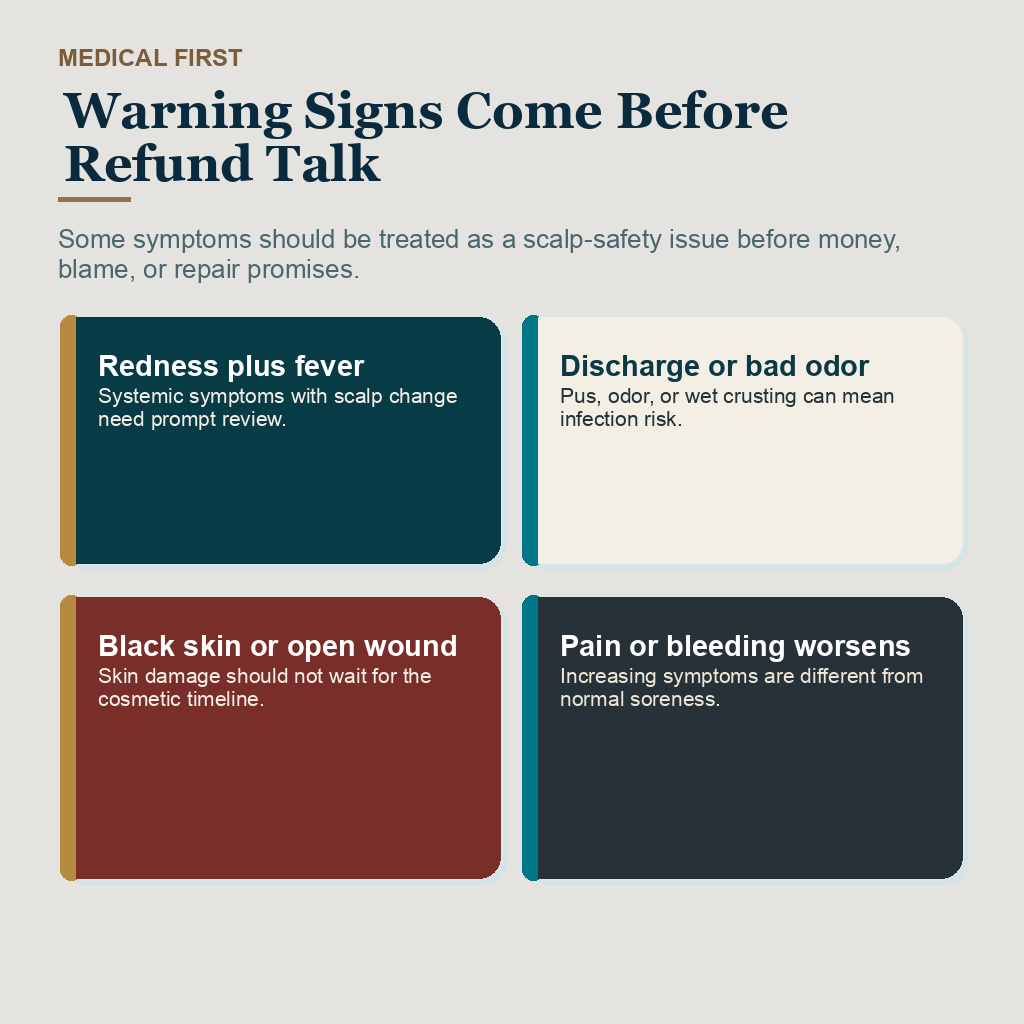
If I am worried about infection, necrosis, wound separation, or severe inflammation, I still ask for clear photographs and written notes, but I do not delay medical review while a patient gathers a perfect file. Medical safety comes first. Infected hair transplant warning signs need serious attention after surgery.
Once the medical issue is controlled, I still keep the documentation. A poor scar, delayed healing, visible donor damage, or a patch of lost skin can affect repair options later. That order protects the repair decision. Stabilize the scalp first, then review what caused the problem and what can still be corrected.
If the complaint includes an active wound, document the complication as a medical timeline before you discuss a free repair. Keep same light photos from several distances, the recovery day, bleeding or wetness, odor, discharge, pain level, temperature, products used, clinic instructions, and any local doctor’s note together. That record can later help a repair surgeon judge scar texture, scalp dents after hair transplant, or donor and recipient area limits, but it should not delay treatment while the wound is active.
Request the records that show what happened
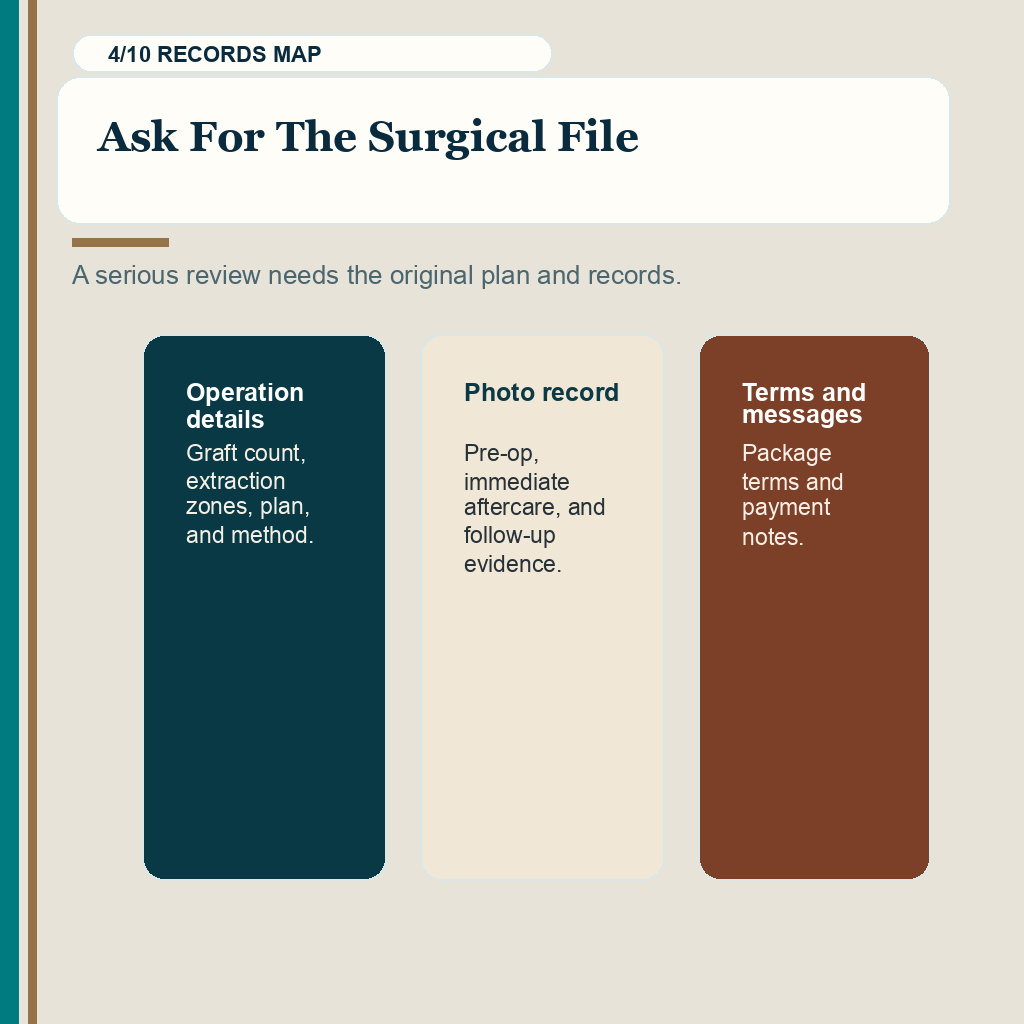
I cannot judge a poor result seriously from memory alone. Ask for the written graft count, graft distribution by area when available, hairline design photos, immediate photos after surgery, donor area photos, medication and aftercare instructions, consent documents, itemized invoice or package terms, and the name or role of the medical professional responsible for the plan. When possible, also ask who performed extraction, who created recipient incisions, who implanted grafts, and whether bleeding, skin pressure, delayed healing, wound treatment, or another complication was recorded during surgery or early healing. Request the operative record, graft count, and aftercare notes before you rely only on messages or marketing claims.
If the operation was arranged through a travel package, keep the medical file separate from the dispute file. The clinic may answer quickly about refunds and slowly about records, or the opposite. I still need the operative details, role map, wound timeline, donor photos, and aftercare instructions before a repair plan becomes more than a reaction to disappointment.
A concern around six months should be recorded without turning it into a final verdict. Keep the surgery date, graft number, treated zones, immediate placement photos, monthly comparison photos, aftercare instructions, products used, and clinic replies together so the repair review starts from facts instead of frustration.
These records do not prove everything. They cannot prove graft survival by themselves, and they may not answer every complaint. Still, they help me separate the useful categories. One result may still be maturing. Another may be limited by the original donor or recipient area. A third may reflect weak planning, weak execution, poor follow up, or a misleading promise.
I read graft numbers carefully. A high number written in a package does not prove that the plan was safe, and a lower number is not proof of failure by itself. I ask whether the number matched the treated area, the donor reserve, the hair caliber, and the long term plan. Hair transplant graft count verification can clarify what documents, photos, and early density can and cannot prove.
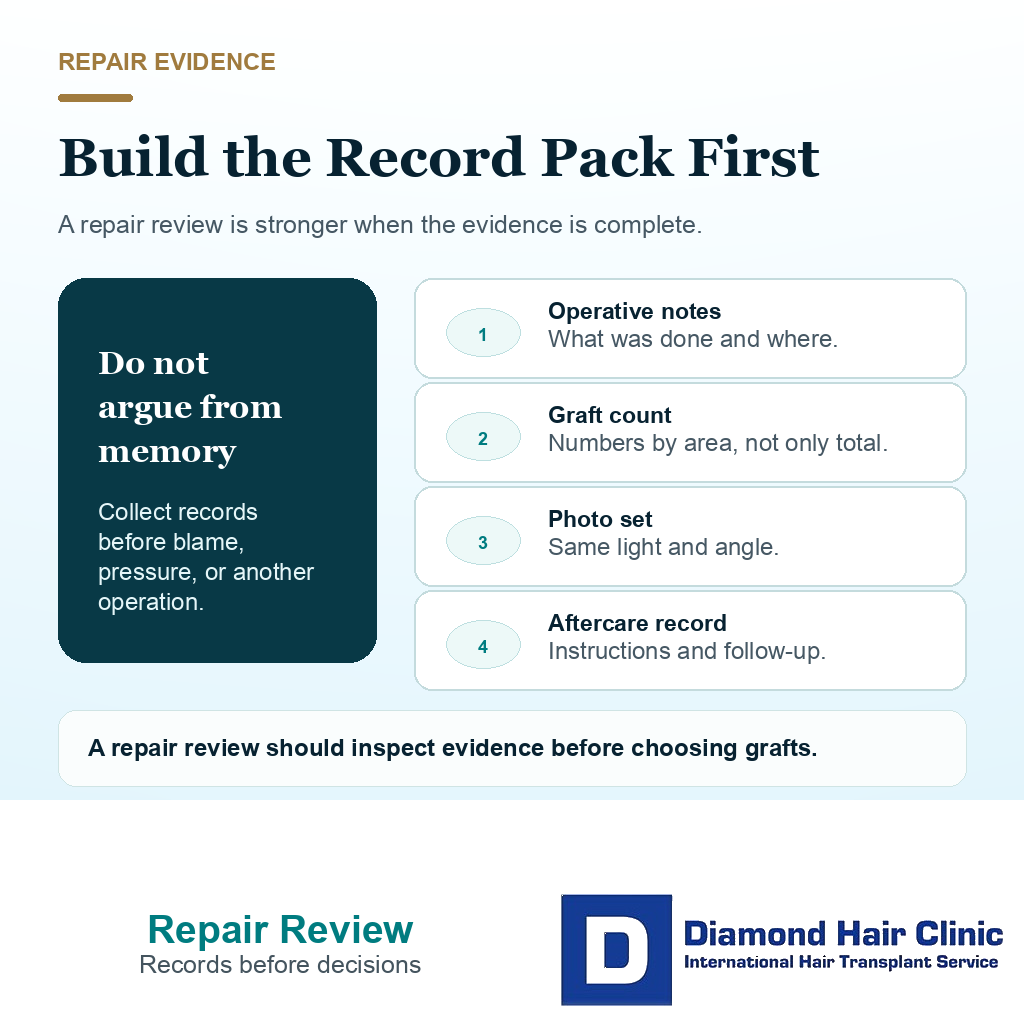
Repair review record checklist
| Record | Why it matters |
|---|---|
| Surgery date and treated zones | The timing shows whether the result is immature, reviewable, or ready for repair planning. |
| Planned and final graft numbers | The repair surgeon needs to know what was promised, placed, and left untreated. |
| Immediate post surgery photos | They help separate original placement from later growth, shedding, or native hair loss. |
| Repeat comparison photos | Matched photos reduce the risk of judging from one harsh mirror check. |
| Aftercare instructions and clinic replies | The record shows what guidance was given and whether follow-up stayed medically useful. |
If clinic replies have become scattered, the same record also supports a structured follow up through clinic silence after a hair transplant.
Photos should be repeatable before any dispute
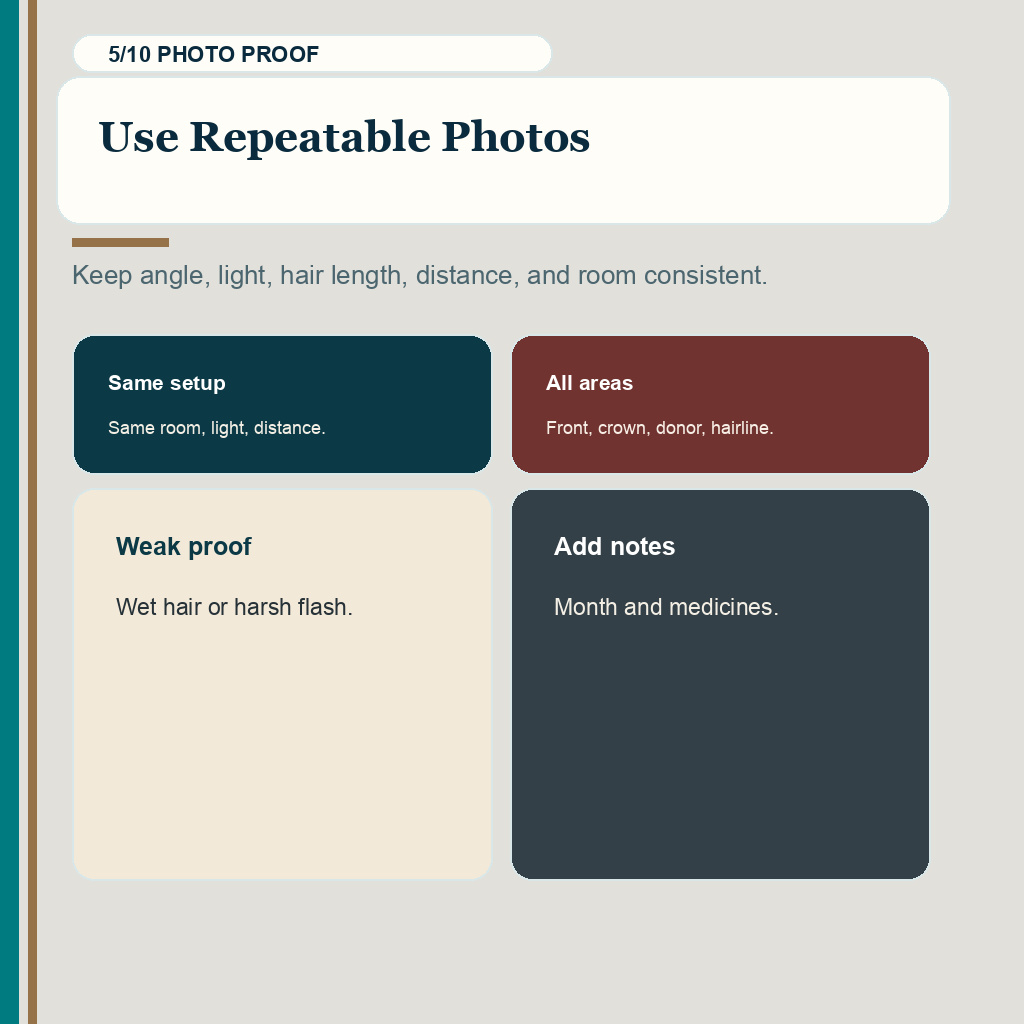
Make progress photos boring and repeatable. Use the same room, same camera distance, same angles, same hair length when possible, and similar lighting. Take front, both temples, top, crown, donor area, and close hairline views. Keep a simple timeline beside the photos with the surgery date, month after surgery, medication changes, shedding phase, illness, trauma, or aftercare problems. Avoid fibers, heavy styling product, wet hair exaggeration, or strong overhead light in one photo and soft window light in another. Same lighting, same angles, same hair length makes the comparison more useful.
A fair photo set matters more than either the worst image or the most flattering one. A clinic, second opinion doctor, or repair surgeon should be able to see the recipient area, donor area, hairline shape, density break, and natural hair around the transplant.
If the original clinic promised a certain look using polished before and after examples, compare your result carefully but fairly. Hair length, styling, camera angle, flash, wet hair, and harsh light can all change perceived density. I judge hair transplant before and after photos by consistency, not by the most attractive single image.
Refund pressure can distort the next decision
If you feel cheated, you may want quick compensation, a free touch up, or immediate repair. I understand that reaction. A poor result affects the face, confidence, money, travel, and trust. Keep the complaint factual by listing dates, promises, records requested, symptoms, photos, and the answer you need from the clinic. I am also very cautious about refund pressure after a hair transplant, because a weak result is not proof by itself that the clinic alone caused the outcome. A complaint can show frustration, but it cannot replace a dated medical review of the scalp and donor area.
Lifestyle after surgery, smoking, nutrition, illness, scalp inflammation, medication changes, aftercare, graft quality, donor quality, and individual healing can all affect growth. A refund demand makes more medical sense only when the patient side factors were favorable, the timeline is mature, and the documents point clearly toward poor planning, poor execution, or poor follow up. In real life, that is very difficult to prove cleanly.
The original clinic may say the result is still early. Another clinic may offer repair because that is what you are asking for. I do not let either answer decide surgery by itself. The scalp has to be examined, the donor area has to be checked, and the original plan has to be understood. A refund discussion should not decide whether another 800, 1,500, or 2,500 grafts are removed from the donor area. When the failure may be biological rather than only technical, diagnosis before another hair transplant may include biopsy review.
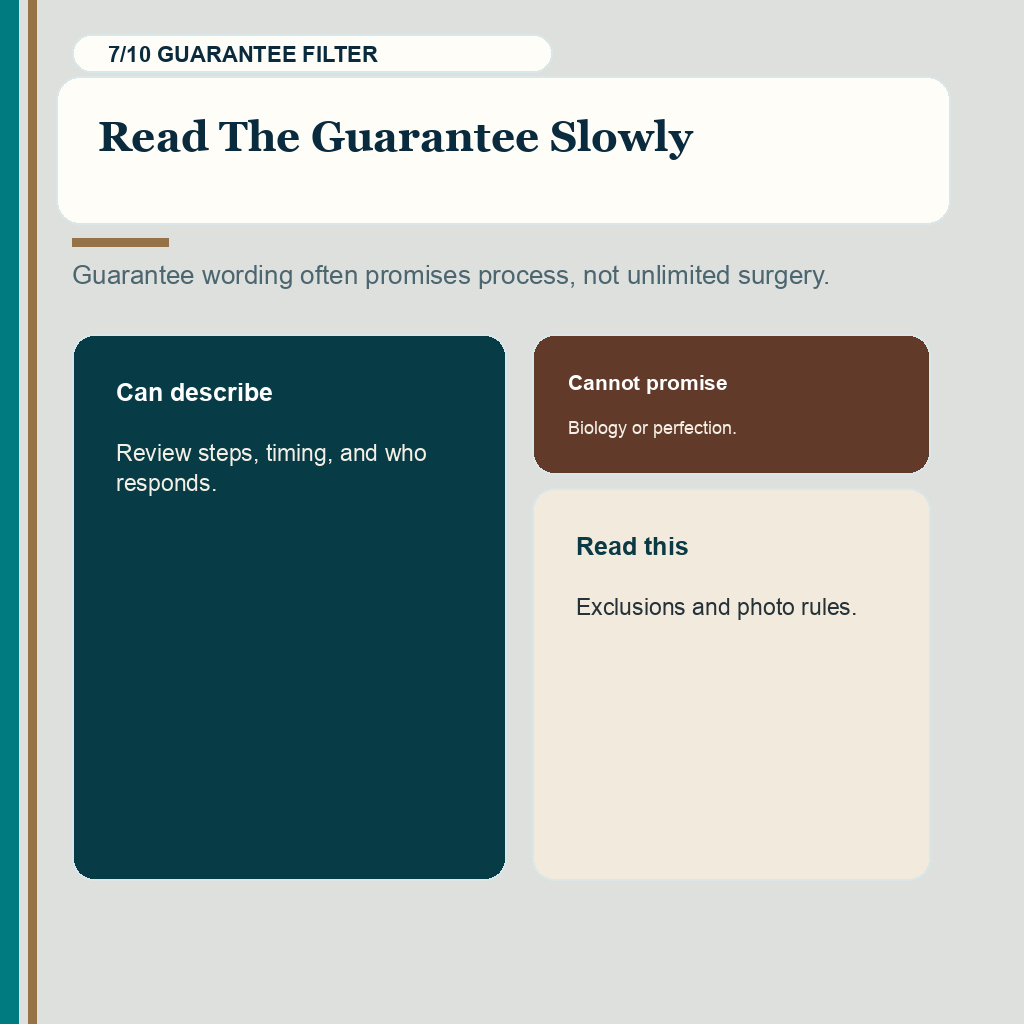
Result guarantees need careful reading. A reputable surgeon can stand behind the planning, surgical judgment, follow up, and transparency of the explanation. But no reputable surgeon can realistically guarantee graft growth, final density, native hair stability, or a perfect cosmetic result. When a clinic sells a strong guarantee before surgery, I read it as marketing language, and it is especially common in high volume or hair mill style clinics that want to look safer to worried patients.
If the original offer included written guarantee terms, read them slowly. Sometimes the wording only describes review, support, or possible correction. It still cannot promise biology, graft survival, native hair stability, or a perfect cosmetic result. The wording matters before you trust the promise, especially when judging hair transplant guarantees.
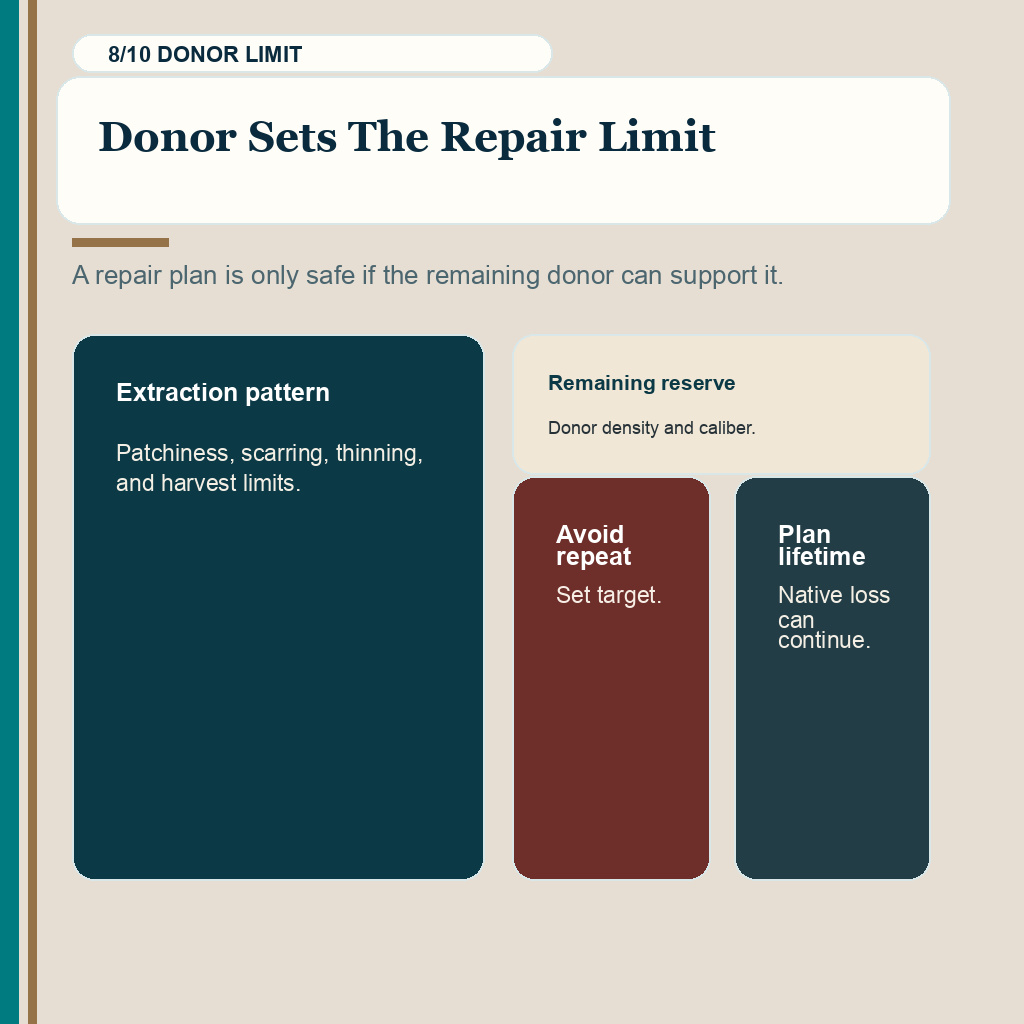
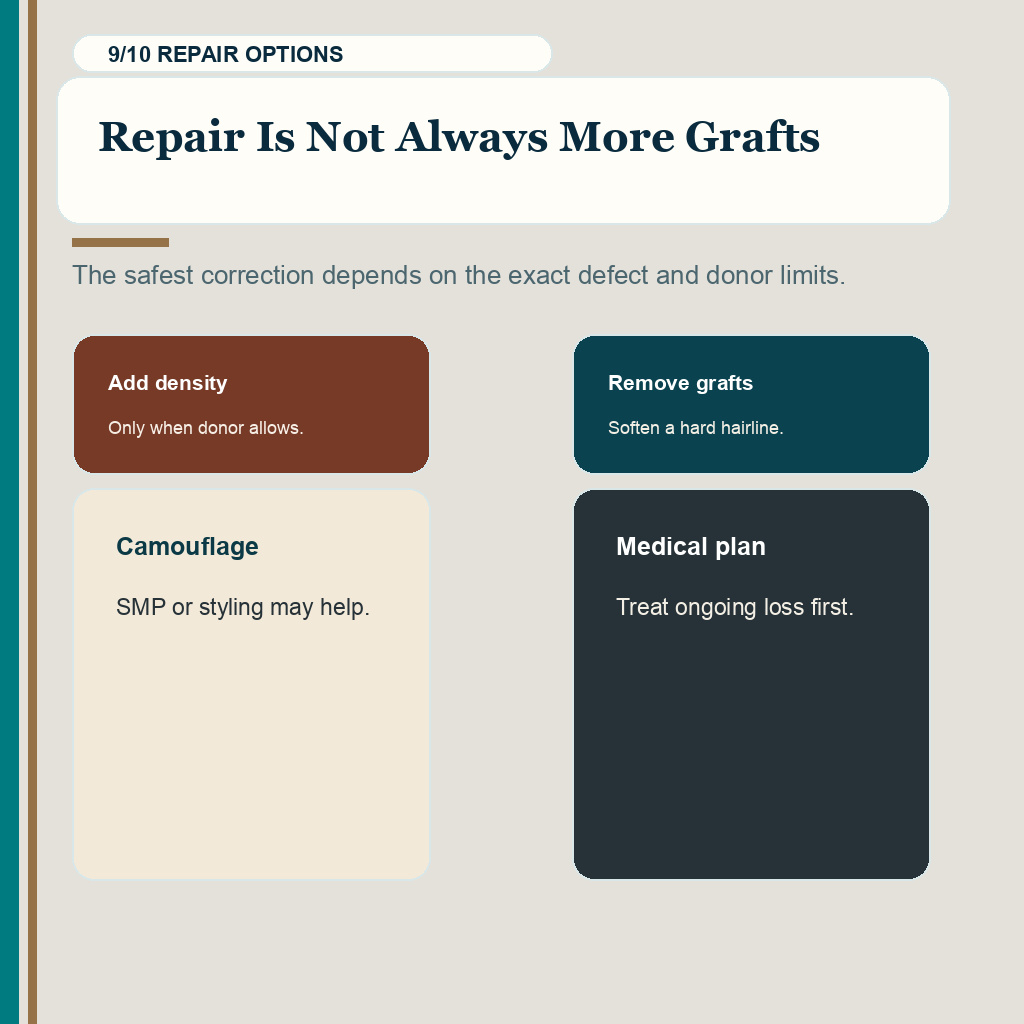
Swipe through the 10 slides below to separate refund pressure from the medical repair decision. Use the arrows one step at a time, or choose a dot below the image to jump to that point.

Repair plan becomes reasonable only after diagnosis
I consider repair only when the result is mature enough to judge, the concern is clearly defined, the donor area can support correction, and you understand what repair can realistically change. Repair planning should usually wait until the result has matured, unless there is a medical complication that needs urgent medical treatment or a very specific technical issue that can be assessed safely.
Before I call it a repair plan, I define the visible defect. The review separates a straight hairline, multi hair grafts at the front, weak density across a wide area, limited crown coverage, donor overharvesting, ongoing native hair loss, and a plan that asked too much of the donor supply.
A hair transplant can also underperform even when the patient seems favorable and the surgery was planned carefully. Good donor hair, healthy skin, careful graft handling, correct angles, and good aftercare improve the odds, but they do not control every biological factor. Healing response, blood supply, graft survival, inflammation, native hair loss, medication response, scarring tendency, and genetic hair loss behavior can still change the final result. For that reason, I avoid any repair plan that starts from blame alone. I first define what can still be diagnosed, what donor reserve can still be protected, and what another surgery can realistically improve.
For one patient, repair may mean adding a small number of grafts. For another, it may mean graft removal, camouflage, scalp micropigmentation, medication review, or accepting that further surgery would use too much donor hair for too little improvement. Once the review shows that correction is truly needed, bad hair transplant repair becomes the next decision.
Donor area sets the repair limit
I treat the donor area as the limit of the repair plan. A poor result in the recipient area is frustrating, but a damaged donor area can limit the rest of your lifetime plan. I check visible extraction patterns, thinning in the donor zone, scar visibility, short haircut limits, remaining density, beard or body donor options when relevant, miniaturization under magnification, and whether extractions were taken outside the safer donor zone. I also compare whether the first surgery used more grafts than the visible result seems to show.
Donor condition decides how much correction is still possible. If donor reserve is weak, another surgery may improve one area while creating a new problem behind the scalp. If donor reserve is still strong, I can discuss repair more flexibly, but the plan still needs conservative graft use and careful placement.
A return offer needs the same scrutiny as a new clinic choice. Before traveling back, the problem should be named, the donor reserve should be checked, and the written plan should explain why the same pathway is now likely to protect the remaining graft supply.
A small correction may belong under hair transplant touch up grafts rather than a full repair plan. True repair usually addresses a larger problem such as unnatural design, poor growth, wrong angle, poor donor use, or a result that does not match the documented plan.
Returning to the same clinic requires clear conditions
I do not rule out returning to the same clinic if the issue is minor, the clinic communicates clearly, the surgeon accepts responsibility for review, donor reserve is protected, and the correction plan is medically sound. I become concerned when the clinic avoids records, gives changing explanations, blames every concern on time without examining the scalp, or pushes a free touch up without explaining graft source, density, angles, or donor limits.
Free correction is not the main medical test. I ask whether the same system that created the first result can now diagnose the problem properly and protect the remaining donor hair. Free surgery can still be expensive if it uses grafts badly.
Before accepting a correction, I need the plan written clearly. It should state what problem is being corrected, how many grafts may be used, where those grafts will come from, who will create the recipient area incisions, and what result is realistic. The written plan should also explain what happens if the correction grows poorly, the donor area looks thinner, or the first diagnosis proves incomplete. If those answers are vague, the offer is not enough to protect you.
An independent second opinion before more surgery is useful when the original explanation remains unclear. It should examine the records and scalp rather than responding only to the emotional side of the complaint.
Refund or correction agreements need careful review
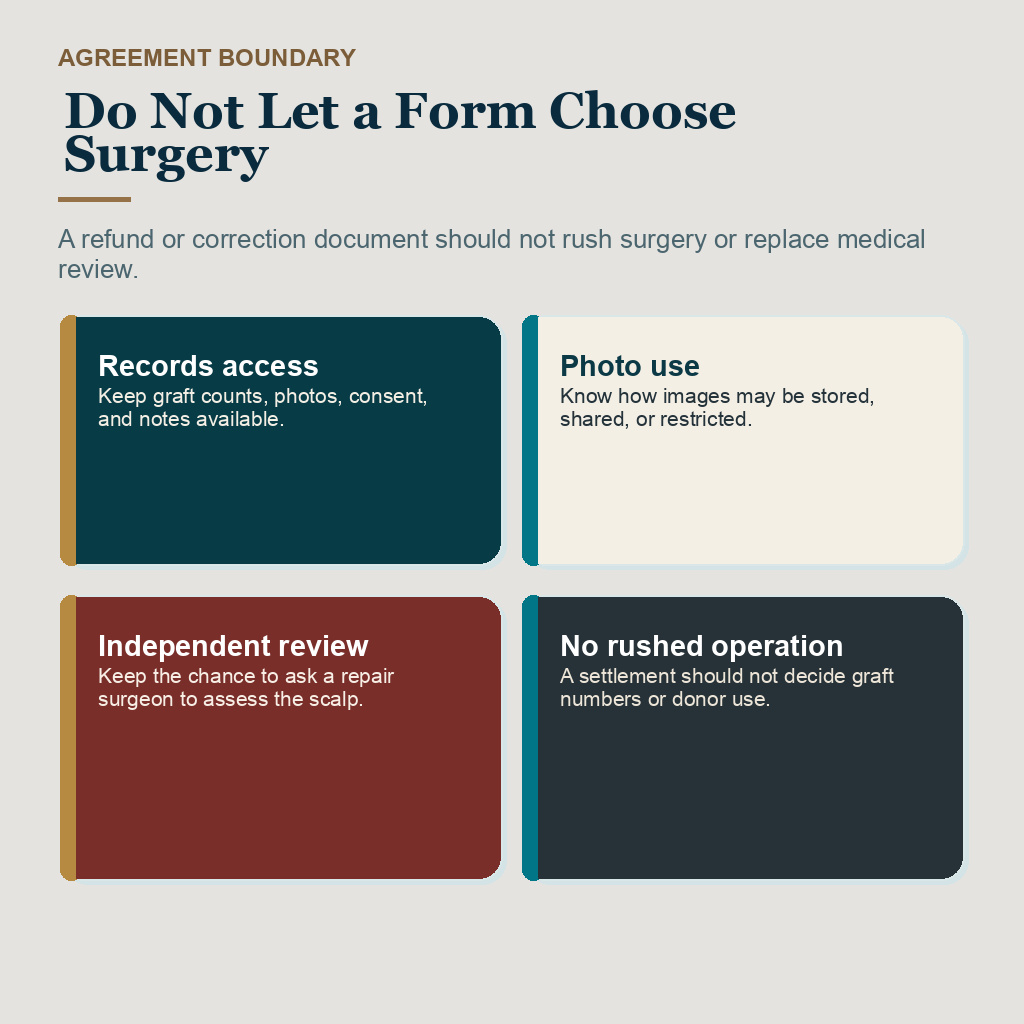
If a clinic offers a refund, partial refund, free correction, or settlement document, do not sign it only because you feel exhausted by the dispute. I am careful with both sides of this conversation. A clinic should not use a guarantee to sell surgery, and disappointment alone should not become proof that a refund is medically justified. Read what the agreement says about future medical review, access to your records, use of your photographs, confidentiality, and whether accepting the offer limits your ability to seek an independent repair opinion. If the document affects legal rights, get advice in the relevant country before letting it decide the medical plan.
From my side as a surgeon, the document should not drive the medical decision. A document that closes a complaint should not push you into a rushed second operation or make you ignore donor damage, infection history, poor hair direction, or a hairline that may need a different surgeon’s judgment. If the wording affects your legal rights, ask someone qualified in your country before signing. My role is to protect the medical decision, not to decide the legal dispute.
Normal reassurance still needs a timeline and plan
Sometimes the clinic is right. The middle and later months of the first year can still be uncertain, especially if there are fine new hairs, the crown was treated, or native hair changed during recovery. Sometimes the clinic is avoiding a difficult conversation. I judge the answer by how specific it is.
A useful follow up answer should discuss your timeline, treated zones, donor area, photos, medication history, graft count, and what should change by the next review. I do not consider vague reassurance enough when you have no dated review plan. Vague blame is also weak, especially if the clinic blames washing, sleeping, minor touching, or normal shedding without showing evidence.
A clinic that stops replying still needs a calm medical record request kept separate from public dispute pressure. Save dated messages, payment documents, photos, symptom notes, and the specific records requested. From a surgical point of view, the next consultation is stronger when it starts with facts instead of a screenshot battle.
If you are tracking hair transplant growth month by month, consistent photo comparisons can make the review more grounded. If the main worry is thin growth in the middle or later months of the first year, I still treat that stage with caution before calling the result final.
The dispute needs records and repair needs donor reserve
The medical picture sets the order. An urgent complication needs prompt review. An immature result needs dated documentation and a planned reassessment. A mature poor result needs records, donor assessment, and a comparison of repair options. Refund or complaint discussions stay separate from the surgical decision.
Legal rights, refund rules, contracts, and consumer complaints depend on the country, clinic agreement, and facts of the case. They require advice from someone qualified in the relevant jurisdiction. The surgical decision uses a different test. Scalp condition, donor reserve, realistic density, and the smallest correction that can improve the result without creating a larger problem determine the operation. Anger, embarrassment, a guarantee, a refund argument, or a free correction offer should not choose it.
If the original planning happened mainly through photos or messages, I also review the limits of hair transplant planning from photos. A weak first plan often becomes visible only after surgery, when the hairline, donor use, and density no longer match what you believed was promised.
A poor result can involve the scalp, the records, and trust in the original clinic. The timeline and medical signs establish whether action is urgent or premature. The photographs and operation records show what can be verified. The donor examination sets the limit for any correction. Only then does it make sense to choose among waiting, review by the original clinic, independent repair, or a refund route.