


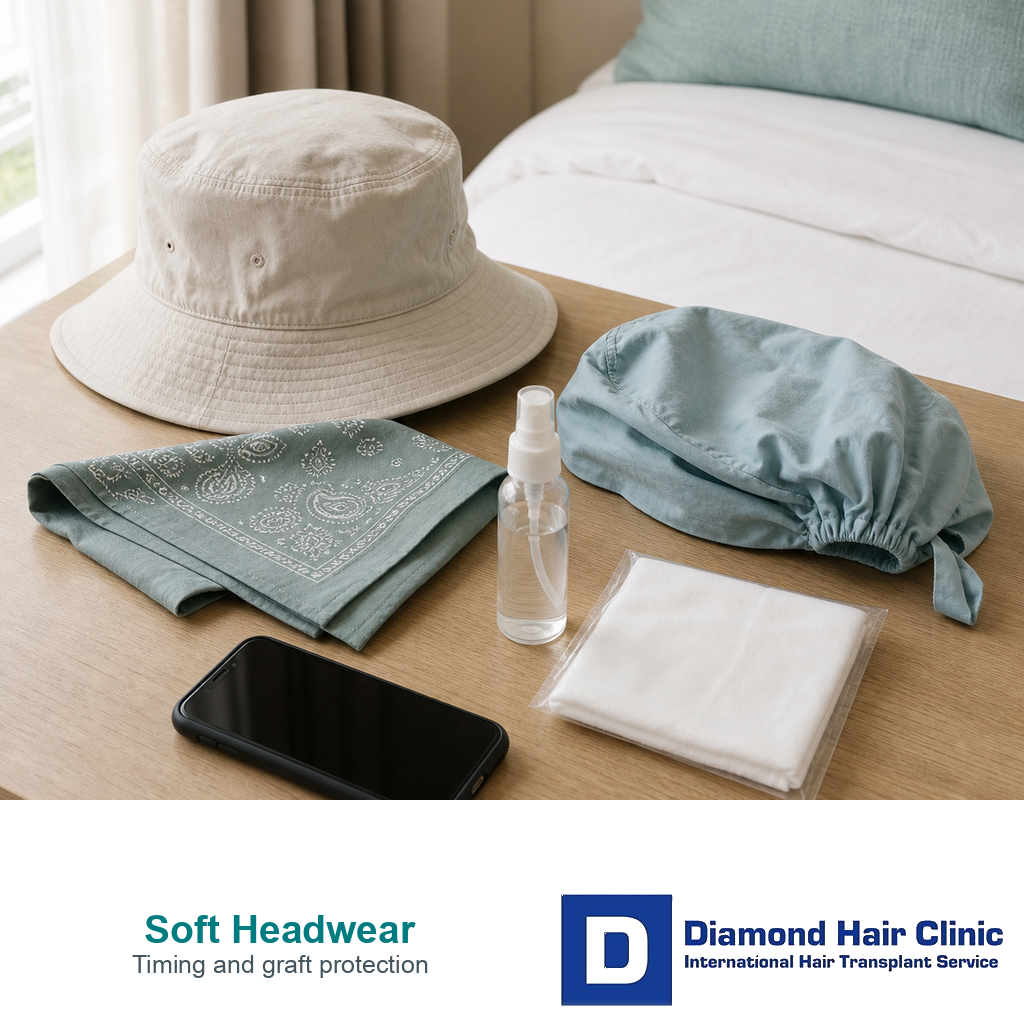
Soft Headwear Is Safer When It Stays Loose
You can use soft headwear after a hair transplant only when it is loose, clean, brief, and kept away from the grafted area. A bucket hat that sits away from the hairline is very different from a bandana, durag, headband, scarf, or bonnet that is tied, stretched, or pulled across the recipient area.
The word soft can be misleading. In the first days, I care less about the fabric name and more about contact with the grafts, friction during walking, heat, cleanliness, and whether crusts catch during removal. Those details decide the risk. The pressure standard also applies to braids and protective styles after FUE, where fabric softness does not cancel tension on healing skin.
If headwear is mainly for the airport or flight home, decide in advance when you will leave it off. A few uncomfortable looks from strangers are safer than a cover that rubs fresh grafts for the whole journey. That is especially important for private travel after female hairline FUE, where the goal is to protect the new edge first and use privacy covering only when it stays loose.
For that reason, soft fabric needs a separate decision from wearing a hat after a hair transplant. Pressure and movement are different. A motorcycle helmet, bicycle helmet, or construction hard hat creates a stronger pressure profile, so helmet after hair transplant has a different timing rule.
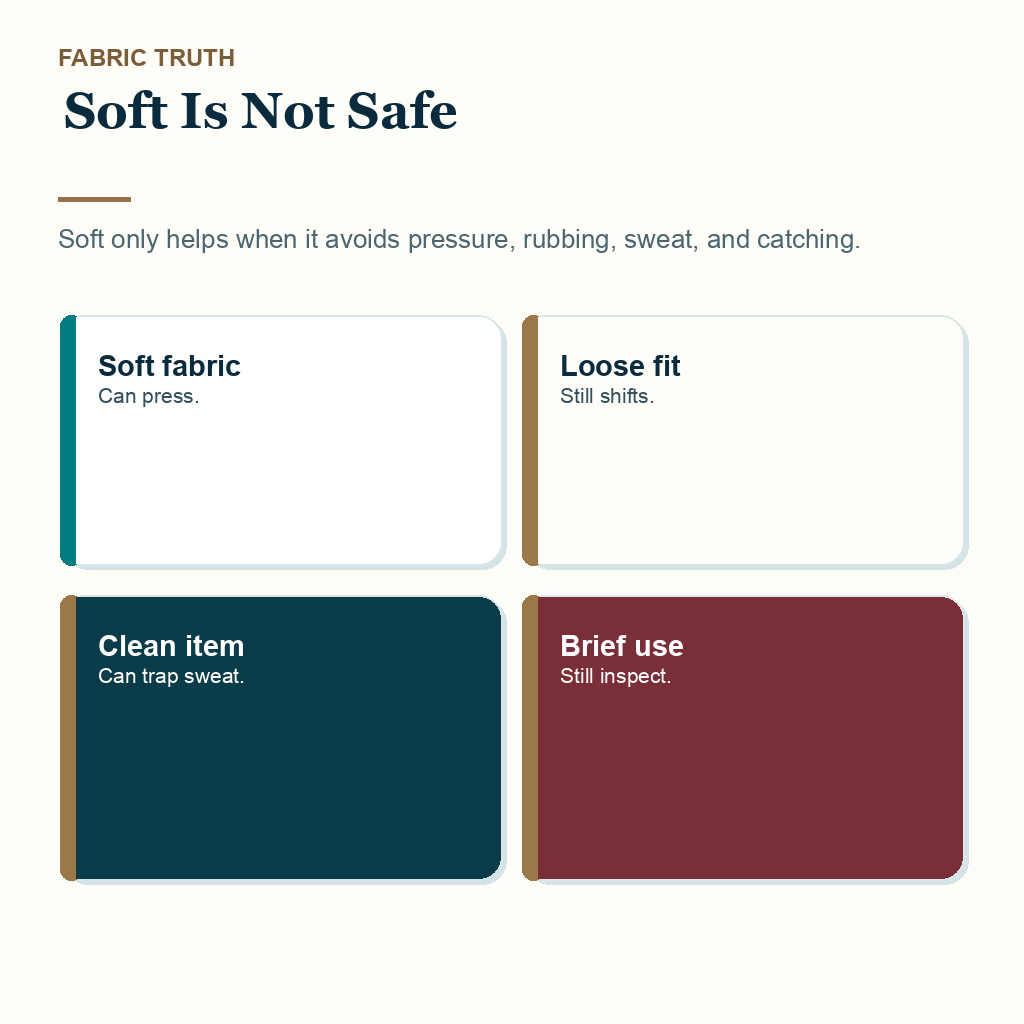
Soft fabric can still harm grafts
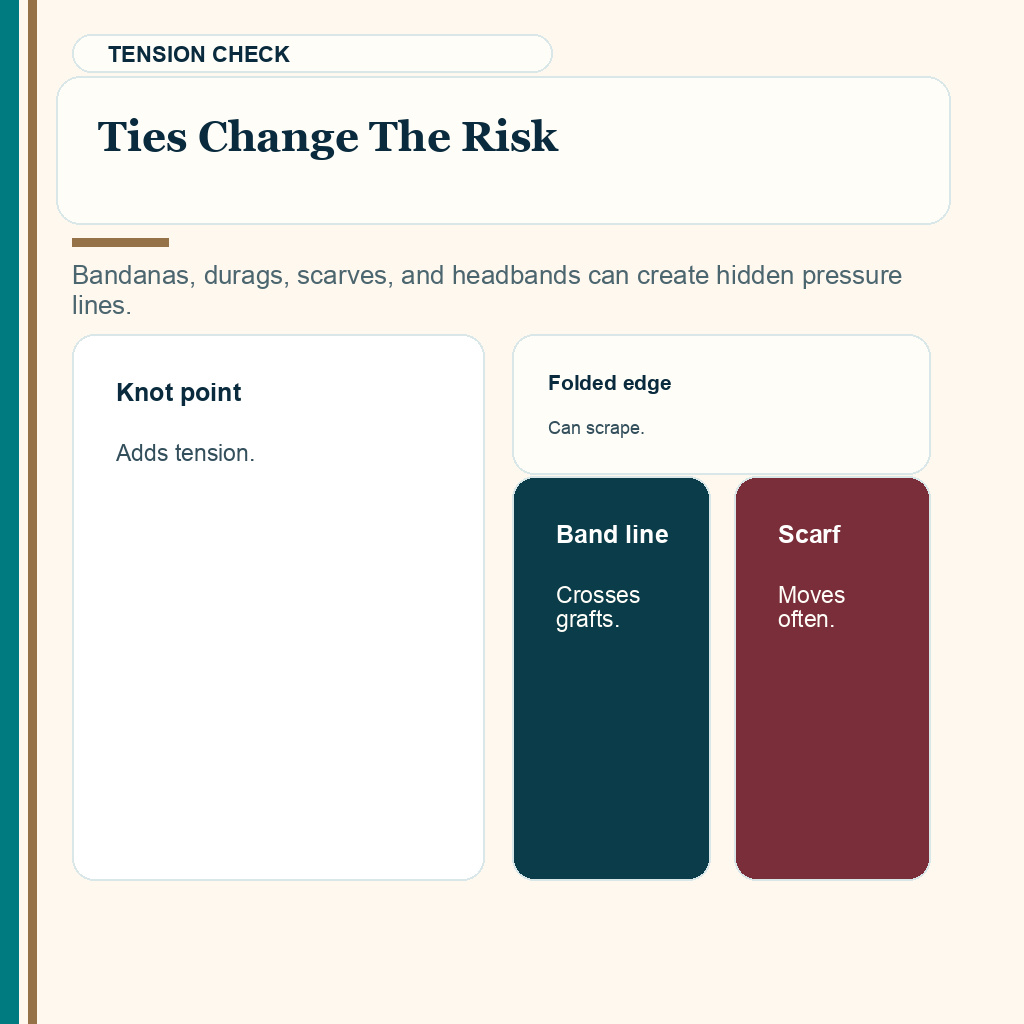
Soft fabric is not the same as safe contact. A bandana can slide over the hairline. A durag can create tension from the tie point. A headband can press across the exact recipient area. A scarf can shift each time you turn your head. Even a loose bucket hat can rub if the brim catches the grafts while you put it on or remove it.
The grafted area is most delicate early in healing because the follicles have been placed into tiny openings in the recipient area. During this period, I want to avoid anything that pulls crusts, scrapes the skin, catches grafts, or creates repeated rubbing. If touching the grafts still makes you nervous, fabric contact should not be treated as harmless just because it feels gentle.
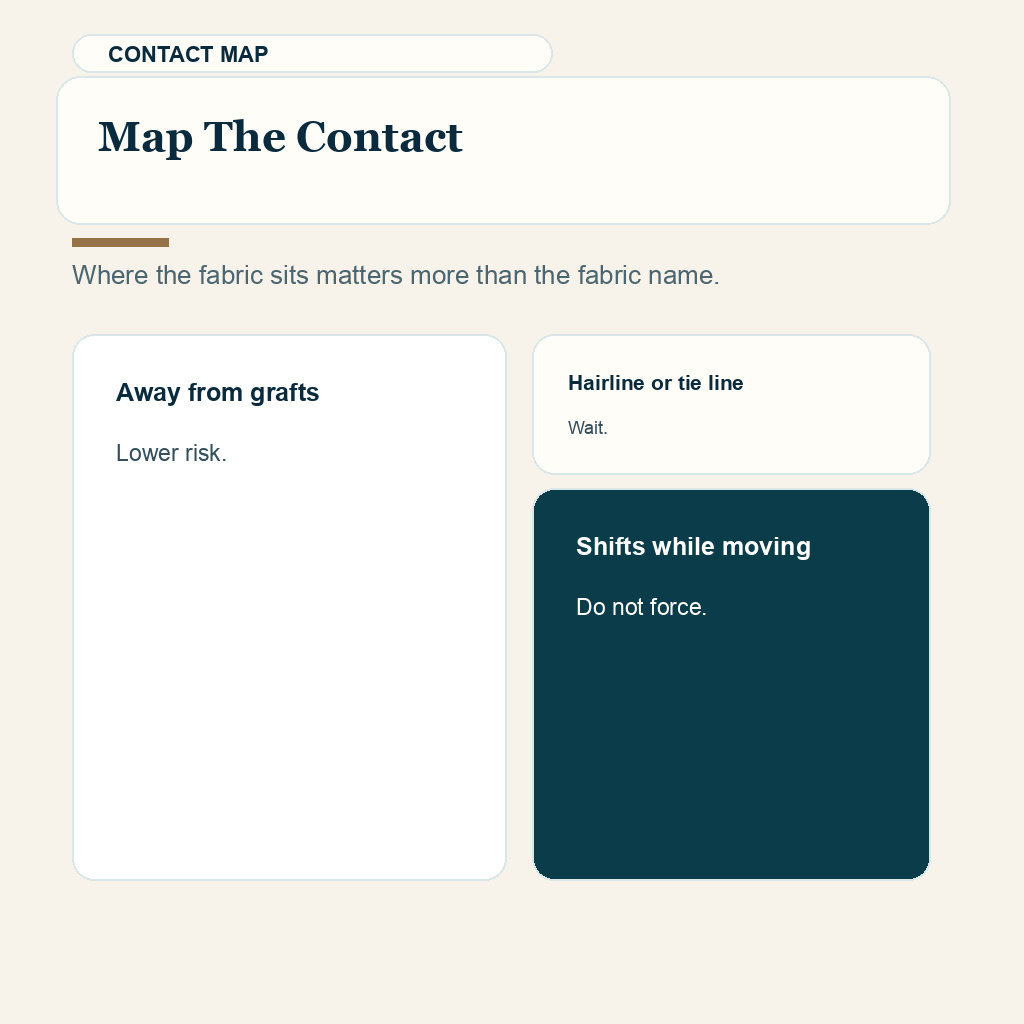
I separate the decision into contact, pressure, and movement. The fabric should rest away from the transplanted hairline, stay loose when tied, and stay predictable while you move. A covering that shifts for three hours during airport travel is different from one careful five minute walk outside. Treat that short walk example as part of the larger decision about short walks after a hair transplant.
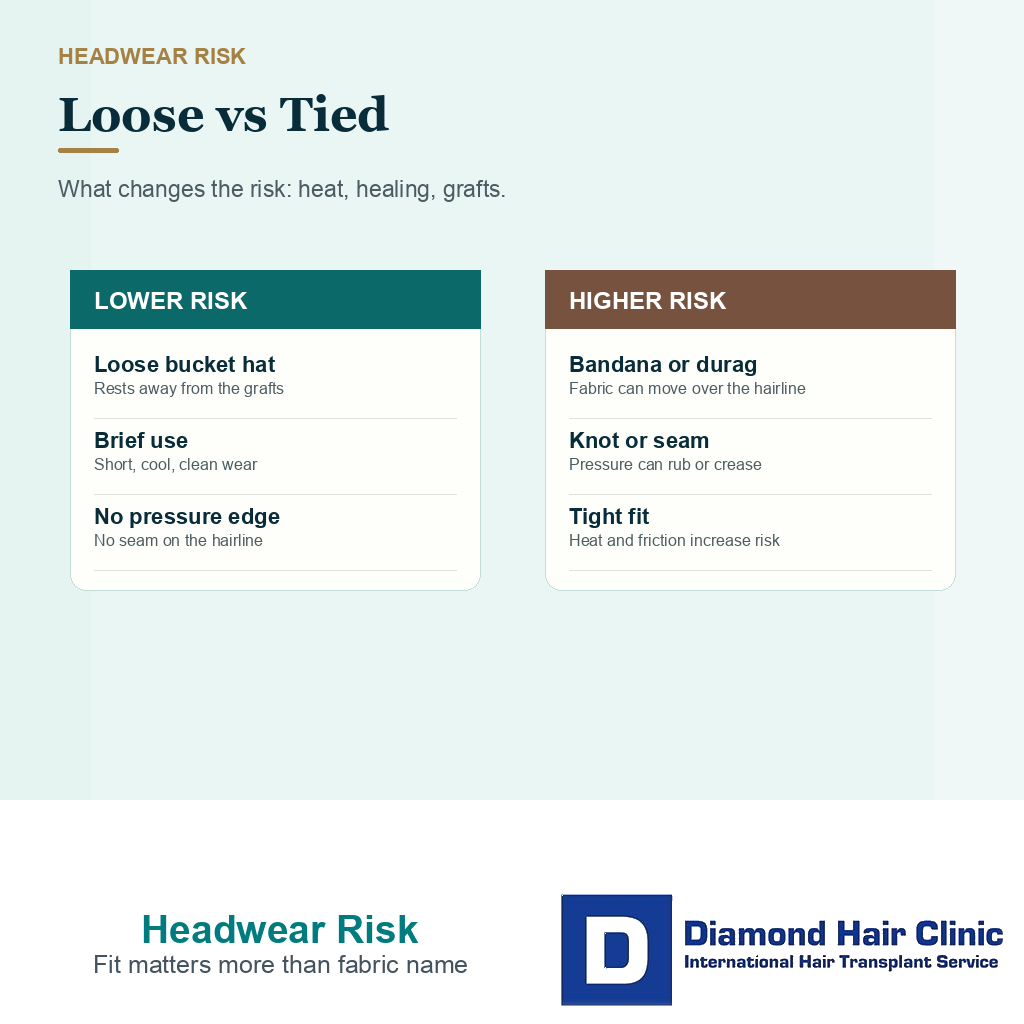
Soft headwear risk depends more on fit, pressure, and movement than on the fabric name.
Loose bucket hats, bandanas, and durags are not the same
A loose bucket hat is often easier to make safe because it can sit around the head without a tight edge crossing the grafts. The risk still depends on the hat shape. If the crown collapses onto the recipient area, if the brim scratches the hairline while going on, or if the hat moves in the wind, it loses that advantage.
A bandana or durag behaves differently. It usually has to be tied, stretched, folded, or tensioned. That can create pressure along the front hairline, temples, donor area, or knot area. A durag may also stay close to the scalp for a long time, trapping heat and sweat. A silk bandana may reduce surface friction compared with rough cotton, but it can still press, slide, or tighten.
A headband deserves special caution because it often sits exactly where frontal grafts were placed. If it crosses the recipient area, it is not a cosmetic accessory during early healing. It is a pressure line. If you need a headband for swelling, use only what your clinic has provided or approved, and keep it in the zone they instructed.
Soft headwear becomes less risky after early healing
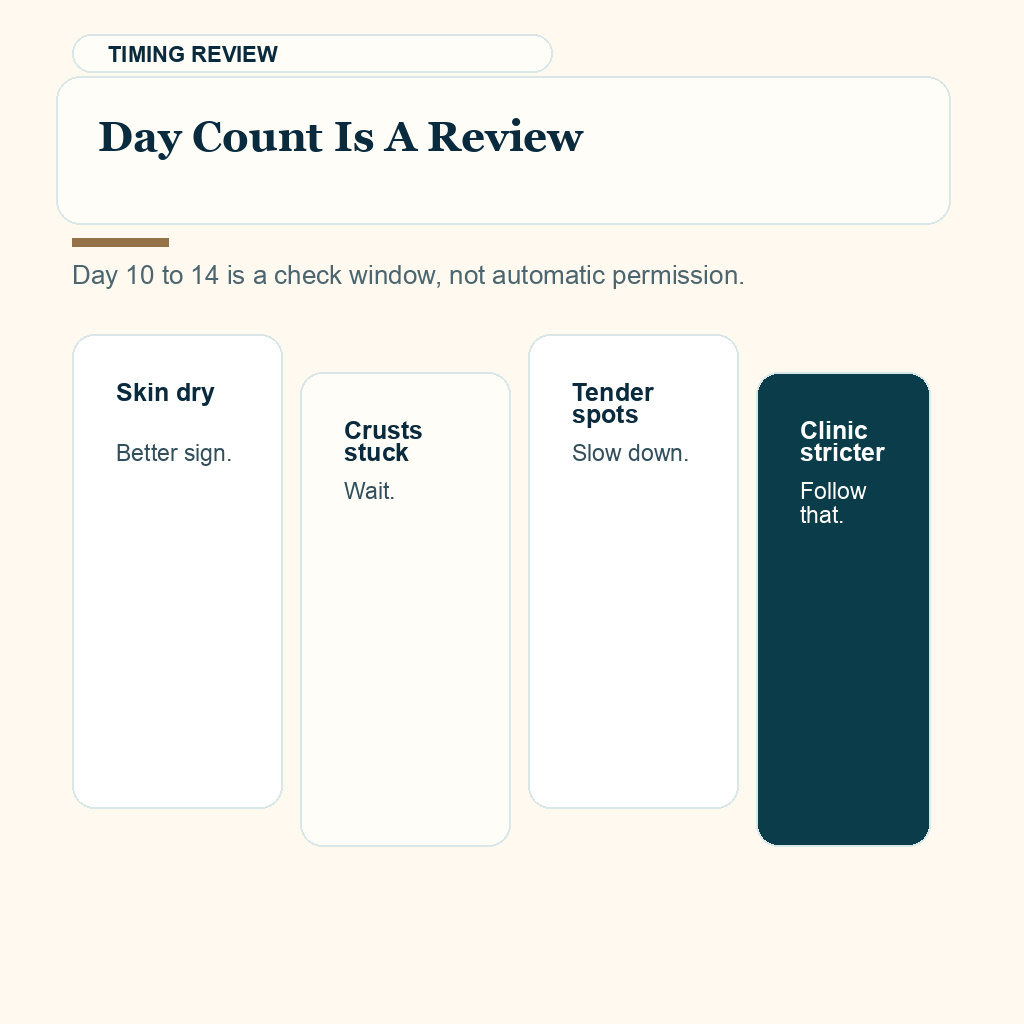
Risk usually drops after the early graft security period has passed, the scabs are loosening or gone, the skin is dry, and you can put the covering on without dragging it across the recipient area. Many clinics become more relaxed around day 10 to day 14, but that is not a universal permission slip. A dry scalp with loose crusts is still different from a clean scalp that no longer catches on fabric.
The calendar helps, but the scalp decides. A patient at day 12 with dry, clean skin and a loose bucket hat may be in a different situation from a patient at day 12 with heavy crusting, tenderness, bleeding spots, folliculitis, or a bandana tied tightly across the hairline.
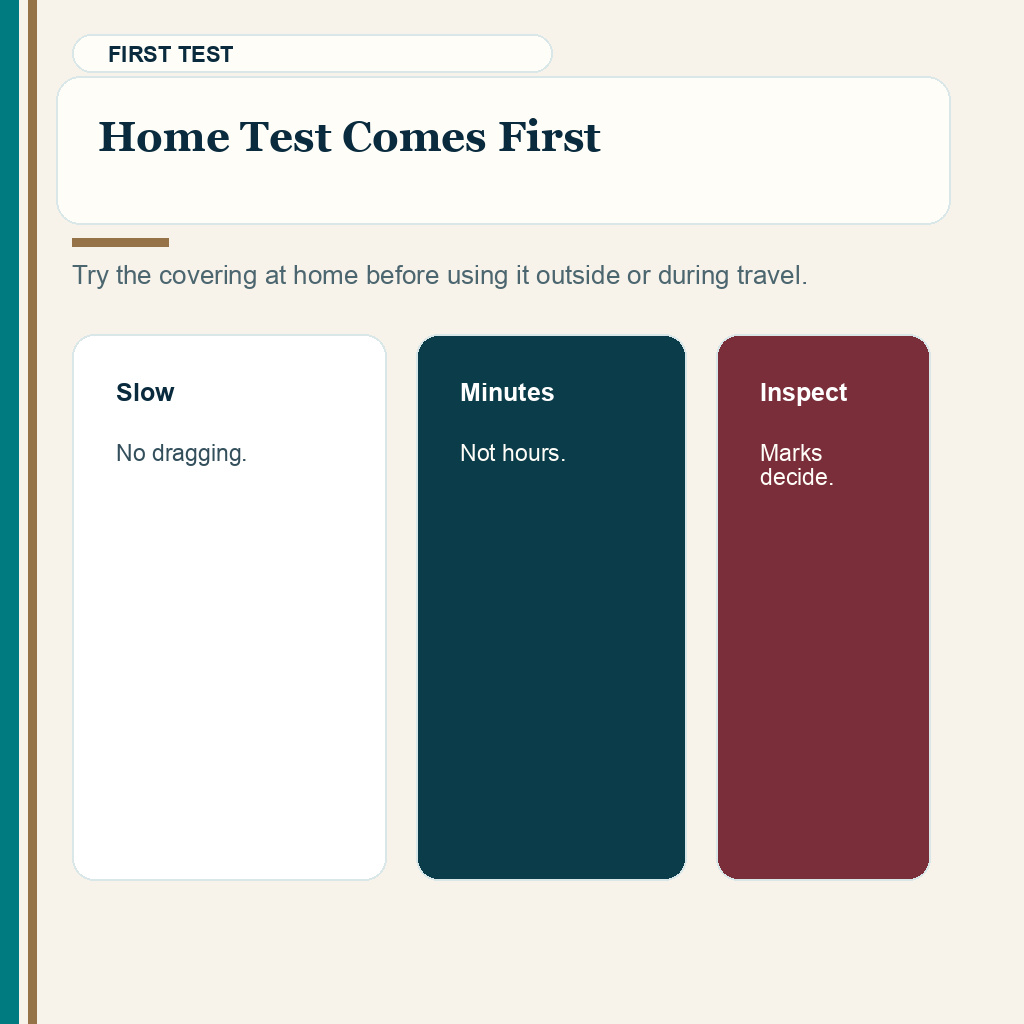
Before using any covering for longer, do a short home test. Put it on slowly, wear it for a few minutes, remove it slowly, and inspect the scalp in normal light. If you see a pressure line, fresh redness, wet crust, bleeding, stuck hairs, or new tenderness, the covering is not ready for that stage.
If your clinic gave stricter instructions, follow those instructions. Some clinics allow a carefully placed loose cap early. Others ask patients not to cover the recipient area for two weeks or longer. The difference often comes from technique, graft placement, shaving pattern, swelling, crusting, and the surgeon’s own postoperative protocol.
These 10 soft headwear slides separate fabric contact, tie pressure, timing, the home test, travel use, sweating, cleanliness, rubbing accidents, and gradual return. Swipe sideways, use the arrows one slide at a time, or choose a number below the image.
Mistakes that matter most in the first 10 to 14 days
During the first 10 to 14 days, avoid anything that needs to be pulled over the grafts or tightened around the recipient area. That includes tight bandanas, durags, elastic headbands, beanies, scarves tied over the hairline, hoodies that drag across the scalp, and any fabric you need to adjust repeatedly. If a prayer cap, scarf, or covering is part of your routine, connect that decision to prayer after hair transplant recovery rather than treating fabric as harmless.
Also avoid dirty or sweaty headwear. A cap worn all day at work, a bandana from a suitcase, or a hat used during exercise can irritate healing skin. If sweat is the main issue, start with sweating after hair transplant surgery. If the area already has pimples, pustules, or active inflammation, folliculitis and hair transplant surgery matters more than hiding the scalp.
The strongest early rule is to protect the grafts before appearance. The first week is temporary. A rubbed or infected area can create a longer problem than a few days of visible recovery.
Silk has limits after a hair transplant
Silk may glide better than rougher fabric, and that can be useful later in healing. But silk does not remove pressure. It does not make a tight knot gentle. It does not make a headband safe if it crosses new grafts. It only changes one part of the contact problem.
If you use silk after your clinic has allowed covering, keep it loose, freshly washed, dry, and brief. Do not tie it across the recipient line. Do not let it slide back and forth. Do not sleep in it unless your clinic specifically says it is acceptable for your case. During sleep, fabric can move without you noticing, especially if you are already using a neck pillow after a hair transplant or trying to keep your head elevated.
Satin bonnets, soft scrub caps, scarves, and fabric caps can help only when the fit is safe. The material can help, but the fit decides the risk.
Hiding the transplant while travelling
Travel is often when the covering question becomes urgent. Airports, flights, hotel lobbies, and public transport make the early appearance harder to ignore. The temptation is understandable, especially if you are travelling home around day 5 to day 10.
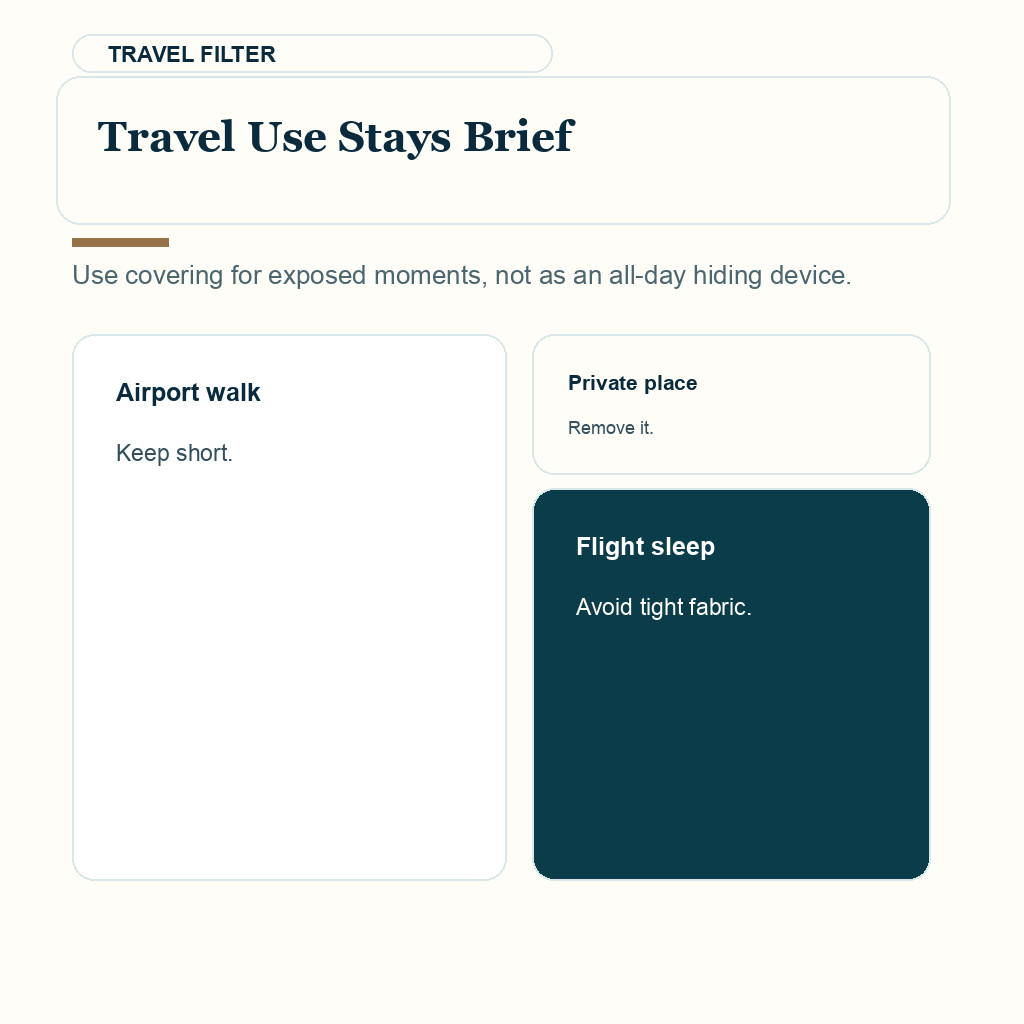
For travel, think in layers of risk. If you can avoid covering during the earliest days, that is often cleaner. If you must cover, choose the loosest option that does not touch or slide across the grafts. A structured, loose bucket hat or clinic approved cap is usually more predictable than a tied bandana. Practice once at home before the airport, then put it on slowly in front of a mirror. Place the front edge below or away from the recipient area, then settle the back without dragging fabric over the grafts. When a hijab, turban, scarf, or similar covering cannot be skipped, use the hijab and turban recovery guide to decide whether the journey can be done in short, loose windows.
Use the covering for the exposed part of travel, not as a full day hiding device. Remove it in a clean private place when possible, let heat and sweat settle, and check that the fabric has not shifted. Carry a spare clean covering if the first one becomes sweaty. Do not sleep in a bandana, durag, or tight cap during the flight unless your clinic has specifically cleared that plan.
If you are flying after surgery, protect the grafts from bumps, overhead bags, tight headrests, accidental hand contact, and airport security after hair transplant. For an office, clinic, shop, or role that involves meeting patients or customers, work after a hair transplant in public should be planned around visibility, swelling, and graft protection together.
Headwear can increase sweating, pimples, or irritation
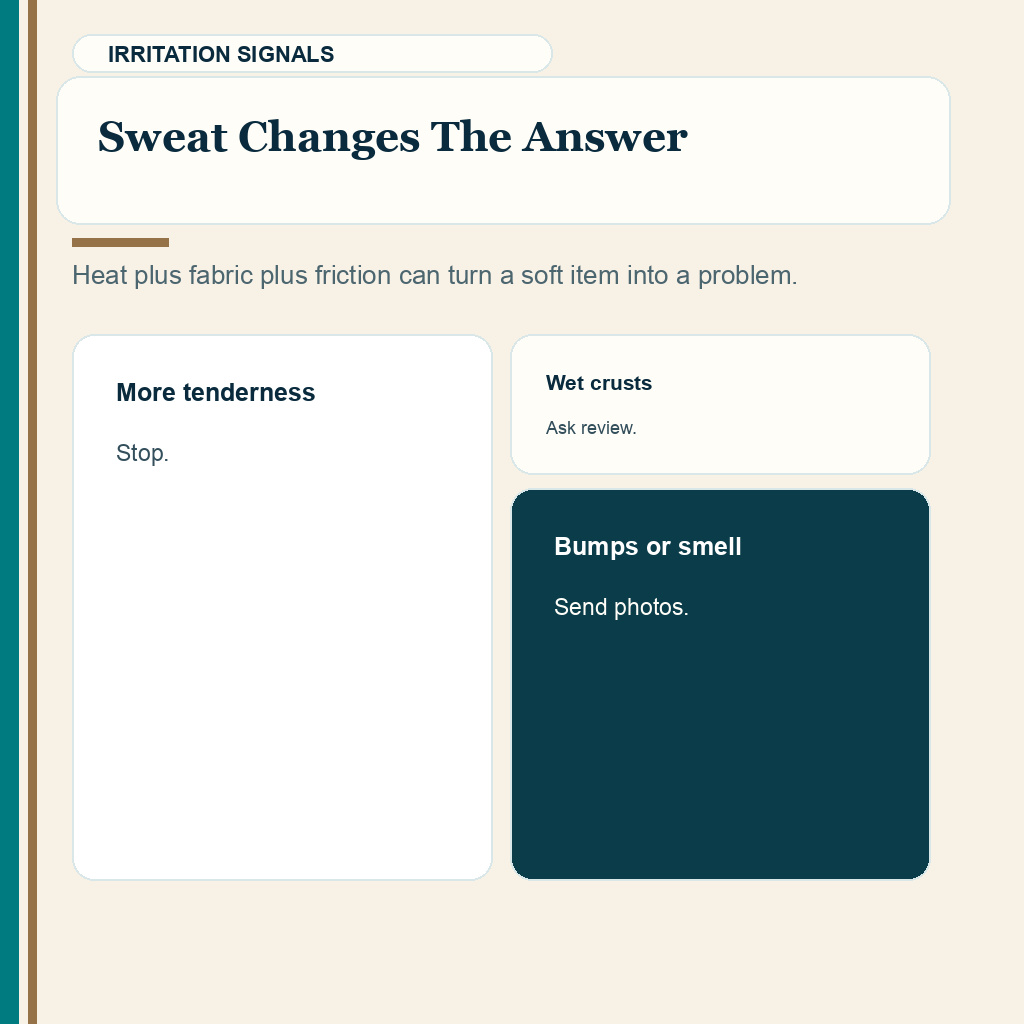
It can. A soft covering can trap heat. Heat can increase sweating. Sweat plus fabric plus friction can irritate healing skin, especially if the material is dirty or worn for many hours. This does not mean every short period of loose headwear causes a problem. It means long, sweaty, tight wear deserves caution.
Watch for warning signs that the covering is not working for you. These include increasing tenderness, new clusters of bumps, wet crusting, foul smell, spreading redness, pus, or pain that is getting worse instead of settling. If these appear, stop covering the area and ask for clinic review. Do not try to solve irritation by hiding it under more fabric.
Sun protection is another reason patients want headwear. That is valid, but direct sun and pressure are two separate problems. A loose hat may help outdoors, while sunscreen usually waits until the skin has healed enough for your clinic to allow it. I treat sun exposure after hair transplant surgery as a separate decision from pressure and friction.
Handling fabric near the grafts
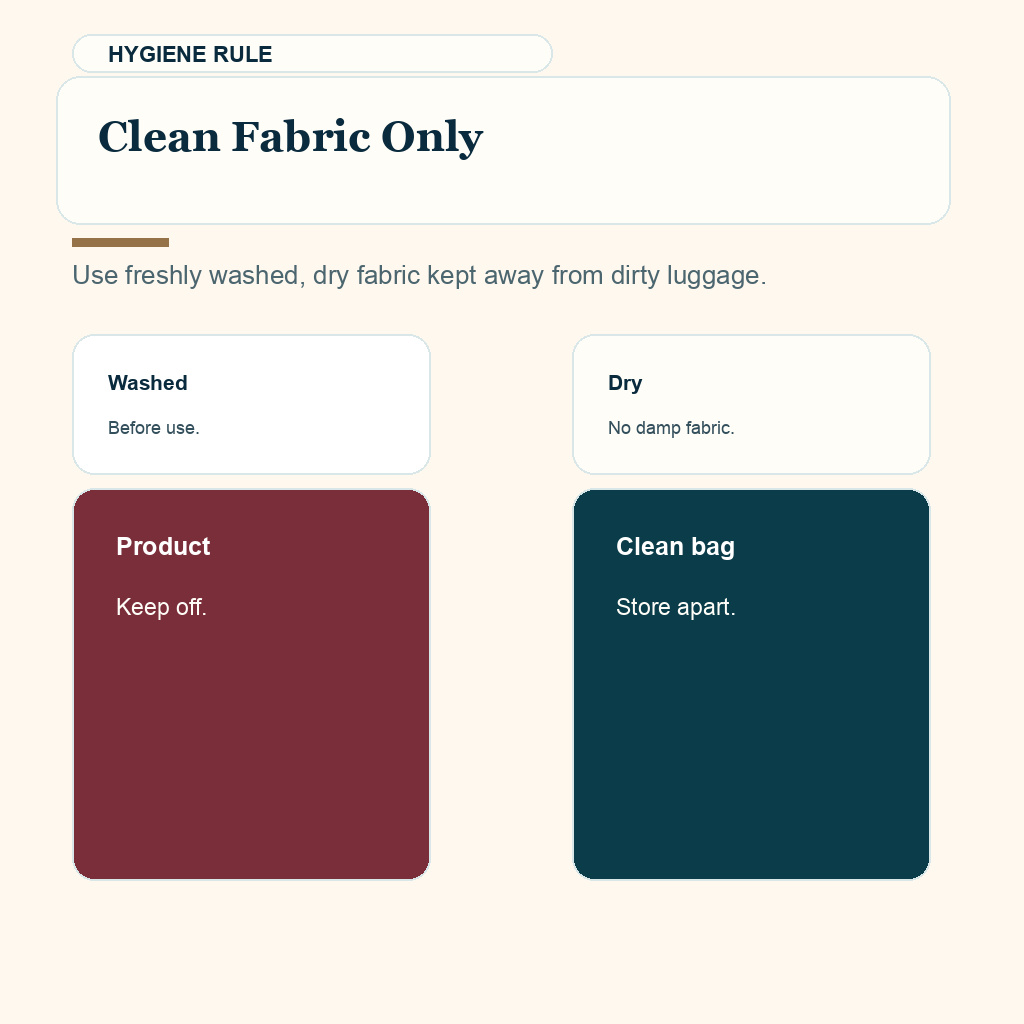
Use only clean fabric. Wash the covering before use. Let it dry completely. Avoid perfume, styling product, hair fiber, makeup, or oil on the fabric. If you sweat in it, wash it again before using it near the healing scalp.
A used covering should not sit directly against the healing scalp. Keep the clean item in a separate bag, and make sure detergent is fully rinsed out. Fragrance, sweat, hair product, and dust can all turn a soft item into an irritant.
Put the covering on with both hands and in front of a mirror. The movement matters. A loose item can still cause friction if you drag it backward over the hairline. Remove it slowly as well. If the fabric catches on crusts, hairs, or sticky healing skin, stop and loosen it rather than pulling.
If a bonnet, scarf, or soft cap has to be peeled away from crusts, it is not safe headwear yet. Lift it off in the easiest direction and leave stuck crusts alone. Use that item again only after the crusts release or your clinic has reviewed the timing.

Before fabric touches the scalp, check cleanliness, movement, heat, sweating, pressure, and clinic timing.
Fabric cannot replace washing instructions. Gentle washing, crust management, and timing should follow washing hair normally after a hair transplant.
After covering touches or rubs the grafts
If fabric touches the grafts, stop using the covering and look once in good light. Brief contact does not mean the result is ruined. Look for bleeding, a graft with tissue attached, new pain, wetness, swelling, or a simple surface brush.
If fabric contact causes bleeding, visible graft loss, increasing pain, or a concerning change, send your clinic focused photos in good light. Include when the fabric touched the scalp, the covering type, and whether the area looks different from surrounding grafts. If the contact was light and the area looks unchanged, observation and gentler handling are usually enough. Use the photo and symptom check in touching grafts after a hair transplant before treating every brush of fabric as graft loss.
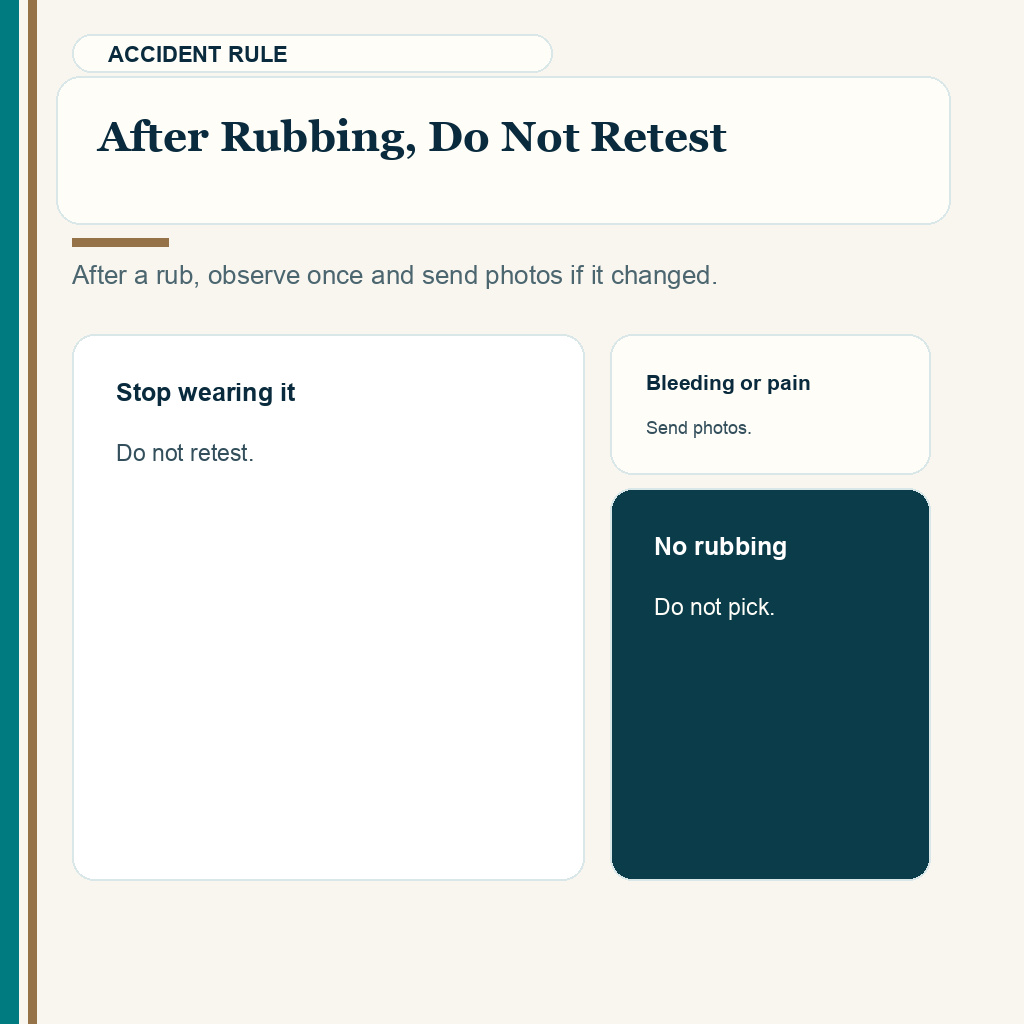
Rubbing the area to test graft security can create more harm than information. Picking crusts or repeatedly taking the covering on and off creates another avoidable irritation. One small accident should lead to more caution, not repeated experiments.

After fabric touches grafts, judge what changed rather than rubbing or retesting the area.
Normal headwear after the early healing period
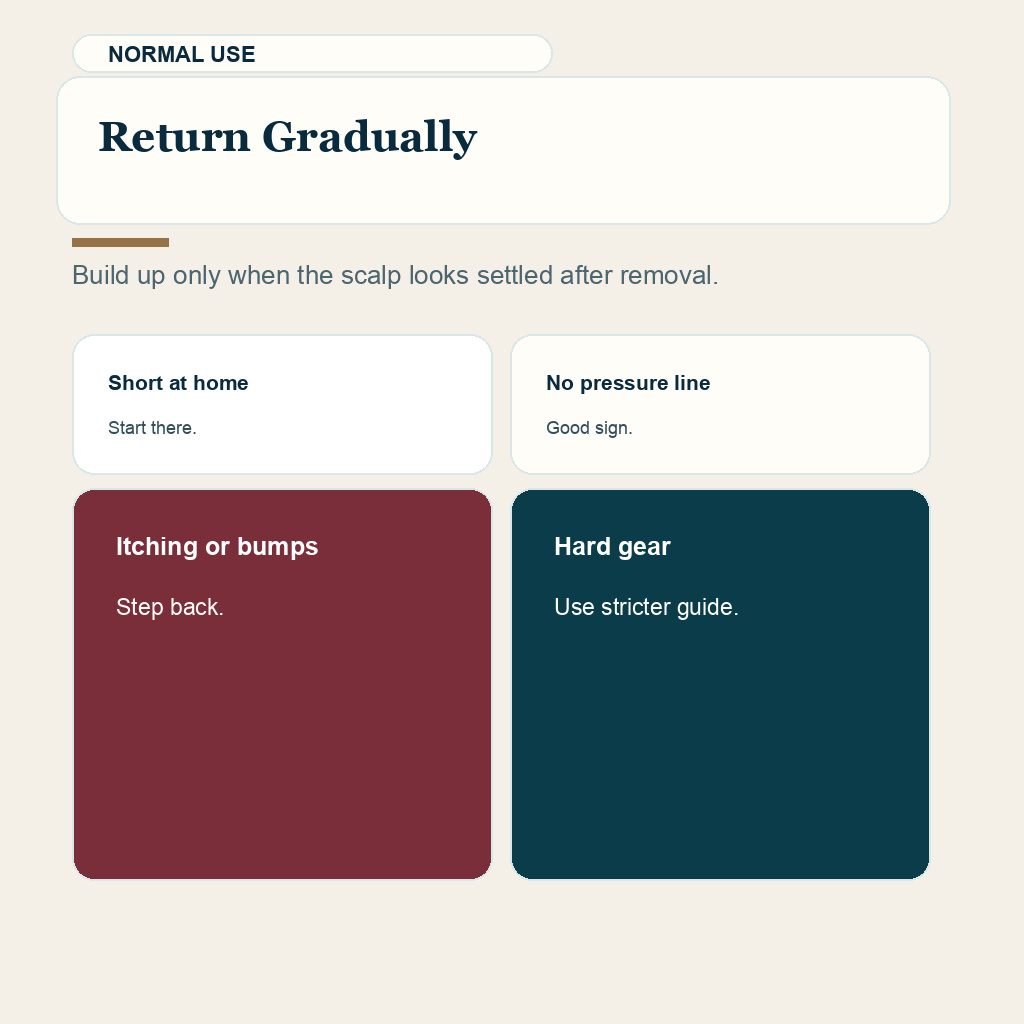
Return gradually. Start with a clean, loose covering for a short period at home. If the scalp feels comfortable and looks settled afterward, you can slowly increase the time. If you notice pressure marks, itching, sweating, pimples, or rubbing, step back.
Comfort while the item is on is only part of the test. The scalp after removal matters more. A covering that feels comfortable but leaves a line across the grafted area is still too much pressure.
For bucket hats, make sure the crown does not collapse onto the grafts. For bandanas, avoid tight folds over the hairline and keep the knot away from sensitive donor or recipient areas. For durags, wait until your clinic allows closer fabric contact and avoid strong tension. For headbands, be especially careful if they cross frontal grafts. For helmets, hard hats, or other heavy headwear, use the helmet guidance rather than soft headwear timing.
Clothing also matters. Pullover hoodies, sweaters, and tight collars can drag across the grafts even when your hat choice is careful, so include what to wear after hair transplant surgery in the same recovery plan.
Details that matter most when judging soft headwear
I judge soft headwear by contact, pressure, movement, hygiene, sweating, and timing rather than by the name of the item.
If you are early in recovery, choose no covering when possible. If covering is necessary, choose the loosest clean option, wear it briefly, and keep it away from the grafted area. If your clinic gave a stricter rule, follow the stricter rule. The first two weeks are not the time to prove that a fabric item is probably fine.
The best covering barely touches the grafts. When that cannot be achieved, waiting is usually better. Appearance improves quickly. Donor and recipient healing deserve more patience than a social outing, airport walk, or short embarrassment.