


Hair Transplant Death Risk and Safety Screening
A death around hair transplant surgery is very rare, but the risk cannot be treated as zero. I answer this directly because the fear is real. The danger usually comes from poor screening, unsafe anesthesia dosing, casual sedation, hidden medical history, weak ECG or chest imaging before surgery, or a clinic that ignores warning signs instead of delaying surgery.
A hair transplant is elective surgery. It involves local anesthesia, thousands of small skin openings, several hours in the chair, medication decisions, blood pressure changes, bleeding control, travel planning, and early wound healing. For a healthy person with stable medical history and a sensible graft plan, that is usually manageable. Low risk, however, is not the same as no risk.
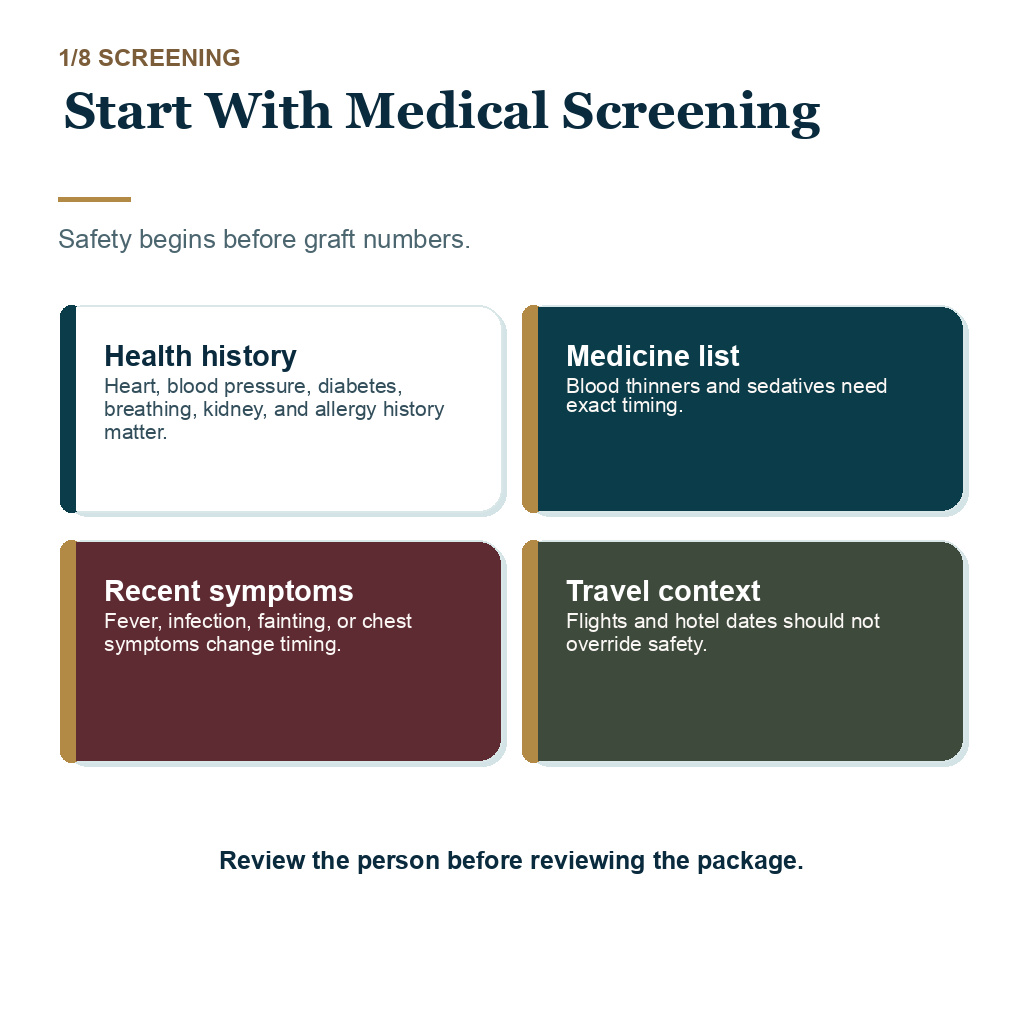
Before travel, write down heart or breathing problems, fainting or seizure history, medication allergies, blood pressure medicines, and any past reaction to anesthesia or sedatives. A safety review is only useful when the uncomfortable details are visible before the surgery day.
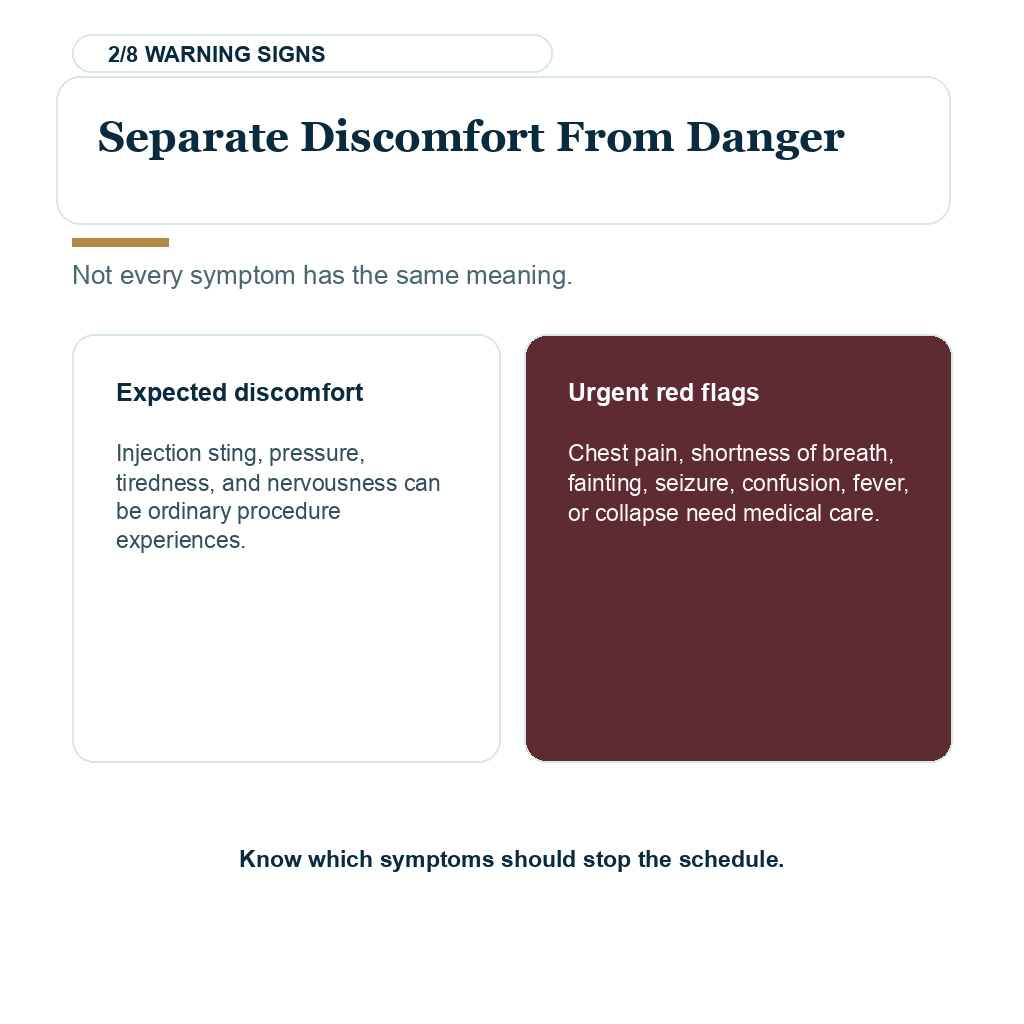
For safety, I separate normal procedure discomfort from medical warning signs. Stinging injections, nervousness, pressure, and tiredness are different from chest pain, shortness of breath, fainting, seizure, confusion, uncontrolled blood pressure, fever, or a reaction to medication. My job is to separate those situations before they become urgent.
Death from a hair transplant is possible but very rare
Death is possible with almost any medical procedure, even one that is normally low risk. Hair transplant surgery is not major heart surgery, and it is usually done with local anesthesia while you breathe on your own. That makes the risk profile very different from major surgery under general anesthesia.
Still, the operation should never feel casual. The serious cases usually begin before the first graft is placed. A medical history is missed, a medicine is stopped without the prescribing doctor, blood pressure is not controlled, sedation is used too casually, anesthesia dosing is not respected, or a long procedure is treated like a beauty appointment instead of surgery.
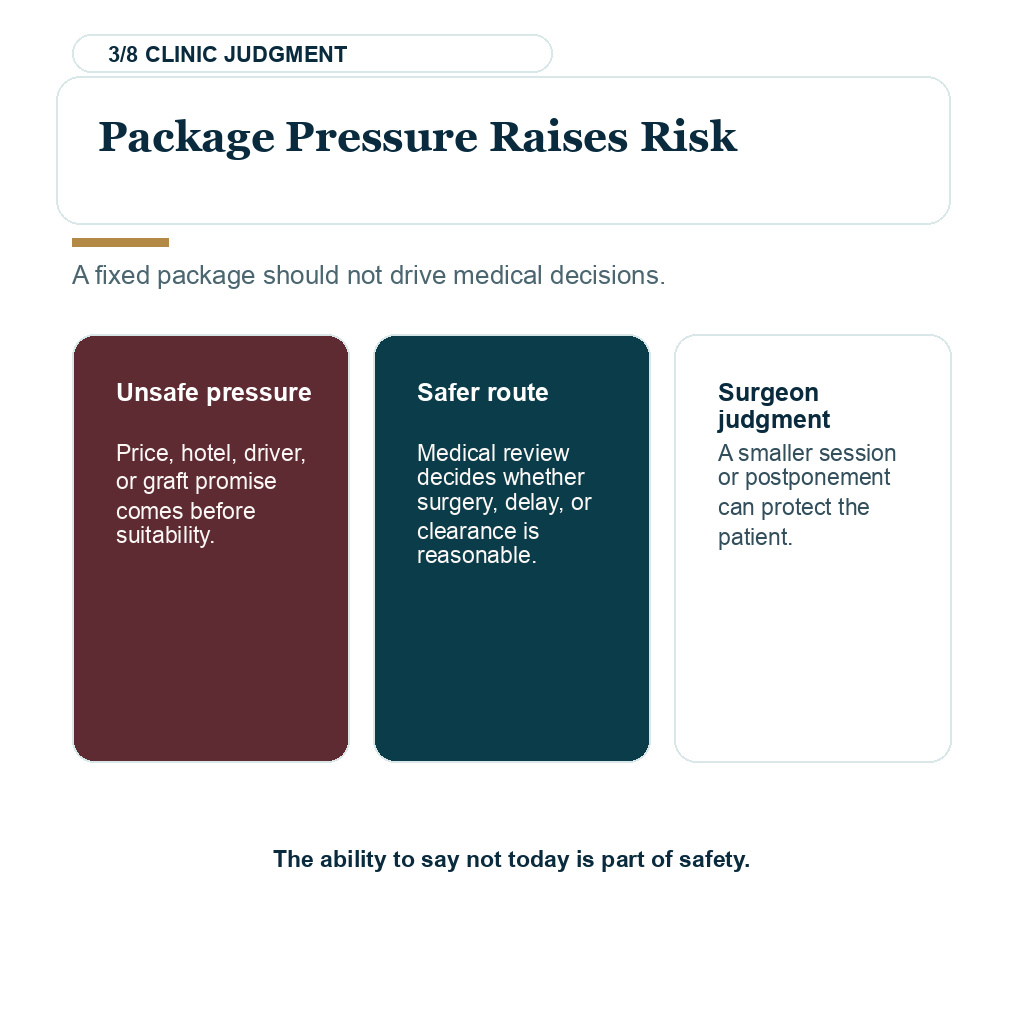
At Diamond Hair Clinic, I review the person before I review the number of grafts. Age, blood pressure, heart history, diabetes, kidney disease, breathing problems, allergies, previous anesthesia reactions, blood thinners, infection risk, and travel plans can all change the decision. Some people can proceed. Some need medical clearance. Some should wait. The ability to say “not today” is part of safety, not a failure of planning.
Safety problems usually start before graft placement
A hair transplant becomes more dangerous when a clinic treats it as a fixed package instead of a medical decision. The graft number, price, hotel, driver, and marketing promise should not come before medical suitability. Your body has to tolerate a long day, local anesthetic, adrenaline when used, bleeding control, still positioning, anxiety, and the first days of healing.
The warning signs I take seriously are uncontrolled blood pressure, unstable heart disease, recent heart attack or stroke, poorly controlled diabetes, serious kidney or liver disease, severe asthma or sleep apnea, active infection, fever, unexplained chest pain, new shortness of breath, fainting history, medication changes made without the prescribing doctor, and any history of a serious reaction to anesthesia.
These findings do not make a transplant impossible by themselves. They mean the conversation has to become medical before it becomes cosmetic. The answer may be written clearance, a smaller session, or postponement until the condition is stable.
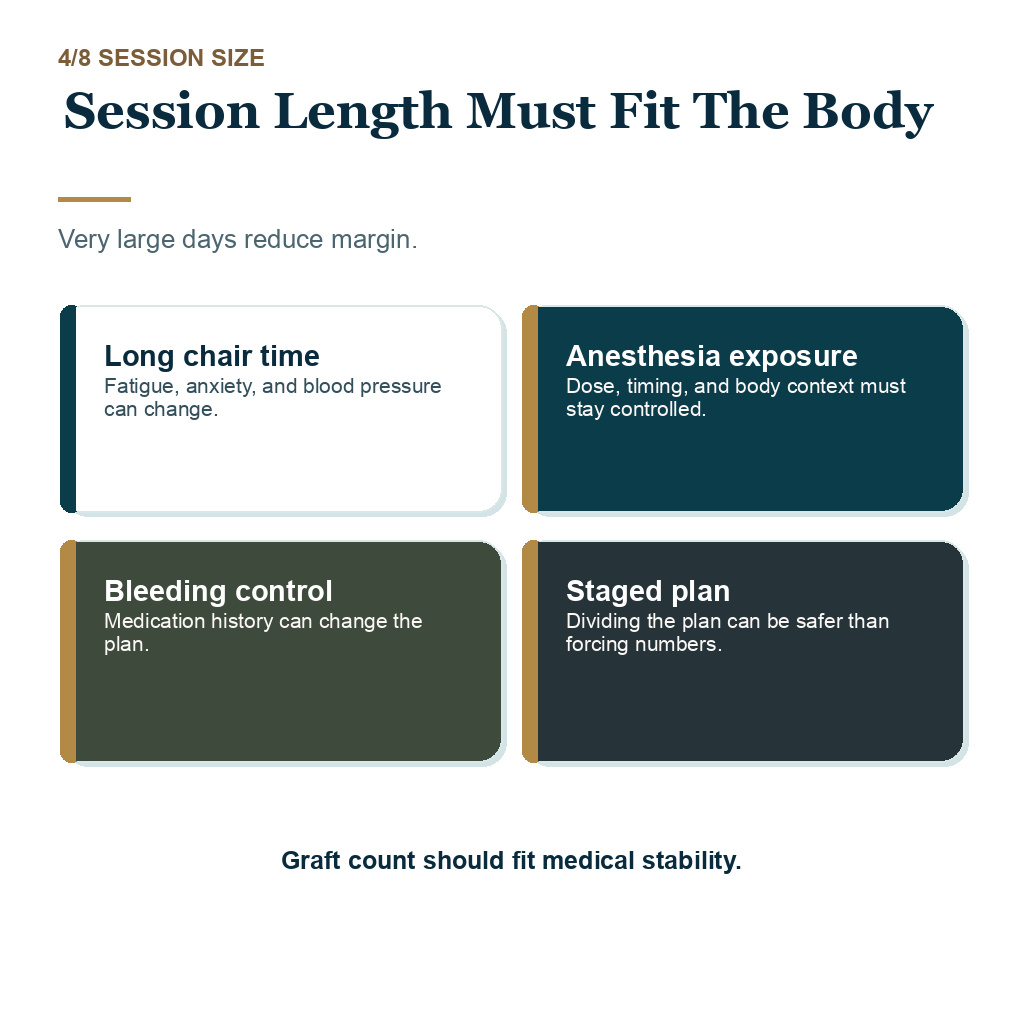
Procedure length matters too. Very large sessions can mean more anesthesia exposure, more fatigue, more time for blood pressure or anxiety to change, and less margin if the day becomes difficult. Dividing the plan or reducing the graft number can be safer than forcing everything into one session because a package promised a large number.
The graft count should fit the body, not the other way around. A measured session planned around medical stability is different from a session that keeps expanding because the sales promise has already been made.
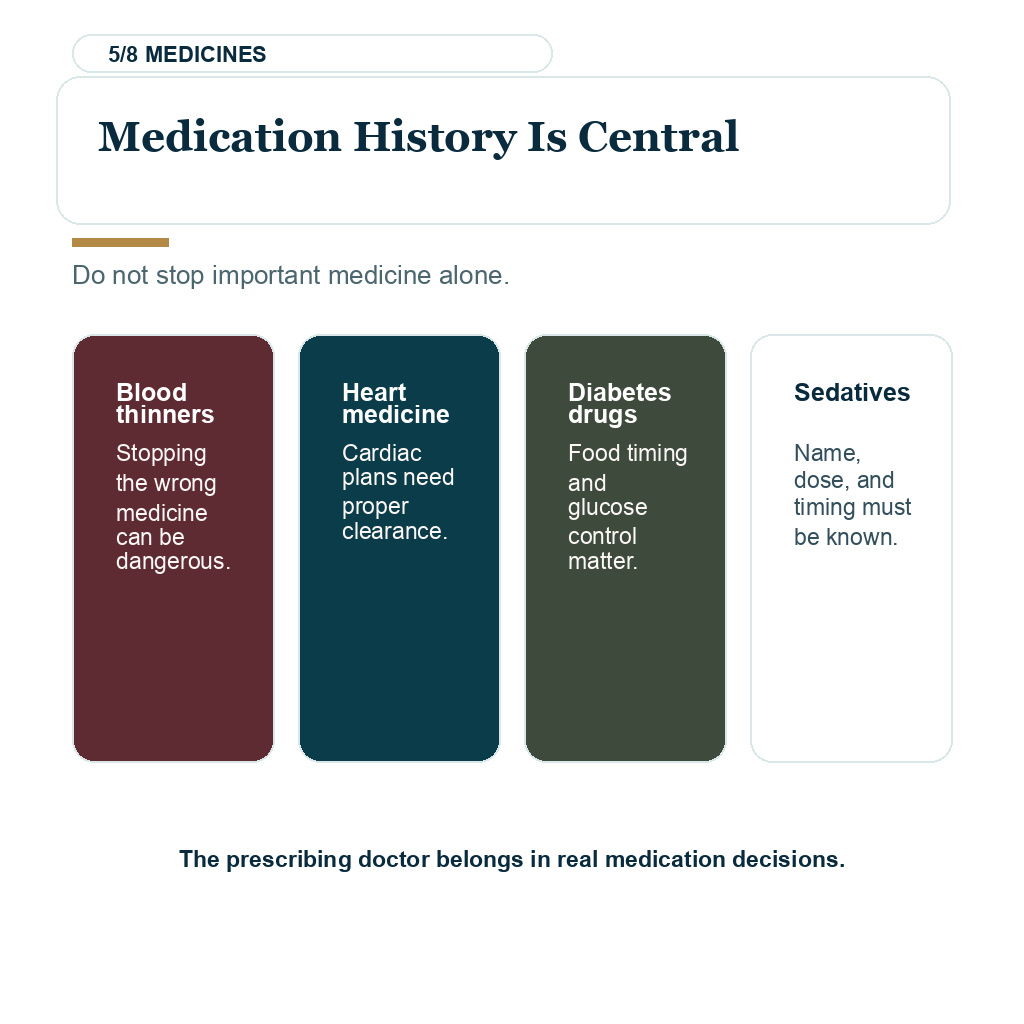
Medication history is one of the clearest examples. If you take blood thinners before a hair transplant, you should never stop them alone just to make bleeding easier for the clinic. Stopping the wrong medicine can be more dangerous than extra bleeding. The prescribing doctor and the operating doctor need to agree on the plan.
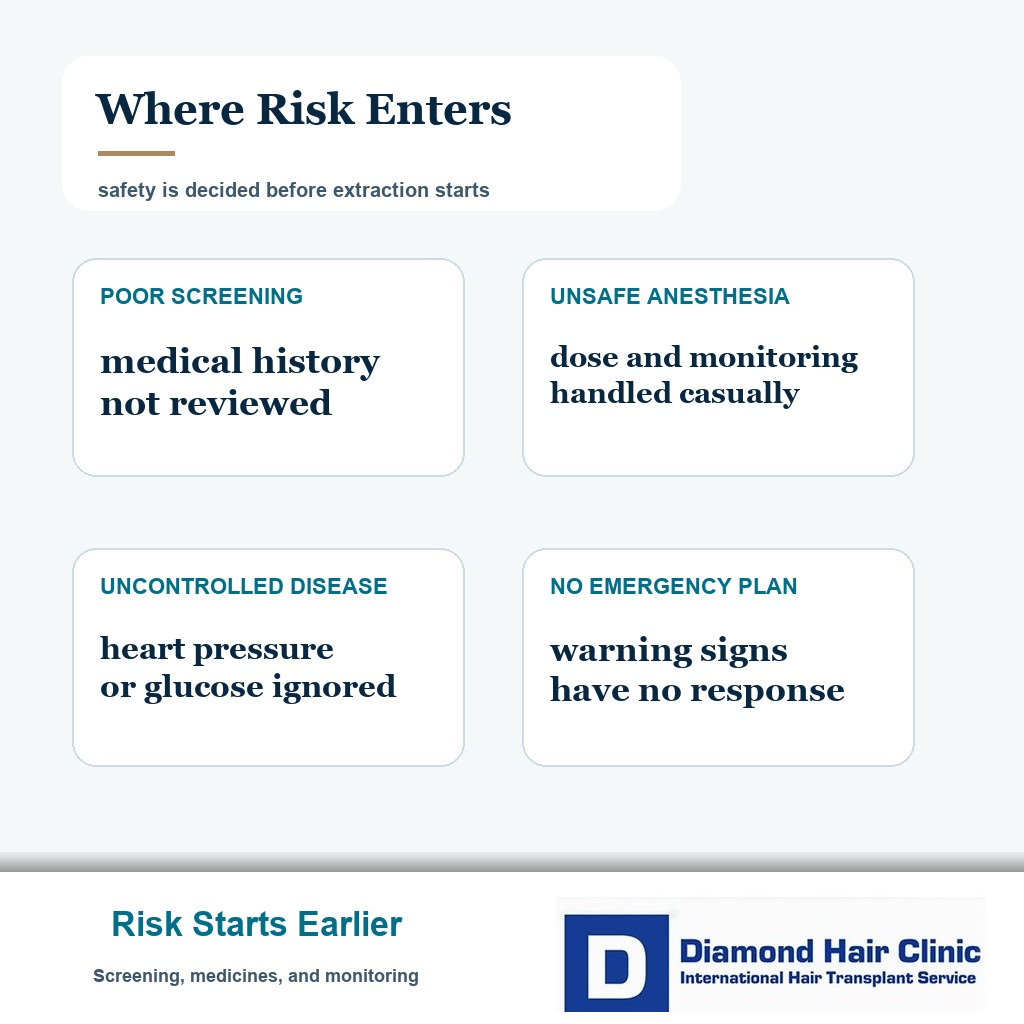
Safety problems usually begin before the first graft is placed, when screening, medication review, or anesthesia planning is weak.
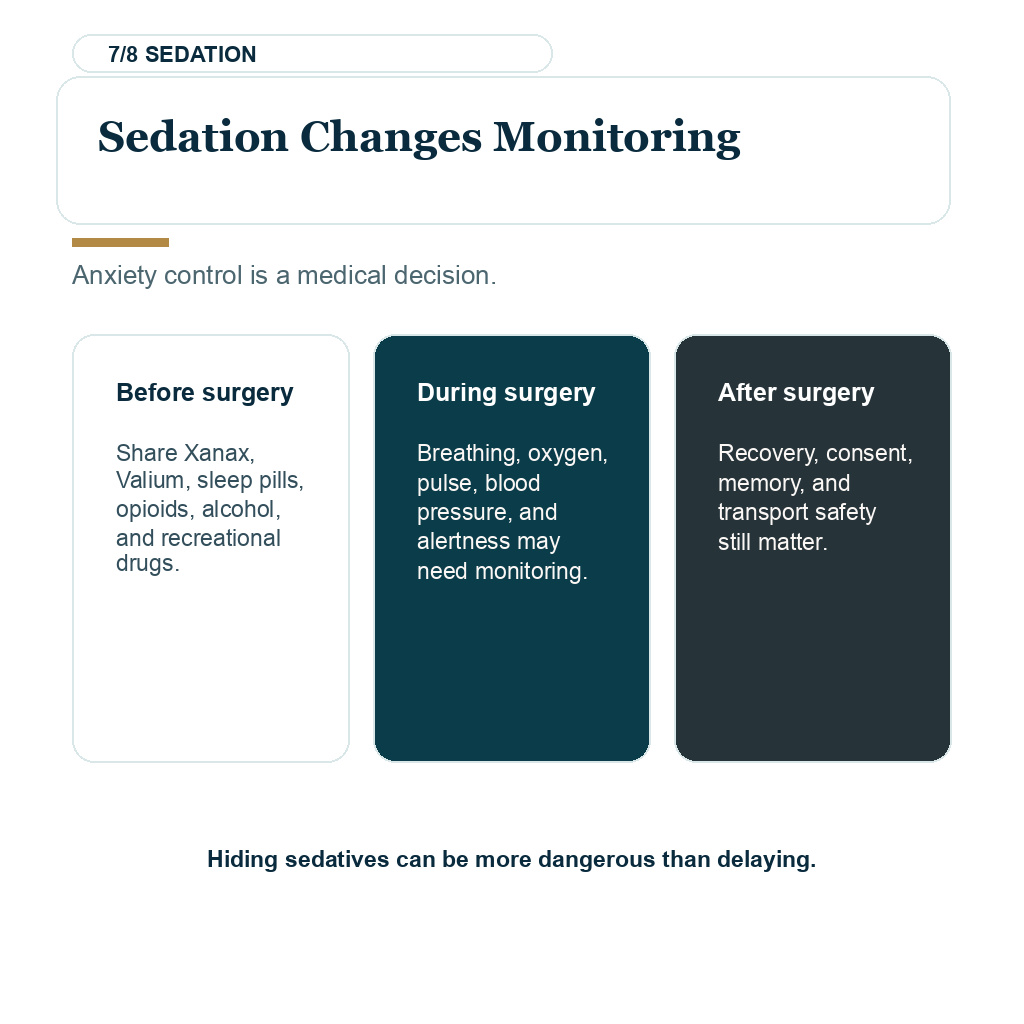
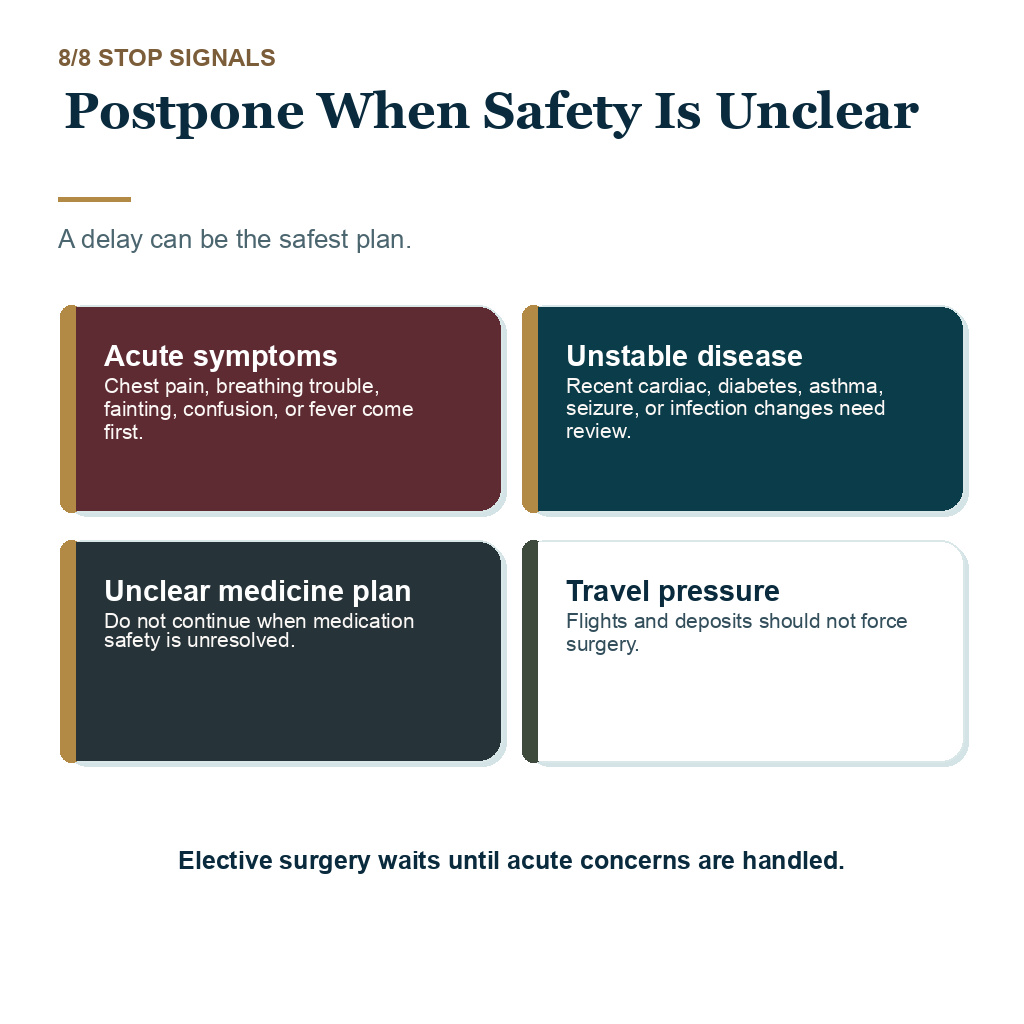
These 8 safety review slides keep rare serious risk in context by separating medical screening, warning signs, package pressure, session length, medication history, anesthesia control, sedation monitoring, and travel timing. Swipe sideways, use the arrows one slide at a time, or choose a number below the image.
Local anesthesia needs dose control and monitoring
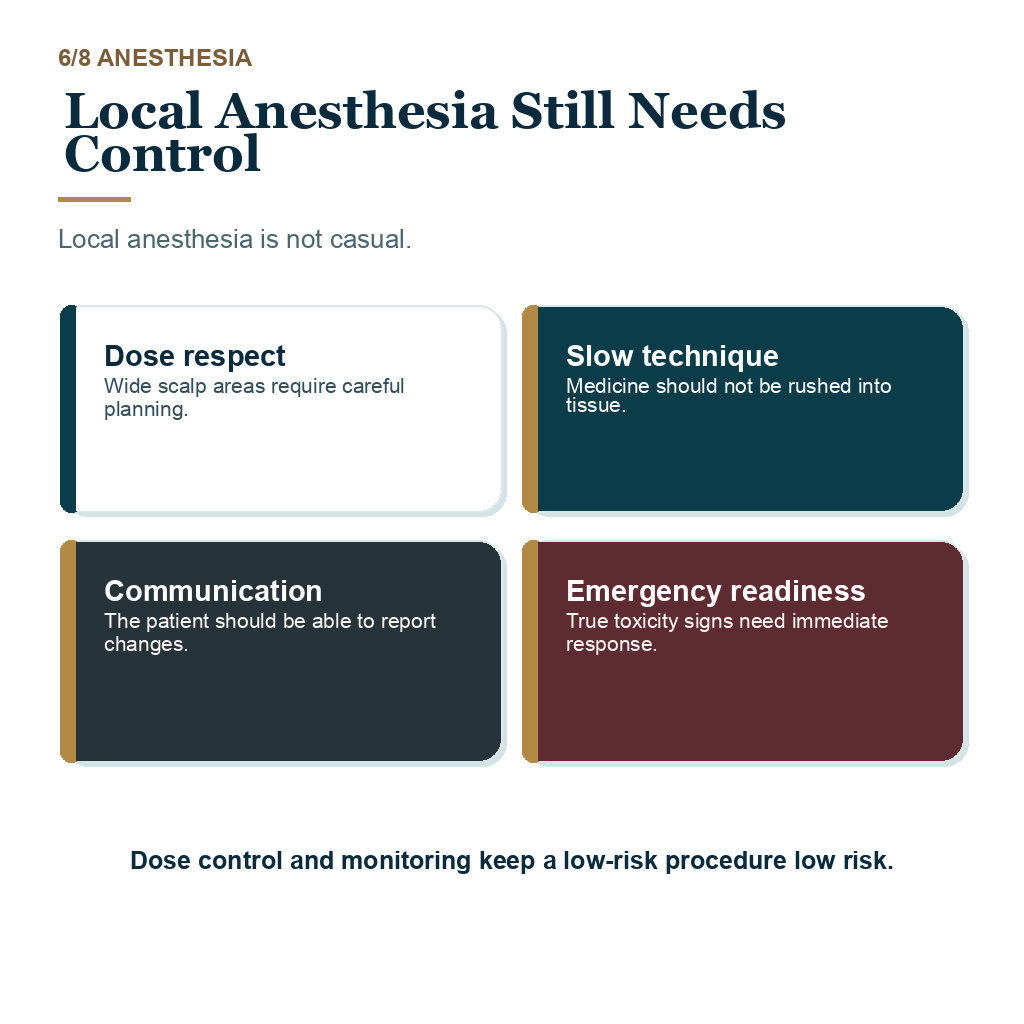
Local anesthesia is one reason hair transplant surgery is usually safer than operations that require general anesthesia. You remain awake, breathe independently, and can be monitored through the procedure. But local anesthesia still needs dose control, slow technique, timing control, and medical judgment.
The scalp has a rich blood supply, and a hair transplant can require anesthesia across a wide area. Serious toxicity is rare, but it can affect the nervous system and the heart if dosing is unsafe, if medicine enters the bloodstream too quickly, or if medical risk factors are ignored. Warning signs such as metallic taste, ringing in the ears, dizziness, confusion, twitching, seizure, abnormal rhythm, breathing trouble, or collapse need immediate medical response.
A brief sting from injections, pressure, or a short racing heart feeling after adrenaline belongs in a different category from a true toxicity emergency. Adrenaline in hair transplant anesthesia can be useful when it fits the medical history and is used carefully. Needle phobia before a hair transplant deserves patience and technique, not careless extra medication.
Pain control is not only comfort. It is part of surgical safety. The scalp needs to be numb, the bleeding controlled, the dose respected, and the person in the chair able to communicate if something feels wrong.
Sedation and anxiety medicine can change the risk
Anxiety medicine, sedatives, alcohol, sleep pills, antihistamines, opioid pain medicine, and recreational drugs can change breathing, alertness, blood pressure, consent, memory, transport safety, and how you respond during a long procedure. Even when the main operation uses local anesthesia, these details still matter.
If you take Xanax, Valium, another benzodiazepine, a sleep tablet, opioid pain medicine, or alcohol before surgery, the clinic needs the exact name, dose, and timing. Xanax or Valium before a hair transplant is a separate medication decision. Hiding sedation to get through anxiety can create more danger than delaying and planning the procedure properly.
Light, selected anxiety control is different from being kept deeply asleep. Once sedation is used, the clinic must be ready to monitor breathing, oxygen level, pulse, blood pressure, responsiveness, and recovery. If sedation is being offered mainly to make a rushed or unsafe day continue, the surgery should wait.
Medical clearance is needed when health risk is unclear
Medical clearance is not paperwork for the clinic file. It is a way to decide whether your body is stable enough for a long elective procedure. A delay is safer than pushing through when the warning signs are already visible.
If you have heart disease or a stent before hair transplant, the plan has to respect cardiac risk and medication safety. If you have high blood pressure before hair transplant, control matters more than a single nervous reading on surgery morning.
If you have diabetes before hair transplant, glucose control, wound healing, infection risk, food timing, and medicine timing all need attention.
Other conditions can also change the decision. Kidney disease and hair transplant planning may affect medication choices and clearance. Asthma before a hair transplant requires stable breathing and access to the right inhalers.
Epilepsy before FUE needs seizure control, medication timing, and trigger planning. HIV or hepatitis before a hair transplant needs appropriate documentation and infection control discipline.
The same safety thinking applies to fever, active chest infection, severe allergy flare, uncontrolled thyroid disease, recent surgery, fainting episodes, unexplained leg swelling, recent emergency visits, or new symptoms that have not been assessed. Do not hide these details because flights and hotel plans are already arranged. The clinic should make it easy to speak openly before the day becomes complicated.
Travel risk depends on planning and timing
Travel itself does not make a hair transplant unsafe. Poor travel planning can. I do not see Istanbul or Turkey as the issue. Risk rises when a patient arrives exhausted, dehydrated, anxious, medically unreviewed, or pressured to continue because flights, deposits, and hotel dates are already fixed.
For most healthy adults, travelling for a hair transplant carries a different risk profile from major body surgery. Long flights, poor sleep, dehydration, smoking, previous clot history, recent surgery, leg swelling, language confusion, and unclear follow up all change that risk.
Medical tourism can hide risk when the clinic focuses only on package details. A hotel transfer and a low price do not replace medical screening. If you are comparing hair transplant packages in Turkey, ask who evaluates medical suitability, who designs the surgical plan, who administers or supervises anesthesia, and who decides to stop if the day is not medically suitable.
Flying soon after surgery also needs common sense. Many people travel safely after proper review, but travelling alone to Turkey for a hair transplant leaves less room for vague instructions. You need medication timing, meals, swelling guidance, luggage support, direct follow up, and a clear plan for unexpected symptoms.
Many serious safety decisions happen before extraction begins. They happen in the preoperative conversation, medical history review, blood pressure check, anesthesia plan, and willingness to delay when needed.
A safer clinic treats medical clearance, anesthesia discipline, and emergency readiness as part of the hair transplant plan.
Real safety includes the option to stop. If monitoring shows a problem, the team should be willing to postpone, shorten, or stop the procedure rather than treating the date as fixed.
Decision points before committing
Ask who will evaluate your medical history before you travel. Ask whether you should send a medication list, diagnosis list, allergy history, blood pressure readings, recent blood tests, or specialist letters. Ask what would make the clinic postpone surgery. If postponement reasons are vague, the clinic may be more focused on completing the booking than protecting the decision.

Ask who gives the anesthesia and who monitors you during the procedure. Ask whether the clinic uses local anesthesia only, light sedation, or any stronger medicine. Ask how dose is calculated and whether emergency equipment and trained medical staff are available. You do not need a lecture in pharmacology. You do need to know that the clinic has a real system.
Ask what happens if your blood pressure rises, you feel chest tightness, you become short of breath, you faint, or you show signs of local anesthetic toxicity. The answer should describe a practical response, not only say that nothing will happen.
Ask how many operations happen at the same time. A long hair transplant needs attention. If several people are being moved through rooms like a production line, the risk is also medical, not only aesthetic. Subtle changes in bleeding, blood pressure, breathing, pain, dizziness, or panic can be missed.
Ask what follow up looks like after you leave the clinic. If increasing pain, spreading redness, discharge, fever, fresh bleeding, or dark skin changes appear, there must be a clear contact route. The same plan should name how urgent medical help is reached if a clinic issue becomes more than a recovery question. Clear contact details matter, but so does knowing where care escalates when a warning sign cannot wait. Infection after a hair transplant warning signs and black scabbing and necrosis warning signs need quick review instead of silence.
Surgery should be postponed when risk is not controlled
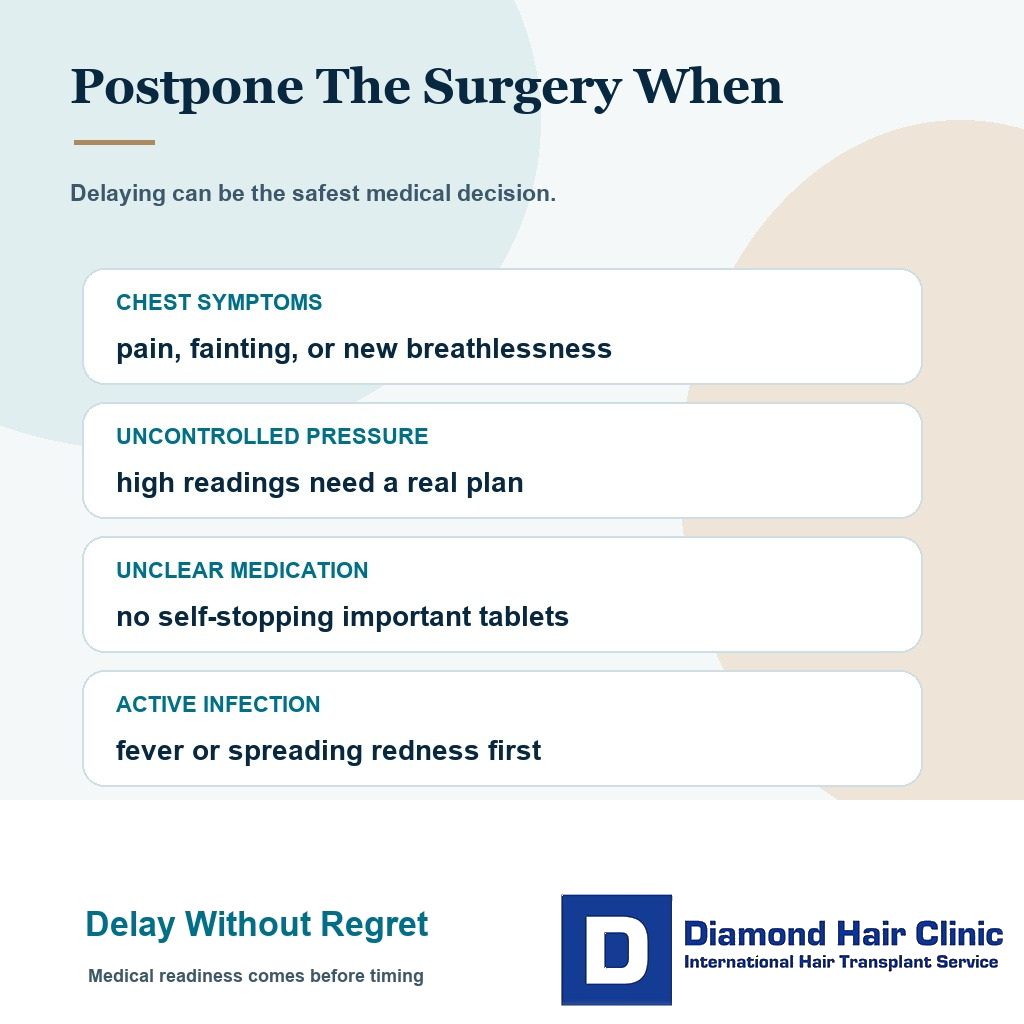
Postponement is not failure. It is often the correct medical decision. If you have uncontrolled blood pressure, chest pain, shortness of breath, fever, active infection, uncontrolled diabetes, recent cardiac symptoms, unexplained fainting, new neurological symptoms, or a medication plan that has not been cleared, the surgery should wait.
The same applies if you have been told to stop an important medicine without the prescribing doctor being involved. A clinic should not make you choose between hair and heart, hair and stroke prevention, or hair and safe breathing. The transplant can be rescheduled. A serious medical event may not be reversible.
There are practical reasons to pause too. Severe sleep deprivation, dehydration, intoxication, active vomiting, inability to understand instructions, or anxiety so strong that cooperation is impossible can make a long procedure unsafe. The question is not blame. The question is whether the day can be completed with clear thinking, safe anesthesia, steady monitoring, and reliable aftercare.
Judging whether the clinic is safe enough
Safety is visible in the clinic’s behavior before surgery. A clinic with real medical discipline asks medical questions before discussing large graft numbers. It does not promise that everyone is suitable. Donor capacity, procedure length, anesthesia, medicine handling, and follow up all belong in the same safety discussion.
Look for clear surgeon involvement. The surgeon should not appear only as a name on a website. The doctor responsible for the plan should understand your medical history, hair loss pattern, donor area, and realistic limits. That becomes even more important when there are medical risk factors or a very large session is being offered.
Also listen to how the clinic talks about complications. A trustworthy answer does not say “nothing can happen.” It explains what is unlikely, what is possible, which warning signs matter, and how the team responds. Hair transplant surgery is safer when the clinic respects the procedure before it becomes urgent.
Fear needs screening, not panic
My answer in consultation is plain. A properly planned hair transplant is usually a procedure with low risk, but it is not free of risk. Death is very rare. The path away from danger is real screening, careful anesthesia, controlled procedure length, medication coordination, clear communication, and accurate postponement when your body is not ready.
The most dangerous hair transplant is not always the cheapest one or the most expensive one. It is the one where nobody takes responsibility for the medical decision. If a clinic cannot explain who evaluates you, who gives or supervises anesthesia, who monitors you, who stops the procedure, and who helps you after surgery, the answer is already too weak.
If you are healthy, medically stable, properly screened, and treated in a surgeon led setting with a sensible graft plan, the fear of death should not dominate the decision. If there are warning signs, unstable disease, unclear medicines, or pressure to proceed quickly, waiting is the safer decision. Hair restoration should never require ignoring a medical warning.