


Air Travel During Graft Recovery
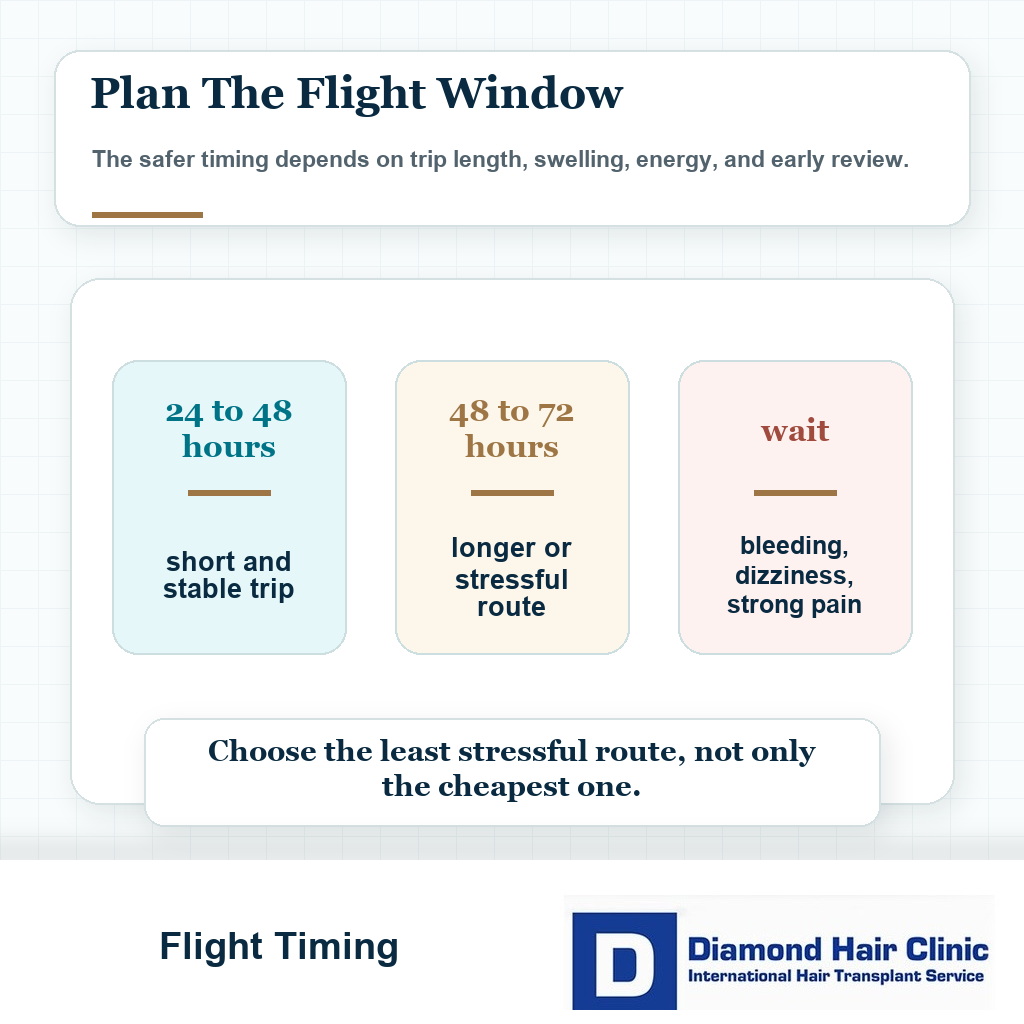
Most medically stable patients can fly after a hair transplant. A short, stable trip is usually more reasonable after 24 to 48 hours, while 48 to 72 hours is better if the flight is long or you feel swollen, tired, or anxious. The airplane itself is not usually the main danger, but a cold or flu before a hair transplant trip can change whether travel should happen at all. The real risks are bumping the head, rubbing the recipient area, lifting heavy luggage, sleeping poorly, becoming dehydrated, and leaving before a surgeon has checked that the early healing looks normal. If a face mask is part of that journey, plan it as carefully as luggage and headrest contact. Use the mask strap pressure plan after FUE to keep pressure away from grafts and donor skin during travel.
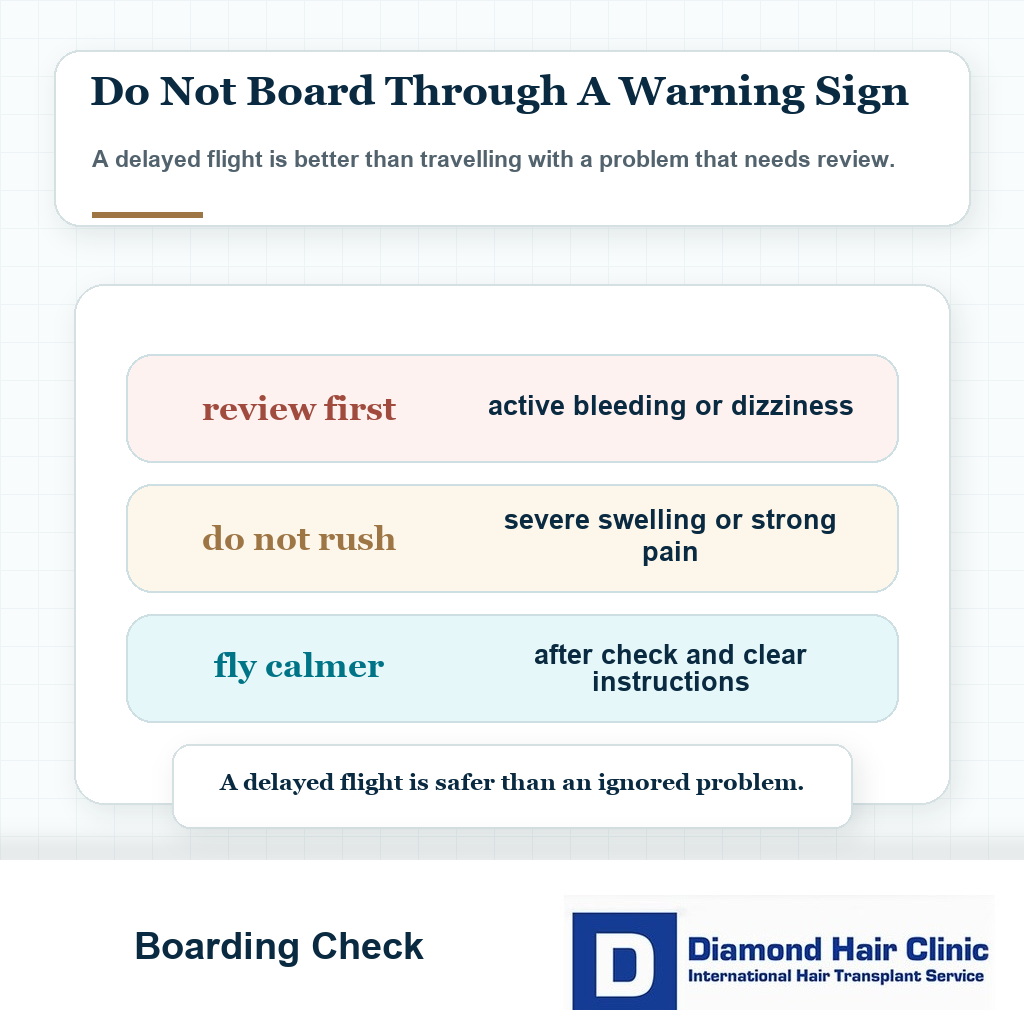
If there is active bleeding, dizziness, strong pain, high blood pressure, unusual swelling, or any sign of infection, wait to fly until you are reviewed. A delayed flight is better than entering transit with a problem that needed in person review. Travel is also harder when black eye bruising after a hair transplant comes with eye pain, severe one sided swelling, fever, or fresh bleeding. If the booking changes after surgery, use flight home changes after FUE to separate a travel delay from a medical delay.
Practical guide
Plan the trip around
the medical decision
International patients need more than a surgery date. Use the route that matches the practical question you are trying to settle before travelling, paying, or returning home.
Do not answer the flight question only with the word yes. The correct answer depends on your medical condition, the size of the procedure, the first night, the route home, and whether you can protect the grafts while traveling. If you have a previous DVT, pulmonary embolism, or clotting history, the travel answer should also include blood clot history and hair transplant planning, not only whether the grafts can tolerate a flight.
Plan who handles the overhead bag before the flight. Stretching up, bumping the scalp while boarding, or rushing through a crowded aisle can matter more than cabin pressure.
When is flying usually reasonable?
For many people, flying after hair transplant surgery is possible after 24 hours if the operation was uncomplicated and you feel well. For international travel, 48 hours is usually better when possible because it allows time for the first night, early swelling review, medication instructions, and practical questions.
If the route is long, includes multiple transfers, heavy luggage, airport security after a hair transplant, or a high stress airport schedule, 48 to 72 hours is often more comfortable. This is not because the grafts cannot survive a flight. It is because tired people make careless movements. If client meetings are waiting at home, public facing work after hair transplant also needs a buffer day after travel. If rhinoplasty is part of the same trip, rhinoplasty and hair transplant timing should be reviewed before the return flight is treated as simple FUE travel.
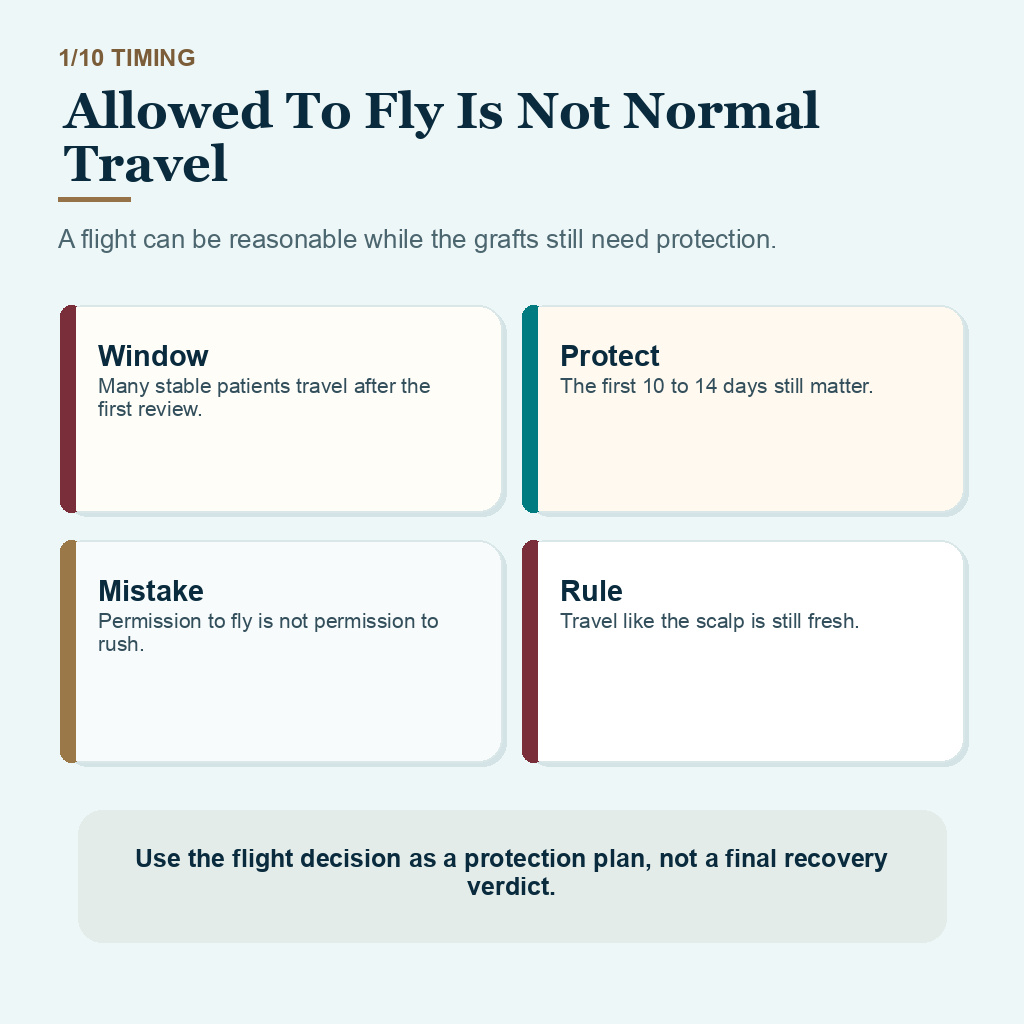
For flying, the 10 to 14 day protection window matters for the grafts and scalp surface. You do not need to stay in Istanbul for that whole period, but you do need to travel as someone who is still protecting fresh grafts.
That distinction matters. You can be allowed to fly and still be in the protection period. Permission to travel is not permission to behave normally at the airport, sleep on the grafts, carry heavy bags, or hide the scalp under pressure.
Clear instructions matter before you leave. A rushed departure can turn a straightforward recovery into a confusing one, especially if you are trying to remember washing, medication, sleeping position, and airport behavior while tired.
Before surgery, travel planning belongs in the conversation, especially after recent COVID. The surgery date, likely review timing, flight time, and airport limits need to be clear before the operation. This fits naturally with proper instructions before hair transplant, not last minute guessing.
For many stable patients, 24 to 48 hours is reasonable. A 48 to 72 hour window is better when the travel plan is long, stressful, or medically uncertain.
Long flights do not usually damage grafts by themselves
A long flight does not normally damage grafts by itself. Cabin pressure, altitude, and sitting in an airplane seat are not the same as physical trauma to the recipient area. The grafts are much more likely to be disturbed by direct rubbing, scratching, impact, or careless handling.
On a long flight, behavior is the issue. You may fall asleep against the seat, pull a sweatshirt over the scalp, rub the forehead, remove a hat too aggressively, or bump the head while reaching for luggage. These small moments matter more than the flight itself.
Long flights can also increase swelling and discomfort. Sitting for many hours, not drinking enough water, eating salty food, and sleeping poorly can make the face feel heavier. That is not a sign that the grafts are failing, but it can make recovery feel more dramatic. If you normally wear contacts, pack backup glasses because contact lenses after FUE travel can become uncomfortable when the eyes are dry or swollen. If the same trip also includes laser eye surgery, review LASIK and hair transplant timing before booking, because dry cabin air, eye drops, swollen eyelids, and early graft care can compete.
Think of the airplane as a protection challenge. Keep the recipient area untouched. Keep the head away from overhead bins, seat edges, and tight clothing. Avoid leaning the grafted area into a pillow, window, or headrest.
If travel takes 8 hours, 12 hours, or longer, preparation matters more than fear. The grafts need careful behavior, not panic.
The same careful thinking applies after landing. Many early problems happen when someone relaxes too soon. A crowded taxi, low car door, hotel shower, rough towel, or poorly planned car travel after a hair transplant can create the contact you avoided during the flight.
Avoid improvising while traveling. Do not decide at the airport that the scalp looks dry and needs extra product. Do not decide on the plane to clean the recipient area in the bathroom. The first days need to stay controlled.
If something feels uncomfortable, take a photo and ask the clinic. Improvising during travel often creates more risk than the original concern.
Do not treat a flight as fixed if the scalp is actively bleeding or you feel unwell. A recovery problem should be photographed, explained to the clinic, and handled before boarding, even when that means changing the ticket.
Cabin pressure is not the main graft risk
Normal commercial cabin pressure is not what I worry about most after a hair transplant. I worry much more about you bumping the head, rubbing the recipient area, sleeping badly, carrying heavy luggage, or leaving before the early scalp condition has been checked.
If a graft is disturbed during travel, the cause is more likely to be direct contact or careless handling than airplane altitude. This distinction matters because people sometimes fear the wrong thing and ignore the practical risks they can actually control.
A long flight can still make recovery less comfortable. Dry cabin air, salty food, sitting for many hours, and poor sleep can make swelling feel worse. This is discomfort, not evidence that the grafts are being destroyed. It means the body is recovering while you are in an uncomfortable environment.
For most healthy patients after an uncomplicated hair transplant, my main concern during the flight is scalp protection and comfort. If you have a history of blood clots, heart or lung disease, uncontrolled blood pressure, limited mobility, obesity, estrogen therapy, or another recent operation, the flight discussion also needs to include your general medical risk, not only the grafts.
A hair transplant is normally done under local anesthesia, but long travel still means long sitting. On a longer flight, move your legs, walk when it is safe, drink water, and do not use alcohol or sedatives to force sleep unless your doctor has approved them.
With clot risk factors, ask your own doctor or surgical team before travel whether compression stockings, a longer stay, or a different travel plan is needed. Do not add aspirin or any blood thinner on your own just because you are worried about a flight. Keep medication decisions inside the medical plan.
The airplane is not the enemy. Poor planning on the travel day is the real problem.
Airport steps after surgery
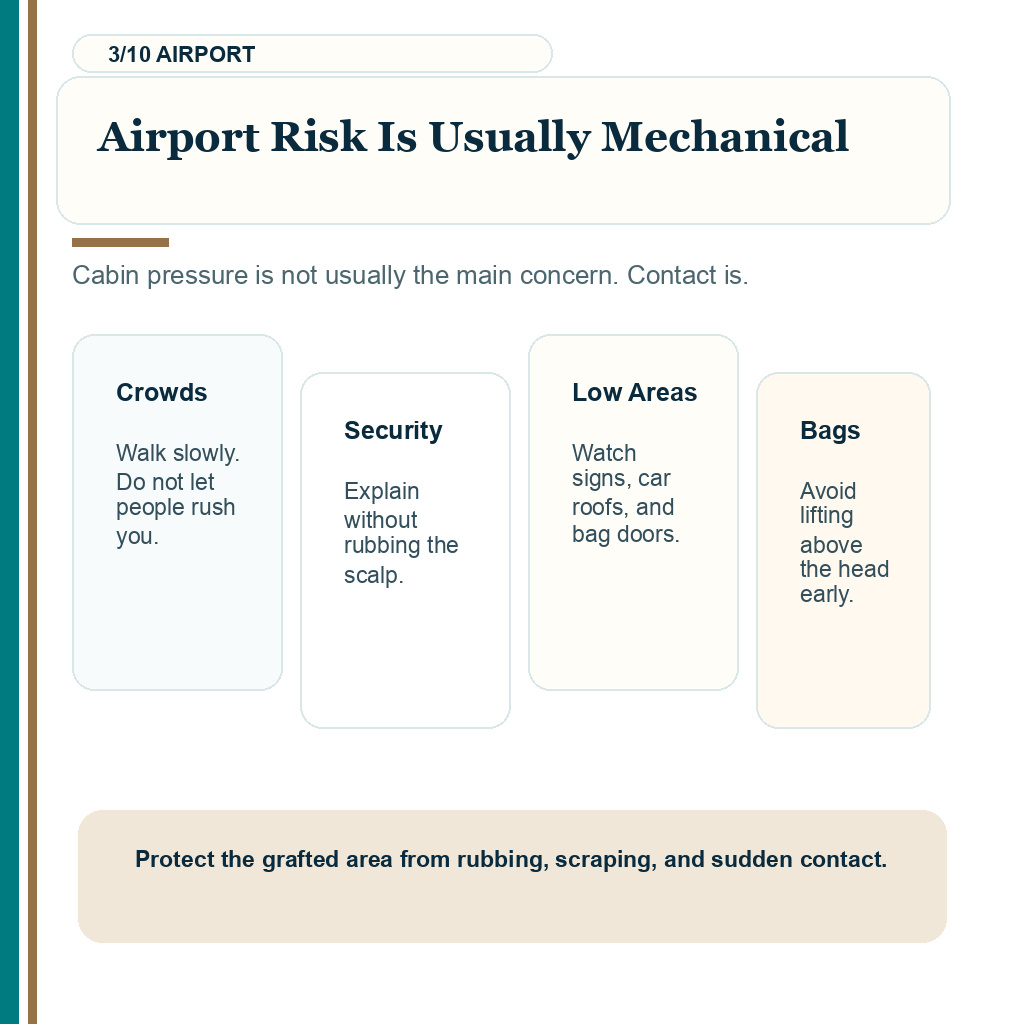
At the airport, move slowly and protect the scalp from accidental contact. Do not rush through crowds. Do not let people behind you push you forward. Do not bend under low signs, luggage doors, or security barriers without thinking about your head.
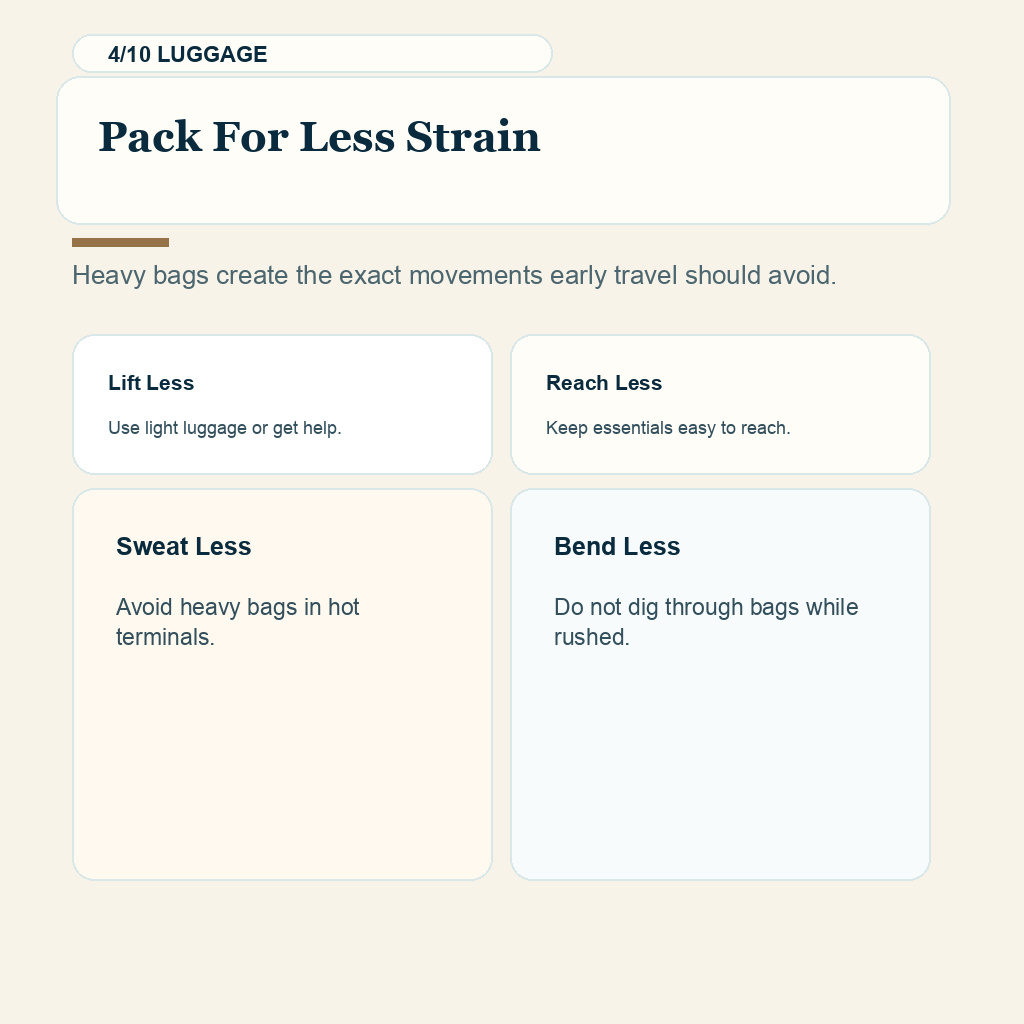
I advise avoiding heavy luggage in the first days. Pulling, lifting, and placing a bag into an overhead compartment can increase strain and create accidental head contact. If you must travel, use light luggage and plan airport assistance after FUE before the route depends on an overhead lift or rushed gate change.
Security checks can make people nervous. If you need to explain the situation, keep it plain. You do not need to touch or expose the recipient area aggressively. A short explanation is enough in most situations if someone asks why your scalp looks recently treated.
If staff need to inspect anything, ask them to avoid direct contact with the grafted area. Most situations can be handled with a short explanation. Do not feel embarrassed about protecting a fresh surgical area.
If you are worried about privacy, do not solve that problem with a tight hat. A loose clean hat may be possible when the timing is appropriate, but anything that presses or rubs the grafts too early is a bad trade. The same pressure and friction principle applies to a hat after a hair transplant.
Stay hydrated, but avoid alcohol. Alcohol can worsen dehydration, increase careless behavior, and make it harder to keep the first recovery days careful. If you are already tired from surgery and travel, alcohol makes bumping or rubbing the scalp more likely.
Boarding and leaving the plane can be harder than sitting in the seat. If you need to wait until the crowd moves, wait. Keep bags low, avoid overhead bins, and let someone else lift luggage whenever possible.
The airport is not dangerous because it is an airport. It is risky because it is crowded, distracting, and full of opportunities for careless contact.
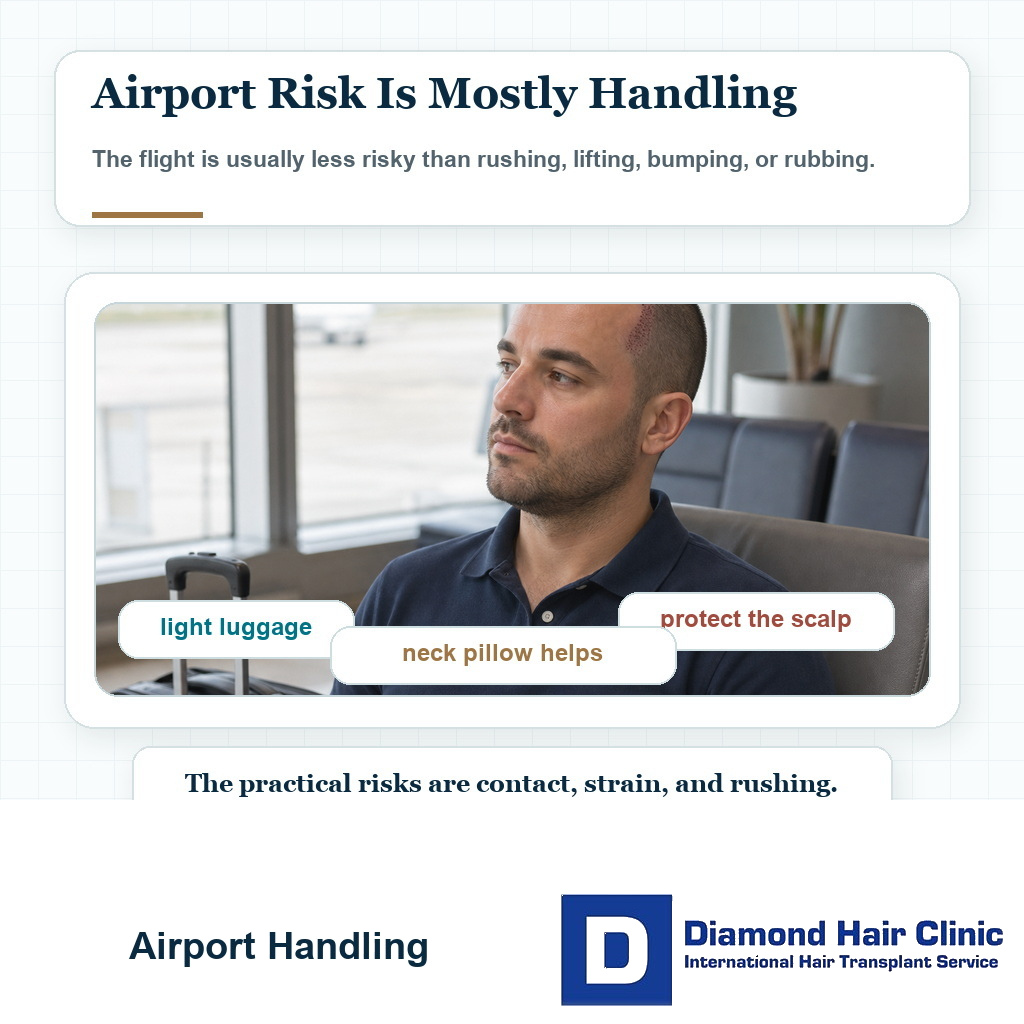
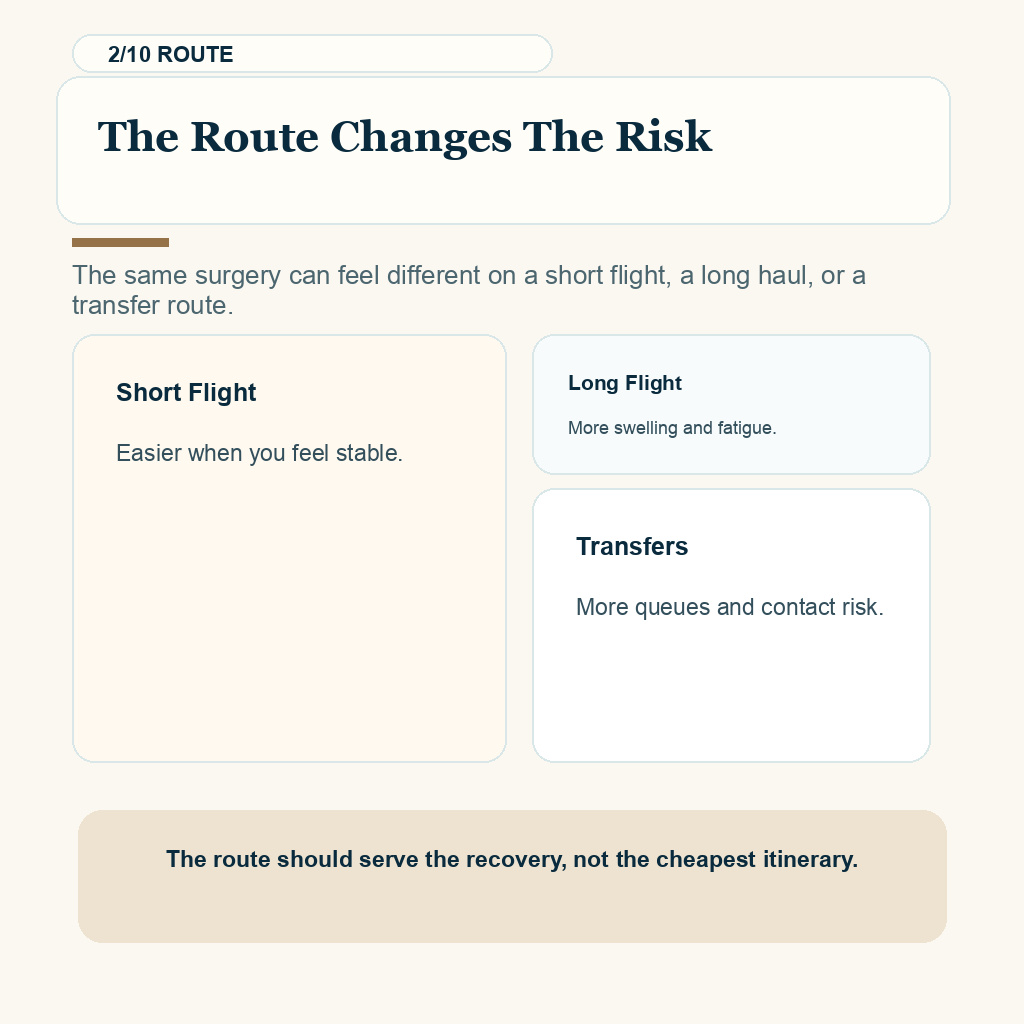
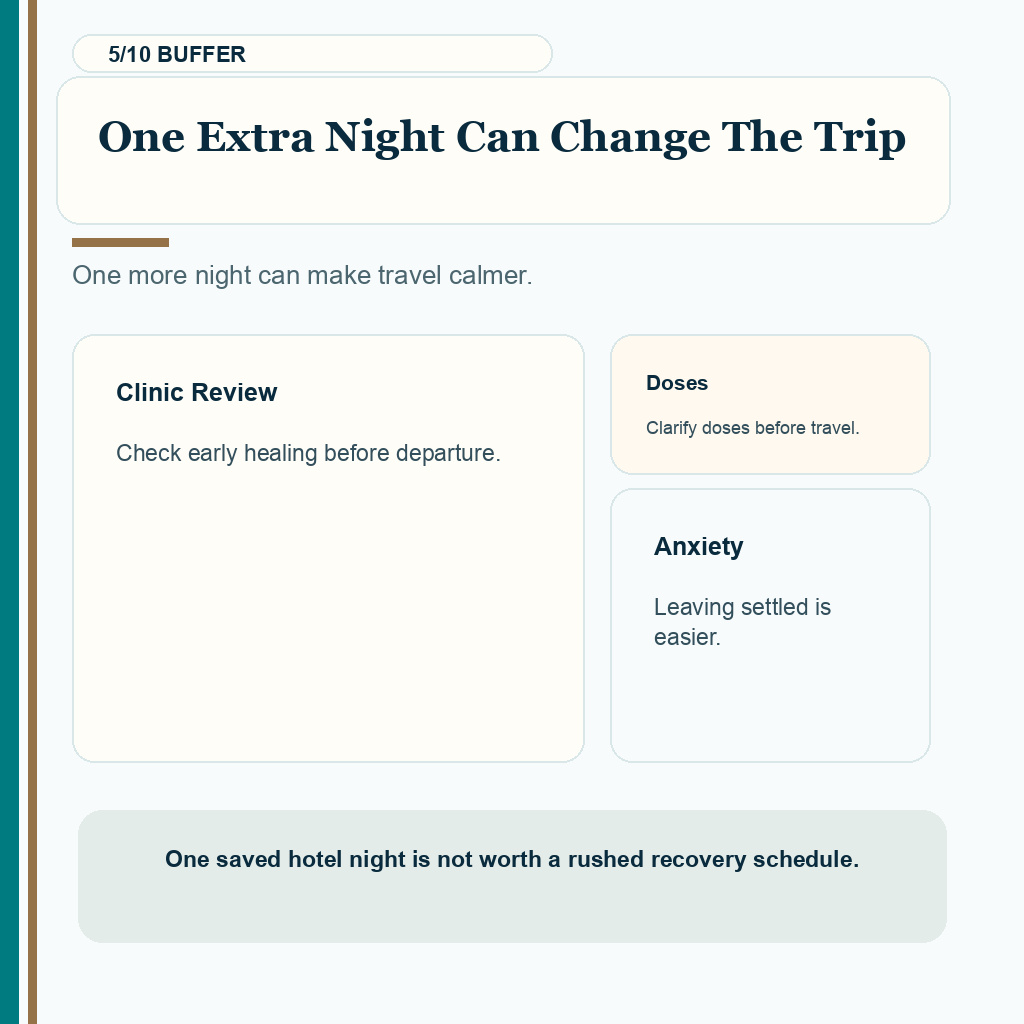
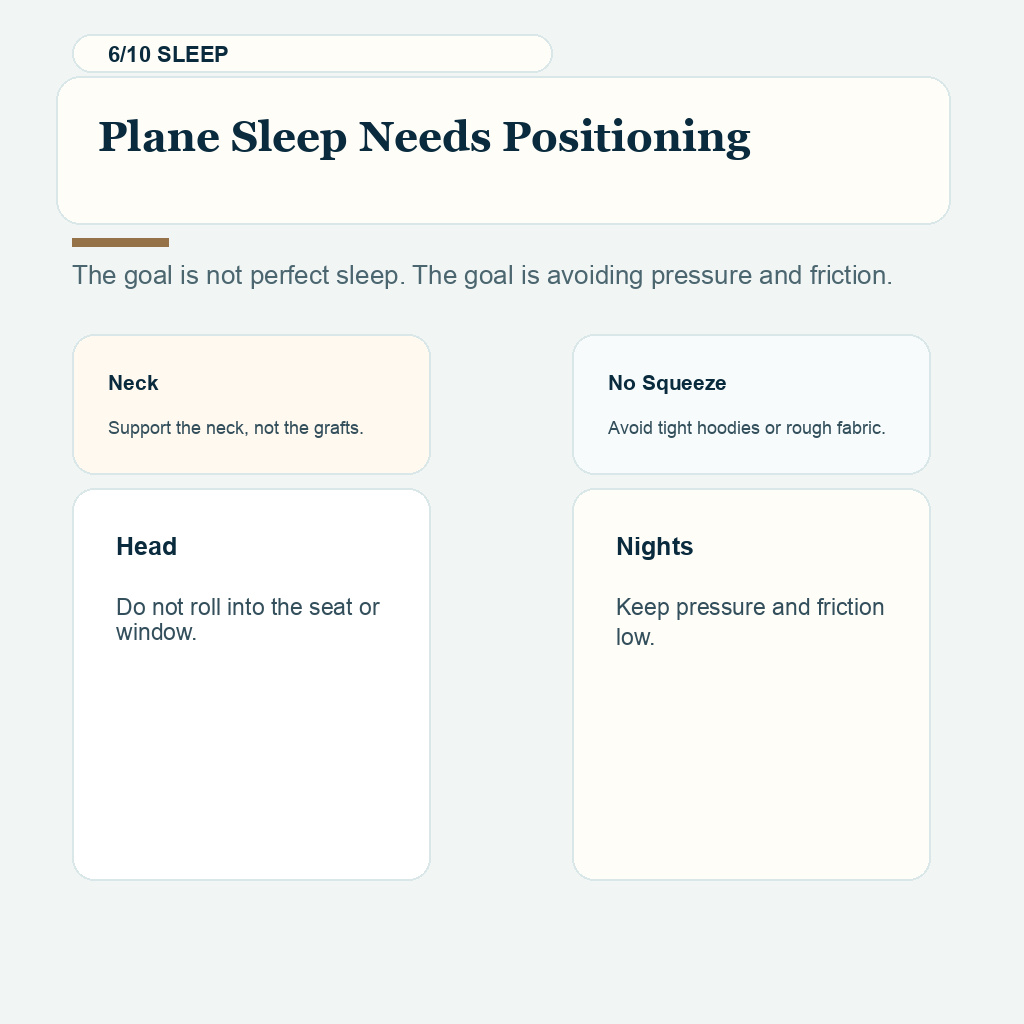
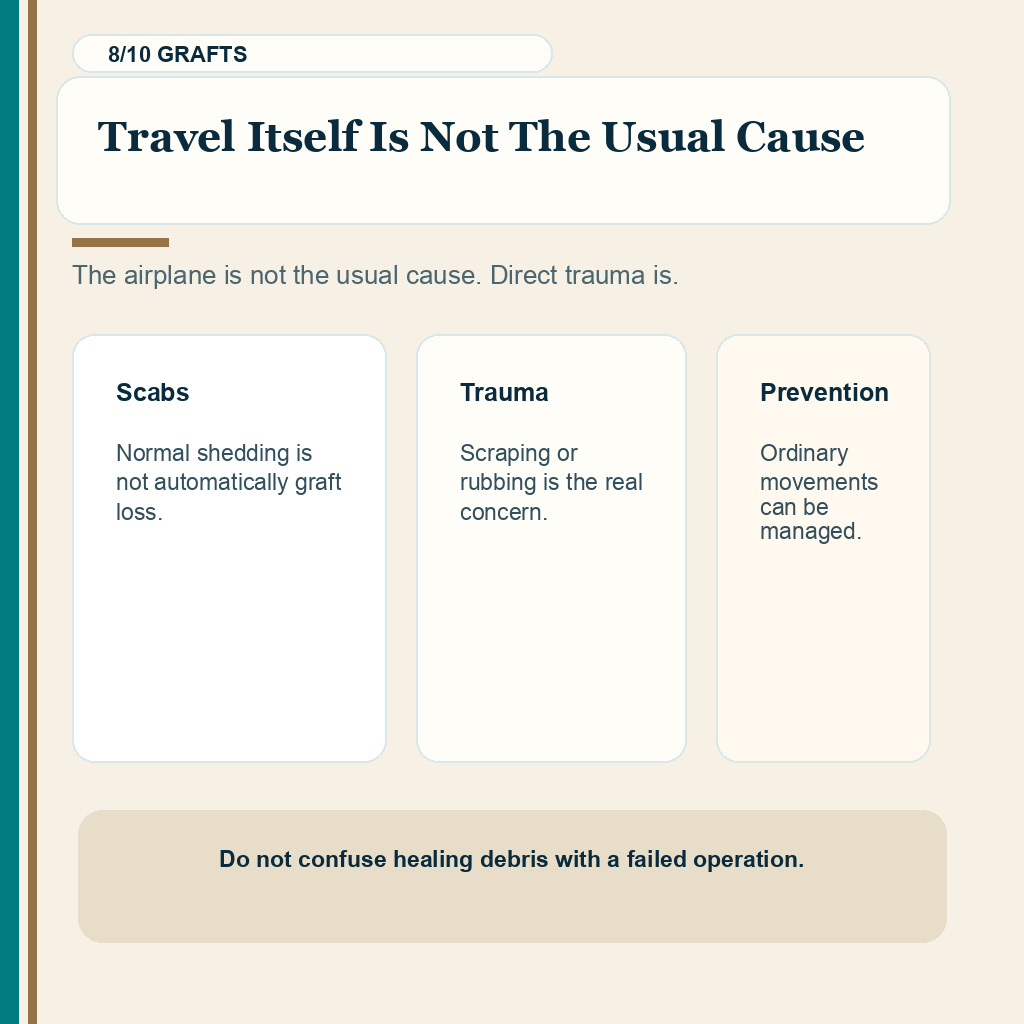
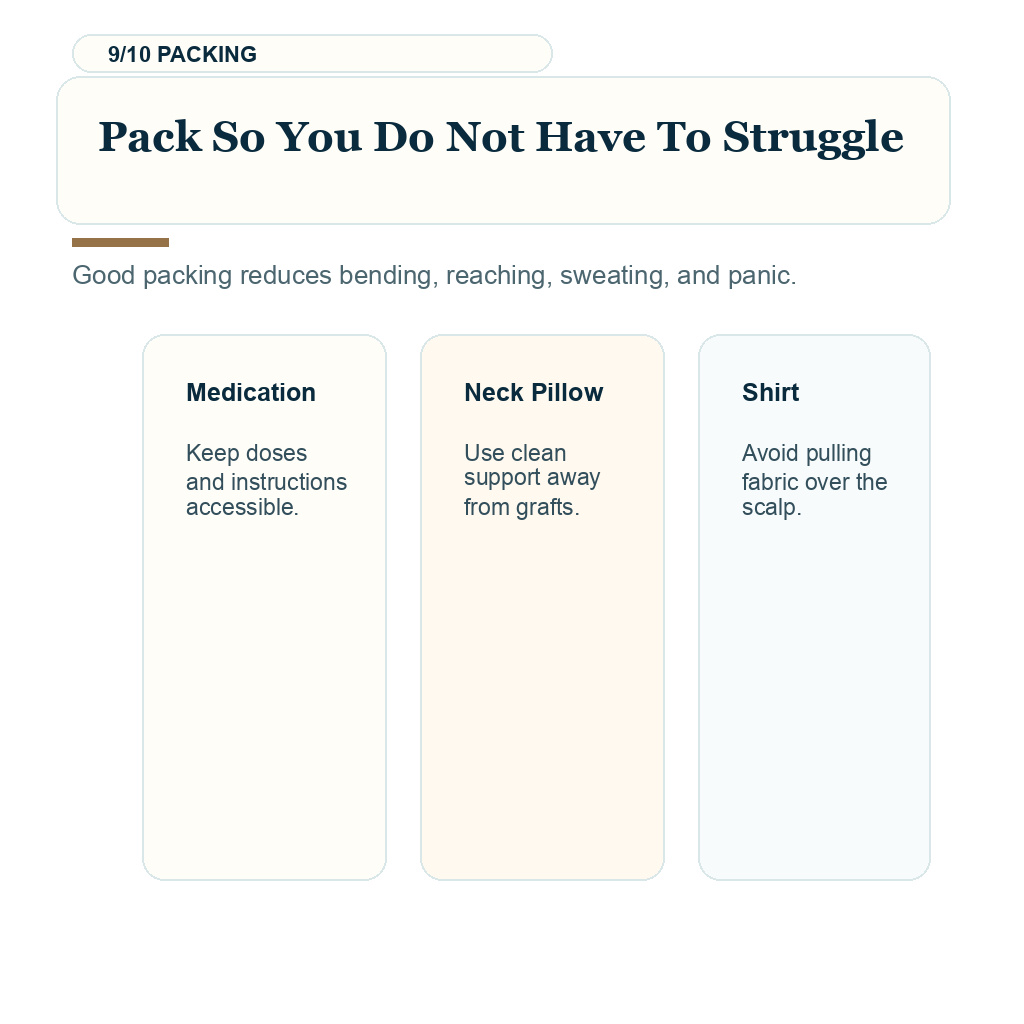
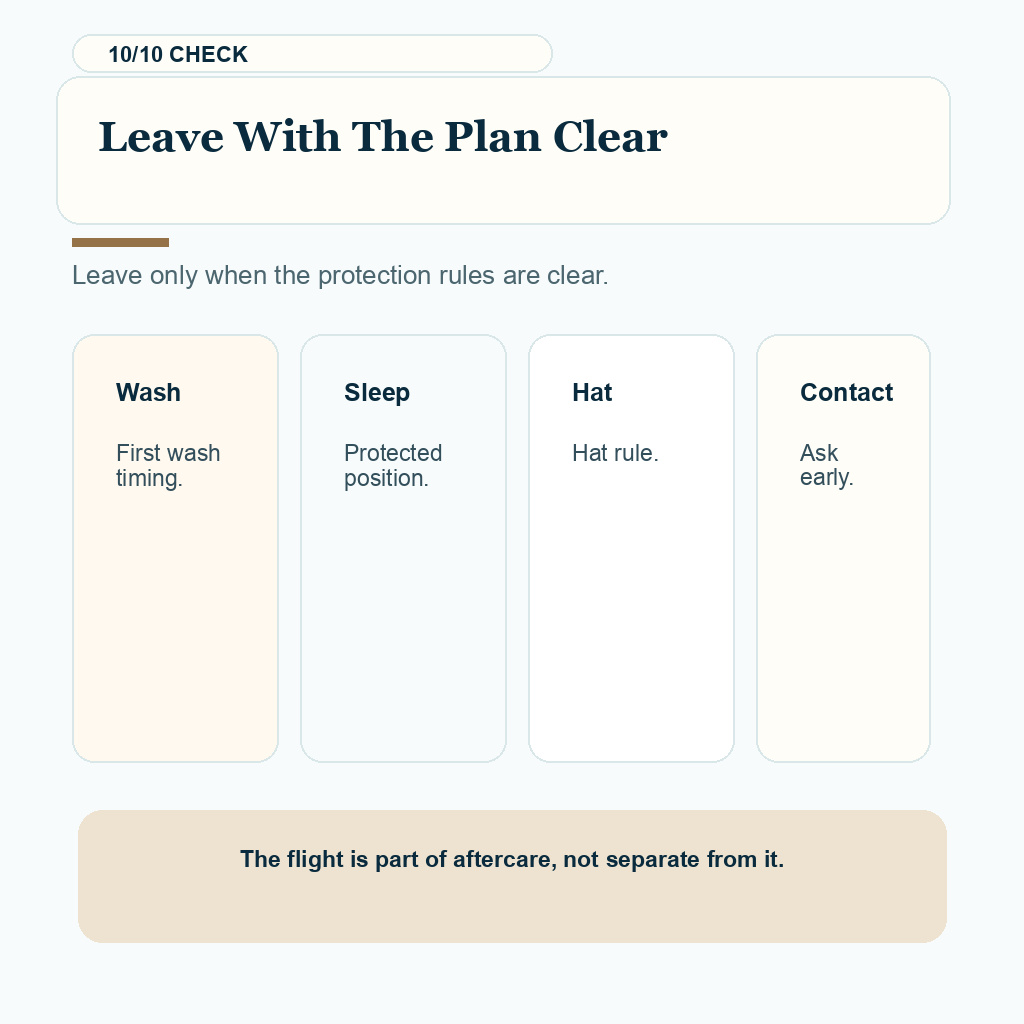
Use the 10 flight planning slides below to separate medical timing, airport handling, luggage, sleep, warning signs, and packing into one decision at a time. Swipe the carousel, use the arrows for one slide at a time, or choose a number below the image to jump to that point.

Connecting flights need extra planning
A connecting flight is not necessarily unsafe, but it adds more chances for mistakes. More queues, more security checks, more boarding lines, more luggage handling, and more tired walking all create opportunities for accidental contact.

If you have a connection, choose a route with enough time between flights. Rushing through an airport after surgery is exactly the kind of behavior to avoid. A slower route is often safer than a cheaper route with a stressful transfer.
Keep luggage simple. Every extra bag becomes another reason to bend, lift, sweat, or reach above the head. If a travel companion can handle luggage, that is better.
During a long layover, do not use the time to inspect, clean, or experiment with the scalp. Sit, drink water, keep the recipient area untouched, and follow the clinic instructions you were already given.
If your route requires many hours in airports, it may be wiser to stay one extra night near the clinic and fly home with more energy. A good plan gets you home without turning travel into the first recovery problem.
An extra night may be safer before flying home
If you can stay one extra night, it is often a wise choice. It gives the body time to settle and gives the clinic time to check the early condition before you travel home. This is especially helpful if you are anxious or traveling alone.
Staying longer does not make a poor surgery good, but it can make early aftercare safer. You can ask questions, review washing instructions, confirm medication timing, and leave better prepared. For international patients, I plan how many days to stay in Turkey after a hair transplant around the first nights before flying home.
Some people travel from very far away and want to compress everything into the shortest possible schedule. The cost and work pressure are real. But in recovery planning, a slightly slower schedule is often worth more than one saved hotel night.
Travel fatigue also belongs in time off work after a hair transplant. Recovery planning should include the flight home, not only the number of days away from the office.
If the surgery was very large, swelling is strong, anxiety is high, or there is a history of blood pressure issues, I am more likely to recommend staying. If the session was smaller and uncomplicated and the flight is short, leaving sooner may be reasonable.
I individualize this decision. I am strict about clinic schedules that treat every person like the same travel package. You are not a flight booking. You are a surgical case with your own healing behavior.
Careful clinic planning includes these details. When too many operations are treated like a production line, travel questions become generic. The schedule may look organized, but the medical judgment behind it can be weak.
A surgeon led plan includes the return flight. It does not end when the last graft is placed.
Sleeping on a plane needs gentle positioning
Sleeping on a plane after a hair transplant requires common sense. If you sleep deeply and your head rolls against the seat, window, or shoulder, you may create pressure or friction on the recipient area. That is what we are trying to prevent.
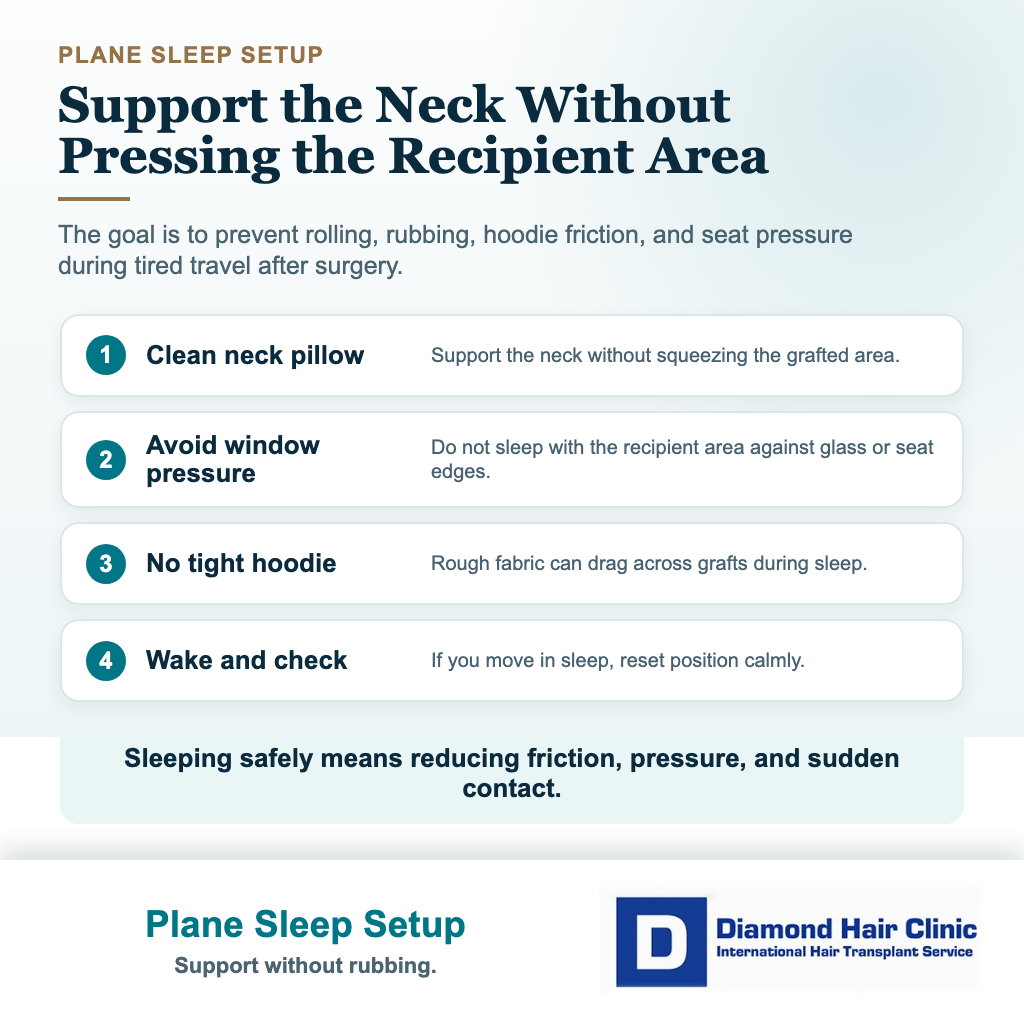
For the first 7 to 10 nights, keep the head elevated and protected from rubbing. If you must sleep on a plane, a clean neck pillow can help support the head without pressing the grafted area. The pillow supports the neck. It must not squeeze the recipient area.
The night routine is explained in more detail on the page about sleep after a hair transplant. The same principles apply during travel. Reduce friction, reduce pressure, and reduce sudden contact.
Do not cover the recipient area with rough fabric while sleeping. Do not pull a hoodie tightly over the scalp. Do not use the airplane blanket in a way that drags across the grafts.
If you cannot sleep safely, it is better to rest quietly than to force sleep in a bad position. One uncomfortable flight is not pleasant, but a disturbed recipient area is a bigger problem.
Stand carefully too. Many people bump their head when leaving a window seat or reaching under the seat in front. After surgery, every movement should be slower than usual.
If you know you sleep heavily, tell the clinic before travel. A daytime flight may be safer if it helps you stay alert. Some people also do better with a travel companion who understands that the scalp must not be touched.
Swelling, bleeding, or pain before the flight
Mild swelling can be normal after a hair transplant, especially around the forehead and upper face. But swelling that is severe, rapidly worsening, painful, one sided, or associated with other symptoms should be reviewed before travel.
Small donor area oozing can happen early, but active bleeding is different. If bleeding continues, do not simply board a flight and hope it settles. You need proper instructions and, when necessary, direct clinical assessment.
Pain also needs context. Mild donor tenderness is common. Strong pain, heat, increasing redness, pus, fever, or a donor area that becomes worse instead of calmer is not something to ignore.
Medication timing matters too. You should understand what you are taking, when to take it, and what side effects to watch for. Clear guidance about medications after hair transplant should be in place before you leave the clinic environment.
If you feel dizzy, weak, or unusually unwell, flying is not the priority. Safety is the priority. A changed ticket is inconvenient, but a medical problem in transit can be much more difficult.
I watch blood pressure. If you feel tense, have a headache, or seem unusually flushed, do not ignore those symptoms because a flight is waiting. A short clinical check can prevent a much larger problem during travel.
Do not use a flight schedule to overrule your body. If the early recovery does not look normal, the surgeon needs to assess it before travel.
Travel rarely causes graft loss by itself
Travel does not always cause lost grafts. The concern is mechanical trauma. If the recipient area is scraped, rubbed, hit, or scratched, then grafts can be disturbed during the early vulnerable period.
Scabs can also make patients panic. Normal scab behavior is not the same as graft loss. A scab falling away without bleeding or tissue attached is different from a graft being pulled out by trauma.
This distinction matters in lost grafts after hair transplant scabs, because many people confuse healing debris with a failed operation. During travel, the same distinction matters.
At the airport, the highest risk moments are often ordinary. Taking off a shirt, removing a cap, leaning into a car, brushing the scalp against the airplane seat, or lifting a bag above the head. These are preventable.
Avoid touching the recipient area to check if it is safe. Constant checking creates more irritation. If something looks concerning, take a clear photo and contact the clinic. If you only notice the concern after you are already home, use the separate guide on what to do after flying home with a recovery concern.
The best protection is not complicated. Move slowly, avoid pressure, keep the scalp clean, follow washing instructions, and do not let embarrassment make you hide the area in a harmful way.
Avoid constant phone checking with the head bent forward. The posture itself is not the danger, but the habit leads to more touching, more camera checking, and more anxiety. During travel, steady behavior is part of aftercare.
Choosing between local surgery and travel abroad
The answer depends on the surgical quality, not only geography. A clinic near home can still be poor, and a clinic abroad can still be excellent. I focus on whether you receive surgeon led planning, safe donor management, proper follow up, and clear expectations.
Many people travel because they want better value or a surgeon with more focused experience. That can be reasonable. But travel should never be used as an excuse for rushed consultation, unclear medical responsibility, or careless aftercare.
If you are considering Turkey, plan the medical side first and the travel side second. The broader process is explained on the page about how to get a hair transplant in Turkey. The trip should serve the surgery, not the other way around.
Question any clinic that wants someone to arrive, operate, and leave with almost no meaningful assessment. Hair transplantation is not a tourist activity that happens to include surgery. It is surgery that requires travel planning.
A careful clinic should make you feel medically guided before arrival and after departure. The detail that matters is not only who sells the package, but whether the evaluation, design, critical surgical steps, and aftercare communication are connected under real medical responsibility.
Travel can be safe when it is organized around medical judgment. It becomes risky when it is organized only around convenience, low price, or a crowded clinic schedule.
Before you book travel abroad, the questions that matter before committing to a hair transplant should already be clear. The return flight is only one part of the decision. The bigger question is whether the whole clinic process is medically serious.
Packing for the return flight
Pack lightly. Many people underestimate this. Heavy luggage creates strain, sweat, and overhead lifting. A small practical bag is better than a suitcase that turns every movement into effort. Pack the things you may need during the flight in your cabin bag, and leave heavier items in checked luggage so you do not have to lift them into the overhead bin.
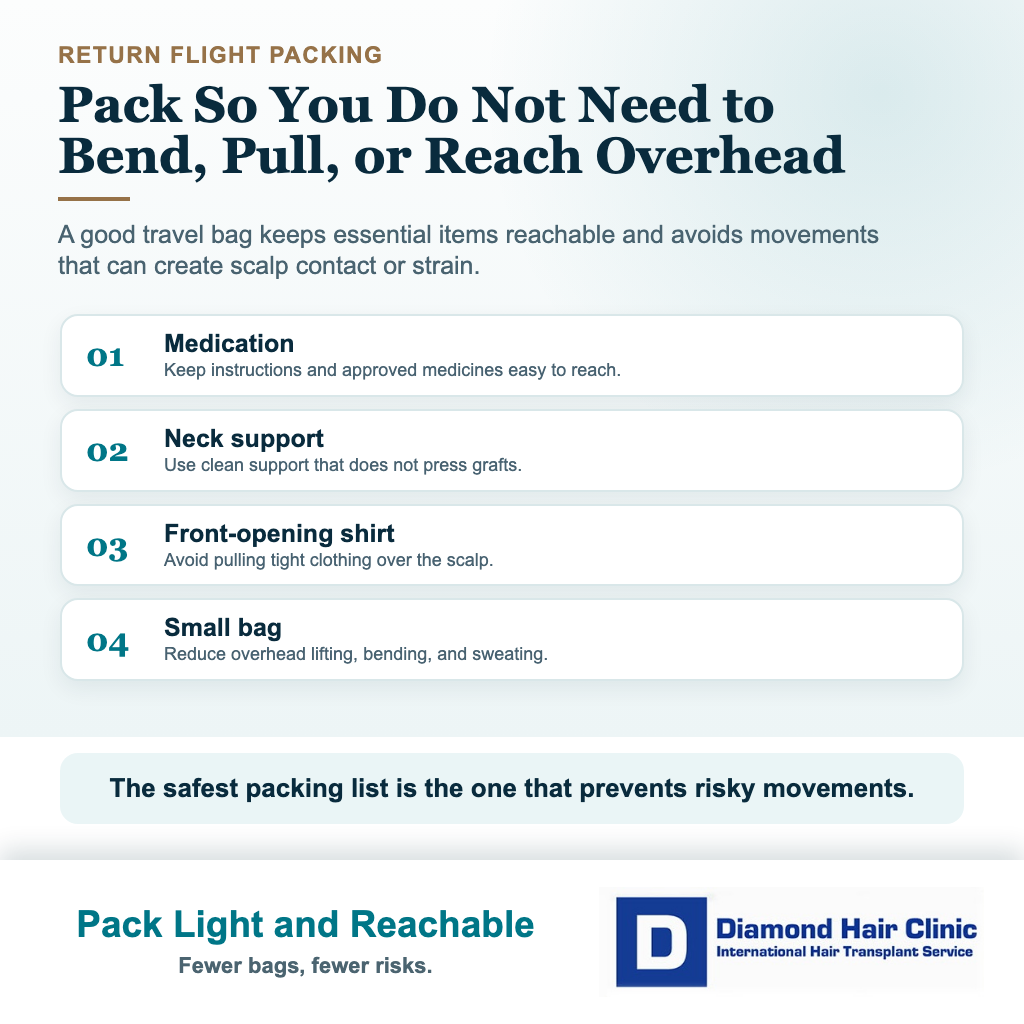
Bring your medications, written instructions, a clean neck pillow, any approved spray or washing materials your clinic provided, and enough water access during travel. Keep essential items in a place you can reach without bending or pushing your head into a tight space.
Clothing matters. Wear a shirt that opens from the front if possible, rather than something that must be pulled tightly over the head. Choose soft clean fabric. Avoid anything that sheds fibers or catches the grafts.
If you travel during hot weather, plan for sweating. Heat, crowds, and airport stress can make the scalp uncomfortable. Seasonal planning matters in hair transplant in summer or winter, and the same logic applies to travel days.
Do not pack cosmetic products to hide the transplant in the first days. The recipient area is a healing surgical field, not a styling surface. Privacy is understandable, but healing comes first.
A prepared travel plan reduces careless contact, and that is exactly what the grafts need in the first days.
Keep clinic contact details easy to access. If you are unsure about bleeding, washing, medication, swelling, or a bumped graft, do not make yourself search through emails while tired in an airport.
The flight home is part of recovery
Book the return flight with recovery in mind, not only price. If possible, avoid leaving immediately after the operation. A 24 to 48 hour window is more reasonable for many people, and 48 to 72 hours is often more comfortable for long international flights.
Choose a flight that reduces stress. Fewer transfers, better departure time, shorter airport waiting, and less luggage can matter more than saving a small amount of money. The best flight after surgery is the least stressful one.
Before leaving, make sure you understand washing, sleeping, medication timing, hat use, activity limits, and when to contact the clinic. These are not small details. They are the first layer of protection after the surgical work is done. If you become unwell during travel, advice on cold or flu symptoms after a hair transplant or vaccine side effects can help you decide when to contact the clinic instead of guessing.
Hair transplant aftercare becomes more than a printed instruction sheet here. It becomes the way you protect the surgical result while life becomes busy again.
If the flight is already booked too soon, do not panic. Ask your surgeon to assess whether it is safe in your specific case. If everything is stable, the trip may be acceptable. If something is not right, changing the plan may be the wiser decision.
Be clear about your own behavior. Some patients can travel carefully without touching the scalp. Others become restless, inspect constantly, and cannot stop adjusting hats or mirrors. If you know you are anxious, give yourself more time before flying.
The plan is clear. Travel only when the early condition is stable, the instructions are clear, and you can protect the grafts from clinic door to home.