


Ketoconazole for Dandruff During FUE Scalp Healing
In my routine, ketoconazole shampoo does not touch the recipient area during the first 14 days after a hair transplant. Nizoral is one brand name for ketoconazole shampoo, so I use the same timing rules for Nizoral after a hair transplant. After day 14, I consider it only if the scabs are gone, the skin is closed, and normal washing already feels comfortable. For stronger or prescription ketoconazole, 3 to 4 weeks is usually safer unless there is a clear medical reason and the clinic approves it.
Ketoconazole can be useful for some patients, especially when seborrheic dermatitis, scalp eczema, oily scale, or recurrent dandruff is part of the scalp history. But after surgery, timing matters. A product that helps the right scalp at the right time can irritate a healing recipient area if it is used too early or too aggressively. When the main symptom is visible flaking rather than confirmed dermatitis, review white flakes after hair transplant before treating every flake as dandruff. If the problem is greasy buildup without a confirmed dermatitis flare, I separate that decision in oily scalp after FUE before adding medicated shampoo.
The early scalp needs gentle washing and clear instructions. Healing comes first. Medicated products return only when the skin is ready.
I avoid ketoconazole during the first 14 days
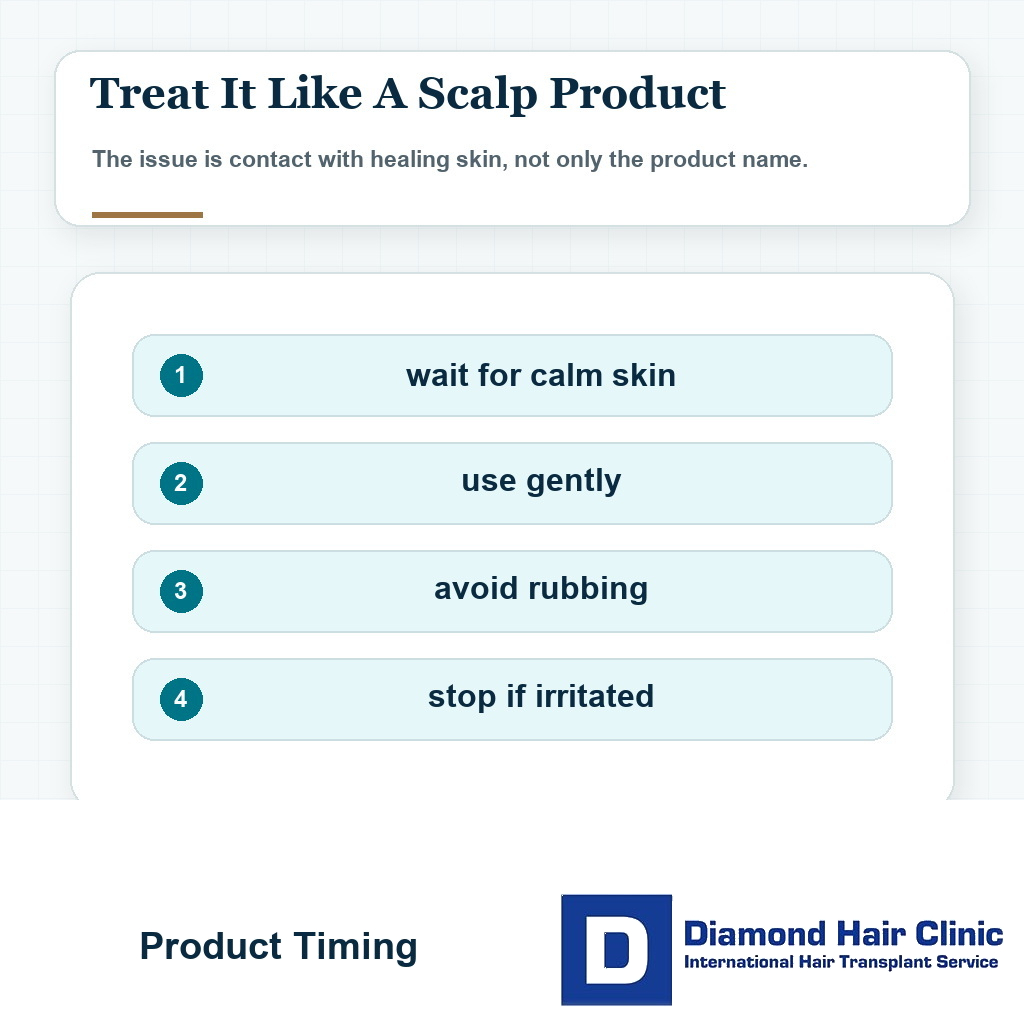
The first 14 days are about graft protection, controlled washing, crust softening, and keeping the scalp easy to inspect. The patient is already managing tenderness, redness, scabs, and the fear of touching the grafts. A stronger shampoo can add burning, dryness, peeling, or confusion. I use the same caution with aloe vera, moisturizers, or conditioner because the issue is still contact with healing skin.
If the scalp becomes red or itchy after ketoconazole, the patient may worry that something is wrong with the transplant. Sometimes the cause is simply product irritation, but it still makes recovery harder to interpret.
In the first period, keep the routine plain. Clean water temperature, gentle contact, and the clinic approved washing plan matter more than returning to every old product quickly.
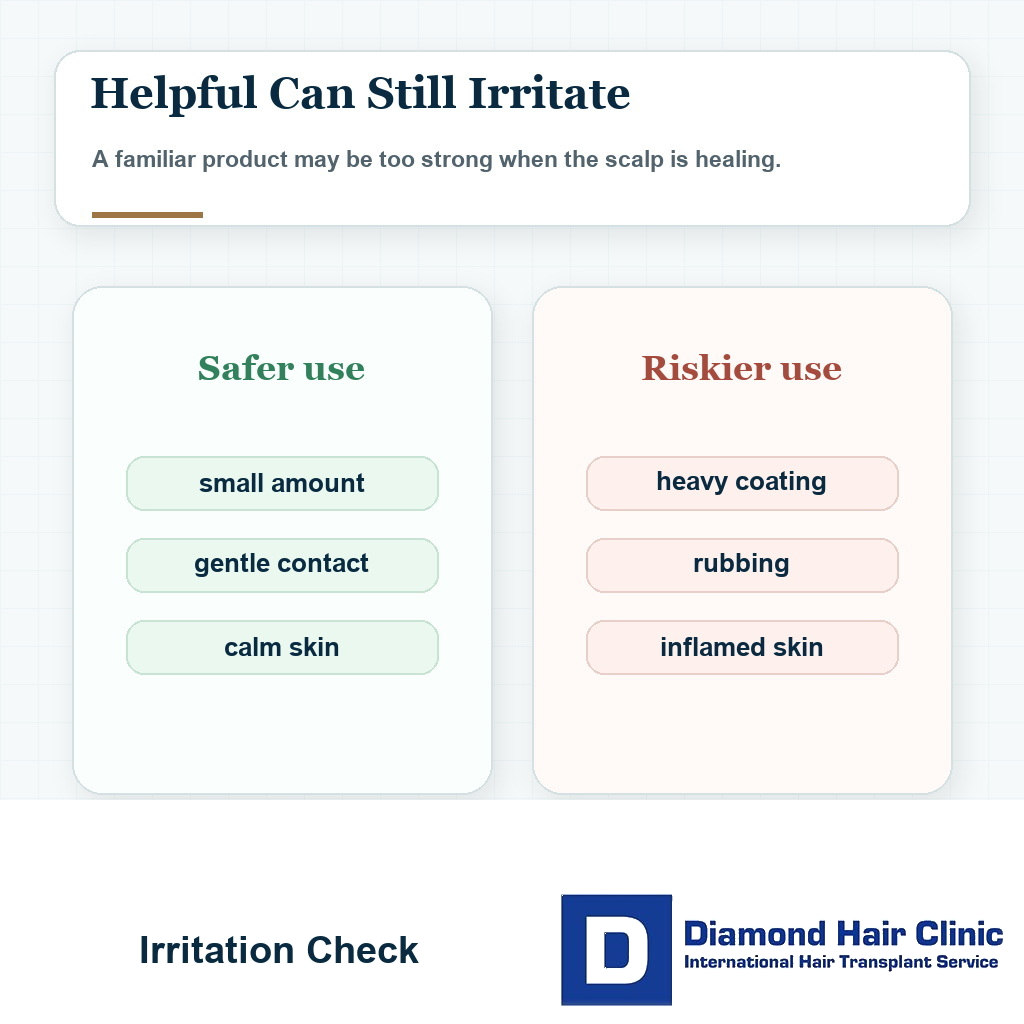
Timeline I usually use
For most patients, ketoconazole shampoo should not touch the recipient area before day 14. After day 14, I still check whether the scabs are gone, ordinary washing is comfortable, and there is no active irritation.
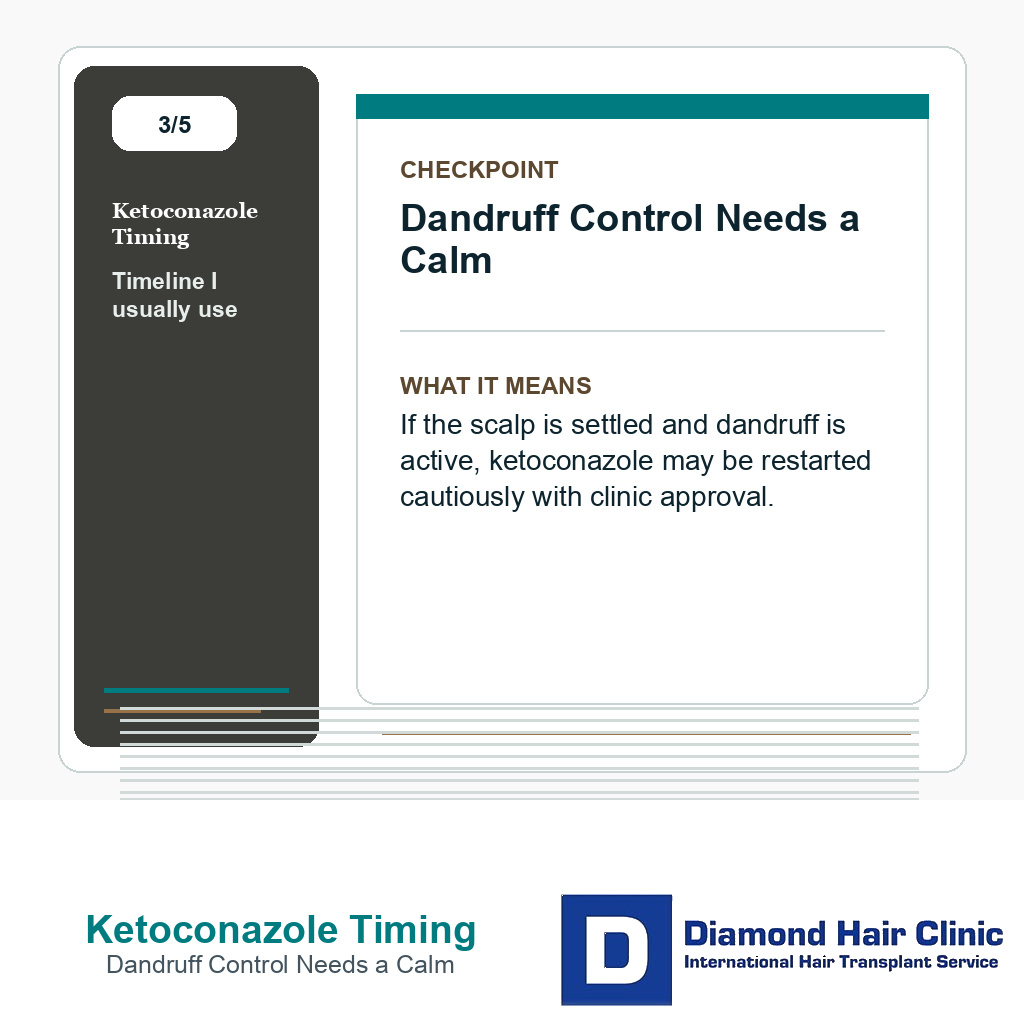
If the patient uses a mild dandruff shampoo with ketoconazole and the scalp is settled, it may be restarted cautiously after day 14 with clinic approval. With stronger prescription products, or a very sensitive scalp, waiting 3 to 4 weeks is usually safer.
The calendar helps, but the skin decides. A settled scalp on day 14 is different from a red, tight, flaky scalp on the same day. I make the decision from the skin, not from the date alone.
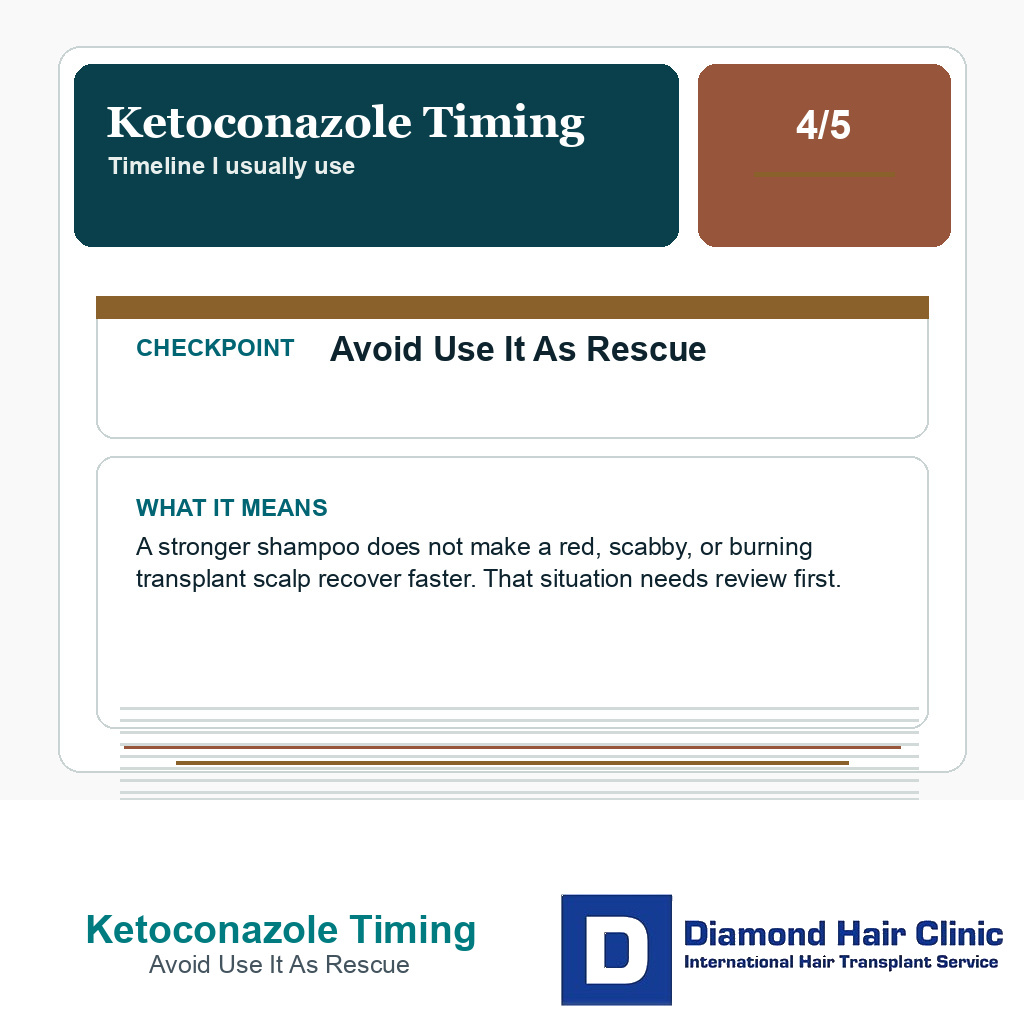
I also separate restarting ketoconazole from using it to rescue a scalp that is still scabby, red, or burning. If the skin is not ready, a stronger shampoo does not make the recovery safer. It can simply make the scalp harder to read.
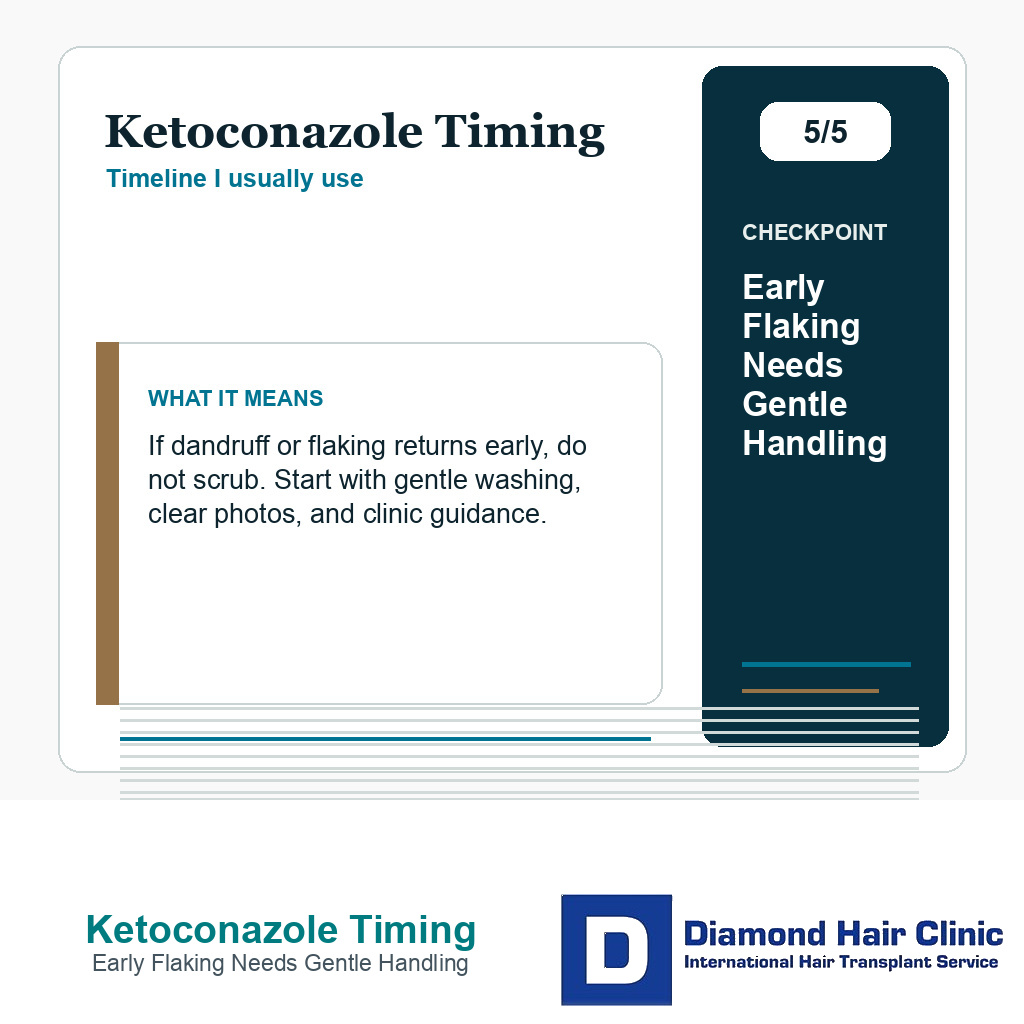
The 5 slides here show when ketoconazole can help and when a healing scalp needs gentler handling. Swipe sideways, use an arrow, or choose a number below the image.
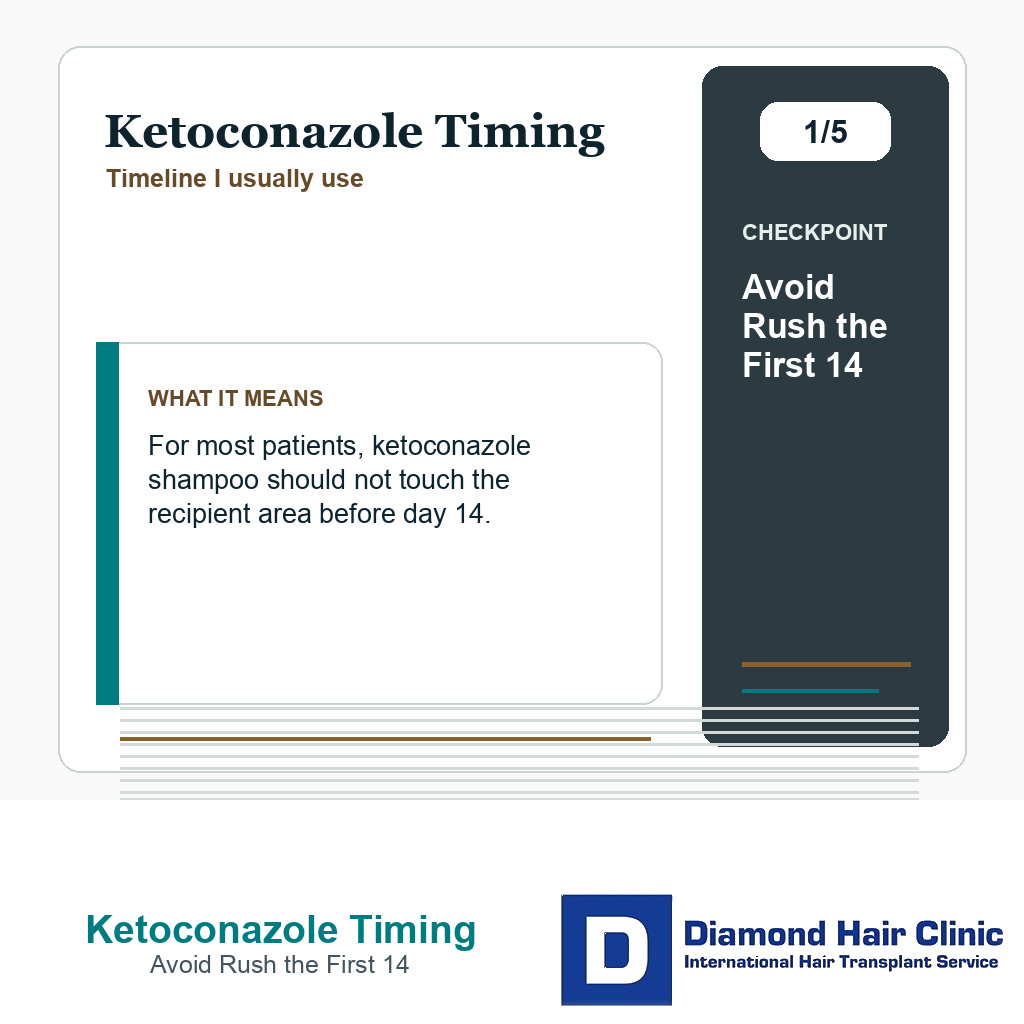
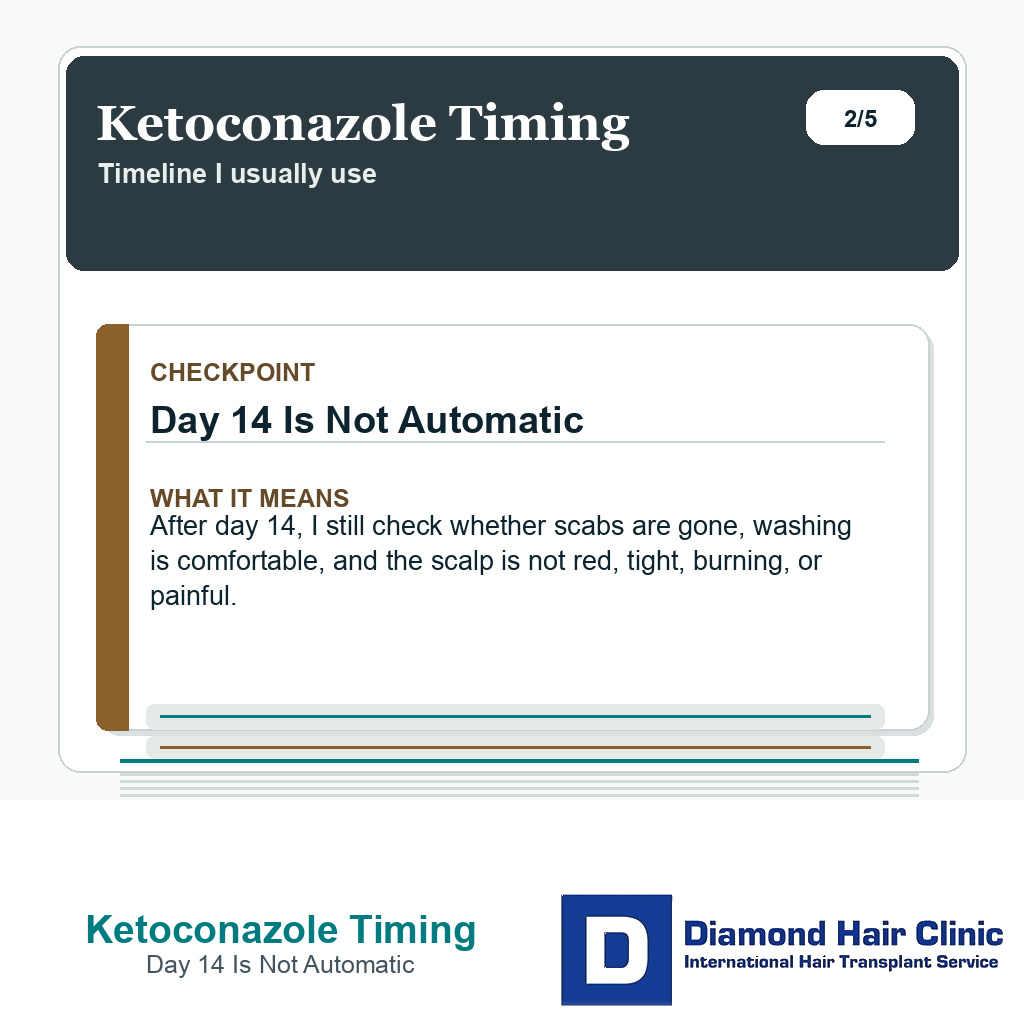
Ketoconazole can help after the grafts are secure and dandruff is active
Ketoconazole may be helpful when the patient has seborrheic dermatitis, oily yellow scale, recurrent dandruff, itching with greasy flakes, or a history of scalp flares that respond well to this shampoo. In that case, it can support scalp control once surgical healing is far enough along. Before surgery, the bigger question is whether an itchy scalp is stable enough for graft placement, not simply which shampoo is available.
When seborrheic dermatitis is part of the case, I do not try to sterilize the scalp aggressively. Seborrheic dermatitis and hair transplant planning is about controlling inflammation without disturbing graft healing.
When the diagnosis fits, ketoconazole can be useful. When the scalp is only dry from healing, ketoconazole may be the wrong answer.
Itching does not always mean dandruff has returned
Many patients think every itch after a hair transplant means dandruff is returning. Sometimes it does, but very often itching comes from healing, dryness, crust separation, tight skin, or anxiety about touching the grafts.
If the itch comes with oily scale and a known history of seborrheic dermatitis, ketoconazole may have a place. If the itch comes with dry tight skin, a stronger medicated shampoo can make the scalp more uncomfortable.
I ask patients to send photos instead of guessing. The treatment changes depending on what the scalp actually looks like.
Reintroducing ketoconazole without irritating grafts
It should be reintroduced gradually. Use it only on the days it is needed, with gentle contact and thorough rinsing. Scrubbing, repeated lathering, hot water, or leaving the shampoo on too long can turn a useful product into an irritant.
The aim is a controlled scalp condition, not a scalp that feels stripped or squeaky clean. If there is burning, worsening redness, unusual dryness, tightness, or new irritation, stop and ask the clinic.
When ketoconazole returns, it should be one controlled product inside an otherwise plain washing plan. One careful medicated wash is different from daily use, repeated lathering, or stacking several scalp products in the same week. One product is easier to judge than five products used at the same time.
Patients who should wait longer
Patients with very dry skin, strong redness, psoriasis, active wounds, folliculitis, crusts that have not come away, or a history of reacting badly to medicated shampoos should wait longer. The same product that helps one scalp can irritate another.
I am also careful in patients who are already using minoxidil, oils, styling products such as dry shampoo, fibers, or several scalp treatments. Too many products at once can make the scalp harder to read. If a reaction happens, it becomes difficult to know what caused it. The same timing problem appears when too many treatments after FUE overlap in the same week.
The same principle applies to hair oil after a hair transplant. Early recovery is not the time to test many products on healing skin.
If dandruff returns before day 14
If dandruff or flaking returns early, do not panic or scrub the scalp. The first step is usually gentle washing and photo review. If the scale is mild and the skin is still healing, we may simply continue the normal wash plan and watch the direction.
If the scale is thick, oily, uncomfortable, or connected with spreading redness, I need to evaluate the scalp before the patient starts experimenting. The answer may be a small adjustment in washing, a different treatment, or simply more time for the skin to settle.
A healing transplant scalp should be managed one step at a time. Every unnecessary product makes the next decision less clear.
Ketoconazole can dry or irritate the recipient area
Ketoconazole can cause burning, stinging, dryness, itching, irritation, or a change in hair texture in some patients. Most patients tolerate it well when the timing and diagnosis are right, but the recipient area after surgery is more sensitive than normal scalp skin.
If the product causes irritation, do not push through discomfort just because the shampoo has a medical name. The scalp after transplant needs judgment, not force.
Daily ketoconazole “just in case” is not a good recovery plan. It should have a reason. If the reason disappears, the routine can often become lighter again.
Ketoconazole and graft safety
Ketoconazole shampoo used at the right time is not something I fear as a graft killer. The bigger concern is early irritation, rubbing, dryness, and patient behavior. If a strong shampoo makes the scalp burn, the patient may rub more, wash more aggressively, or become anxious and start touching the area.
Graft survival depends on many things, including surgical technique, early protection, clean healing, and avoiding trauma. The shampoo itself is not usually the main issue. The timing and the way it is used matter more.
I separate the question into two parts. Is ketoconazole useful for this patient? Is the scalp ready for it now? Both answers need to be yes before I am comfortable.
Fitting ketoconazole into the normal wash routine
Once the scalp is ready, ketoconazole should fit around the normal shampoo after hair transplant routine rather than replace it completely. Most patients still need gentle ordinary washing on the other days. The medicated shampoo should be used only as often as needed or as advised by the treating doctor.
More shampoo does not mean more protection. The aim is a settled scalp, not a drier and more irritated one.
A plain hair transplant aftercare plan makes recovery easier to manage. If the scalp reacts, we can identify the cause and correct it more safely.
Pimples or folliculitis need separate judgment
If pimples or folliculitis are present, the cause needs to be understood before adding or restarting ketoconazole. Some bumps are part of healing. Some are ingrown hairs. Some are irritation. Some are true folliculitis that needs a different approach.
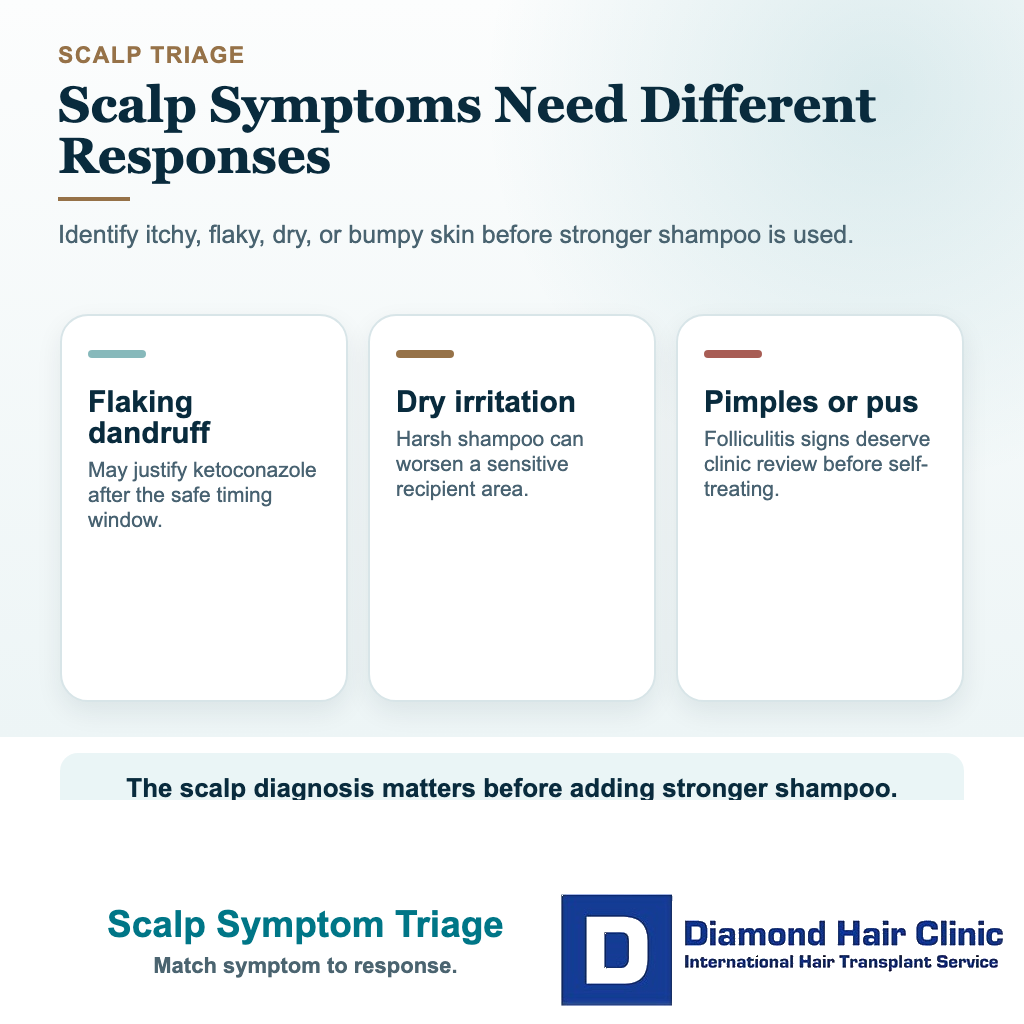
Ketoconazole may help if yeast related inflammation is part of the problem, but it is not the answer for every bump. If there is pain, pus, spreading redness, or worsening clusters, the scalp needs review.
Active bumps change how I think about folliculitis and hair transplant timing. Redness, scabs, and pimples after a hair transplant can also help patients separate common healing from warning signs.
Ketoconazole is not a graft growth treatment
I do not use ketoconazole as the main growth treatment after a hair transplant. If a patient has seborrheic dermatitis or dandruff, controlling the scalp can make recovery more comfortable. But ketoconazole should not be treated as a substitute for graft quality, donor planning, finasteride, minoxidil when appropriate, or the normal growth timeline.
Some patients use it because they feel they must add something to improve growth. In early recovery, adding more is not always better. The transplanted follicles need protection, not product anxiety.
If there is no dandruff, seborrheic dermatitis, or clear scalp reason, I do not rush to add ketoconazole just because the patient has heard it can help hair growth.
Reasons to stop ketoconazole again
Burning, stronger redness, unusual dryness, stinging, peeling, tenderness, or new irritation are reasons to stop and reassess. Also stop if it is being used too often and the scalp is becoming drier instead of more settled.
A useful scalp plan changes with the skin. Sometimes ketoconazole is useful for a period, then ordinary gentle washing becomes the better choice again.
Do not stay loyal to a product that is clearly irritating the scalp. A settled scalp matters more than proof that a shampoo is powerful.
Using ketoconazole shampoo safely
Do not use ketoconazole shampoo on the recipient area during the first 14 days. After day 14, consider it only if the scabs are gone, the skin is closed, and ordinary washing is comfortable. For stronger ketoconazole, 3 to 4 weeks is usually safer unless there is a clear reason to restart earlier.
If you used ketoconazole before surgery, share that with the clinic. If dandruff returns early, send photos instead of scrubbing or experimenting. If the scalp burns or becomes more irritated after restarting it, stop and ask for guidance.
In the right patient, ketoconazole can be useful. At the wrong time, it can be irritating. That difference is why aftercare should be personal, not copied from another patient.