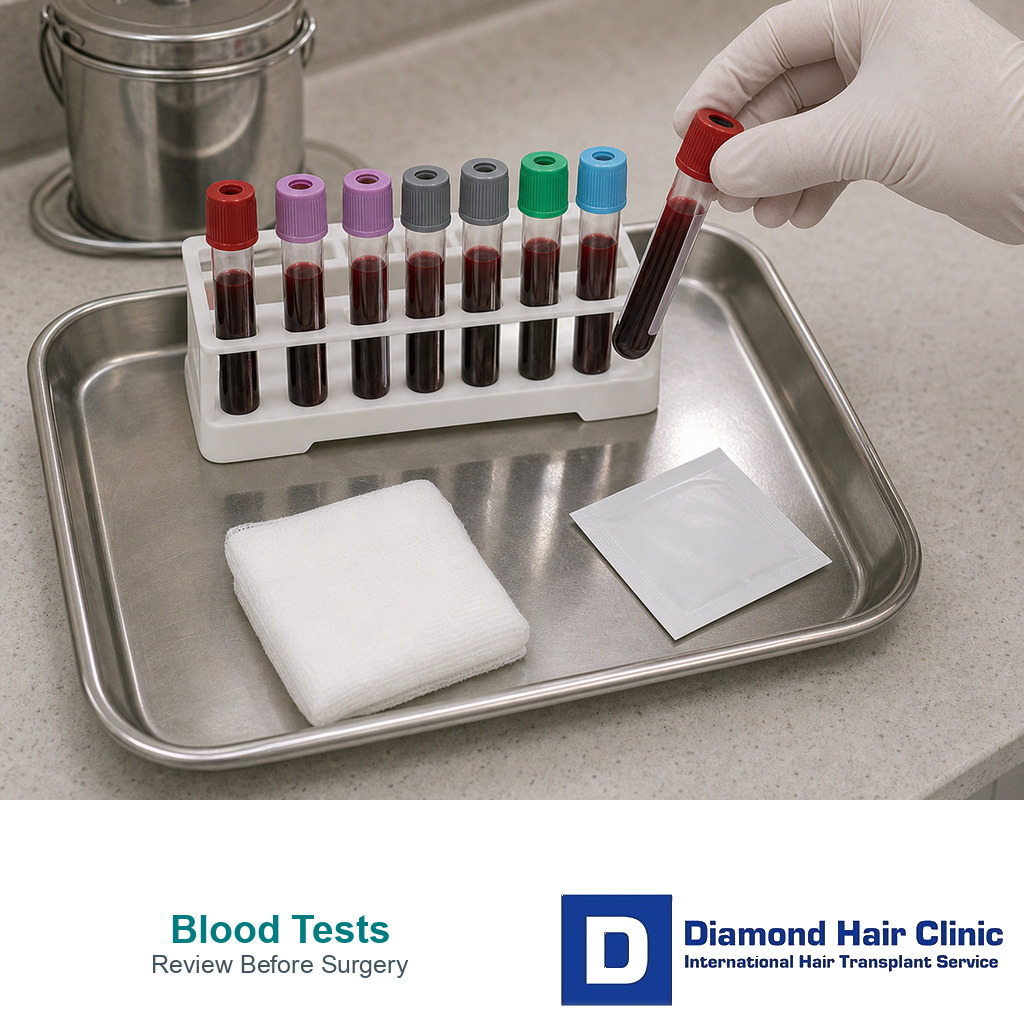
Blood Test Review Before Surgery
Blood checks before surgery matter when they can reveal a problem that changes timing, anesthesia, bleeding, or healing. They are a safety check, not a pass or fail exam. They help the clinic understand whether there is an infection risk, bleeding risk, uncontrolled medical condition, medication issue, high cholesterol or statin use, or general health concern that should be reviewed before surgery. Prednisone or corticosteroid use and biologic medicine such as Humira belong in that same review because dose, duration, timing, and reason for treatment can affect planning. In patients with Crohn disease or ulcerative colitis before a hair transplant, blood count, nutrition, and inflammation history can be especially important. Antibiotics before the procedure belong in that same review when the reason is infection, allergy risk, bowel disease, or medication interaction. A hair transplant is still surgery, even when it is planned under local anesthesia. It is usually performed under local anesthesia, but it should not be treated like a haircut appointment. A patient who is HIV negative but taking PrEP before FUE still needs to name that medicine during the blood test and medication review.
Send the lab date, reference ranges, units, and flagged values, not only a note saying normal or a cropped screenshot. Supplements, recent illness, and medication changes can also explain why a repeat test is needed.
Include both dated reports when a result was repeated instead of sending only the better one. The earlier abnormal value explains why the clinic may still ask follow up questions.
The pressure behind this question is real. You may feel healthy, want to travel, have already paid a deposit, and not want anything to delay the procedure. Still, a small delay is sometimes much safer than ignoring a medical warning.
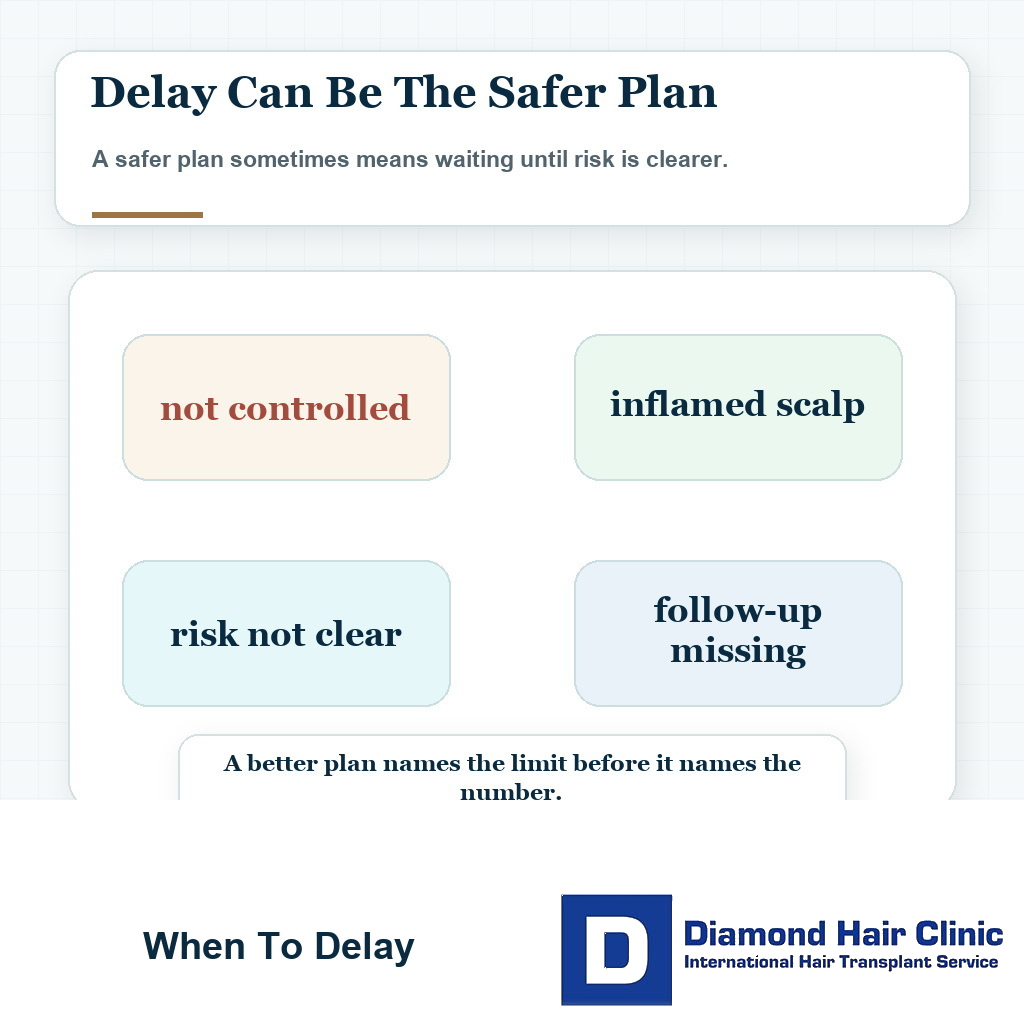
The goal of medical testing is not to reject patients unnecessarily. It is to operate only when the patient is medically suitable and the plan is safe. If something is abnormal, the right answer may be a simple adjustment, a physician review, or postponing surgery until the issue is controlled.
These checks matter before surgery
These checks matter because FUE hair transplant surgery creates many small surgical openings in the donor area and recipient area. Even when the operation is minimally invasive and carefully performed, the body still has to clot, heal, and tolerate local anesthesia safely.
A patient may look healthy but still have an issue that matters for surgery. Blood count, infection markers, blood sugar, clotting status, medication related concerns, active cold sore symptoms, recent vaccine timing, and recent COVID recovery can all change how safely we proceed. It is better to know these problems before the patient is already in the procedure room. A patient planning a hair transplant with epilepsy needs the same kind of medical review because medication history and seizure control can change the surgical plan.
After weight loss surgery, this review is even more relevant because nutrition, ferritin, protein intake, and shedding stability can affect the timing of a transplant. A patient cutting calories during recovery may need the same nutrition review, which makes dieting during hair transplant recovery part of blood test interpretation.
Medical assessment belongs before surgery, not after a complication. It is part of the same careful planning mindset as hair loss diagnosis, donor evaluation, graft number planning, and hairline design.
Some patients think lab checks are only needed for major hospital operations. That is too casual for surgical planning. The size of the operation is not the only question. The decision depends on whether the patient can heal safely and whether the clinic is paying attention to the whole person, not only the hairline.
When a clinic skips basic medical review, it may save time, but it also removes a safety layer. That is careless planning, not efficiency.
A clinic that wants to finish many operations quickly may see medical checks as a delay. In reality, they are part of the operation. Safer surgical planning begins before the patient enters the operating room. A clear supplement and vitamin list before surgery adds another safety layer. A low vitamin D result also needs context, because low vitamin D before hair transplant changes the planning conversation rather than the graft count.
They also create a written baseline. If the patient later feels weak, bleeds more than expected, or has a healing concern, we are not guessing from memory. We know what the situation looked like before surgery.
That baseline can also make follow up clearer because the clinic has facts, not only impressions. It is a small step with real value for the patient and surgeon.
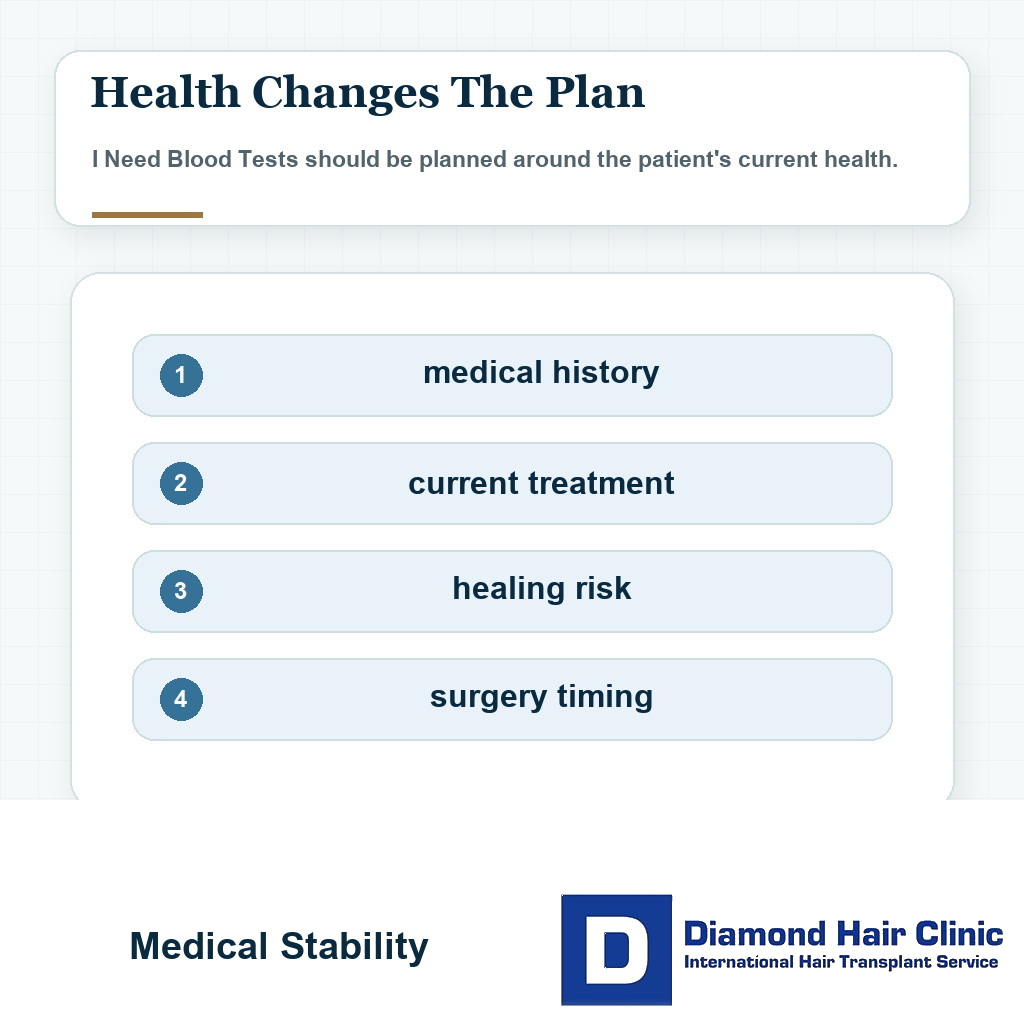
Useful checks before surgery
The exact list should answer a real safety question, not follow a ritual copied from every clinic. The list should show whether this patient can clot, heal, tolerate a long surgical day, and keep both the patient and surgical team safe. Blood count, bleeding and clotting checks, blood sugar information, and infection screening may be requested for that reason. For that reason, I also separate hair transplant documents by purpose before asking patients to send them.
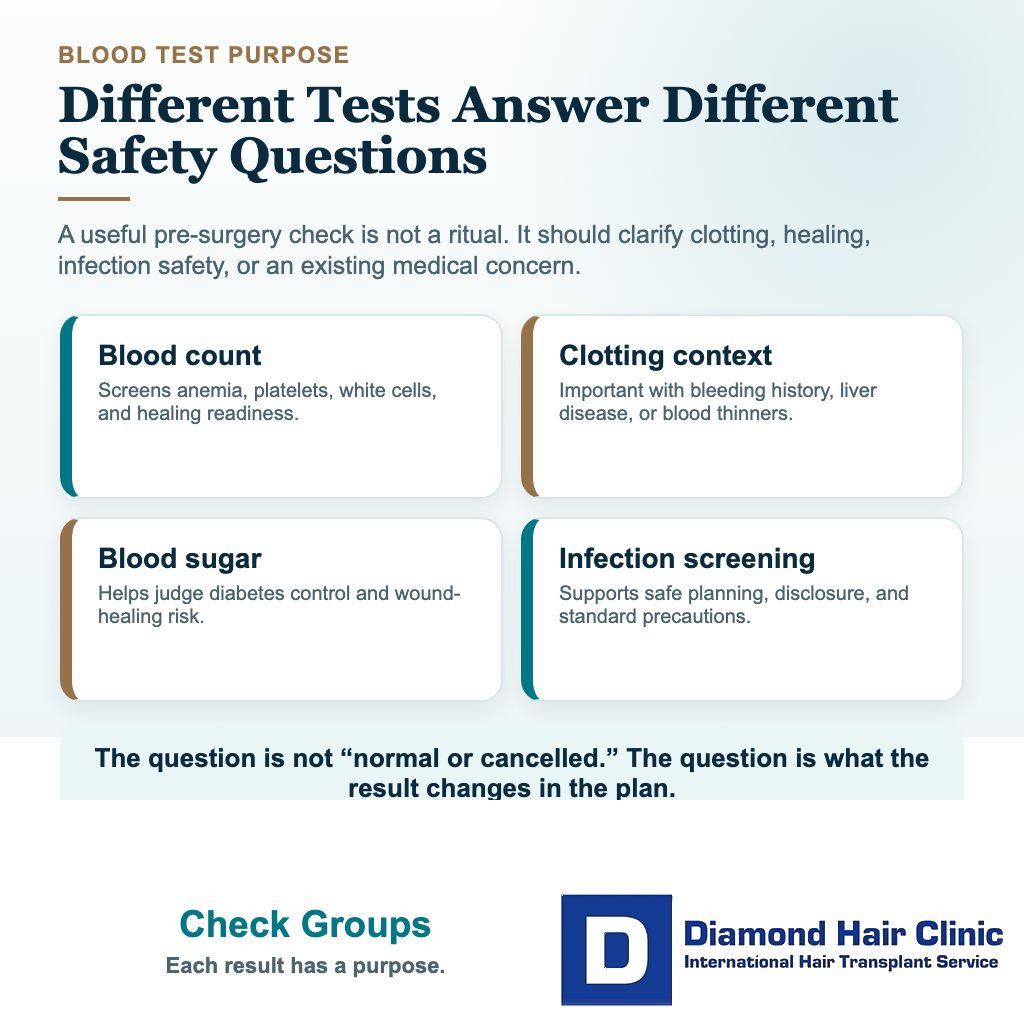
A complete blood count can show anemia, low white blood cells before surgery, low platelet count concerns, high hemoglobin or hematocrit, or signs that need review. Clotting tests can matter when there is a bleeding history, blood thinner use, liver disease, or an unclear medication situation. Blood sugar or HbA1c information matters when diabetes or poor healing is part of the story. Recent donation and DHT medication history can also affect timing, which is why finasteride, dutasteride, and blood donation before FUE belongs in the preoperative review.
Tests for HIV, hepatitis B, and hepatitis C are not about judging the patient. They are about planning safely, protecting the team, and deciding whether extra medical coordination is needed. The test list should match the patient’s health, not be treated as empty paperwork.
Extra checks such as an ECG, chest X ray, or physician clearance should also have a reason. In some patients they are sensible. In a healthy patient with no relevant history, they should not be presented as a universal ritual without explanation.
Lab results can reveal issues before surgery
Lab results can reveal several issues that may affect timing or safety. They may show anemia, infection risk, blood sugar problems, clotting concerns, or abnormal values that should be reviewed by a physician before surgery. A history of severe antibiotic diarrhea or C. diff also belongs in that safety conversation before diarrhea during early hair transplant recovery becomes a postoperative surprise.
When kidney function is already part of the medical history, the clearance decision deserves its own discussion. In kidney disease and hair transplant planning, renal values, dialysis timing, and medication review may come before graft numbers. For broader transplant recipient planning, specialist clearance, medicine that prevents rejection, and infection history still belong with the blood test review.
They may also support decisions around medications. Some patients take blood thinners, use creatine before FUE, take other supplements, hormones, acne medication, antidepressants, blood pressure medication, methotrexate, or other drugs that need to be discussed before the procedure. For a patient on TRT before a hair transplant, blood work also helps keep the surgical plan medically grounded.
Not every abnormal result cancels surgery. A mildly abnormal value, a temporary finding, and a serious uncontrolled condition are different situations. But the finding should be known. A patient with uncontrolled diabetes, active infection, or an unsafe medication situation is not the same as a healthy patient with normal results.
The patient’s general health has to match the plan. A long procedure, a high graft number, or travel from another country can place more stress on the body. If the plan is already demanding, the medical baseline matters even more.
Lab testing is not the whole assessment. It is one part of it. A proper consultation still needs scalp evaluation, donor analysis, hair loss history, medication review, and realistic surgical planning.
For diffuse thinning, normal blood work does not end the diagnosis. Thyroid, ferritin, prolactin, nutrition, and medication history can explain part of the shedding story, but scalp inflammation, donor miniaturization, and surgical timing still need examination. A clean lab panel should support the plan, not replace the scalp assessment.
Lab results do not measure how many grafts a patient needs. They do not tell us whether the hairline belongs lower, whether the crown belongs in the plan, or whether the donor area is strong enough. Those decisions still require surgical examination and planning.
The value is different. These checks answer whether there is a medical reason to adjust, pause, investigate, or ask another physician for guidance before surgery. That answer can protect the patient from a preventable problem.
A positive HIV or hepatitis test needs medical review
Not necessarily. A positive result should be taken seriously, confirmed properly, and understood medically. I do not reduce this to whether the patient deserves surgery. The decision depends on whether the condition is diagnosed, controlled, communicated, and safe for an elective procedure.
If a patient already knows there is an HIV, hepatitis B, or hepatitis C diagnosis, this should be shared with the clinic before travel. Hidden information creates risk for everyone. Accurate information allows the clinic to decide whether surgery is possible, whether medical clearance is needed, and what infection control planning is required.
Even so, infection control should not depend on stigma. Standard precautions should already be used for every patient. A positive result may change medical coordination, documentation, timing, or surgical environment planning, but it should not lead to panic or disrespect.
I discuss this more directly in my article on having a hair transplant with HIV or hepatitis. A result should lead to medical judgment, not panic, stigma, or careless promises.
One abnormal result does not always cancel surgery
That depends on which value is abnormal, how abnormal it is, whether it is temporary, and whether it creates a real surgical risk. I do not cancel surgery just because a number is slightly outside a range, but I also do not ignore a result that changes safety.
For example, a low white blood cell or neutrophil result may need a separate safety review before the operation is treated as routine. Recent illness, a medication change, or an unexplained drop can change the infection risk discussion. Other mild issues may only require a repeat test, a short delay, or communication with the patient’s doctor. A more serious issue may require postponing the operation when the result is not clearly explained or the patient is not yet medically stable. The broader decision framework is covered in cases where I say no to a hair transplant.
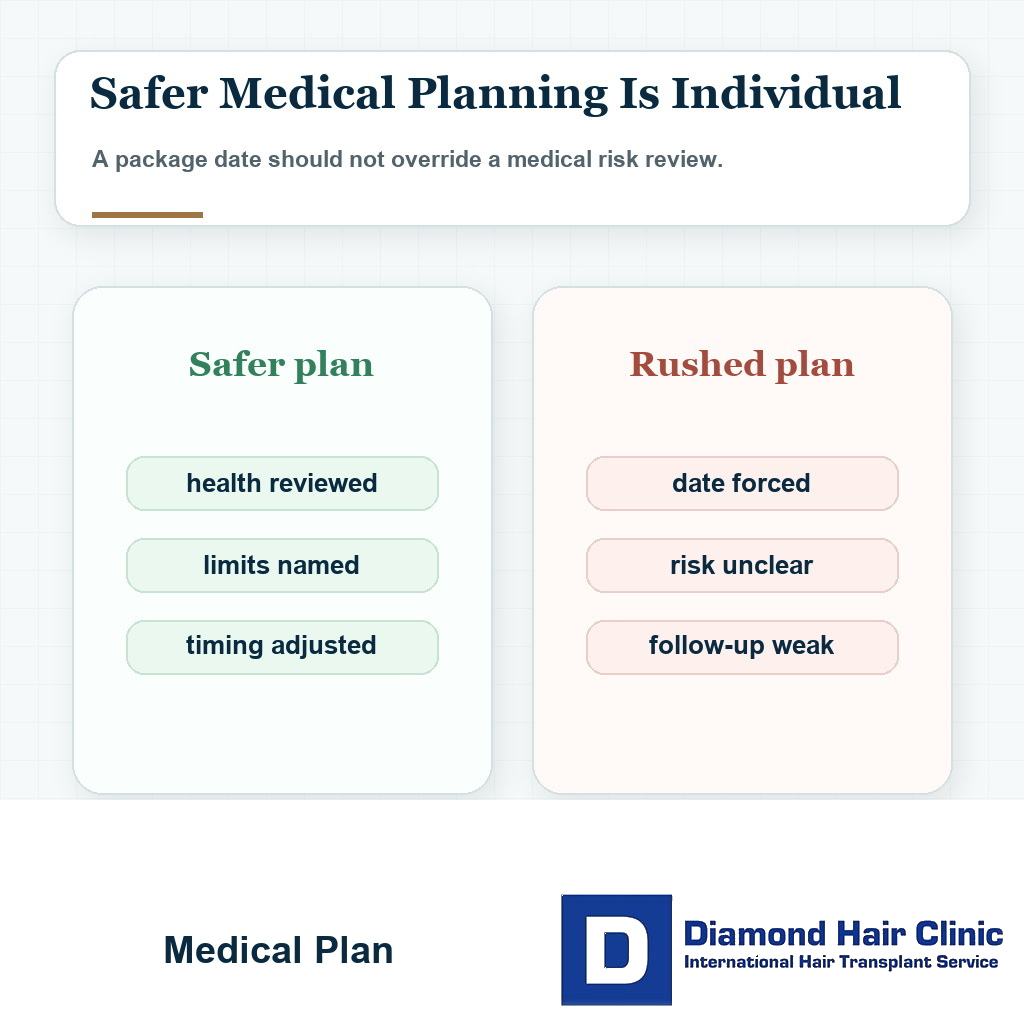
Judgment matters here. A hair transplant should not be pushed through because the travel date is convenient. It should be performed when the patient’s body is ready for surgery and healing.
I have seen patients become disappointed when a medical concern delays surgery. I understand that feeling. But a difficult delay for the right reason is safer than exposing the patient to avoidable risk.
When you have a concern, do not hide it. Share what medications you use, what conditions you have, and what previous results have shown. Accurate information helps us protect you.
Do not pressure the clinic to ignore a result. If a result needs attention, the correct response is not to negotiate with the number. The correct response is to understand why it is abnormal and whether it matters for surgery.
The next step may be to repeat the test, ask for a doctor’s opinion, adjust medication, or wait until the condition is stable. None of these steps means the patient has failed. They mean the clinic is taking surgery seriously.
Share medical history that can change surgical safety
You should share your full medical history, even if you think it is unrelated to hair. That includes heart disease or a stent, blood pressure problems, diabetes, thyroid disease, liver disease, kidney disease, bleeding disorders, allergies, previous fainting with injections, and any history of poor wound healing.
You should also share every medication and supplement. This includes prescription medication such as ADHD medication, pharmacy tablets, vitamins, herbal products, testosterone, finasteride, dutasteride, minoxidil, and anything used for mood, sleep, pain, or blood pressure.
Before surgery, patients should read and follow the clinic’s instructions before hair transplant, but written instructions cannot replace clear medical disclosure. If something is not written on the list but you use it, share that with the clinic.
Medication timing needs to be clear. Some decisions should be made before the operation, not during recovery. Keep that in mind with medication before hair transplant.
Smoking, alcohol, and certain supplements can also affect safety or healing. If you smoke, With smoking and hair transplant surgery, i take this seriously. No judgment is involved. The aim is to reduce preventable risk.
Patients sometimes forget to mention supplements because they do not consider them medication. Biotin before FUE is a good example because it can affect how some lab results are interpreted. This can be a mistake. Some supplements may affect bleeding, blood pressure, or healing. Even if the effect is small, the surgeon should know what the patient is taking. Fish oil before hair transplant surgery is a common example because dose, timing, and other medicines decide whether it matters.
I ask about previous anesthesia reactions, fainting episodes, panic attacks during medical procedures, and allergies. These details help us prepare the environment and avoid unnecessary stress on the day of surgery.
Lab results and candidacy
Lab results do not decide candidacy by themselves. A patient can have normal findings and still be a poor surgical candidate because of weak donor area, unstable hair loss, unrealistic goals, or a plan that would waste grafts.
Even so, a patient may have a good donor area and a reasonable hairline goal, but a medical issue that needs treatment before surgery. These are separate parts of the decision.
I separate medical suitability from hair restoration suitability. Medical suitability asks whether the patient can safely undergo the procedure. Hair restoration suitability asks whether the surgery makes sense for the patient’s hair loss pattern, donor capacity, age, goals, and future risk.
If you are trying to understand the second part, my article on being a good candidate for a hair transplant is a useful place to begin. It explains why surgery can be technically possible but still unwise.
Medical checks help protect the patient’s body. Candidate assessment helps protect the patient’s donor area and long term appearance. Both matter.
I avoid approving a case from one attractive photo or one requested graft number. A patient may be medically fit but strategically wrong for surgery. Another patient may be strategically suitable but medically not ready yet. The plan has to respect both truths.
When I refuse or postpone a case, I try to explain which problem I am seeing. Is it a medical issue, a donor issue, an age issue, an unstable hair loss pattern, or an expectation issue? The patient deserves that clarity.
A clinic should check more than photos
Photos are useful, but they are not enough. A clinic can estimate hairline recession, crown thinning, and donor appearance from photos, but it cannot fully understand medical safety from images alone.
This matters especially for international patients. A patient may send photos, receive a graft quote, book travel, and assume everything is settled. But the clinic still needs to know medical history, medications, allergies, and whether lab work or other checks are needed.
I have written about whether a clinic can create a hair transplant plan from photos. Photos can start the conversation, but they should not replace proper assessment.
Medical checks are part of taking the whole patient seriously. The review should include the donor area, the scalp, the medical history, and the patient’s long term plan. I need a clear picture of the age, medical history, medication use, smoking pattern, previous surgery, scalp condition, and the pace of hair loss before I give an opinion about surgery. These details are not paperwork. They are how I decide whether the timing is safe.
If a clinic is interested only in your photos and payment, that is a warning sign. Hair transplant surgery is personal, medical, and permanent. The consultation should treat it that way.
Photos are also easy to misunderstand. Lighting, hair length, wet hair, styling products, and camera angle can make the donor or recipient area look better or worse than it is. A final medical and surgical promise from photos alone deserves caution.
A proper process can begin online, especially for international patients, but it should not end there. Before surgery, the patient must be reviewed as a person, not only as a set of images.
Test results should be recent enough to reflect your current health
The results should be recent enough to represent the patient’s real condition before surgery. A result from a long time ago may not tell me what is happening now, especially if the patient has started new medication, lost weight quickly, had illness, changed hormones, developed anemia, or had a recent infection.
If the patient is healthy and the clinic has a clear protocol, timing may be straightforward. If the patient has medical conditions, unclear symptoms, or a recent change in health, I may ask for updated tests before the operation is confirmed. This includes a patient who arrives with cold, flu, or fever symptoms before a hair transplant. If the change is urinary burning, a urine test result, fever with urinary symptoms, or a new antibiotic, review urinary symptoms before FUE clearance before travel.
This timing is especially important for patients traveling from abroad. It is better to discover a problem before travel than to arrive in Istanbul and learn that surgery should wait.
Testing and travel to Turkey
For a patient traveling to Turkey for surgery, timing matters. Some clinics ask for testing before travel. Others perform it after arrival. The responsible approach depends on the clinic, the patient’s medical history, and the planned surgery.
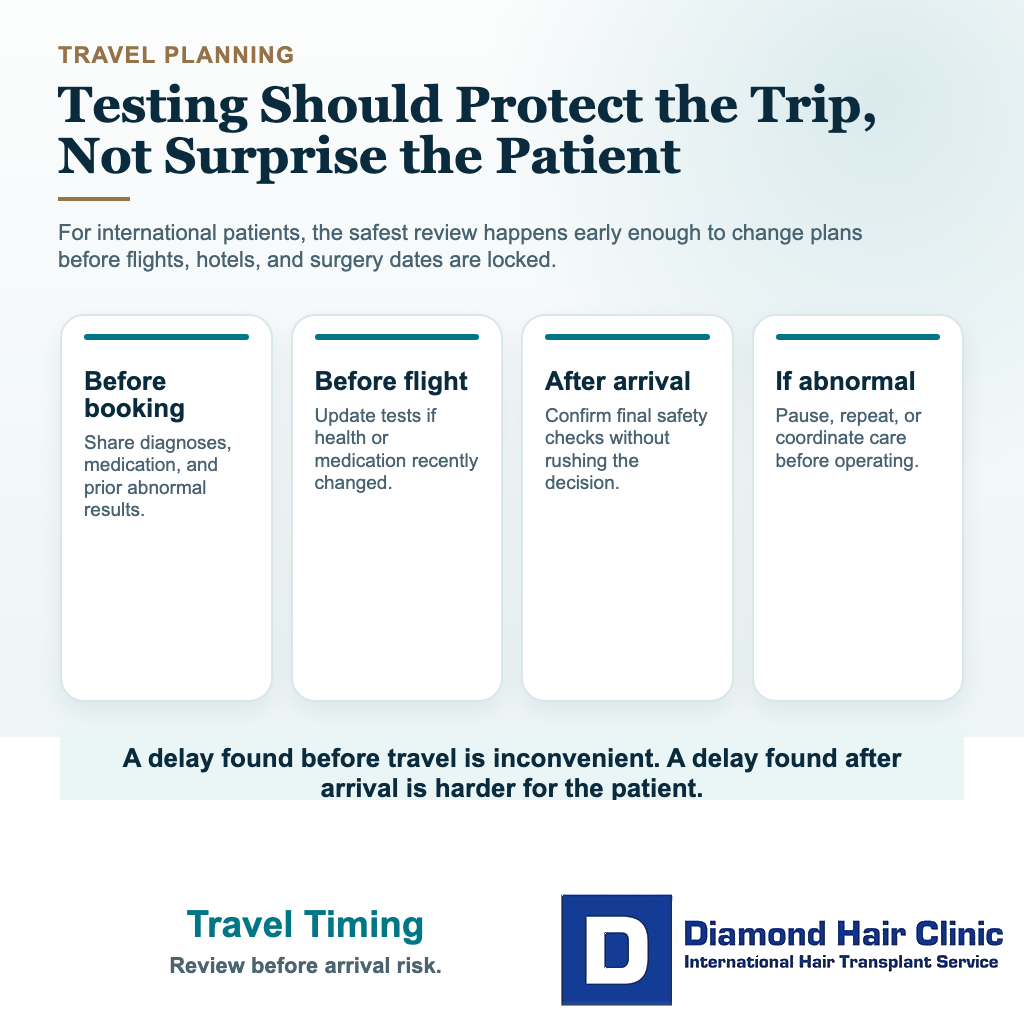
If a patient has known medical conditions, those issues need discussion before travel. It is much better to identify a possible delay early than after the patient has already arrived in Istanbul.
Patients planning international surgery should understand the full process of how to get a hair transplant in Turkey, including consultation, scheduling, travel, procedure day, and follow up. Medical checks are part of that process, not an inconvenience separate from it.
A safe plan explains what happens if a test result is unsafe. Surgery may need to be postponed, the patient may need medical review, and the reason should be explained clearly. These answers matter.
Travel pressure can push patients and clinics toward bad decisions. A plane ticket should not decide whether surgery is safe. The patient’s health should decide.
If a patient has a known condition, recent illness, unusual bleeding history around a period, or medication that may affect surgery, the clinic should know before the flight. This gives enough time to ask for additional information instead of making a rushed decision on the day of surgery. This is especially true when someone is asking about hair transplant after chemotherapy, because medical timing must be clear before the cosmetic plan.
Travel also adds practical issues. The patient may be tired, dehydrated, stressed, or sleeping poorly after arrival. These are not usually reasons to cancel surgery by themselves, but they remind us that international surgery needs organized planning.
Clinic warning signs
Be cautious if a clinic promises surgery before asking about your health. A photo, a graft number, and a price are not a full medical assessment.
Medical questions should not be treated as annoying details. A patient who mentions medication or a health condition should not be brushed aside by a sales coordinator. The answer should come from someone medically responsible.
It is worth understanding who performs hair transplant surgery and who is actually responsible for the plan. A surgeon led hair transplant is not a marketing phrase for me. It changes how decisions are made.
During clinic comparisons, I try to bring the conversation back to responsibility. The lowest price or highest graft number means little if nobody is carefully reviewing the medical history, explaining risk clearly, and willing to postpone surgery when the body is not ready.
When you compare clinics, judge this point carefully. A clinic that protects your health before surgery is more trustworthy than a clinic that only protects the booking.
You should also be careful when a clinic treats safety questions as a sales obstacle. This can appear in subtle ways. The coordinator may say every patient is suitable, every medical issue is easy, and every concern can be solved after payment. That attitude belongs on the list of red flags of Turkish hair mills.
The clinic does not need to frighten the patient. It should make clear that health questions are handled by qualified people and that the surgical plan is not separated from medical safety.
If you are nervous about the tests, tell the clinic early
If you are nervous about testing, share that with the clinic. Some patients faint easily, feel anxious around needles, or have had a bad experience before. This is not something to be embarrassed about.
The clinic can usually help by giving you time, keeping the environment quiet, and making sure you are not rushed. Anxiety is easier to manage when it is known in advance.
Do not hide fear by avoiding the test. Avoiding medical checks creates more uncertainty, not less. If the result is normal, you gain reassurance. If the result needs review, you gain protection.
After surgery, the medical review still needs clear instructions. Proper hair transplant aftercare reduces panic because the patient knows what to do and what to watch.
A structured medical process should make you feel more secure. It should not make you feel like a product being moved through a schedule.
If you tend to faint during blood draws, eat and drink in line with the clinic’s instructions and tell the team before the test. Do not try to be brave in silence. A clear warning allows the team to help you sit or lie safely and avoid unnecessary fear.
Patients sometimes think fear makes them a difficult case. It does not. Hiding fear can make the day harder. Sharing it early usually makes the day smoother.
Patients should remember that nervousness before surgery is normal. The useful detail is whether the clinic responds with patience and structure. If the team rushes you, mocks your concern, or treats a simple medical check as a nuisance, that tells you something about the clinical environment.
Bloodwork should make the day predictable
Treat these checks as part of responsible planning. They are not the whole decision, but they can reveal information that protects the patient before surgery begins. If a result needs attention, that is not failure. It is a chance to make the operation safer.
Before surgery, the clinic needs to understand your medical history, medications, supplements, allergies, previous reactions to injections, smoking or alcohol pattern, and any earlier operation. You also need to know who reviews the results and what will happen if something needs more attention.
If something is unclear, that question should appear before the patient travels. A small delay in planning is much safer than discovering a medical detail when the patient is already in the clinic.
The process should feel organized and safe, not frightening. Sometimes the answer is to repeat a test, speak with your doctor, adjust timing, or postpone until the body is ready. These steps are part of medical treatment.
Normal lab results do not make every hair transplant wise. The design still has to preserve donor supply, account for later hair loss, and look natural on the face. Medical safety and surgical judgment need to work together.
Careful planning means more than graft numbers. It also means not ignoring medical details just to complete a case. A safe operation starts before the first graft is removed.
The clinic should make you feel that safety is part of the plan, not an obstacle to the plan. That is the standard I expect for any patient before surgery.